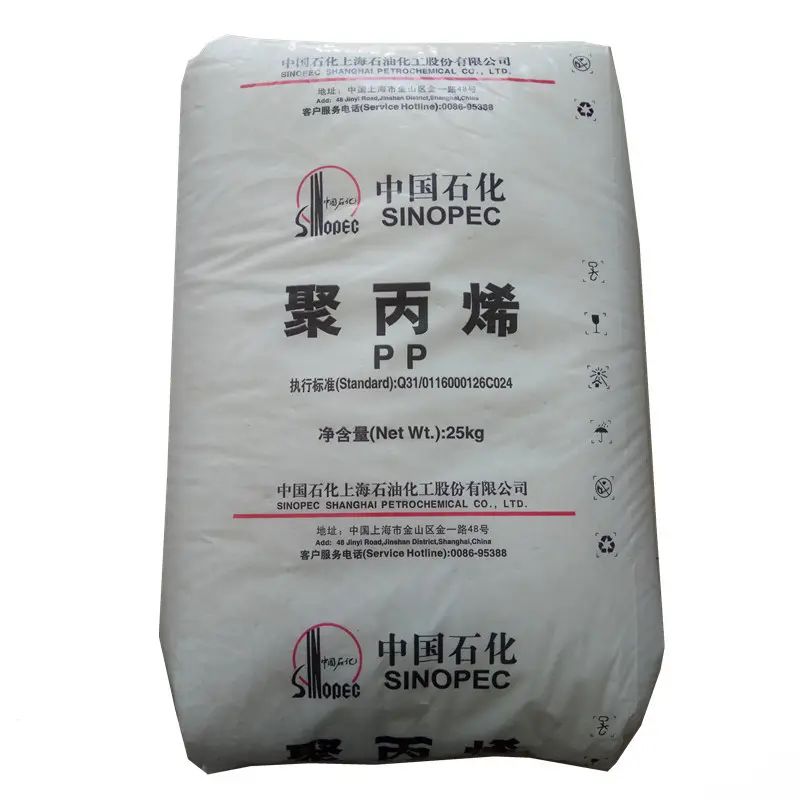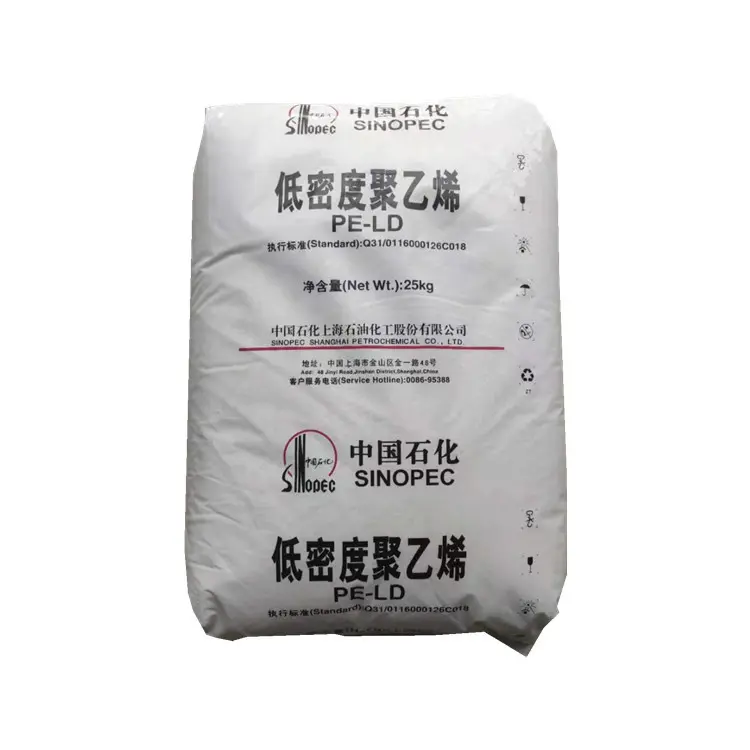
Sinopec 1C7A LDPE is a low-density polyethylene with 0.918 g/cm³ density and 7 g/10 min melt flow, for flexible packaging, coating, lamination and films.
| Manufacturer | SINOPEC Shanghai Petrochemical |
|---|---|
| Density | 0.918 g/cm³ |
| MFR | 7 g/10 min |
Note: See the product description for additional technical specifications
1C7A is a low-density polyethylene (LDPE) grade produced by Sinopec Shanghai Petrochemical Company Limited, belonging to the low-density polyethylene (LDPE) family of general-purpose flexible polyolefins. With a density of 0.918 g/cm³ and a melt mass-flow rate of 7 g/10 min, it ranks among the more free-flowing grades in the LDPE range: it delivers stable filling behaviour and surface quality in extrusion and injection molding while retaining the flexibility, low-temperature toughness and heat-seal performance characteristic of LDPE, making it a general-purpose choice for flexible packaging, paper-plastic lamination and daily-use plastic products.
As a manufacturer, Sinopec is one of the world’s largest energy and chemical companies, with an integrated chain from oil refining through chemical production, and has long held a stable industry position in batch-to-batch consistency and large-scale supply capacity for polyethylene resins. Produced within this system, grade 1C7A suits large-scale processors that require consistent incoming material and reliable long-term supply.
In terms of main application areas, 1C7A is used primarily in flexible and composite packaging (extrusion coating, lamination and packaging films), hygiene and daily-use consumer products, small injection-molded parts and auxiliary wire and cable materials; it also commonly serves as a carrier resin for colour masterbatches, filled masterbatches and modification systems.
| Physical Properties | Test Value | Test Unit | Test Standard |
| Density | 9.18E-01 | g/cm³ | ASTM D1505 |
| Melt Mass-Flow Rate | 7.00E+00 | g/10 min | ASTM D1238 |
The technical data sheet (TDS) of Sinopec Shanghai Petrochemical 1C7A LDPE material from Sinopec corporation, if there are differences, please refer to the official website of Sinopec.
Flexible packaging and paper-plastic composite packaging: The flow and heat-seal properties of 1C7A suit extrusion coating and lamination: coatings for beverage paper cups, paper bowls and liquid-food cartons, lids for instant-noodle bowls, composite layers for paper bags, and the bonding layer in paperboard/aluminium foil composite packaging. In such structures LDPE acts as both the heat-seal layer and the protective layer.
Film products: Suitable for blown film processing, covering packaging films, shopping bags, refuse bags, liner bags, composite base films and agricultural films, especially where transparency, softness and seal strength are required together.
Hygiene and daily-use consumer products: Backing and barrier films for hygiene products, soft film articles such as rainwear and table covers, and a range of daily-use soft plastic parts.
Small injection-molded and extruded parts: Bottle-cap liners and gaskets, sealing rings, simple containers and daily-use plastic parts that require flowability and flexibility.
Masterbatch and modification carrier: Commonly used as the carrier resin for colour masterbatches, filled masterbatches and flame-retardant masterbatches, where its good flow and compatibility with inorganic fillers improve dispersion uniformity.
Other industrial uses: Auxiliary materials for wire and cable insulation and jacketing, and auxiliary compounds for pipe and profile extrusion.
Under the packaging sustainability trend, LDPE is a recyclable thermoplastic: once sorted, washed and re-pelletised, recyclate can be reused in non-food-contact articles. For recycling routes and their limitations, see the technical note on LDPE recycling and reuse.
Q1: Does 1C7A need drying before processing?
A: Unlike hygroscopic materials such as PET and PA, LDPE has a non-polar chain structure and extremely low water absorption, so no dedicated drying is required under normal packaging and storage conditions. Pre-treatment is advisable only in the following cases: bags that have been left open for a long time in a humid environment, condensation on pellet surfaces, or formulations containing hygroscopic additives and filled masterbatches — in these cases hot-air drying at 70–80 °C for 1–2 hours is sufficient. In extrusion coating, excessive moisture appears as bubbles, pinholes and a rough coating surface, so a small trial run before full production is recommended.
Q2: How does 1C7A differ from HDPE, LLDPE and other LDPE grades from the same producer?
A: The three belong to the same polyethylene family but differ in chain structure and performance emphasis. HDPE offers higher stiffness and barrier performance and is used mainly in blow molding and structural injection-molded parts; LLDPE excels in puncture and tear resistance and is widely used in stretch film and heavy-duty packaging film; LDPE balances transparency, softness, heat-sealability and processability, making it better suited to coating, lamination and general flexible packaging. For the differences in molecular structure and properties, see differences between HDPE, LDPE and LLDPE. Where blown-film transparency, processing stability and stable large-volume supply are the primary requirements, SINOPEC Maoming LDPE 2426K from the same Sinopec system can also be evaluated as a complementary grade, which makes parallel trial runs and dual-source supply assessment straightforward.
Q3: What are the key process considerations for extrusion coating and film processing with this grade?
A: As general industry practice, extrusion temperatures for LDPE are typically set in the 160–200 °C range, while extrusion coating is normally run hotter because lower melt viscosity and better substrate adhesion are required; actual parameters should follow the manufacturer’s TDS and the specific equipment. Three process points deserve attention: first, neck-in control in coating, where die gap, air gap and line speed are matched to stabilise web width; second, coating thickness uniformity, for which on-line thickness measurement combined with linked adjustment of screw speed and haul-off speed is recommended; third, bubble stability and frost-line height control in blown film. In addition, excessive processing temperature accelerates oxidation and odour generation and affects heat-seal performance, so the temperature window should be established during trial runs before mass production.
Q4: How should compliance requirements such as food contact, RoHS and UL be confirmed?
A: Polyethylene itself has a hydrocarbon structure and contains no halogens or heavy metals, so it generally meets the existing restrictions of RoHS and REACH. For food-contact applications such as food-packaging lamination and inner coatings, a food-contact compliance declaration for the specific grade must be obtained from the manufacturer and checked against the regulations of the target market (for example US FDA 21 CFR 177.1520 or EU 10/2011); for wire and cable and similar safety-regulated fields, the UL Yellow Card should be requested for the specific grade. Because the applicable documents may differ between batches and end uses of the same grade, document verification and small-batch validation are recommended before bulk purchasing.
Submit your inquiry today and receive a professional competitive price tailored to your project requirements.