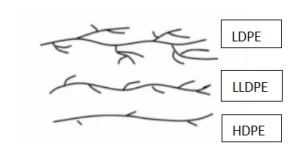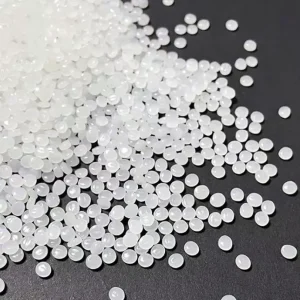
Low-Density Polyethylene (LDPE), as one of the most widely applied commodity polymers globally, occupies a pivotal position in flexible packaging, industrial films, cable insulation, and extrusion coatings, thanks to its excellent flexibility, low-temperature resistance, chemical inertness, and superior moisture barrier properties.
Against the global backdrop of B2B trade driving towards a circular economy, carbon neutrality goals, and increasingly stringent multinational buyer requirements for supply chain compliance and technical qualification audits, “whether LDPE is recyclable” and “how to achieve high-efficiency recycling” have become core topics in polymer supply chain management. This article delivers an in-depth, scientific analysis of LDPE recycling feasibility across dimensions including chemical-physical properties, mechanical and chemical recycling processes, technical bottlenecks, and compliance standards.
Core Conclusion: Low-Density Polyethylene (LDPE) is Technically Fully Recyclable
From the perspective of macromolecular chemical structure, Low-Density Polyethylene (LDPE) is a typical thermoplastic. This means it softens and becomes fluid when heated to its melting point (typically between 105°C and 115°C) and resolidifies upon cooling, a physical transformation process that, in theory, can be repeated multiple times.
In the Resin Identification Code (RIC) system, LDPE is designated with the “Number 4” symbol. Pure, uncontaminated virgin LDPE or industrial scraps do not easily undergo severe molecular chain degradation during well-regulated remelting and reprocessing, owing to their molecular chain structure which possesses numerous long chain branches. Therefore, at a purely technical level, LDPE holds exceptionally high potential for circular recycling.
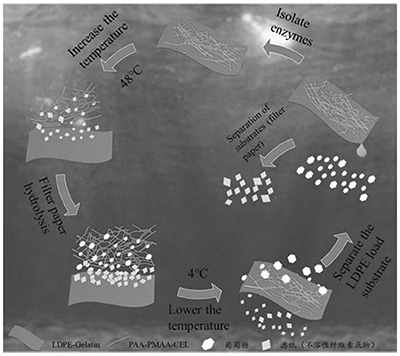
Practical Processing Pathways for LDPE Recycling
Currently, the global industry primarily relies on two mainstream pathways for recycling LDPE, each possessing its own technical advantages and application boundaries:
Mechanical Recycling (The Most Common Pathway)
This is currently the most commercially prevalent solution, primarily targeting Post-Consumer Recycled (PCR) plastics and Post-Industrial Recycled (PIR) plastics.
- Collection and Air Classification: Because LDPE exists heavily in the form of lightweight flexible packaging like films and stretch wraps, recycling initiates with high-efficiency automated optical sorting (Near-Infrared / NIR) or air elutriation to eliminate rigid plastics (such as PET and PP).
- Shredding and Thorough Washing: The films are shredded into flakes, and surfactants are utilized to wash away residual label adhesives, organic contaminants, and printing inks.
- Melt Pelletization: In twin-screw extruders, specific antioxidants or processing aids are introduced. Through shear melting at 160°C to 200°C, trace impurities are filtered out, and the material is re-granulated into recycled Low-Density Polyethylene (rLDPE) pellets.
Chemical Recycling / Advanced Recycling
For waste LDPE mixed with other multi-layer composite films (such as PE/PET or PE/PA barrier films) or heavily contaminated materials that cannot be processed via mechanical recycling, chemical recycling provides molecular-level solutions.
- Pyrolysis Technology: In an oxygen-free or oxygen-deficient high-temperature environment (400°C to 600°C), the long polyethylene chains of LDPE are cracked into pyrolysis oil or synthesis gas.
- Monomer Cracking: The pyrolysis oil can enter steam crackers as a chemical feedstock to be reduced back into ethylene monomers, which are then re-polymerized into brand new polyethylene with performance equivalent to virgin materials. This pathway perfectly bypasses the degradation of mechanical performance.
Why Does the Actual Recycling Rate of LDPE Face Significant Technical Challenges?
Although fully feasible in technical terms, the actual recycling rate of LDPE—especially post-consumer flexible films—is often lower in global waste plastic management practices than that of rigid plastics like High-Density Polyethylene (HDPE) and Polyethylene Terephthalate (PET). The root causes for this contrast lie in its unique physical form and application scenarios:
- Extremely High Collection and Sorting Costs: LDPE films (such as courier bags, bubble wraps, and food cling wraps) feature low density, large volume, and light weight. In traditional waste sorting and recycling streams, lightweight flexible films easily wrap around the rotating shafts of sorting machinery, causing equipment failures. Consequently, many curbside recycling systems refuse to accept this type of flexible packaging.
- Vulnerability to Cross-Contamination: Food packaging residues, paper stickers, and soil (particularly agricultural mulch films) easily adhere to the soft surface of LDPE films. Trace amounts of fibers or other resins (such as PVC and PP) can cause gels or carbonized black spots during melt reprocessing, severely deteriorating the mechanical strength and tensile toughness of the recycled material.
- Thermal-Oxidative Degradation and Performance Decline: During multiple repeated mechanical extrusion thermal histories, LDPE molecular chains undergo a certain degree of tertiary carbon atom chain scission or cross-linking reactions. This causes the Melt Flow Index (MFI) to drift, and the material gradually becomes brittle and hard.
Upgraded Performance Control Mechanisms for Recycled Low-Density Polyethylene (rLDPE)
To enable recycled rLDPE to re-enter high-end industrial cycles, resin compounding engineers typically employ the following technical methods to compensate for its physical property defects, thereby extending its lifecycle:
| Defect Type | Potential Impact | Technical Route for Industrial-Grade Solutions |
| Chain Scission / Embrittlement | Decrease in tensile strength, films rupture easily | Physical Modification: Blending a portion of high-molecular-weight virgin Linear Low-Density Polyethylene (LLDPE) or polyolefin elastomers (POE) for toughening. |
| Thermal-Oxidative Degradation | Unstable melt flowability, yellowing | Chemical Additives: Introducing hindered phenolic primary antioxidants and phosphite secondary antioxidants during the secondary granulation process. |
| Residual Odor | Restricts application in daily chemicals and packaging | Physical Devolatilization: Introducing high-efficiency twin-screw vacuum degassing systems or supercritical carbon dioxide (CO2) washing technologies to extract volatile organic compounds (VOCs). |
Global Recycling Compliance and Industry Technical Trends
With the acceleration of global legislation on plastic pollution control (such as the EU’s Packaging and Packaging Waste Regulation / PPWR, and Extended Producer Responsibility / EPR systems in various countries), the recycling of LDPE is evolving towards high-value applications:
- Breakthroughs in Food-Grade Mechanisms: Due to the risk of small-molecule migration, traditionally mechanically recycled rLDPE faces extreme difficulty in passing food contact material (FCM) certifications by the US FDA or EU EFSA. Currently, multinational chemical giants are overcoming the barriers to food-grade recycled polyethylene through Chain of Custody tracking or chemical pyrolysis methods.
- Design for Recycling: International brands are accelerating the transition from multi-layer composite flexible packaging composed of various materials (such as PET/PE structures), which were historically difficult to recycle, fully towards mono-material PE packaging dominated by high-purity polyethylene. This transformation greatly simplifies downstream mechanical recycling processes, significantly improving the color and purity of recycled rLDPE.
Conclusion
In summary, as a mainstream thermoplastic commodity resin, Low-Density Polyethylene (LDPE) possesses complete recyclability at a scientific and technical level. The focus of the global polymer industry is no longer on “whether it can be recycled,” but rather on how to overcome the practical obstacles of flexible packaging in sorting, washing, and melt performance degradation through technical upgrades, mono-material design, and the industrialization of advanced chemical recycling, thereby fully releasing the closed-loop economic value of rLDPE in global green supply chains.