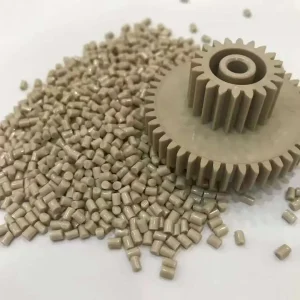
Polyether Ether Ketone (PEEK), as the most representative semi-crystalline specialty engineering plastic within the polyaryletherketone (PAEK) family, has demonstrated an irreplaceable capacity for metal replacement (“metal-to-plastic conversion”) under extreme operating conditions. This is due to its ultra-high thermal resistance, outstanding mechanical strength, top-tier chemical resistance, as well as excellent radiation resistance and inherent flame-retardant characteristics.
With increasingly stringent global demands for lightweighting, high integration, and operational reliability in extreme environments, the global PEEK market is undergoing a generational technological transformation and structural growth. The following sections provide a rigorous and professional in-depth analysis of the global PEEK market across core market drivers, key application sectors, the competitive landscape, and future trends.
Key Market Drivers
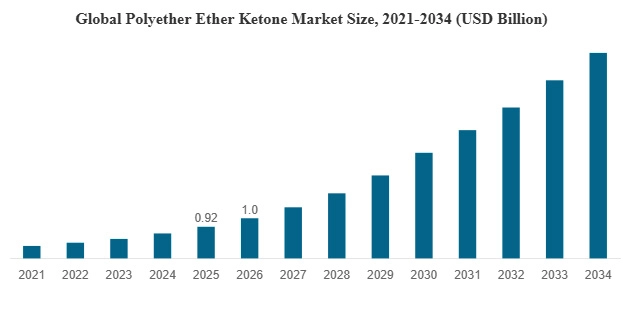
The global PEEK market has maintained a strong compound annual growth rate (CAGR) in recent years, with its growth momentum primarily driven by a revolution in the underlying logic of industrial manufacturing:
- “Metal-to-Plastic Conversion” and the Global Lightweighting Wave: In the aerospace and automotive industries, reducing component weight directly correlates with lower carbon emissions and enhanced fuel efficiency. The density of PEEK (approximately 1.3 g/cm3) is only about half that of aluminum and one-sixth that of steel, yet its specific strength and specific stiffness are exceptionally prominent. This drives an accelerated transition from traditional metal parts to specialty injection-molded or extruded components.
- Extremes in High-End Manufacturing Environments: Downstream industries such as semiconductor fabrication, deep-sea oil extraction, and precision medical devices demand increasingly strict standards for thermal tolerance (long-term service temperature >= 240 °C), resistance to strong acids and alkalis, and ultra-low outgassing. The natural physicochemical barrier of PEEK makes it an ideal material to meet these rigorous standards.
Downstream Market Segments
The downstream applications of the PEEK market exhibit highly concentrated and high-value-added characteristics, primarily distributed across four strategic sectors:
Electronics & Semiconductors
Semiconductor precision manufacturing is one of the most technologically demanding niches within the PEEK market.
- Wafer Processing and Handling: Inside wafer fabrication plants (fabs), high-purity PEEK is routinely utilized to manufacture wafer carriers, precision test sockets, and LCD handling components. Its extremely low metal ion release rate (ionic contamination control) and superior wear resistance in high-temperature and plasma environments are critical to safeguarding chip yields.
- 5G/6G High-Frequency Communications: Leveraging its exceptionally stable low dielectric constant and low dielectric loss across broad frequency bands, the application scale of PEEK in RF connectors and precision-insulated high-frequency wiring harnesses continues to expand.
Automotive & Transportation
With the explosive growth of electric vehicles (EVs), the automotive sector’s demand for PEEK is experiencing a structural rebound.
- Powertrain and Thermal Management Systems: Under the trends of 800V high-voltage fast charging and high-RPM electric drives, traditional nylons (PA) or polyphenylene sulfide (PPS) approach their performance limits when subjected to long-term exposure to hot gear oil and severe thermal shocks. PEEK is widely adopted for injection-molded brake system pump bodies, gearbox thrust washers, electric compressor scroll rotors, and high-voltage wiring harness insulation clips.
- Aerospace: Because it complies with highly stringent flame, smoke, and toxicity (FST) safety standards, PEEK is extensively used to manufacture aircraft interior structural components, airborne cable conduits, and high-vacuum ducting systems, delivering significant weight reduction.
Medical & Healthcare
Medical-grade PEEK ranks among the fastest-growing segments in the fields of biosimplants and high-value medical devices.
- Orthopedic Implants: The elastic modulus of implant-grade PEEK (approximately 4 GPa) closely matches that of human cortical bone, effectively avoiding the “stress shielding” effect common with metal implants, and it offers complete radiolucency under X-rays. Consequently, it is heavily applied in spinal fusion cages, trauma fixation, and joint replacement components.
- Repeatedly Sterilized Instruments: Due to its ability to withstand thousands of autoclaving cycles (134 °C) without physical degradation, it is frequently chosen for surgical instrument handles, endoscope components, and precision dental attachments.
Industrial Machinery & Energy
In deep-sea drilling, shale gas extraction, and the chemical process industry, PEEK exhibits top-tier component lifespans.
- Extreme Sealing and Wear Resistance: It is primarily used to manufacture high-pressure seals (V-rings) inside oil drilling tools, wear-resistant bushings, chemical pump valve seats, and compressor valve plates, demonstrating a natural immunity when in contact with high-temperature, high-pressure hydrogen sulfide (H2S) and acid solvents.
Competitive Landscape
The supply side of the global PEEK market presents a highly concentrated, technology-intensive, pyramid-like structure:
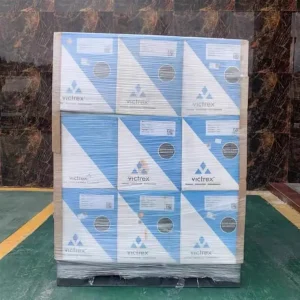
- International Traditional Giants: As the pioneer of the industry, Victrex (UK) still holds a substantial global market share and pricing leverage in high-end applications (such as aerospace and medical implant grades) and specialized modified formulations. Concurrently, Solvay and Evonik maintain intense competitiveness in the automotive and E&E markets through well-established vertically integrated supply chains.
- The Rise and Globalization of Chinese Manufacturing: Chinese polymer material enterprises, represented by companies such as Zhongyan High Polymer, have broken technological monopolies through independent R&D. Relying on robust capacities for pure resin mass production, continuously optimized melt flow control (covering full product viscosity ranges from high-flow to medium-viscosity), and a clear cost-performance advantage, Chinese manufacturers are rapidly expanding their footprint in global B2B resin trade, accelerating the adoption of PEEK in mid-to-high-end industrial components.
Future Technology Trends
- Industrialization of Additive Manufacturing (3D Printing): High-performance PEEK filaments suitable for Fused Deposition Modeling (FDM) and laser-sintered crystalline PEEK powders have become major R&D hotspots. This turns the moldless, rapid manufacturing of personalized medical prosthetics and small-batch complex aerospace structural parts into reality.
- Upgrades in Carbon Fiber Reinforced Composites (CFR-PEEK): By incorporating continuous or chopped carbon fibers, the flexural modulus and tensile strength of the composite material can leap multiple times over, further extending the boundaries of metal replacement for PEEK in primary load-bearing aerospace structures and high-end industrial robotic arms.
- Sustainability and Recycling: As a thermoplastic, PEEK’s capability for remelting and reprocessing gives it a distinct environmental advantage in the circular economy over traditional thermoset composites. Developing traceable, high-performance recycled PEEK is becoming a vital procurement consideration for multinational automakers and mainstream electronics manufacturers.