In modern high-end manufacturing, with increasingly stringent requirements for lightweight design, high integration, and reliability under extreme operating conditions, high-performance engineering plastics are undergoing an unprecedented technological revolution. As the most representative semi-crystalline polymer in the polyaryletherketone (PAEK) family, polyetheretherketone (PEEK) has become the core driving force for achieving “metal-to-plastic conversion” due to its irreplaceable comprehensive performance. Among numerous international PEEK grades, Victrex’s VICTREX® PEEK Polymer 450G has consistently been recognized as the global golden standard for industrial-grade unfilled resin.
This article provides an in-depth analysis from multiple dimensions—including technical characteristics, practical processing pain points, typical application scenarios, and metal replacement advantages—of why VICTREX PEEK 450G has remained an industry benchmark for years.
What is VICTREX® PEEK Polymer 450G?
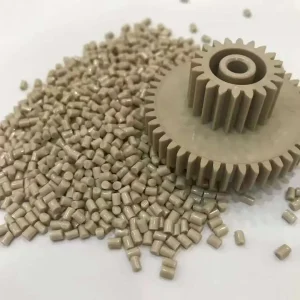
VICTREX® PEEK 450G is a standard-flow, general-purpose unfilled polyetheretherketone (PEEK) pellet produced by Victrex plc. The product appears as natural beige-to-light-yellow cylindrical pellets and belongs to semi-crystalline thermoplastic high-performance engineering plastics.
As a representative grade with medium molecular weight and medium melt viscosity, 450G exhibits an exceptional balance of processing properties in injection molding and extrusion processes. Without adding any reinforcing fibers, it simultaneously satisfies extremely high heat resistance, chemical corrosion resistance, wear resistance, excellent mechanical strength, and electrical insulation properties.
Core Technical Parameters Reference (TDS Reference)
To ensure absolute consistency in material selection and product page data, the core performance indicators of this material are outlined below:
- Physical and Thermal Properties:
- Density: 1.30 g/cm³
- Melting Point: 343 °C
- Glass Transition Temperature (Tg): 143 °C
- Mechanical Properties (Test Conditions: 23 °C):
- Tensile Modulus: 4000 MPa (ISO 527-2)
- Tensile Stress at Yield: 98 MPa (ISO 527-2)
- Tensile Strain at Break: 45% (ISO 527-2)
- Flexural Modulus: 3800 MPa (ISO 178)
- Flexural Stress at Yield: 165 MPa (ISO 178)
Metal-to-Plastic Conversion: How 450G Excels Under Extreme Conditions
In many traditional industrial sectors, metals such as aluminum, copper, and stainless steel have long dominated. However, with increasing demands for weight reduction, energy saving, and corrosion resistance, engineers are rapidly transitioning metal parts to high-performance PEEK plastics.
- Superior Specific Strength and Lightweight Advantages PEEK has a density of only about 1.30 g/cm³, which is half that of aluminum and one-sixth that of steel. By adopting VICTREX 450G, components can significantly reduce weight while maintaining extremely high specific strength and specific stiffness, effectively enhancing the energy efficiency ratio of aerospace and automotive transmission systems.
- Extreme Heat Resistance Beyond Conventional Engineering Plastics Compared to traditional general engineering plastics (such as PC or PA), 450G has a melting point as high as 343 °C, with a continuous service temperature up to 260 °C, enabling it to maintain outstanding creep resistance and dimensional stability under high-temperature and high-load environments for long periods.
- Unmatched Chemical and Corrosion Resistance Except for concentrated sulfuric acid and a few strong acids, PEEK is virtually immune to all organic and chemical solvents. In oil and gas drilling, chemical valves, and high-temperature steam environments, it does not experience swelling or chemical decomposition.
Engineer’s Practical Guide: Processing and Risk Mitigation
Because PEEK belongs to ultra-high-temperature special engineering plastics, its processing threshold is relatively high. To ensure smooth injection molding and extrusion operations, the following points are vital:
- Strict Drying Pretreatment: Although PEEK has extremely low water absorption, it can still absorb trace surface moisture when exposed to air or high-humidity environments. Before entering the high-temperature barrel (typically between 360–400 °C), it is essential to fully dry the raw material (recommended at 150–160 °C for 3–4 hours) to prevent bubbles, silver streaks, or molecular chain breakage caused by high-temperature hydrolysis.
- High Mold Temperature Control: To achieve ideal crystallinity and ensure the mechanical properties and dimensional stability of molded parts, the mold temperature typically needs to be set within a higher range (generally recommended at 160–200 °C).
Typical Industrial Application Fields
Backed by its balanced comprehensive performance, VICTREX PEEK 450G is widely applied across multiple high-end manufacturing industries:
- Aerospace: Leveraging its lightweight nature, excellent flame retardancy (meeting FST standards), and high-strength characteristics, it is extensively used to manufacture aircraft structural parts and interior components.
- Automotive Industry: Utilized for peripheral engine components, high-performance bearings, thrust washers, seals, and clutch rings, achieving significant weight reduction while lowering friction coefficients.
- Medical Devices & Food Contact: Complies with FDA food contact material regulations and meets medical-grade biocompatibility requirements, frequently used in autoclavable surgical instruments, endoscope components, and dental medical equipment.
- Electronics, Electrical & Semiconductors: Benefiting from its outstanding electrical insulation and high-temperature dimensional stability, it is commonly used in semiconductor wafer carriers, high-performance connectors, and electronic insulation components.
Frequently Asked Questions (FAQs)
Q1: What are the differences between VICTREX PEEK 450G and low-viscosity grades (like 150G) or high-viscosity grades?
A1: As a standard-flow (medium-viscosity) grade, 450G balances good fluidity with outstanding mechanical strength, making it the most versatile choice for injection molding and extrusion. Low-viscosity grades (like 150G) are better suited for thin-walled, micro, or extremely complex precision injection molding, whereas high-viscosity grades are more commonly used for thick-walled profile extrusion or scenarios with extreme toughness requirements.
Q2: Does VICTREX PEEK 450G comply with international environmental and food/medical compliance certifications?
A2: Yes. The material strictly complies with the European Union’s RoHS directive and REACH regulations. Meanwhile, specific batches or grades conform to FDA food contact safety standards and satisfy medical industry requirements for resistance to repeated steam sterilization (autoclaving).
Q3: In cross-border procurement, how can one ensure the acquisition of genuine VICTREX 450G and evaluate costs?
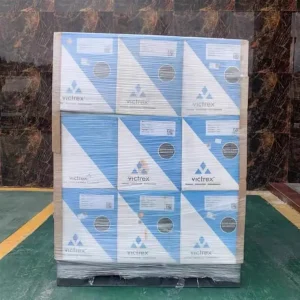
A3: As the pioneer of the global PEEK industry, Victrex 450G features a robust quality traceability system and original technical data sheet (TDS) support. During procurement, it is recommended to source original factory-packaged materials, COA quality certificates, and related compliance documents through authorized special engineering plastics suppliers to ensure smooth project delivery and compliance audits.