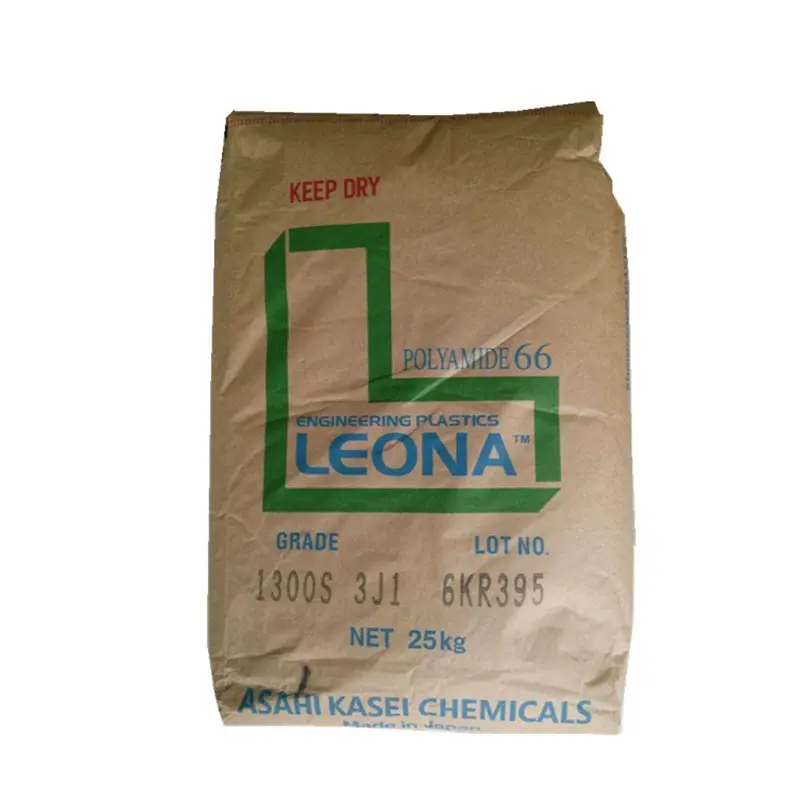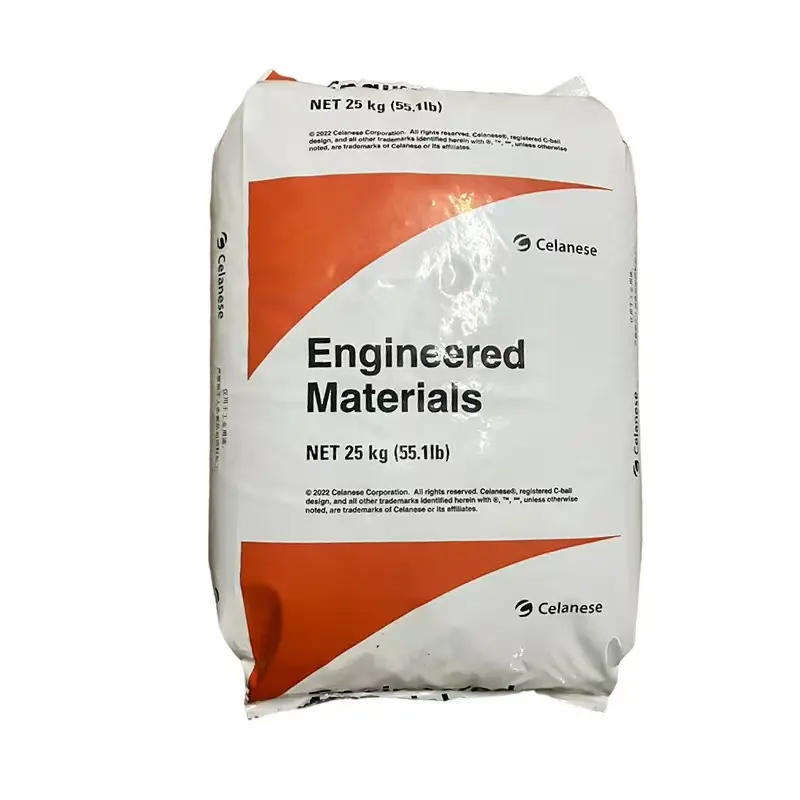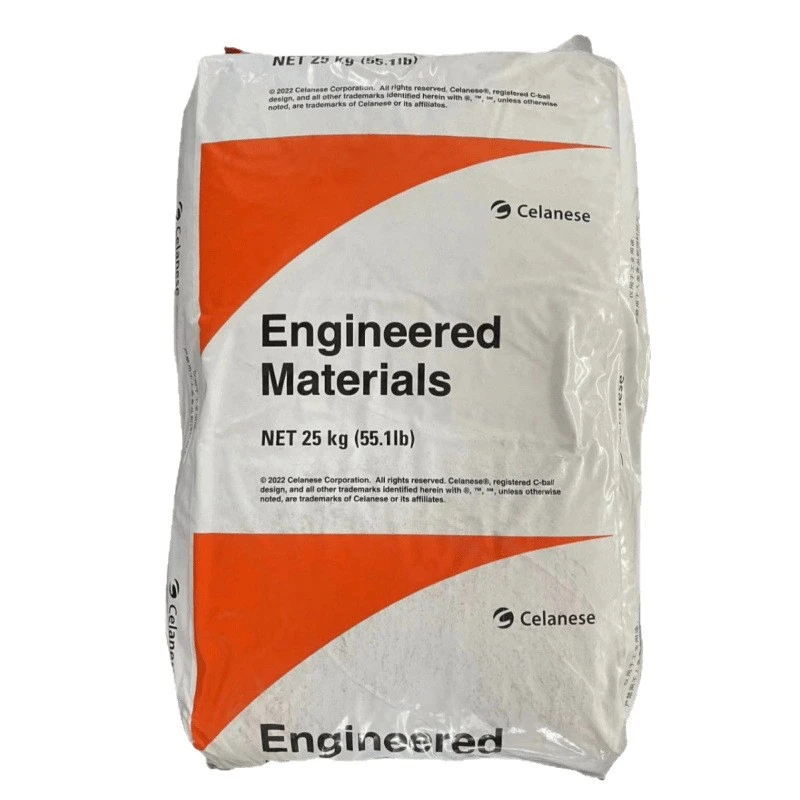
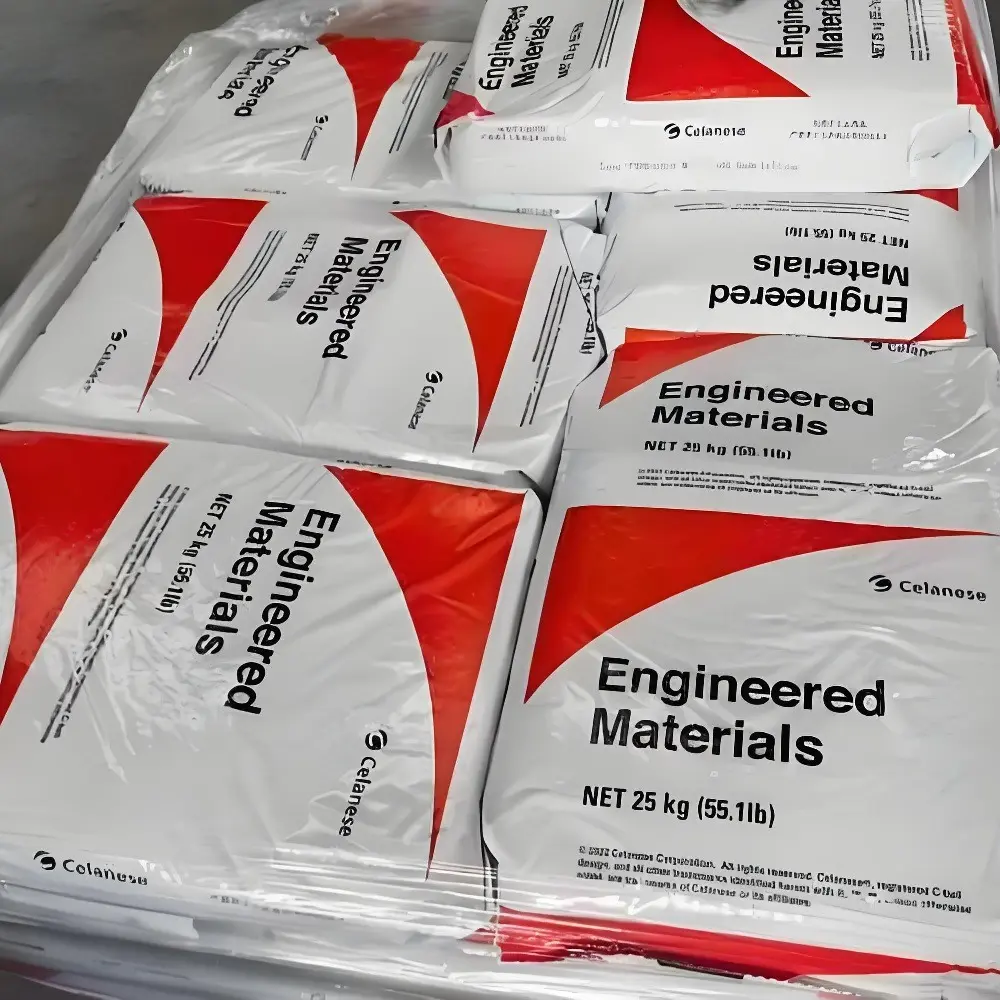
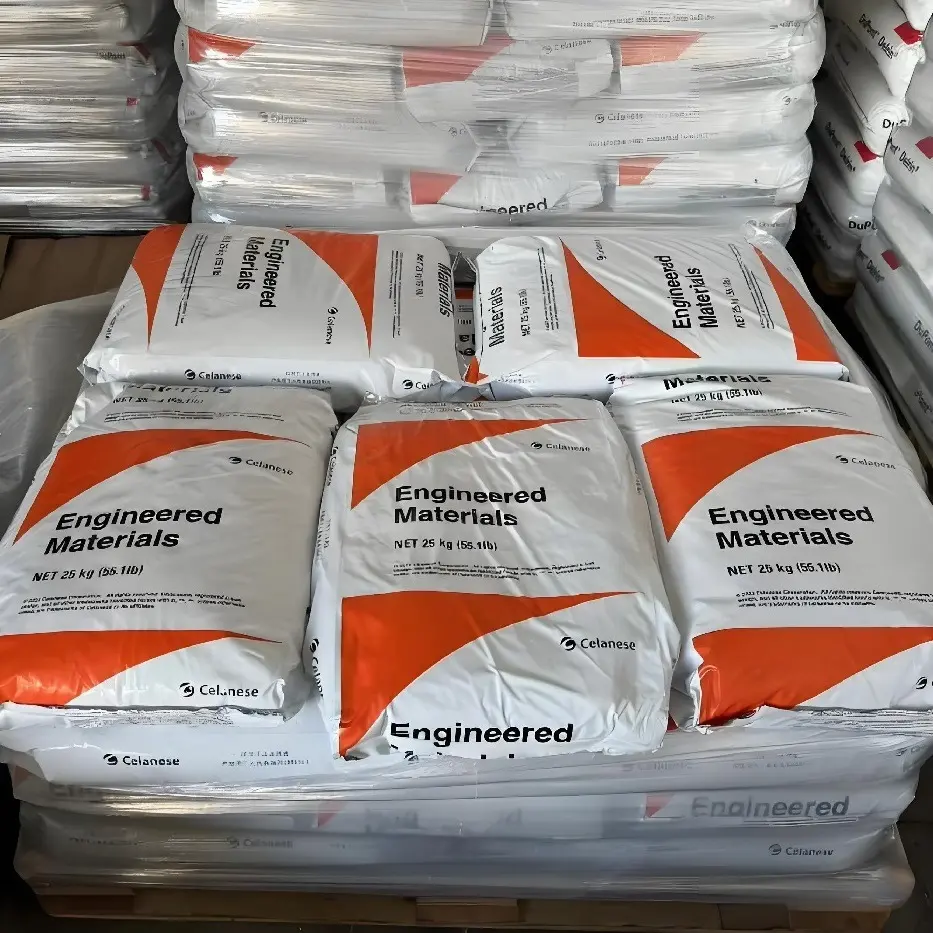
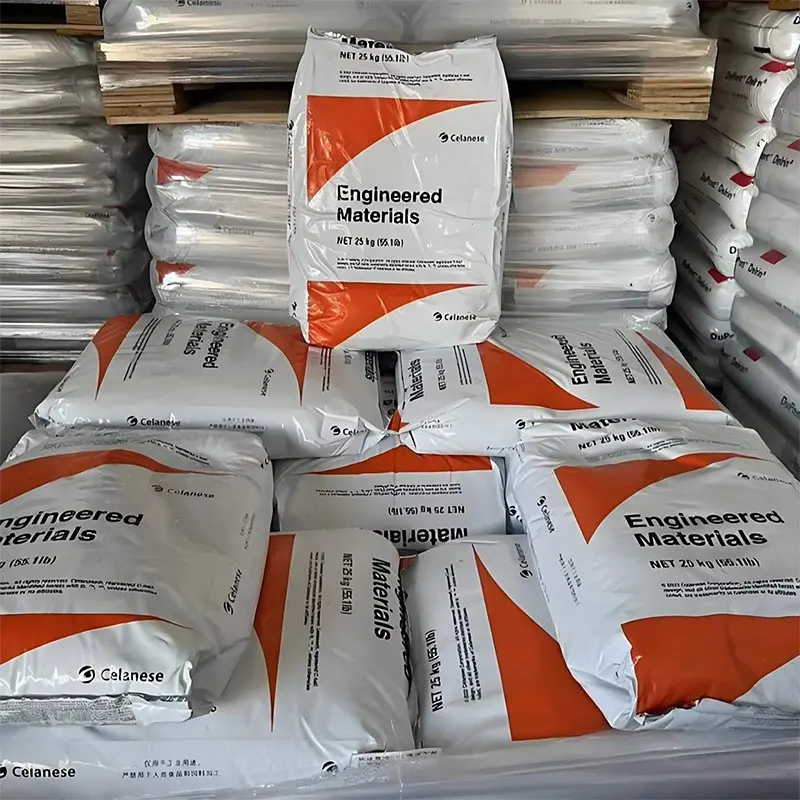
Celanese Zytel® 101L NC010 PA66 is an unreinforced, injection-molding-grade polyamide 66 resin manufactured by Celanese, offering an exceptional balance of rigidity, toughness, and processability. TaiKuo New Materials provides detailed technical parameters, application scenarios, processing guidelines, and compliance support to meet industrial B2B procurement requirements.
| Manufacturer | Celanese |
|---|---|
| Density | 1.14 g/cm³ |
| MFR | 24 g/10min |
| Tensile Strength at Yield | 82.0 MPa |
| Elongation at Yield | 4.5 % |
Note: See the product description for additional technical specifications
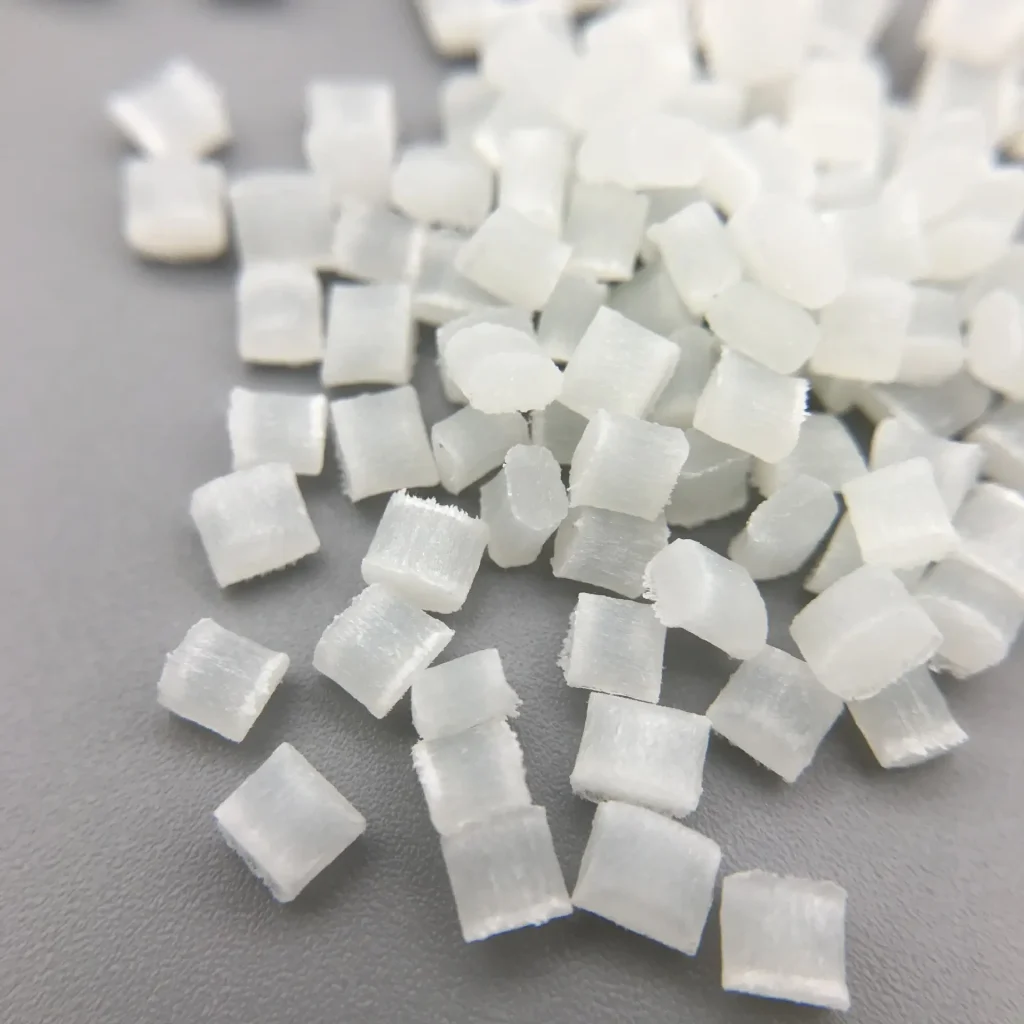
101L NC010 PA66 is manufactured by Celanese and belongs to the Zytel® product family, representing an unreinforced, injection-molding-grade polyamide 66 (PA66) resin. The material features a natural color cylindrical pellet appearance with excellent colorability. Formulated with an internal lubricant, 101L NC010 serves as a universally circulating general-purpose PA66 base resin in the global engineering plastics market, achieving a well-balanced combination of rigidity, toughness, and processability. This raw material is adapted to injection molding processes and is widely utilized in automotive components, electrical and electronics, industrial transmission accessories, and household appliance structural parts.
| Physical Properties | Test Value | Test Unit | Test Standard |
| Density, Dry | 1.14 | g/cm³ | ISO 1183 |
| Melt Mass-Flow Rate (MFR), Dry | 24 | g/10min | ISO 1133 |
| Molding Shrinkage, Normal, Dry | 1.4 | % | ISO 294-4 |
| Molding Shrinkage, Parallel, Dry | 1.4 | % | ISO 294-4 |
| Dry: Water Absorption24 hr, 23 ℃, 1 mm | 4.2 | % | ISO 62 |
| Moisture Absorption, Saturation, Dry23 ℃, 2 mm | 8.5 | % | ISO 62 |
| Moisture Absorption, Equilibrium, Dry50% RH, 23 ℃, 2 mm | 2.6 | % | ISO 62 |
| Viscosity Number, 96% Sulfuric Acid, Dry96% H2SO4 | 150 | cm³/g | ISO 307 |
| Rockwell Hardness, M-scale, Dry | 79 | — | ISO 2039-2 |
| Rockwell Hardness, M-scale, Moist | 59 | — | ISO 2039-2 |
| Rockwell Hardness, R-scale, Dry | 121 | — | ISO 2039-2 |
| Rockwell Hardness, R-scale, Moist | 108 | — | ISO 2039-2 |
| Ball Indentation Hardness, DryH358/300 | 180 | MPa | ISO 2039-1 |
| Ball Indentation Hardness, MoistH358/300 | 85 | MPa | ISO 2039-1 |
| Ball Indentation Hardness, DryH961/300 | 160 | MPa | ISO 2039-1 |
| Fogging, G, Condensate, Dry | 4.00E-04 | g | ISO 6452 |
| Melt Density, Dry | 0.97 | g/cm³ | — |
| Organic Emissions, Dry | 10 | μgC/g | VDA 277 |
| Odor, Dry | 3.5 | — | VDA 270 |
| Mechanical Properties | Test Value | Test Unit | Test Standard |
| Tensile Modulus, Dry | 3100 | MPa | ISO 527-2 |
| Tensile Modulus, Moist | 1400 | MPa | ISO 527-2 |
| Tensile Stress, Yield, Dry | 82 | MPa | ISO 527-2 |
| Tensile Stress, Yield, Moist | 55 | MPa | ISO 527-2 |
| Tensile Strain, Yield, Dry | 4.5 | % | ISO 527-2 |
| Tensile Strain, Yield, Moist | 25 | % | ISO 527-2 |
| Tensile Strain, Break, Dry | 25 | % | ISO 527-2 |
| Tensile Strain, Break, Moist | > 50 | % | ISO 527-2 |
| Tensile Creep Modulus, Moist1 hr | 1400 | MPa | ISO 899-1 |
| Tensile Creep Modulus, Moist1.0e+3 hr | 820 | MPa | ISO 899-1 |
| Flexural Modulus, Dry | 2800 | MPa | ISO 178 |
| Flexural Modulus, Moist | 1200 | MPa | ISO 178 |
| Flexural Strength, Dry | 90 | MPa | ISO 178 |
| Flexural Strength, Moist | 54 | MPa | ISO 178 |
| Poisson’s Ratio, Dry | 0.37 | — | — |
| Poisson’s Ratio, Moist | 0.43 | — | — |
| Charpy Impact Strength, Notched, Dry-30 ℃ | 4.5 | kJ/m² | ISO 179 1eA |
| Charpy Impact Strength, Notched, Moist-30 ℃ | 3 | kJ/m² | ISO 179 1eA |
| Charpy Impact Strength, Notched, Dry23 ℃ | 5.5 | kJ/m² | ISO 179 1eA |
| Charpy Impact Strength, Notched, Moist23 ℃ | 15 | kJ/m² | ISO 179 1eA |
| Charpy Impact Strength, Unnotched, Dry-30 ℃ | 400 | kJ/m² | ISO 179 1eU |
| Charpy Impact Strength, Unnotched, Dry23 ℃ | No Break | — | ISO 179 1eU |
| Izod Impact Strength, Notched, Dry-40 ℃ | 5.5 | kJ/m² | ISO 180/1A |
| Izod Impact Strength, Notched, Moist-40 ℃ | 3 | kJ/m² | ISO 180/1A |
| Izod Impact Strength, Notched, Dry-30 ℃ | 5.5 | kJ/m² | ISO 180/1A |
| Izod Impact Strength, Notched, Moist-30 ℃ | 3 | kJ/m² | ISO 180/1A |
| Izod Impact Strength, Notched, Dry23 ℃ | 5.5 | kJ/m² | ISO 180/1A |
| Izod Impact Strength, Notched, Moist23 ℃ | 12 | kJ/m² | ISO 180/1A |
| Izod Impact Strength, Unnotched, Dry-30 ℃ | 300 | kJ/m² | ISO 180/1U |
| Izod Impact Strength, Unnotched, Dry23 ℃ | No Break | — | ISO 180/1U |
| Thermal Properties | Test Value | Test Unit | Test Standard |
| Deflection Temperature Under Load, Dry, Unannealed0.45 MPa | 190 | ℃ | ISO 75-2/B |
| Deflection Temperature Under Load, Dry, Unannealed1.8 MPa | 70 | ℃ | ISO 75-2/A |
| Glass Transition Temperature (Tg), Dry10 ℃/min | 65 | ℃ | ISO 11357-2 |
| Vicat Softening Temperature, Dry | 240 | ℃ | ISO 306/B50 |
| Ball Pressure Test, Dry240 ℃ | Pass | — | IEC 60695-10-2 |
| Melting Temperature, Dry10 ℃/min | 262 | ℃ | ISO 11357-3 |
| Coefficient of Linear Thermal Expansion (CTE), Flow, Dry | 1.00E-04 | cm/cm/℃ | ISO 11359-2 |
| Coefficient of Linear Thermal Expansion (CTE), Transverse, Dry | 1.10E-04 | cm/cm/℃ | ISO 11359-2 |
| Thermal Conductivity, Dry | 0.24 | W/m-K | — |
| Effective Thermal Diffusivity, Dry | 5.00E-08 | m²/s | — |
| Specific Heat Capacity of Melt, Dry | 1680 | J/kg/℃ | — |
| Specific Heat Capacity of Solid, Dry | 2790 | J/kg/℃ | — |
| Flammability Rating, Dry0.71 mm | V-2 | — | IEC 60695-11-10, -20 UL94 |
| Flammability Rating, Dry1.5 mm | V-2 | — | IEC 60695-11-10, -20 UL94 |
| Glow Wire Ignition Temperature (GWIT), Dry0.75 mm | 725 | ℃ | IEC 60695-2-13 |
| Glow Wire Ignition Temperature (GWIT), Dry1.5 mm | 750 | ℃ | IEC 60695-2-13 |
| Glow Wire Ignition Temperature (GWIT), Dry3 mm | 800 | ℃ | IEC 60695-2-13 |
| Oxygen Index, Dry | 28 | % | ISO 4589-2 |
| FMVSS Flammability, Dry | DNI | — | FMVSS 302 |
| Melt Thermal Conductivity, Dry | 0.16 | W/m-K | — |
| Electrical Properties | Test Value | Test Unit | Test Standard |
| Volume Resistivity, Dry | 1.00E+10 | ohms·cm | IEC 62631-3-1 |
| Volume Resistivity, Moist | 1.00E+08 | ohms·cm | IEC 62631-3-1 |
| Electric Strength, Dry | 32 | kV/mm | IEC 60243-1 |
| Electric Strength, Moist | 28 | kV/mm | IEC 60243-1 |
| Permittivity (Dielectric Constant), Dry1.0e+6 Hz | 3.5 | — | IEC 62631-2-1 |
| Permittivity (Dielectric Constant), Moist1.0e+6 Hz | 4 | — | IEC 62631-2-1 |
| Permittivity (Dielectric Constant), Dry100 Hz | 3.8 | — | IEC 62631-2-1 |
| Permittivity (Dielectric Constant), Moist100 Hz | 11 | — | IEC 62631-2-1 |
| Dissipation Factor, Dry100 Hz | 8.00E-03 | — | IEC 62631-2-1 |
| Dissipation Factor, Moist100 Hz | 0.21 | — | IEC 62631-2-1 |
| Dissipation Factor, Dry1.0e+6 Hz | 0.018 | — | IEC 62631-2-1 |
| Dissipation Factor, Moist1.0e+6 Hz | 0.075 | — | IEC 62631-2-1 |
| Comparative Tracking Index (CTI), Dry | PLC 0 | — | UL 746 |
| Comparative Tracking Index (CTI), Solution A, Dry | 600 | V | IEC 60112 |
| Comparative Tracking Index (CTI), Solution B, Dry | 475 | V | IEC 60112 |
The technical data sheet (TDS) of Celanese Zytel® 101L NC010 material from Celanese Corporation. If there are differences, please refer to the official website of Celanese.
Built-in dedicated lubricant ensures exceptional demolding performance, reduces sticking and mold release defects (whitening), and accommodates continuous high-volume injection molding production to enhance molding efficiency.
Well-balanced rigidity and toughness, exhibiting stable tensile and flexural strength in the dry state; impact performance significantly increases after moisture absorption, enabling it to withstand dynamic shock loads.
Features a UL94 V-2 flammability rating along with a high Glow Wire Ignition Temperature (GWIT), meeting basic flame-retardant safety requirements for electrical components.
Resistant to mineral oils, lubricating oils, fuel, and various organic solvents, making it suitable for power transmission components and automotive fuel line accessories in long-term contact with oil products.
Favorable melt fluidity, rendering it suitable for molding moderately complex structures; stable molding shrinkage facilitates precise dimensional tolerance control for injection-molded parts.
Possesses basic electrical insulation performance with a maximum Comparative Tracking Index (CTI) of up to 600V, making it suitable for low-voltage electrical components such as switches and connectors.
Natural-color base resin is easy to color-match, with controllable fogging and organic emission metrics, adapting to application requirements for interior trims and enclosed space components.
Automotive Industry: Interior clips, fuel line connectors, wire harness fixing brackets, small fuel pump housings, air conditioning duct accessories, and internal lighting structural parts.
Electrical & Electronics Industry: Connector bases, circuit breaker housings, switch assemblies, relay housings, coil formers, and insulating terminal structural parts.
Industrial Transmission & Machinery: Small gears, bearing cages, pulleys, fasteners, chain bushings, and wear-resistant buffer sliders.
Household Appliances: Appliance handles, knobs, guide rails, water pump housings, and vacuum cleaner internal structural components.
General Consumer Goods: Cable ties, plumbing accessories, sporting goods structural parts, and tool housings.
Q1: What drying conditions are required before processing Zytel® 101L NC010 PA66?
A: PA66 readily absorbs moisture from the air, and excessive moisture can cause silver streaks, bubbles, and mechanical degradation in molded parts. It is recommended to use a dehumidifying dryer at 80–90 ℃ for 4–6 hours to control the raw material moisture content below 0.1%. Dried raw materials should be stored in sealed and insulated containers to prevent moisture re-absorption.
Q2: How to select and distinguish between 101L NC010 and the same series 101F PA66?
A: Both grades are unreinforced, lubricated PA66 resins. 101L features higher fluidity, making it suitable for thin-walled and complex cavities; 101F has lower fluidity and higher melt strength, rendering it more suitable for thick-walled, large items with stringent warpage control requirements. Trial molding validation should be conducted prior to full-scale production.
Q3: Can this grade, with its V-2 flammability rating, be directly used for high-voltage electrical components?
A: The material achieves a UL94 V-2 (0.71 mm) flame-retardant standard and possesses a CTI 600V rating. High-voltage operating conditions require comprehensive evaluation combined with overall equipment safety standards rather than relying solely on a single material performance metric; complete system-level testing is recommended.
Q4: PA66 undergoes significant performance changes after moisture absorption; how can finished product dimensional stability be controlled?
A: Molded products continuously absorb moisture over time, causing dimensions, hardness, and modulus to vary with the moisture content. For products with rigorous dimensional precision requirements, moisture conditioning (conditioning treatment) is recommended prior to assembly to reach equilibrium moisture content in advance.
Submit your inquiry today and receive a professional competitive price tailored to your project requirements.