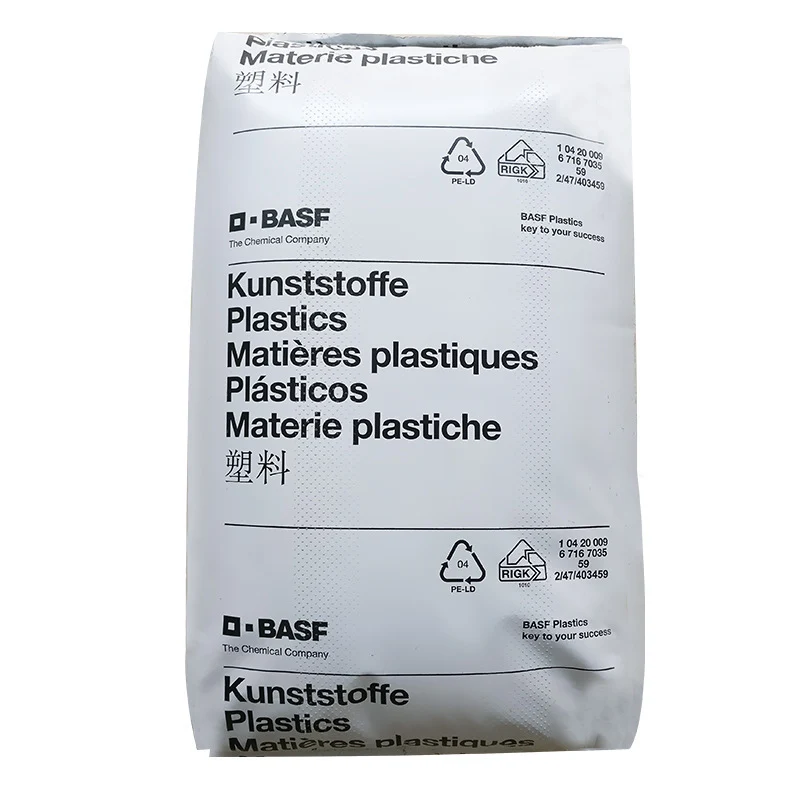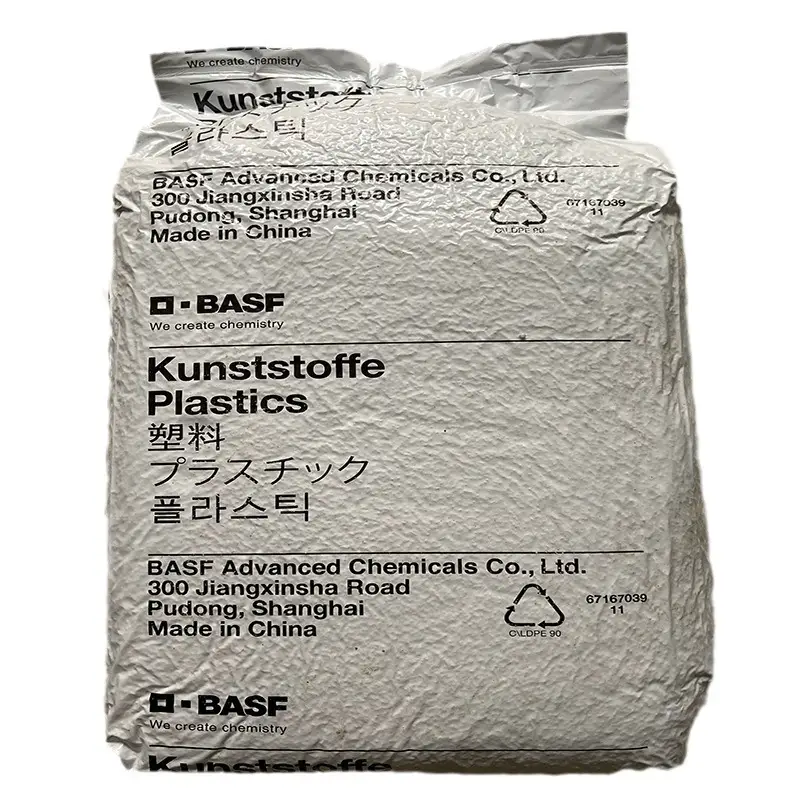
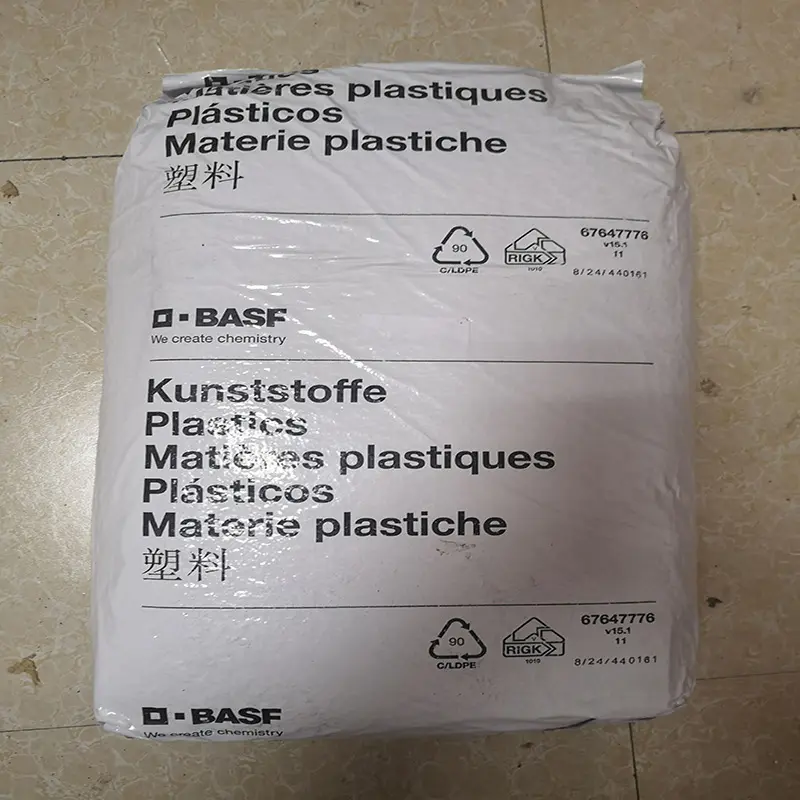
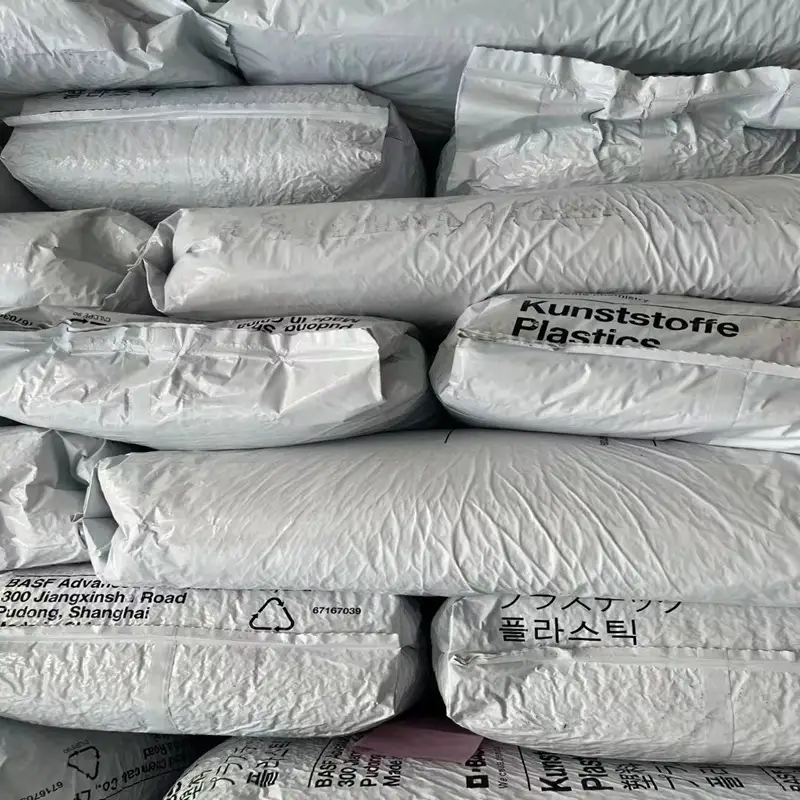
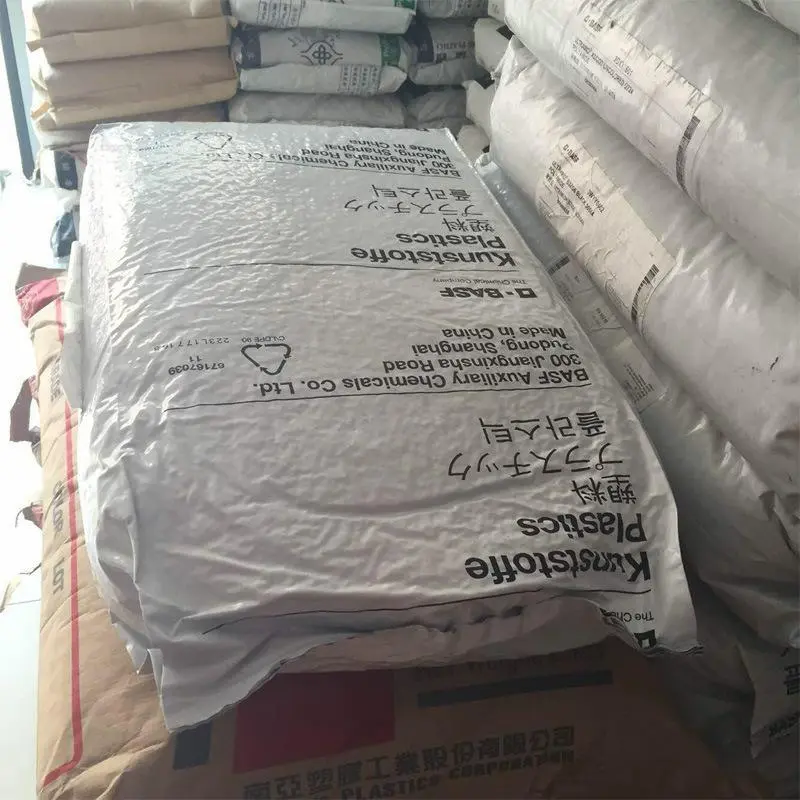
Technical specifications and product overview of BASF Ultramid® PA66 A3K R01 Nylon 66 resin, including its core physical, mechanical, thermal, and electrical property tables, processing drying guidelines, and key industrial application fields.
| Manufacturer | BASF |
|---|---|
| Density | 1.13 g/cm³ |
| MVR | 120 cm³/10 min |
| Tensile Strength at Yield | 85.0 MPa |
| Tensile Strain at Yield | 5.0 % |
Note: See the product description for additional technical specifications
Manufacturer: BASF
Category: Polyamide 66 (Nylon 66), unreinforced general-purpose injection molding grade resin
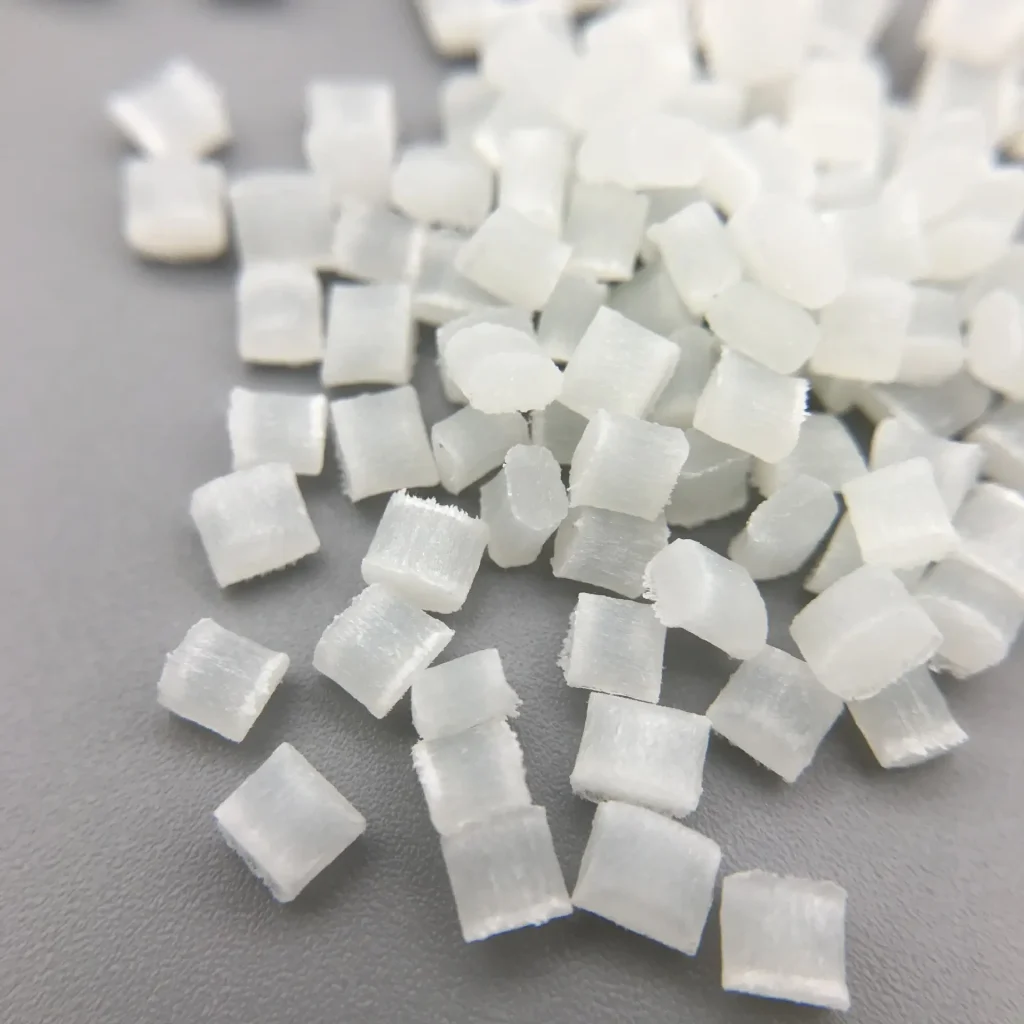
Appearance: Natural color (semitransparent to milk-white) pellets
BASF Ultramid® PA66 A3K R01 is one of the most classic unreinforced, virgin Nylon 66 resins within the prestigious Ultramid® family developed by the global chemical giant BASF. In modern high-end manufacturing and bulk material trade, this grade holds a dominant position in the global engineering plastics market by virtue of its exceptional balance of mechanical properties and wide processing window. Its outstanding melt flowability makes it the premier material choice for processing high-precision, complex, and thin-walled components, widely deployed across core sectors such as automotive electrical systems, high-performance industrial components, and modern low-voltage electrical enclosures.
| Physical Properties | Typical Value | Unit | Test Standard |
| Density, dry | 1.13 | g/cm3 | ISO 1183 |
| Dry: apparent density | 0.7 | g/cm3 | No Standard |
| Melt volume-flow rate (MVR), dry(275 °C, 5 kg) | 120 | cm3/10 min | ISO 1133 |
| Molding shrinkage, normal, dry | 1.7 | % | ISO 294-4 |
| Molding shrinkage, parallel, dry | 1.4 | % | ISO 294-4 |
| Water absorption, saturation, dry(23 °C) | 8.0 – 9.0 | % | ISO 62 |
| Water absorption, equilibrium, dry(50% RH, 23 °C) | 2.5 – 3.1 | % | ISO 62 |
| Viscosity number, 96% sulfuric acid, dry(96% H2SO4) | 150 | cm3/g | ISO 307 |
| Molding shrinkage, dry(1.5 mm) | 0.85 | % | — |
| Mechanical Properties | Typical Value | Unit | Test Standard |
| Tensile modulus, dry | 3100 | MPa | ISO 527-2 |
| Tensile modulus, conditioned | 1100 | MPa | ISO 527-2 |
| Tensile strength at yield, dry | 85 | MPa | ISO 527-2 |
| Tensile strength at yield, conditioned | 50 | MPa | ISO 527-2 |
| Tensile strain at yield, dry | 5 | % | ISO 527-2 |
| Tensile strain at yield, conditioned | 20 | % | ISO 527-2 |
| Tensile strain at break, dry | 30 | % | ISO 527-2 |
| Tensile strain at break, conditioned | > 50 | % | ISO 527-2 |
| Flexural modulus, dry | 2900 | MPa | ISO 178 |
| Charpy notched impact strength, dry(-30 °C) | 4 | kJ/m2 | ISO 179 1eA |
| Charpy notched impact strength, dry(23 °C) | 5 | kJ/m2 | ISO 179 1eA |
| Charpy notched impact strength, conditioned(23 °C) | 20 | kJ/m2 | ISO 179 1eA |
| Charpy unnotched impact strength, dry(23 °C) | No BreakNo Break | —— | ISO 179 1eU |
| Thermal Properties | Typical Value | Unit | Test Standard |
| Heat deflection temperature (HDT), dry, unannealed(0.45 MPa) | 220 | °C | ISO 75-2/B |
| Heat deflection temperature (HDT), dry, unannealed(1.8 MPa) | 75 | °C | ISO 75-2/A |
| Melting temperature, dry | 260 | °C | ISO 11357-3 |
| Max. service temperature, long term, tensile strength, dry(5.0e+3 h) | 118 | °C | IEC 60216 |
| Max. service temperature, long term, tensile strength, dry(2.0e+4 h) | 101 | °C | IEC 60216 |
| Glow wire flammability index (GWFI), dry(1 mm) | 650 | °C | IEC 60695-2-12 |
| Glow wire ignition temperature (GWIT), dry(< 1.5 mm) | 775 | °C | IEC 60695-2-13 |
| Limiting oxygen index (LOI), dry | 28 | % | ISO 4589-2 |
| Electrical Properties | Typical Value | Unit | Test Standard |
| Surface resistivity, conditioned | 1.00E+10 | ohms | IEC 60093 |
| Volume resistivity, dry | 1.00E+15 | ohms⋅cm | IEC 60093 |
| Volume resistivity, conditioned | 1.00E+12 | ohms⋅cm | IEC 60093 |
| Relative permittivity (dielectric constant), dry(1.0e+6 Hz) | 3.2 | — | IEC 60250 |
| Relative permittivity (dielectric constant), conditioned(1.0e+6 Hz) | 5 | — | IEC 60250 |
| Dissipation factor (dielectric loss), dry(1.0e+6 Hz) | 0.025 | — | IEC 60250 |
| Dissipation factor (dielectric loss), conditioned(1.0e+6 Hz) | 0.2 | — | IEC 60250 |
| Comparative tracking index (CTI), Solution A, dry | 600 | V | IEC 60112 |
The technical data sheet (TDS) of BASF Ultramid® PA66 A3K R01 material from BASF corporation, if there are differences, please refer to the official website of BASF.
Superb Flowability and Processability: Features a high melt volume-flow rate (MVR) of 120 $\text{cm}^3/10\text{ min}$, ensuring rapid mold filling and short cycle times. It is ideal for molding ultra-thin walled parts down to 0.5 mm with complex geometries.
Excellent Short-term and Long-term Thermal Performance: Boasting a high melting point of 260°C and a heat deflection temperature (HDT) of 220°C under a 0.45 MPa load, it easily tolerates wave soldering or reflow soldering profiles during electrical assembly.
Superior Self-lubrication and Wear Resistance: As an unfilled PA66 base material, it exhibits a remarkably low coefficient of friction, providing robust, anti-wear characteristics in mechanical drives without external lubrication.
Outstanding Electrical Insulation Properties: Possesses a high volume resistivity of 1.0e+15 $\text{ohms}\cdot\text{cm}$ in its dry state, coupled with a top-tier comparative tracking index (CTI) rating of 600V, offering elite safety and protection for high-voltage and intricate grid components.
Inherent Chemical and Solvent Resistance: Highly resistant to most greases, industrial fuels, petroleum-based solvents, organic acids, and bulk alkaline liquids, guaranteeing excellent dimensional stability of components in harsh, oily industrial environments.
Leveraging its high rigidity and excellent flowability without the need for glass fiber reinforcement, BASF Ultramid® PA66 A3K R01 is widely utilized across various high-volume and precision industrial manufacturing sectors:
Electrical & Electronics (E&E): Miniature high-density connectors, cable ties and fastening clips, relay sockets, industrial terminal blocks, printed circuit board (PCB) guide rails, and precision internal plastic parts for low-voltage circuit breakers.
Automotive Electronics & Mechanical Components: Automotive fuse boxes, wire harness routing clips, internal headlamp adjustment brackets, small lightweight transmission gears, sliding guide rails, bearing retainers, and various anti-vibration mechanical washers.
Consumer Goods & Appliances: Internal miniature structural components for high-end smartphones, internal motor brackets for vacuum cleaners, heat-resistant anti-shock skeletons for kitchen appliances, and heavy-duty plastic cable straps.
Q1: What are the recommended drying guidelines for BASF Ultramid® PA66 A3K R01 prior to injection molding?
A1: Nylon 66 is a highly hygroscopic polymer. To prevent melt hydrolysis during injection molding—which causes splay marks, brittleness, or voids—strict pre-molding drying is mandatory. The recommended drying specification is to use a dehumidifying desiccant dryer at 80°C–90°C for 2–4 hours, ensuring the final moisture content within the resin is kept below 0.1% (ideally below 0.05%).
Q2: As an unreinforced material, how does this grade differ from glass-fiber-reinforced alternatives (e.g., PA66-GF30)?
A2: Unreinforced A3K R01 retains the high toughness, superior elongation (with a tensile strain at break of 30%), and superb melt flowability of pure Nylon 66, making it ideal for ultra-thin or snap-fit assemblies. Conversely, a 30% glass-fiber-reinforced compound (like GF30) significantly boosts tensile modulus and flexural strength, but sacrifices material elongation, toughness, and flowability, while introducing higher mold wear and anisotropic shrinkage. If your application involves intricate snap-fits or requires a high surface gloss, A3K R01 is the superior choice.
Q3: Does this product comply with global environmental regulations such as EU RoHS and REACH?
A3: Yes. As an original, virgin resin from BASF, Ultramid® PA66 A3K R01 strictly complies with mainstream international environmental standards. It is free from hazardous heavy metals like lead, mercury, cadmium, and hexavalent chromium, and contains no toxic phthalate plasticizers. The material is fully compliant with EU RoHS 2.0 and REACH regulations, allowing it to clear strict technical barriers to trade for electronic products or consumer goods destined for Europe and North America. Original certificates of compliance, UL 94 Yellow Cards, or specific environmental testing reports can be requested directly from your sales engineer.
Submit your inquiry today and receive a professional competitive price tailored to your project requirements.