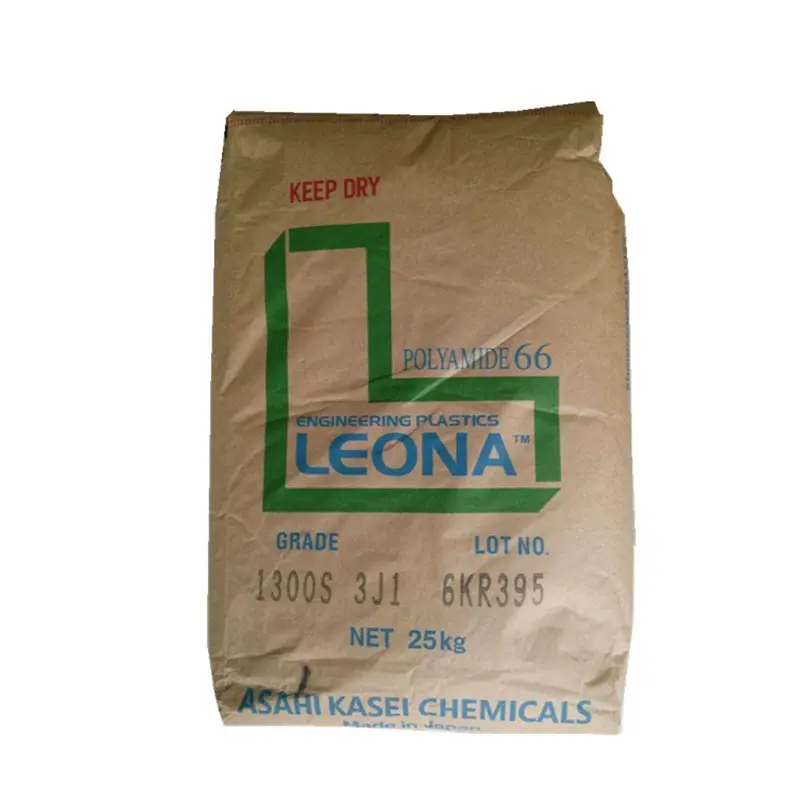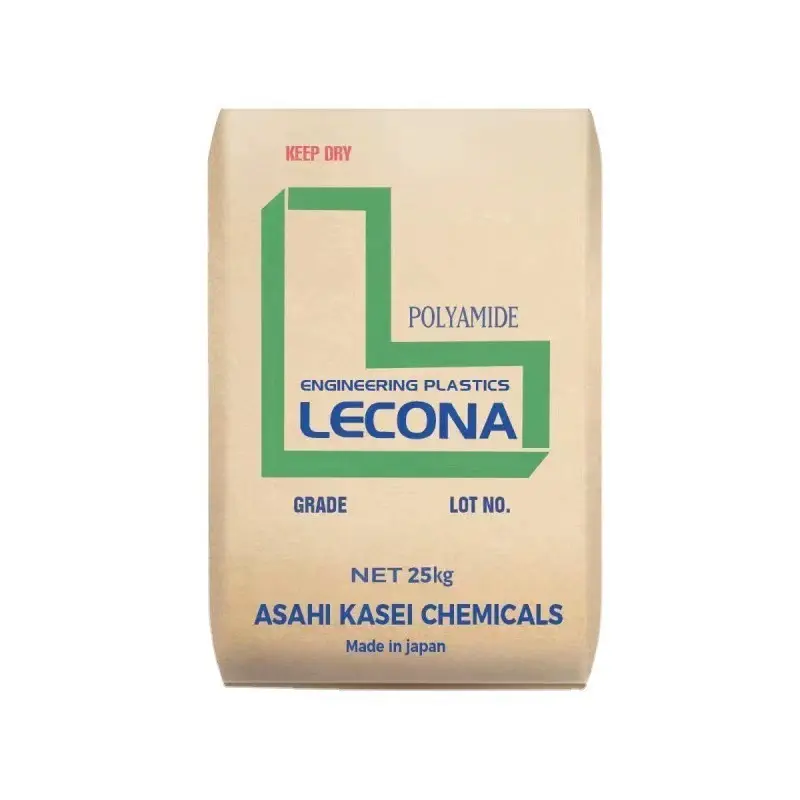
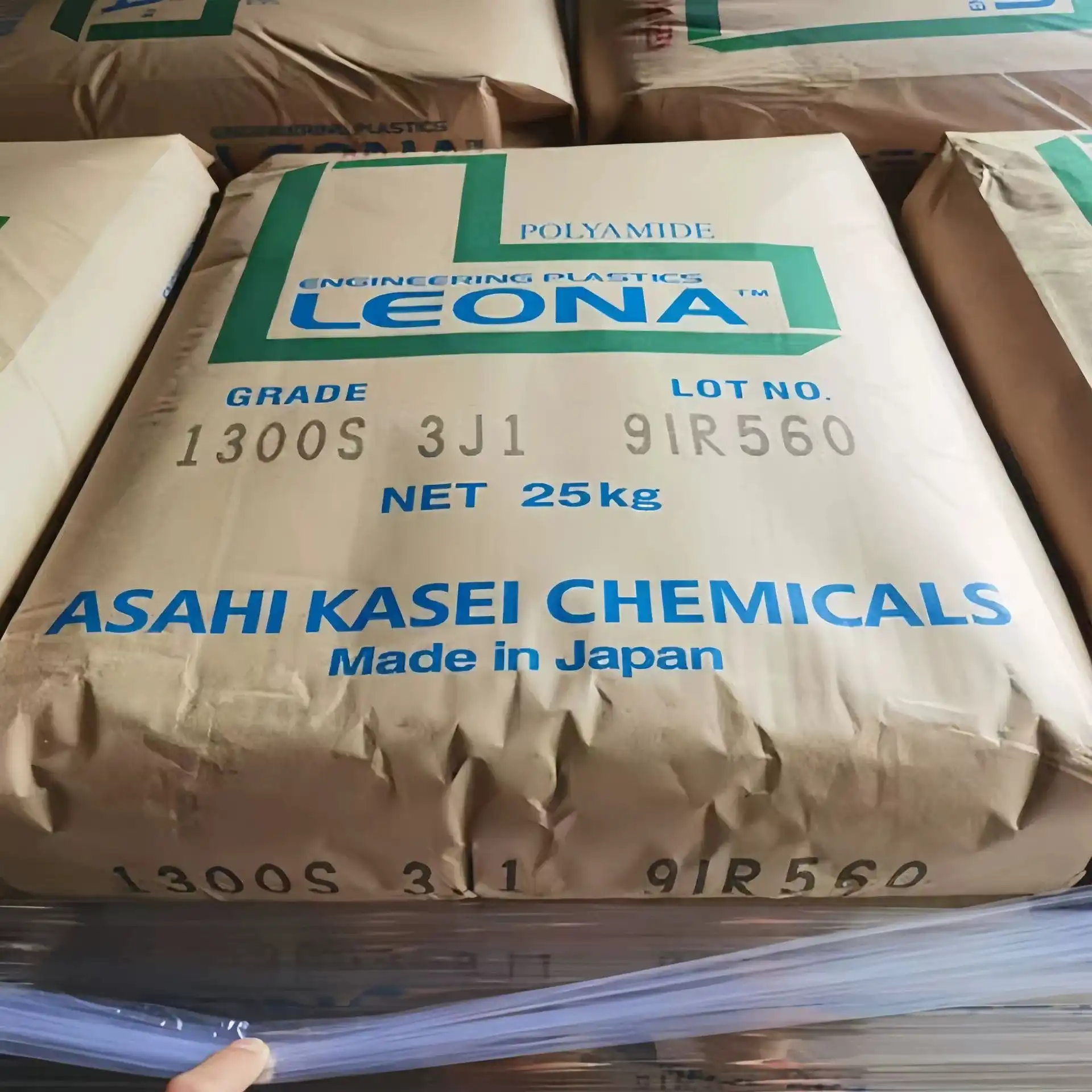
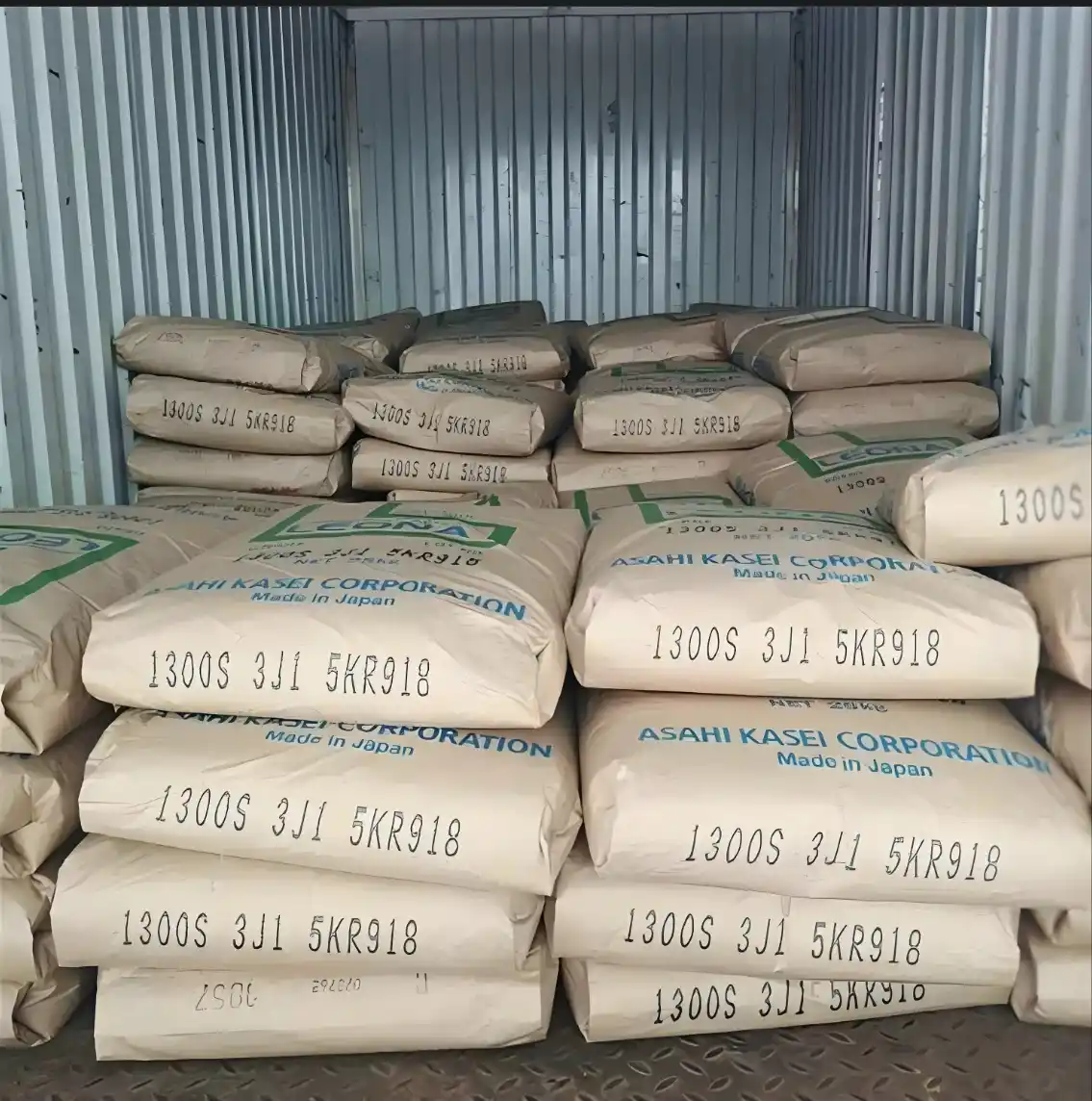
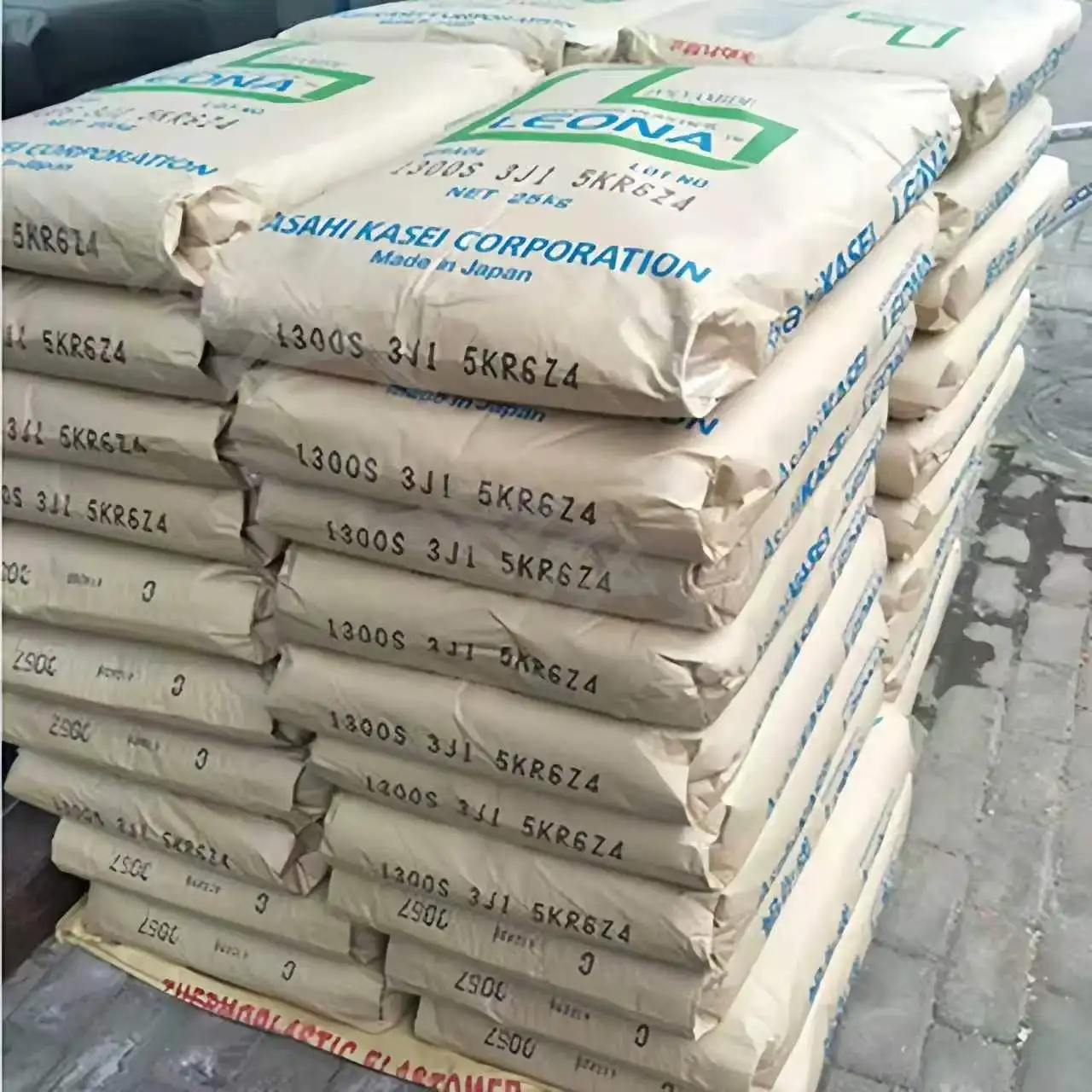
Leona™ FG173 is a Polyamide 66 (PA66) engineering plastic developed and manufactured by Asahi Kasei Corporation. It is a glass fiber-reinforced, flame-retardant modified injection molding grade (typically formulated with 30% glass fiber reinforcement and a UL 94 V-0 flame-retardant system).
| Manufacturer | Asahi Kasei |
|---|---|
| Density | 1.65 g/cm³ |
| Tensile Strength at Break | 174 MPa |
| Elongation at Break | 2.5 % |
| Flexural Modulus | 10800 MPa |
Note: See the product description for additional technical specifications
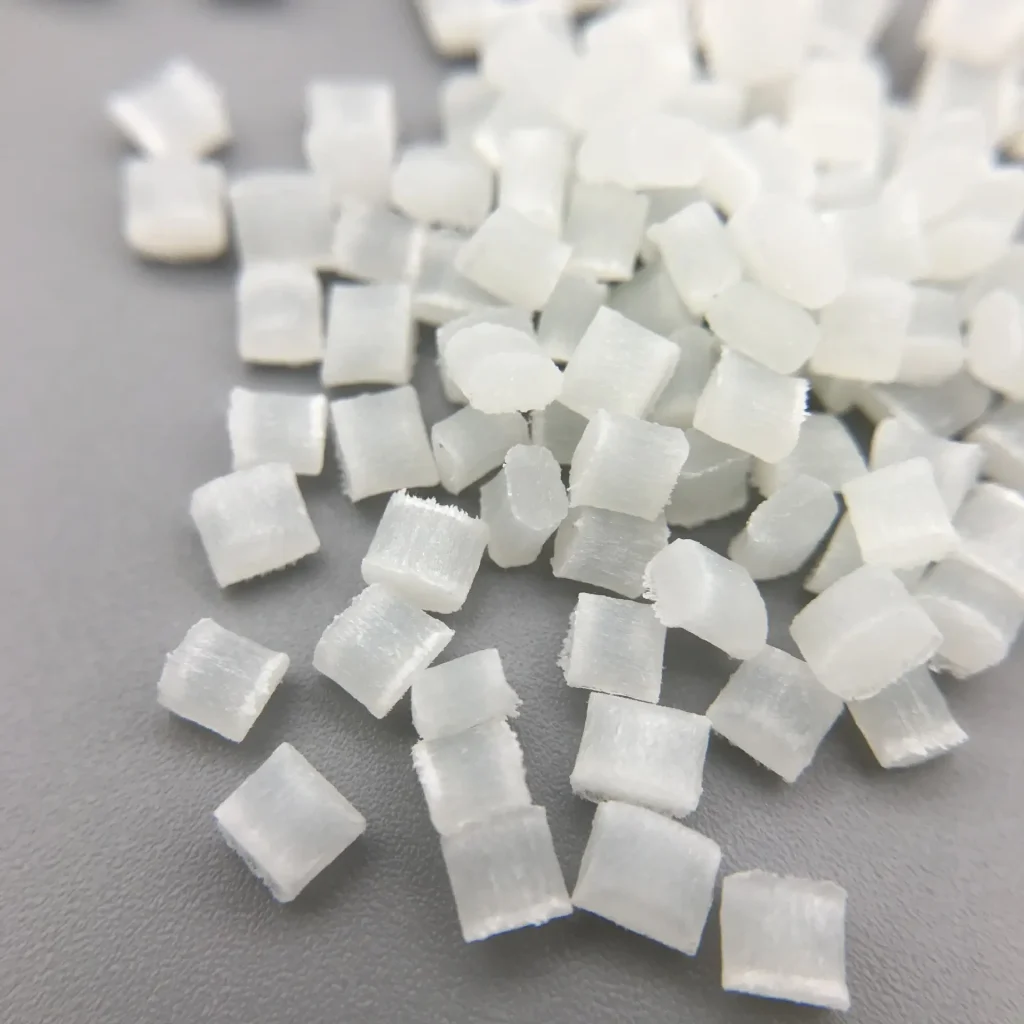
Leona™ FG173 is a Polyamide 66 (PA66) engineering plastic developed and manufactured by Asahi Kasei Corporation. It is a glass fiber-reinforced, flame-retardant modified injection molding grade (typically formulated with 30% glass fiber reinforcement and a UL 94 V-0 flame-retardant system). This material is available in natural or semi-natural opaque granules and features the inherent high melting point, excellent creep resistance, and chemical resistance of PA66. Through glass fiber reinforcement, it exhibits significantly enhanced rigidity and dimensional stability while meeting halogen-free flame retardancy requirements. FG173 is widely utilized in the manufacturing of electrical connectors, switch modules, and automotive low-voltage electrical components that require a combination of electrical safety, heat resistance, and dimensional precision. It is one of the primary commercial grades in the Asahi Kasei Leona™ series designed for precision electronic applications.
| Physical Properties | Typical Value | Unit | Test Standard |
| Density, Dry | 1.65 | g/cm³ | ASTM D792 / ISO 1183 |
| Mold Shrinkage, Transverse, Dry | 0.7 | % | Internal Method |
| Mold Shrinkage, Parallel, Dry | 0.3 | % | Internal Method |
| Water Absorption, Equilibrium (50% RH, 23℃) | 0.8 | % | ISO 62 |
| Rockwell Hardness M, Dry | 100 | — | ASTM D785 / ISO 2039-2 |
| Rockwell Hardness M, Conditioned | 60 | — | ASTM D785 / ISO 2039-2 |
| Mechanical Properties | Typical Value | Unit | Test Standard |
| Tensile Modulus, Dry 23℃ | 11700 | MPa | ISO 527-2 |
| Tensile Modulus, Conditioned 23℃ | 10500 | MPa | ISO 527-2 |
| Tensile Strength, Break, Dry 23℃ | 174 | MPa | ISO 527-2 |
| Tensile Strength, Break, Conditioned 23℃ | 137 | MPa | ISO 527-2 |
| Tensile Strength, Dry | 167 | MPa | ASTM D638 |
| Tensile Strength, Conditioned | 142 | MPa | ASTM D638 |
| Tensile Strain, Break, Dry | 2.5 | % | ASTM D638 |
| Tensile Strain, Break, Conditioned | 3.5 | % | ASTM D638 |
| Tensile Strain, Break, Dry 23℃ | 2 | % | ISO 527-2 |
| Tensile Strain, Break, Conditioned 23℃ | 2 | % | ISO 527-2 |
| Flexural Modulus, Dry | 10800 | MPa | ASTM D790 |
| Flexural Modulus, Conditioned | 8300 | MPa | ASTM D790 |
| Flexural Modulus, Dry 23℃ | 10300 | MPa | ISO 178 |
| Flexural Modulus, Conditioned 23℃ | 8700 | MPa | ISO 178 |
| Flexural Strength, Dry | 250 | MPa | ASTM D790 |
| Flexural Strength, Conditioned | 221 | MPa | ASTM D790 |
| Flexural Strength, Dry 23℃ | 259 | MPa | ISO 178 |
| Flexural Strength, Conditioned 23℃ | 188 | MPa | ISO 178 |
| Taber Abrasion, Conditioned 1.0E+3 Cycles | 29 | mg | ASTM D1044 |
| Charpy Impact Strength, Notched, Dry | 11 | kJ/m² | ISO 179 |
| Charpy Impact Strength, Notched, Conditioned | 10 | kJ/m² | ISO 179 |
| Charpy Impact Strength, Unnotched, Dry | 50 | kJ/m² | ISO 179 |
| Charpy Impact Strength, Unnotched, Conditioned | 52 | kJ/m² | ISO 179 |
| Izod Impact Strength, Notched, Dry | 88 | J/m | ASTM D256 |
| Izod Impact Strength, Notched, Conditioned | 98 | J/m | ASTM D256 |
| Thermal Properties | Typical Value | Unit | Test Standard |
| Heat Deflection Temperature (HDT), Dry, 0.45 MPa | 260 | ℃ | ASTM D648 |
| Heat Deflection Temperature (HDT), Dry, 0.45 MPa | 262 | ℃ | ISO 75-2/B |
| Heat Deflection Temperature (HDT), Dry, 1.8 MPa | 252 | ℃ | ASTM D648 |
| Heat Deflection Temperature (HDT), Dry, 1.8 MPa | 245 | ℃ | ISO 75-2/A |
| CTE, Parallel, Dry | 3.00E-05 | cm/cm/℃ | ASTM D696 |
| Flammability Rating, Dry 0.75 mm | V-0 | — | UL 94 |
| Glow Wire Flammability Index (GWFI), Dry 3 mm | 960 | ℃ | IEC 60695-2-12 |
| Electrical Properties | Typical Value | Unit | Test Standard |
| Surface Resistivity, Dry | 1.00E+14 | ohms | ASTM D257 / IEC 60093 |
| Volume Resistivity, Dry | 1.00E+15 | ohms·cm | ASTM D257 |
| Volume Resistivity, Dry 23℃ | 1.00E+15 | ohms·cm | IEC 60093 |
| Dielectric Strength, Dry | 28 | kV/mm | ASTM D149 / IEC 60243-1 |
| Comparative Tracking Index (CTI), Dry 3 mm | 275 | V | IEC 60112 |
The technical data sheet (TDS) of Leona™ FG173 material from Asahi Kasei corporation, if there are differences, please refer to the official website of Asahi Kasei.
High Heat Resistance and Rigidity: With a PA66 base melting point of approximately 260℃, combined with glass fiber reinforcement, the HDT (1.8 MPa) reaches over 245℃, making it suitable for reflow soldering or high-temperature working environments.
UL 94 V-0 Flame Retardancy (0.75mm) and High CTI (275V): Meets electrical component requirements for flame safety and tracking resistance, ideal for precision connectors and switch modules.
Low Anisotropic Mold Shrinkage: The difference in shrinkage between parallel and transverse directions is controllable (approx. 0.30%/0.70%), facilitating dimensional accuracy control for thin-walled, multi-pin connectors.
Excellent Chemical and Creep Resistance: Offers good tolerance to most greases, fuels, and organic solvents, maintaining mechanical integrity during long-term use.
Mature Injection Processability: Moderate melt flowability enables thin-wall, rapid filling on standard screws, suitable for high-volume automated production of electronic components.
Electronics & Electrical (E&E): PCB connectors, terminal blocks, relay bobbins, switch housings, circuit breaker components, and other parts requiring V-0 flame retardancy and high CTI.
Automotive Low-Voltage Electrical: Harness connectors, fuse boxes, sensor housings, and other non-engine bay heat-resistant electrical components.
Industrial Control Equipment: PLC module housings, terminal strips, small motor end covers, and other components requiring a balance of dimensional stability and flame retardancy.
Consumer Electronics Internal Structural Parts: Adapter plug inner frames, laptop power module brackets, and other internal parts requiring flame retardancy and heat resistance.
Q1: What is the recommended drying process for Leona™ FG173 before injection molding?
A: PA66 is highly hygroscopic, and glass fiber-reinforced grades require strict moisture content control. It is recommended to dehumidify and dry at 80–90℃ for 4–6 hours to ensure a moisture content of <0.1% to prevent hydrolytic degradation, silver streaks, or loss of strength. Melt temperature is typically set at 280–300℃, and mold temperature at 80–100℃ to promote complete crystallization and dimensional stability.
Q2: What is the primary difference between FG173 and non-flame-retardant glass fiber-reinforced PA66 grades?
A: FG173 incorporates a halogen-free flame-retardant system and optimized glass fiber distribution. The core difference lies in meeting UL 94 V-0 (0.75mm) and high CTI (275V) electrical safety requirements, making it suitable for electronic and electrical certification environments. Non-flame-retardant grades typically offer slightly higher impact strength and a wider color range but are not suitable for components requiring UL flame-retardant certification.
Q3: Does this product comply with RoHS, REACH, and UL requirements? Can compliance documentation be provided?
A: Asahi Kasei Leona™ FG173 complies with the EU RoHS directive and REACH regulation restricted substance requirements (halogen-free flame-retardant system) and holds UL Yellow Card certification. TDS, MSDS/SDS, and COA can be provided for each batch, and a Certificate of Compliance (CoC) or third-party test reports can be issued upon customer request.
Submit your inquiry today and receive a professional competitive price tailored to your project requirements.