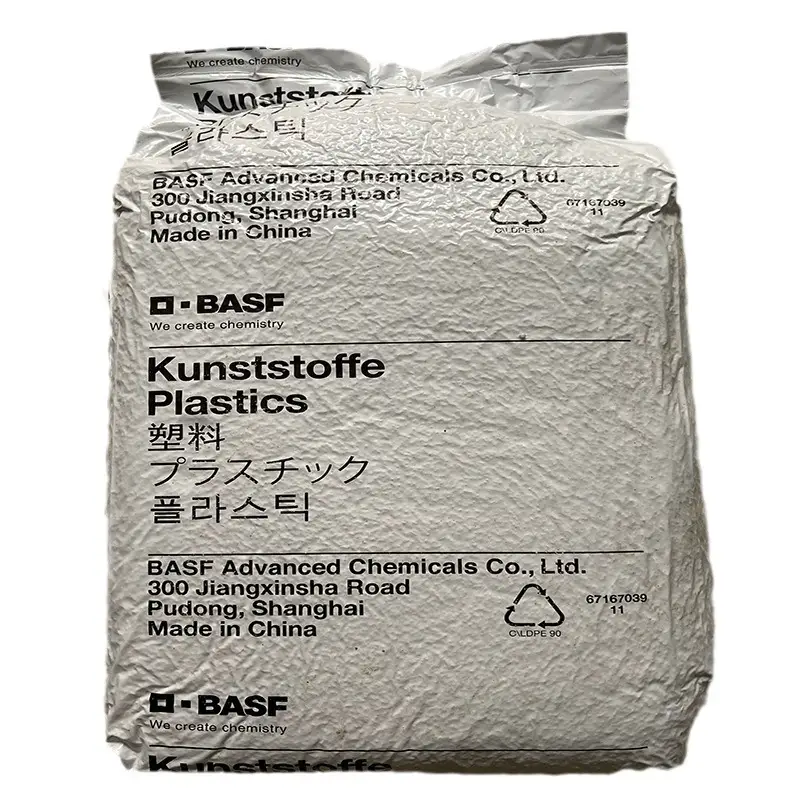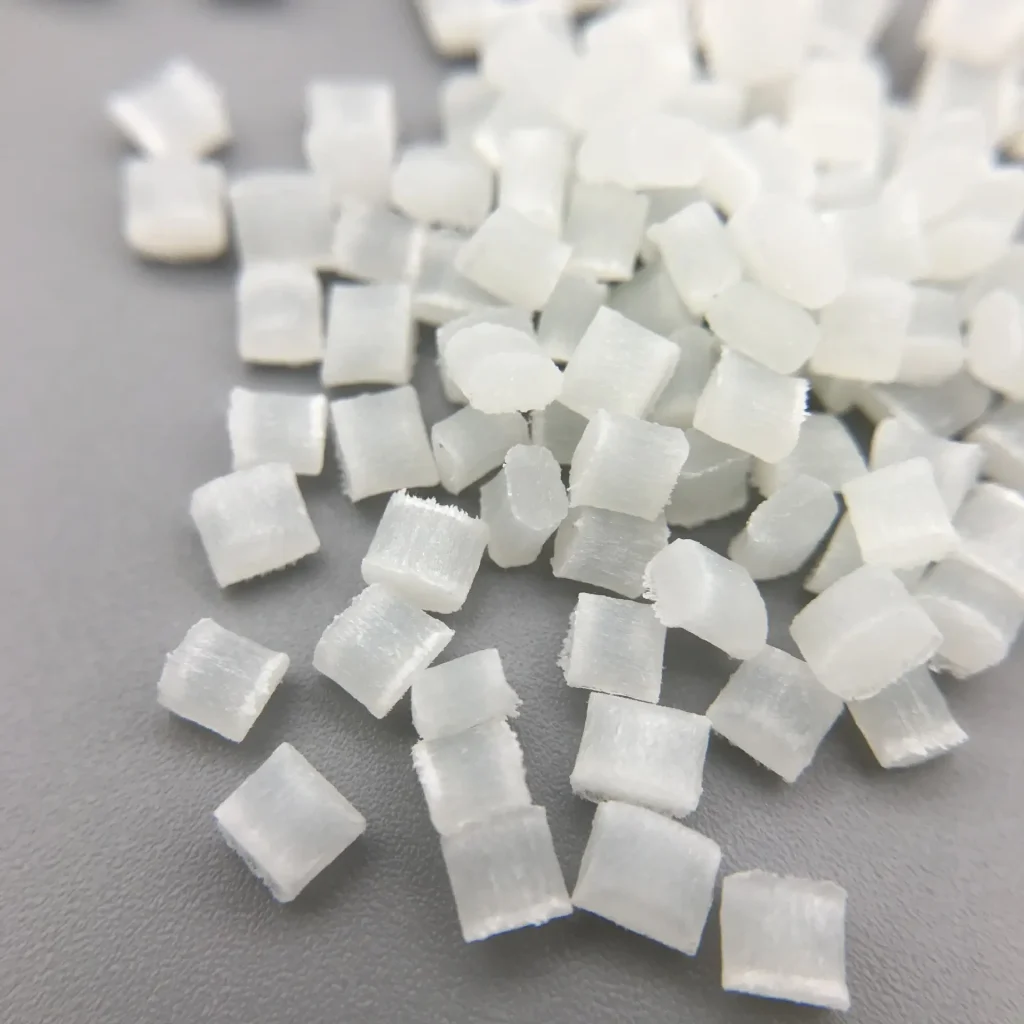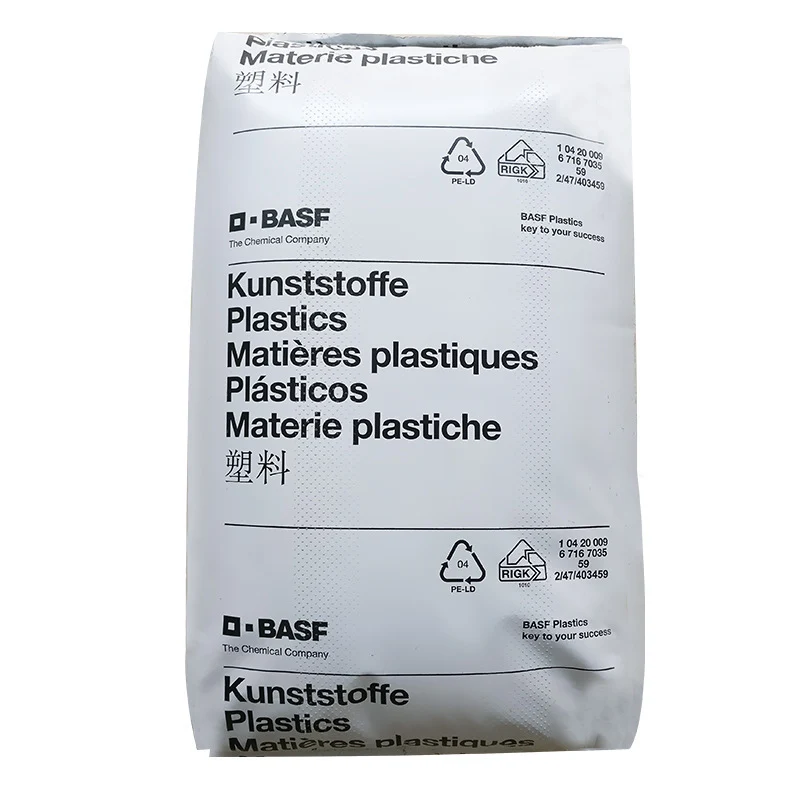
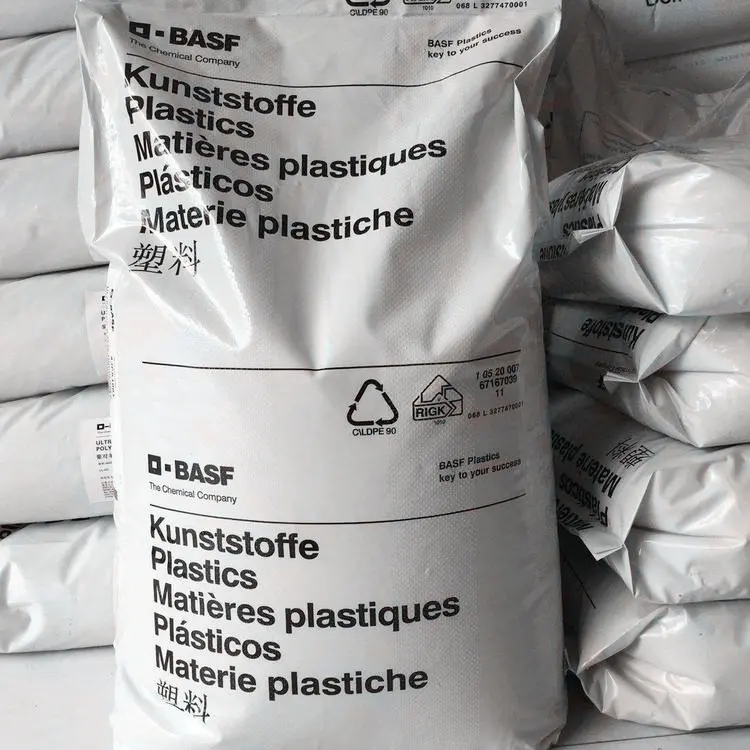
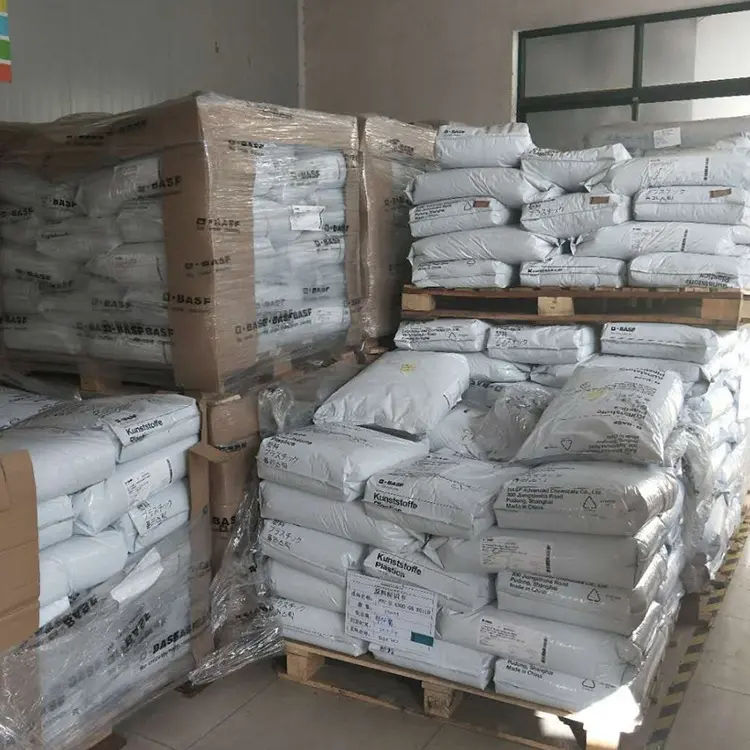
BASF Ultramid B3EG6 is a 30% glass fiber reinforced PA6 engineering plastic with premium rigidity and processing fluidity. View technical specifications and typical applications.
| Manufacturer | BASF |
|---|---|
| Density | 1.36 g/cm³ |
| MVR | 50 cm³/10 min |
| Tensile Strength at Break | 172 MPa |
| Tensile Strain at Break | 3.2 % |
Note: See the product description for additional technical specifications
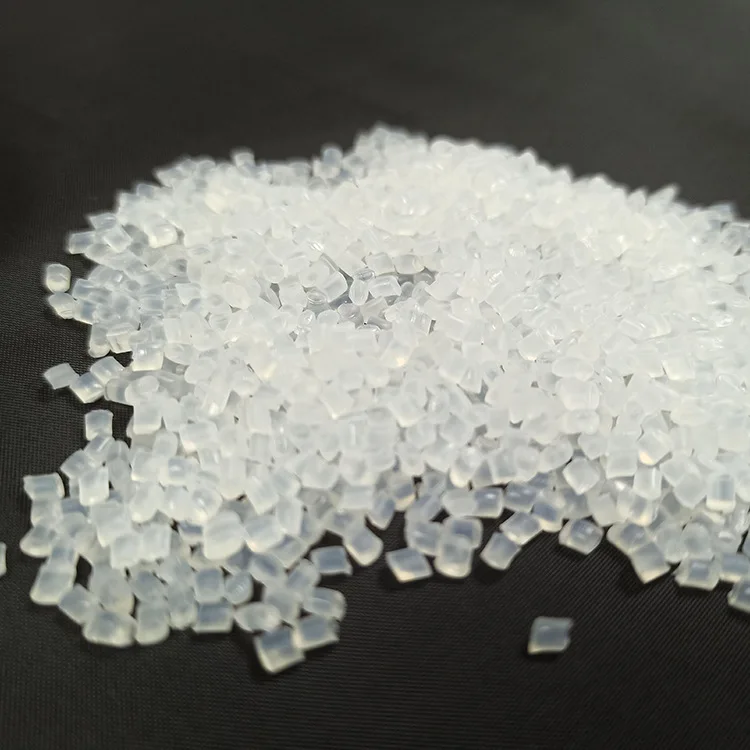
BASF Ultramid B3EG6 is a 30% glass fiber reinforced nylon 6 (PA6+30% GF) engineering plastic manufactured by BASF, the world’s leading chemical company. Supplied in natural pellets, the material appears as semi-crystalline, opaque white or yellowish granules, offering high rigidity, high strength, and excellent thermal stability.
Within the Ultramid series, the B3EG6 grade has become a mainstream alternative to metals and traditional engineering plastics (such as PA66) in automotive, electrical and electronic, and mechanical engineering fields, thanks to its outstanding mechanical properties and processing fluidity. Its primary applications include under-the-hood automotive components, electrical connectors, coil bobbins, industrial gears, pump housings, and power tool enclosures.
| Physical Properties | Test Value | Unit | Test Standard |
| Density, Dry | 1.36 | g/cm³ | ASTM D792ISO 1183 |
| MVR, Dry(275 °C, 5 kg) | 50 | cm³/10 min | ISO 1133 |
| Molding Shrinkage, Parallel, Dry(3.18 mm) | 0.3 | % | — |
| Moisture Absorption, Saturation, Dry | 6.6 | % | ASTM D570 |
| Moisture Absorption, Saturation, Dry(23 °C) | 6.6 | % | ISO 62 |
| Moisture Absorption, Equilibrium, Dry(50% RH) | 2.1 | % | ASTM D570 |
| Moisture Absorption, Equilibrium, Dry(50% RH, 23 °C) | 2.1 | % | ISO 62 |
| Mechanical Properties | Test Value | Unit | Test Standard |
| Tensile Modulus, Dry(23 °C) | 9500 | MPa | ISO 527-2 |
| Tensile Modulus, Conditioned(23 °C) | 6200 | MPa | ISO 527-2 |
| Tensile Strength, Break, Dry(23 °C) | 172 | MPa | ASTM D638 |
| Tensile Strength, Break, Dry(23 °C) | 185 | MPa | ISO 527-2 |
| Tensile Strength, Break, Conditioned(23 °C) | 115 | MPa | ISO 527-2 |
| Tensile Strain, Break, Dry(23 °C) | 3.2 | % | ASTM D638 |
| Tensile Strain, Break, Dry(23 °C) | 3.5 | % | ISO 527-2 |
| Tensile Strain, Break, Conditioned(23 °C) | 8 | % | ISO 527-2 |
| Flexural Modulus, Dry(23 °C) | 8280 | MPa | ASTM D790 |
| Flexural Modulus, Dry(23 °C) | 8600 | MPa | ISO 178 |
| Flexural Modulus, Conditioned(23 °C) | 5000 | MPa | ISO 178 |
| Flexural Strength, Dry(23 °C) | 270 | MPa | ISO 178 |
| Flexural Strength, Conditioned(23 °C) | 180 | MPa | ISO 178 |
| Charpy Notched Impact Strength, Dry(-30 °C) | 11 | kJ/m² | ISO 179 |
| Charpy Notched Impact Strength, Dry(23 °C) | 15 | kJ/m² | ISO 179 |
| Charpy Notched Impact Strength, Conditioned(23 °C) | 30 | kJ/m² | ISO 179 |
| Charpy Unnotched Impact Strength, Dry(-30 °C) | 80 | kJ/m² | ISO 179 |
| Charpy Unnotched Impact Strength, Dry(23 °C) | 95 | kJ/m² | ISO 179 |
| Charpy Unnotched Impact Strength, Conditioned(23 °C) | 110 | kJ/m² | ISO 179 |
| Izod Notched Impact Strength, Dry(-40 °C) | 96 | J/m | ASTM D256 |
| Izod Notched Impact Strength, Dry(23 °C) | 110 | J/m | ASTM D256 |
| Izod Notched Impact Strength, Dry(23 °C) | 15 | kJ/m² | ISO 180 |
| Izod Notched Impact Strength, Conditioned(23 °C) | 20 | kJ/m² | ISO 180 |
| Thermal Properties | Test Value | Unit | Test Standard |
| HDT, Dry, Unannealed(0.45 MPa) | 220 | °C | ISO 75-2/BASTM D648 |
| HDT, Dry, Unannealed(1.8 MPa) | 210 | °C | ISO 75-2/AASTM D648 |
| Melting Temperature, Dry | 220 | °C | ASTM D3418ISO 3146 |
| CLTE, Flow, Dry | 2.00E-05 | cm/cm/°C | ASTM E831 |
| CLTE, Flow, Dry | 2.30E-05 | cm/cm/°C | — |
| CLTE, Transverse, Dry | 6.50E-05 | cm/cm/°C | — |
| RTI, Electrical, Dry(0.75 mm) | 120 | °C | UL 746 |
| RTI, Electrical, Dry(1.5 mm) | 120 | °C | UL 746 |
| RTI, Electrical, Dry(3 mm) | 120 | °C | UL 746 |
| RTI, Impact, Dry(1.5 mm) | 95 | °C | UL 746 |
| RTI, Impact, Dry(3 mm) | 95 | °C | UL 746 |
| RTI, Strength, Dry(1.5 mm) | 130 | °C | UL 746 |
| RTI, Strength, Dry(3 mm) | 130 | °C | UL 746 |
| Flammability Rating, Dry(1.5 mm) | HB | — | UL 94 |
| Flammability Rating, Dry(3 mm) | HB | — | UL 94 |
| Electrical Properties | Test Value | Unit | Test Standard |
| Volume Resistivity, Dry(1.5 mm) | 1.00E+15 | ohms · cm | ASTM D257 |
| Volume Resistivity, Conditioned(1.5 mm) | 1.00E+12 | ohms · cm | ASTM D257 |
| Volume Resistivity, Dry | 1.00E+15 | ohms · cm | IEC 60093 |
| Volume Resistivity, Conditioned | 1.00E+12 | ohms · cm | IEC 60093 |
| Relative Permittivity (Dielectric Constant), Dry(1.0e+6 Hz) | 3.8 | — | IEC 60250 |
| Relative Permittivity (Dielectric Constant), Conditioned(1.0e+6 Hz) | 6.8 | — | IEC 60250 |
| Dissipation Factor, Dry(100 Hz) | 0.023 | — | IEC 60250 |
| Dissipation Factor, Conditioned(100 Hz) | 0.22 | — | IEC 60250 |
| Dissipation Factor, Dry(1.0e+6 Hz) | 0.023 | — | IEC 60250 |
| Dissipation Factor, Conditioned(1.0e+6 Hz) | 0.22 | — | IEC 60250 |
The technical data sheet (TDS) of BASF Ultramid B3EG6 GF30 PA6 material from BASF corporation, if there are differences, please refer to the official website of BASF.
Extreme Rigidity and Strength: The 30% glass fiber reinforcement delivers a dry tensile modulus of 9500 MPa and a tensile strength at break of 185 MPa (ISO), making it an ideal choice for metal replacement and lightweighting.
Outstanding Thermal Performance: Features a heat deflection temperature (HDT at 1.8 MPa) of 210°C and a long-term service temperature (RTI Strength) of 130°C, suitable for high-temperature working conditions.
Significant Toughness Enhancement Post-Moisture Absorption: At 23 °C, the Charpy notched impact strength increases from 15 kJ/m² to 30 kJ/m² after conditioning, and the unnotched impact strength reaches 110 kJ/m², drastically improving impact resistance.
Excellent Dimensional Stability: Features a low molding shrinkage of just 0.30% and a linear thermal expansion coefficient (CLTE) of 2.0×10⁻⁵ cm/cm/°C in the flow direction, making it ideal for precision molding.
Superior Processing Fluidity: With a melt volume-flow rate (MVR) of 50 cm³/10 min (275°C/5 kg), it ensures easy injection molding of complex, thin-walled parts.
Reliable Electrical Insulation: Maintains a volume resistivity of ≥ 10¹⁵ ohms·cm in its dry state and holds at 10¹² ohms·cm even after moisture absorption, satisfying fundamental electrical application standards.
Automotive Industry
Engine cooling fans, fan shrouds, intake manifolds, and cylinder head covers
Fuel system brackets, wiper arms, and pedal modules
Electrical & Electronics
High-voltage connectors, relay bases, and miniature circuit breaker (MCB) housings
Coil bobbins, power tool enclosures, and terminal blocks
Machinery & Industrial Parts
Gears, cams, sleeve bearings, pump housings, and impellers
Pneumatic tool components and textile machinery parts
Consumer Goods & Furniture
Office chair structural components, lift mechanisms, and ski bindings
Furniture slides, hinges, and garden tool housings
1. Does Ultramid B3EG6 require predrying before injection molding? What are the conditions?
Yes. PA6 is inherently hygroscopic. If the moisture content exceeds 0.15%, defects such as silver streaks, bubbles, or material degradation can occur during molding. Recommended drying conditions: hot air drying at 80-90°C for 4-6 hours, or using a desiccant dryer at 80°C for 2-4 hours. Dried material should be processed immediately or kept sealed.
2. Since the mechanical properties decrease after moisture absorption, will it affect actual usage?
Yes, but this is an intrinsic characteristic of nylon materials. While the tensile modulus and strength drop after absorbing moisture, the toughness and impact resistance increase significantly (notched impact strength doubles). During the design phase, safety factors should be selected based on the final operating environment’s humidity, or moisture conditioning pre-treatment (such as boiling water conditioning) should be performed for damp applications.
3. The flame retardancy rating of B3EG6 is HB. Which safety regulations can it meet?
The material has a UL 94 flammability rating of HB, making it suitable for internal structural components, connector housings, and applications where high flame retardancy is not a strict requirement. If a V-0 or V-2 rating is necessary, consider choosing BASF’s flame-retardant series (such as Ultramid B3EG6 FR). Additionally, this material complies with RoHS and REACH environmental regulations, rendering it suitable for most industrial and consumer products.
Submit your inquiry today and receive a professional competitive price tailored to your project requirements.