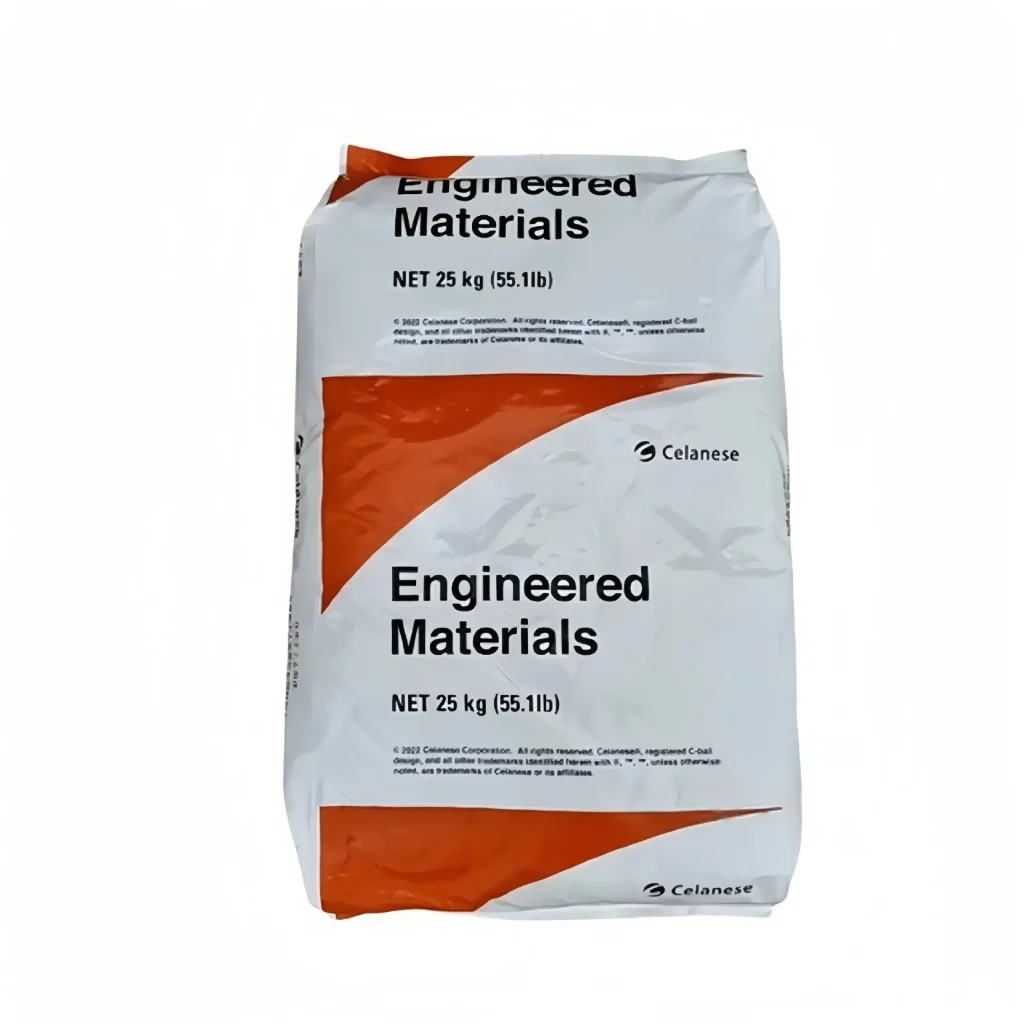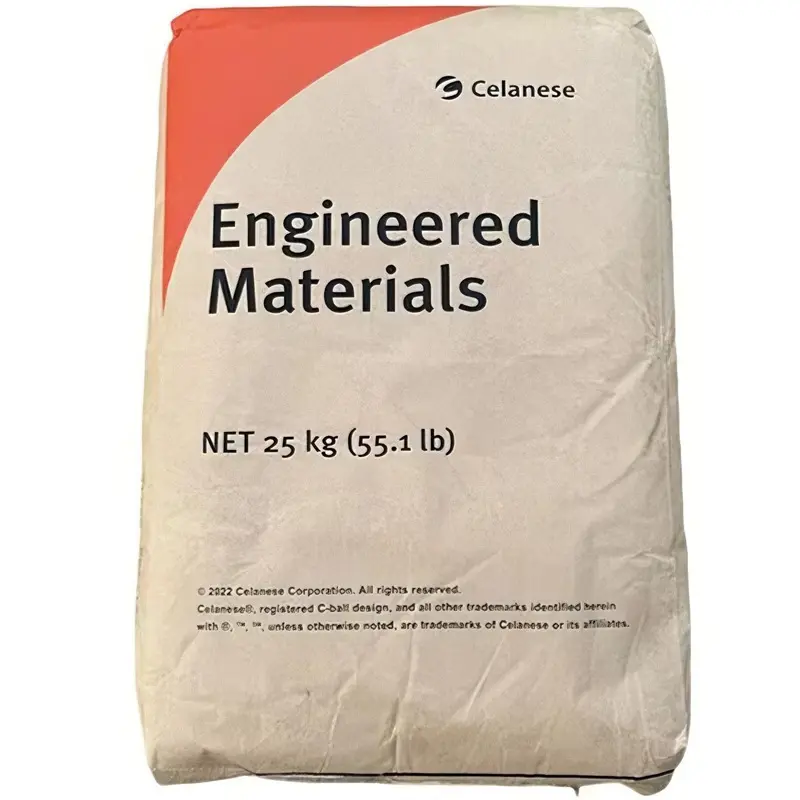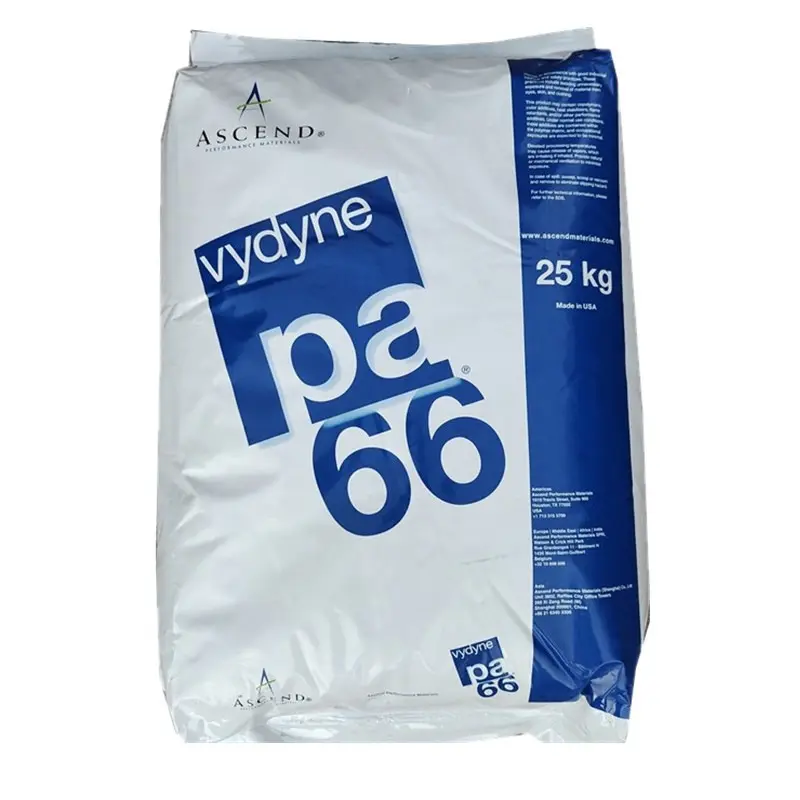
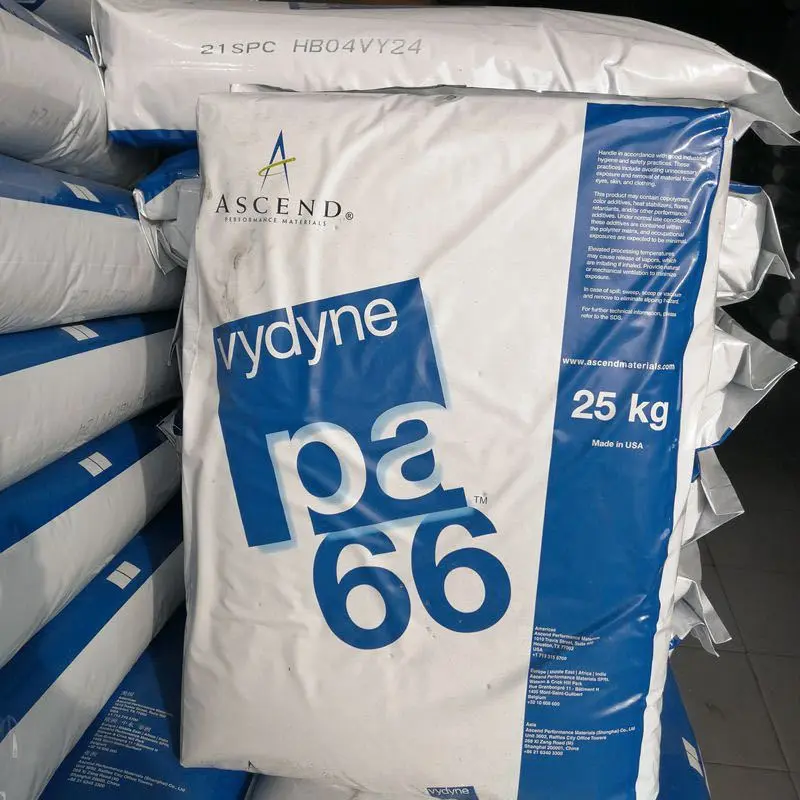
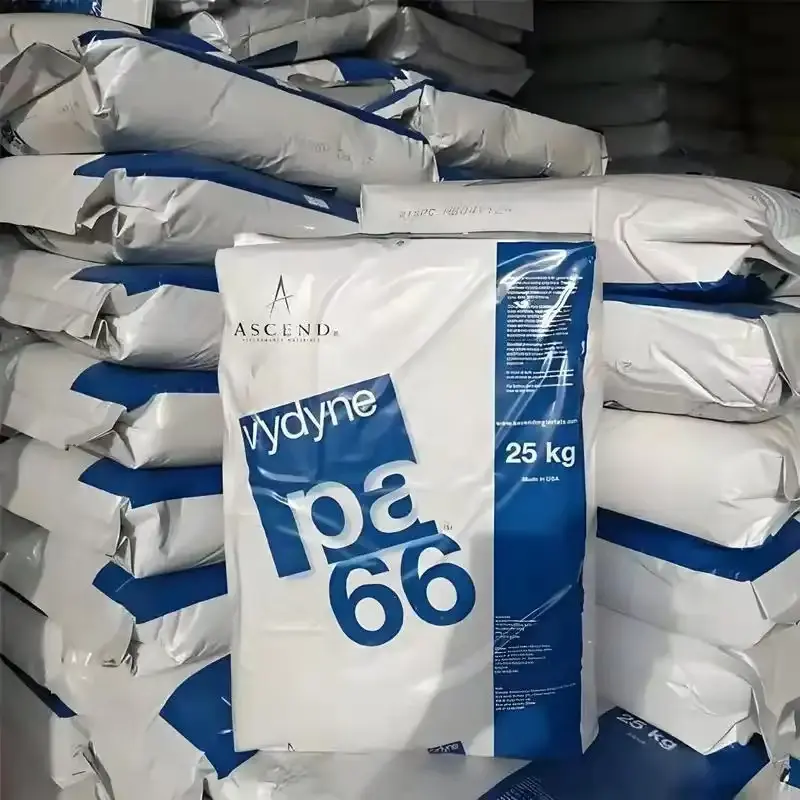
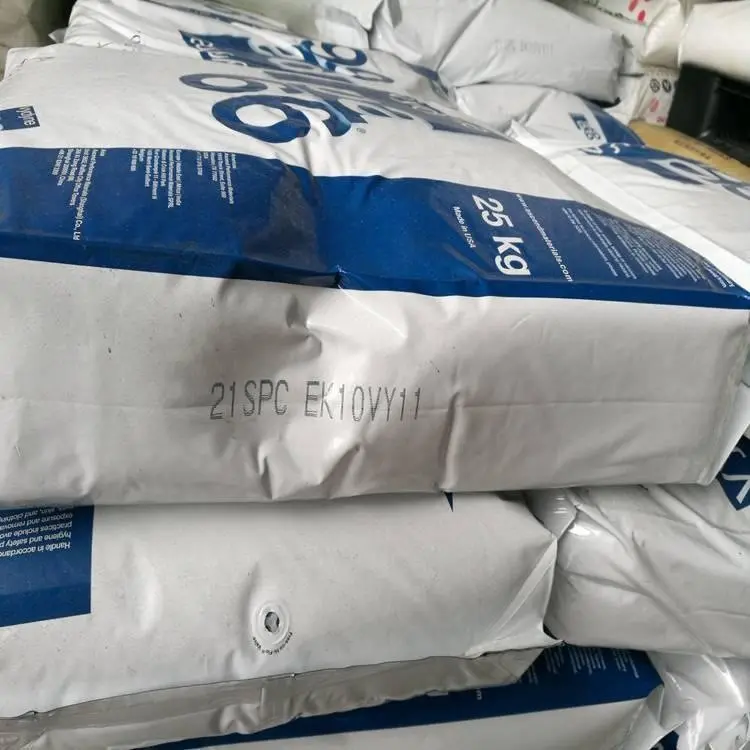
Ascend Vydyne® 21SPC is a high-performance, general-purpose PA66 injection molding resin. It offers an excellent balance of strength, thermal stability (up to 200°C), and chemical resistance, making it ideal for automotive, electrical, and food-contact structural components.
| Manufacturer | Ascend |
|---|---|
| Density | 1.14 g/cm³ |
| Tensile Strength at Yield | 56 MPa |
| Tensile Strength at Break | 46 MPa |
| Flexural Modulus | 1500 MPa |
Note: See the product description for additional technical specifications
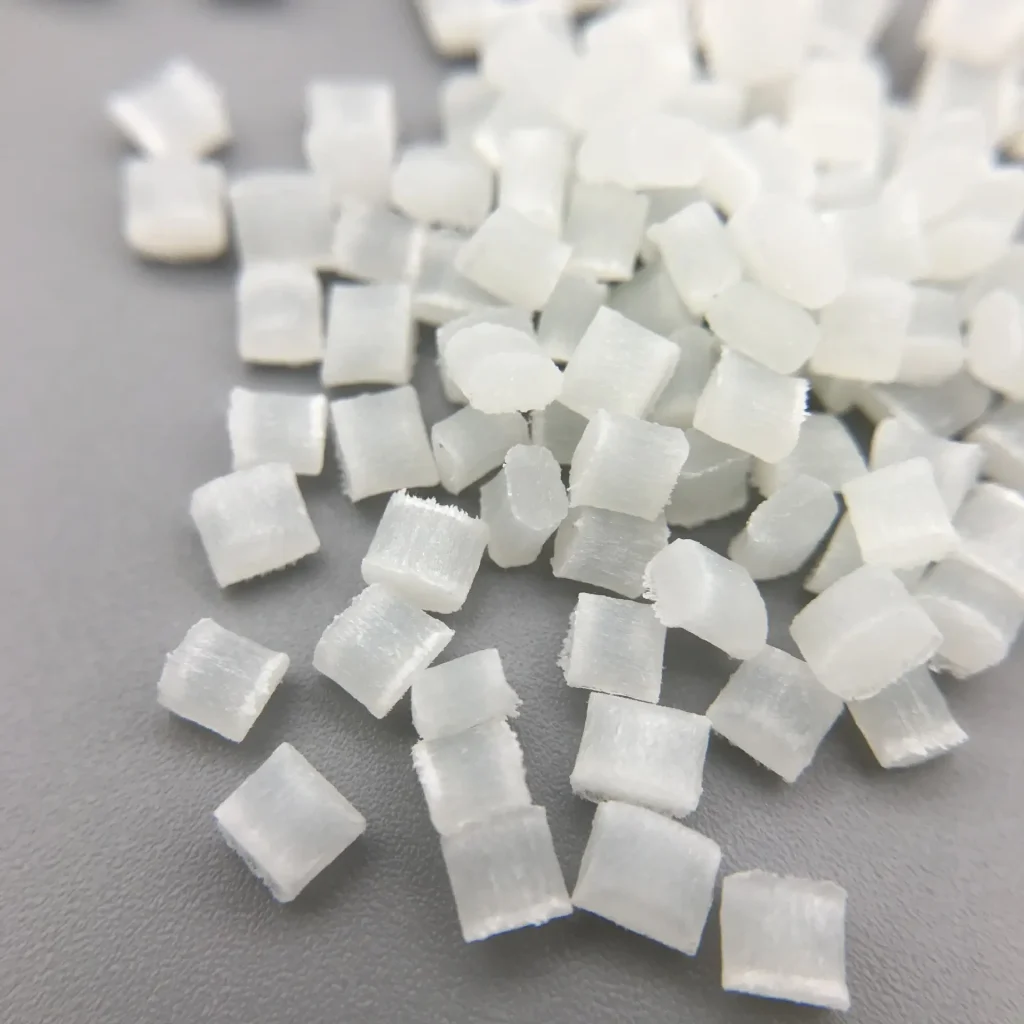
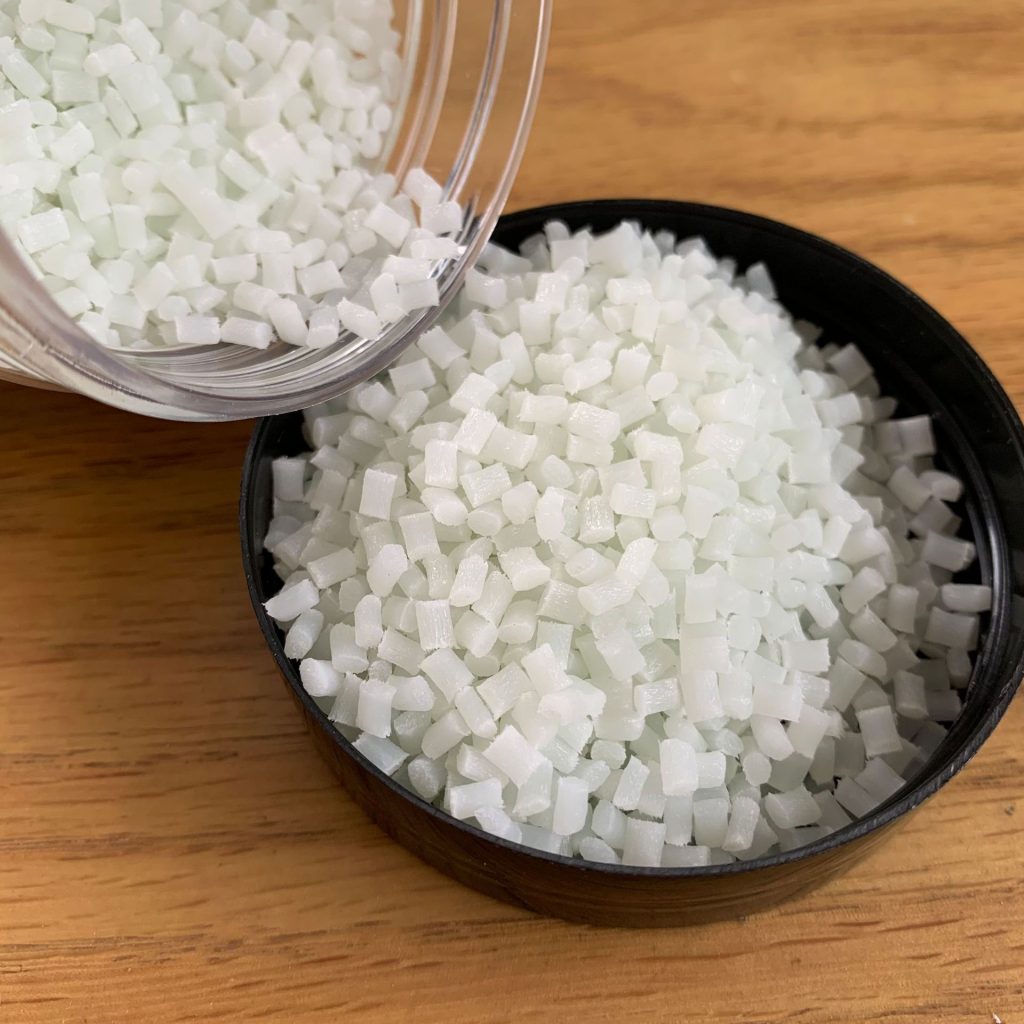
Vydyne® 21SPC is a polyamide 66 (PA66, nylon 66) general-purpose injection molding resin manufactured by Ascend Performance Materials. This material is provided in natural-colored (uncolored), translucent to milky white cylindrical pellets. It is an unreinforced, heat-stabilized, internally and externally lubricated general-purpose grade with a density of 1.14 g/cm³. In the PA66 industry, 21SPC is considered the benchmark reference grade for general structural parts, featuring a tensile yield strength of 86 MPa (dry as molded), a flexural modulus of 2900 MPa, and a heat deflection temperature of 200 °C (0.45 MPa). With its built-in mold release lubrication system and excellent resistance to oils and solvents, it has long been utilized for automotive fasteners, connectors, industrial wear parts, and food-contact components. Designed specifically for injection molding, this grade combines high production efficiency with outstanding regrind stability, making it a highly balanced engineering plastic widely used in the automotive, electrical and electronic, industrial machinery, and food-grade application sectors.
| Property | Value | Unit | Test Standard |
| Density | 1.14 | g/cm³ | ISO 1183 |
| Mold Shrinkage, Parallel (2 mm, 23 °C) | 1.7 | % | ISO 294-4 |
| Mold Shrinkage, Normal (2 mm, 23 °C) | 1.8 | % | ISO 294-4 |
| Water Absorption (24 h, 23 °C) | 1.2 | % | ISO 62 |
| Moisture Absorption (23 °C, 50% RH) | 2.4 | % | ISO 62 |
| Property | Value | Unit | Test Standard |
| Tensile Modulus, Conditioned (23 °C) | 1800 | MPa | ISO 527-2 |
| Tensile Strength, Yield, Conditioned (23 °C) | 56 | MPa | ISO 527-2 |
| Tensile Strength, Break, Conditioned (23 °C) | 46 | MPa | ISO 527-2 |
| Tensile Strain, Yield, Conditioned (23 °C) | 22 | % | ISO 527-2 |
| Tensile Strain, Break, Conditioned (23 °C) | 87 | % | ISO 527-2 |
| Flexural Modulus, Conditioned (23 °C) | 1500 | MPa | ISO 178 |
| Flexural Strength, Conditioned (23 °C) | 50 | MPa | ISO 178 |
| Tensile Modulus, Dry (23 °C) | 2800 | MPa | ISO 527-2 |
| Tensile Strength, Yield, Dry (23 °C) | 86 | MPa | ISO 527-2 |
| Tensile Strength, Break, Dry (23 °C) | 56 | MPa | ISO 527-2 |
| Tensile Strain, Yield, Dry (23 °C) | 4.8 | % | ISO 527-2 |
| Tensile Strain, Break, Dry (23 °C) | 23 | % | ISO 527-2 |
| Flexural Modulus, Dry (23 °C) | 2900 | MPa | ISO 178 |
| Flexural Strength, Dry (23 °C) | 80 | MPa | ISO 178 |
| Charpy Notched Impact Strength, Dry (-30 °C) | 5 | kJ/m² | ISO 179 1eA |
| Charpy Notched Impact Strength, Conditioned (-30 °C) | 7 | kJ/m² | ISO 179 1eA |
| Charpy Notched Impact Strength, Dry (23 °C) | 6 | kJ/m² | ISO 179 1eA |
| Charpy Notched Impact Strength, Conditioned (23 °C) | 20 | kJ/m² | ISO 179 1eA |
| Charpy Unnotched Impact Strength, Dry (-30 °C) | No Break | — | ISO 179 1eU |
| Charpy Unnotched Impact Strength, Dry (23 °C) | No Break | — | ISO 179 1eU |
| Izod Notched Impact Strength, Dry (-30 °C) | 5 | kJ/m² | ISO 180 1A |
| Izod Notched Impact Strength, Conditioned (-30 °C) | 7 | kJ/m² | ISO 180 1A |
| Izod Notched Impact Strength, Dry (23 °C) | 6 | kJ/m² | ISO 180 1A |
| Izod Notched Impact Strength, Conditioned (23 °C) | 20 | kJ/m² | ISO 180 1A |
| Property | Value | Unit | Test Standard |
| Heat Deflection Temperature (0.45 MPa) | 200 | °C | ISO 75-2/B |
| Heat Deflection Temperature (1.8 MPa) | 70 | °C | ISO 75-2/A |
| Vicat Softening Point | 260 | °C | ISO 306/B |
| Melting Point | 260 | °C | ISO 3146 |
| CTE, Parallel (23–55 °C, 2 mm) | 1.00E-04 | cm/cm/°C | ISO 11359-2 |
| CTE, Normal (23–55 °C, 2 mm) | 1.00E-04 | cm/cm/°C | ISO 11359-2 |
| Flammability Rating (0.4 mm) | V-2 | — | UL 94 |
| Flammability Rating (0.71 mm) | V-2 | — | UL 94 |
| Flammability Rating (1.5 mm) | V-2 | — | UL 94 |
| Flammability Rating (3 mm) | V-2 | — | UL 94 |
| Oxygen Index | 25 | % | ASTM D2863 |
| Relative Thermal Index (RTI), Tensile (0.4 mm) | 75 | °C | UL 746 |
| Relative Thermal Index (RTI), Tensile (0.71 mm) | 85 | °C | UL 746 |
| Relative Thermal Index (RTI), Tensile (1.5 mm) | 85 | °C | UL 746 |
| Relative Thermal Index (RTI), Tensile (3 mm) | 85 | °C | UL 746 |
| Relative Thermal Index (RTI), Impact (0.4 mm) | 75 | °C | UL 746 |
| Relative Thermal Index (RTI), Impact (0.71 mm) | 75 | °C | UL 746 |
| Relative Thermal Index (RTI), Impact (1.5 mm) | 75 | °C | UL 746 |
| Relative Thermal Index (RTI), Impact (3 mm) | 75 | °C | UL 746 |
| Relative Thermal Index (RTI), Electrical (0.4 mm) | 130 | °C | UL 746 |
| Relative Thermal Index (RTI), Electrical (0.71 mm) | 130 | °C | UL 746 |
| Relative Thermal Index (RTI), Electrical (1.5 mm) | 130 | °C | UL 746 |
| Relative Thermal Index (RTI), Electrical (3 mm) | 130 | °C | UL 746 |
| Glow Wire Flammability Index (GWFI) (0.4 mm) | 960 | °C | IEC 60695-2-12 |
| Glow Wire Flammability Index (GWFI) (0.71 mm) | 960 | °C | IEC 60695-2-12 |
| Glow Wire Flammability Index (GWFI) (1.5 mm) | 960 | °C | IEC 60695-2-12 |
| Glow Wire Flammability Index (GWFI) (3 mm) | 960 | °C | IEC 60695-2-12 |
| Glow Wire Ignition Temperature (GWIT) (0.4 mm) | 825 | °C | IEC 60695-2-13 |
| Glow Wire Ignition Temperature (GWIT) (0.71 mm) | 850 | °C | IEC 60695-2-13 |
| Glow Wire Ignition Temperature (GWIT) (1.5 mm) | 850 | °C | IEC 60695-2-13 |
| Glow Wire Ignition Temperature (GWIT) (3 mm) | 850 | °C | IEC 60695-2-13 |
| Property | Value | Unit | Test Standard |
| Volume Resistivity (1 mm) | 1.00E+11 | ohms·cm | IEC 60093 |
| Arc Resistance (3 mm) | 5 | — | ASTM D495 |
| Dielectric Strength (1 mm) | 26 | kV/mm | IEC 60243-1 |
| High Voltage Arc Tracking Rate (HVTR) | PLC 0 | — | UL 746 |
| High Current Arc Ignition (0.4 mm) | PLC 1 | — | UL 746 |
| High Current Arc Ignition (0.71 mm) | PLC 0 | — | UL 746 |
| High Current Arc Ignition (1.5 mm) | PLC 0 | — | UL 746 |
| High Current Arc Ignition (3 mm) | PLC 0 | — | UL 746 |
| Hot Wire Ignition (0.4 mm) | PLC 4 | — | UL 746 |
| Hot Wire Ignition (0.71 mm) | PLC 4 | — | UL 746 |
| Hot Wire Ignition (1.5 mm) | PLC 3 | — | UL 746 |
| Hot Wire Ignition (3 mm) | PLC 2 | — | UL 746 |
The technical data sheet (TDS) of Vydyne® 21SPC material from Ascend Performance Materials corporation, if there are differences, please refer to the official website of Ascend Performance Materials.
High Strength and Rigidity: With a tensile yield strength of 86 MPa (dry) and a flexural modulus of 2900 MPa, it possesses high rigidity among general-purpose engineering plastics, making it suitable for replacing metal in load-bearing structural parts with significant weight reduction.
Excellent Chemical and Oil Resistance: Exhibits good resistance to engine oil, transmission fluid, gasoline, antifreeze (water/glycol mixtures), most inorganic salt solutions, and hydrocarbon solvents, making it an ideal choice for components surrounding automotive powertrains.
Internal Lubrication and High Molding Efficiency: The internal and external lubrication system ensures excellent melt flowability and smooth mold release, resulting in short cycle times and the ability to produce thin-walled parts (approx. 0.8 mm) consistently, suitable for high-speed, mass-production injection molding.
Wide Temperature Range Thermal Stability: With a melting point of 260 °C, a heat deflection temperature of 200 °C at 0.45 MPa, and an electrical RTI of 130 °C, it maintains dimensional and structural stability in continuous operating environments ranging from -40 °C to 120 °C.
Food Contact Compliance: Complies with FDA 21 CFR §177.1500, EU 10/2011, and NSF/ANSI 51 food contact standards, suitable for filling valve cores, food conveyor chain pins, and other food-related components.
Good Regrind Stability: Maintains favorable initial color and mechanical properties when using regrind, helping to reduce production costs and scrap rates.
Automotive Industry: Cable ties, plastic rivets, clips, wire harness ties, connector terminals, radiator tanks, intake manifold components, oil seals, oil pan gaskets, steering drive oil reservoirs, and fan blades.
Electrical & Electronics: Electrical housings, coil bobbins, micro-connectors, terminal blocks, circuit breaker modules, and relay housings, leveraging its high strength, insulation (volume resistivity 1.0E+11 Ω·cm), and ease of processing.
Industrial Machinery: Bearings, bushings, cams, pulleys, guides, fasteners, and conveyor chain pins, balancing strength, wear resistance, and chemical resistance.
Food Contact Equipment: Filling valve cores, food conveyor chain links, and food processing equipment housings, meeting food-grade compliance and oil/wash-down resistance requirements.
Note: 21SPC is an unreinforced general-purpose PA66 grade; it is not resistant to strong acids, strong bases, or strong polar solvents such as phenol/formic acid. Long-term contact with strong acids or bases will cause degradation. For long-term outdoor exposure, it should be used in combination with anti-UV modified grades.
Q1: Is pre-drying required for 21SPC injection molding? What is the recommended process?
A1: PA66 is highly hygroscopic (equilibrium moisture absorption reaches 2.4%); moisture can cause hydrolytic degradation, splay, bubbles, and a decline in mechanical properties. It is recommended to dry at 80–90 °C in a circulating hot air dryer for at least 4 hours to ensure moisture content ≤ 0.2%. Hoppers must be sealed to prevent re-absorption. In high-humidity summer workshops, installing a dehumidifying dryer (dew point ≤ -40 °C) is recommended. The recommended melt temperature is 270–300 °C, and the mold temperature is 60–90 °C. Precise temperature control is critical to product quality.
Q2: How do 21SPC and POM (e.g., Delrin 500P) differ in selection?
A2: The advantage of 21SPC (PA66) lies in its higher heat deflection temperature (200 °C at 0.45 MPa vs. approx. 172 °C for POM), superior resistance to oils and hydrocarbon solvents, and lower density-based cost; the advantage of POM lies in its lower coefficient of friction, superior wear resistance and self-lubrication, and dimensional stability (water absorption 0.25% vs 1.2%). Rule of thumb: Choose PA66 for oil/high temperature/food contact applications, and POM for dry-friction wear resistance/precision dimensional stability.
Q3: What are the UL and food contact compliance statuses for this grade?
A3: 21SPC has a UL 94 flammability rating of V-2 (at all thicknesses: 0.4/0.71/1.5/3 mm), not V-0; the electrical RTI is 130 °C, and the tensile/impact RTI is 75–85 °C. Regarding food contact, it complies with FDA 21 CFR §177.1500, EU 10/2011, NSF/ANSI 51, and FED L-P-410A, MIL M-20693B, etc. TDS, SDS, COA, and original manufacturer compliance statements can be requested for each batch; terminal products still require third-party testing for confirmation.
Q4: How can product shrinkage and warpage be controlled when using this material?
A4: PA66 has high mold shrinkage (1.7% parallel, 1.8% normal) and dimensions change after moisture absorption. Mold design should reserve sufficient shrinkage allowance and undergo mold-flow analysis. During production, annealing precision parts at 120–150 °C is recommended to eliminate internal stresses. Since moisture absorption leads to post-molding dimensional growth, finished products should be balanced at 50% RH for 48–72 hours before final dimensional inspection.
Submit your inquiry today and receive a professional competitive price tailored to your project requirements.