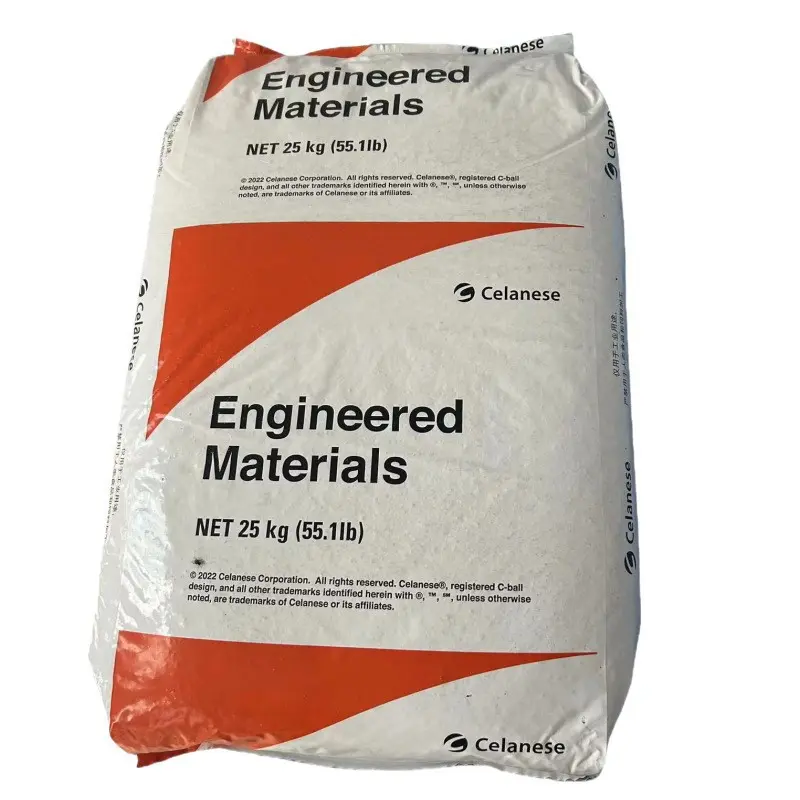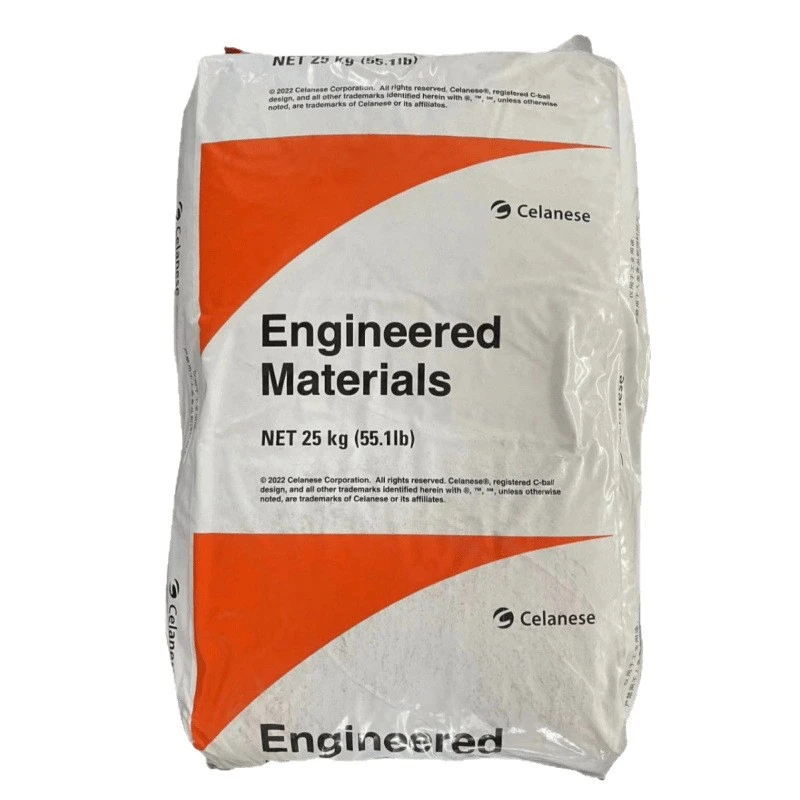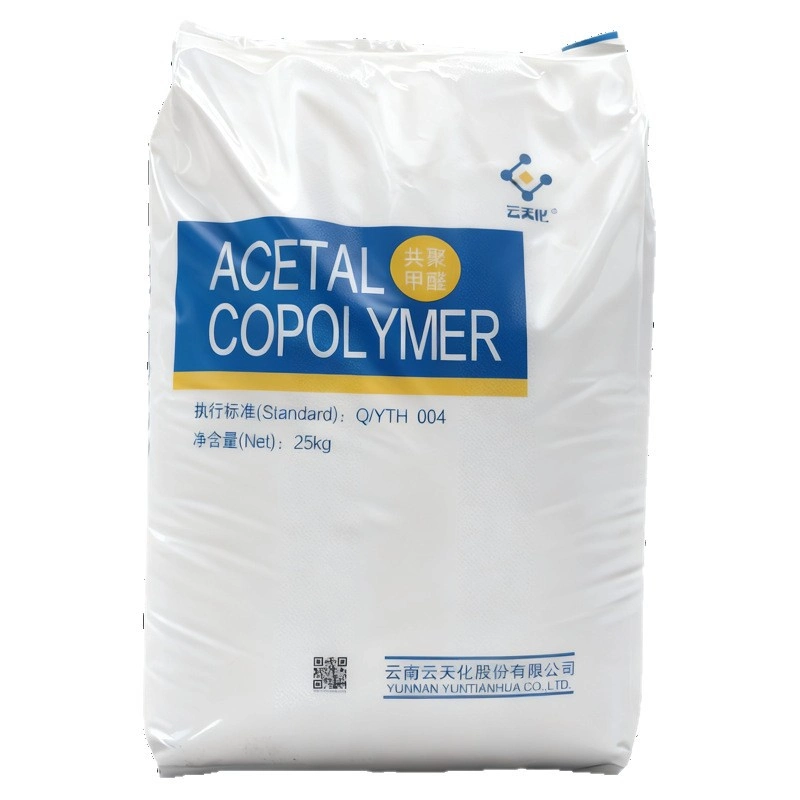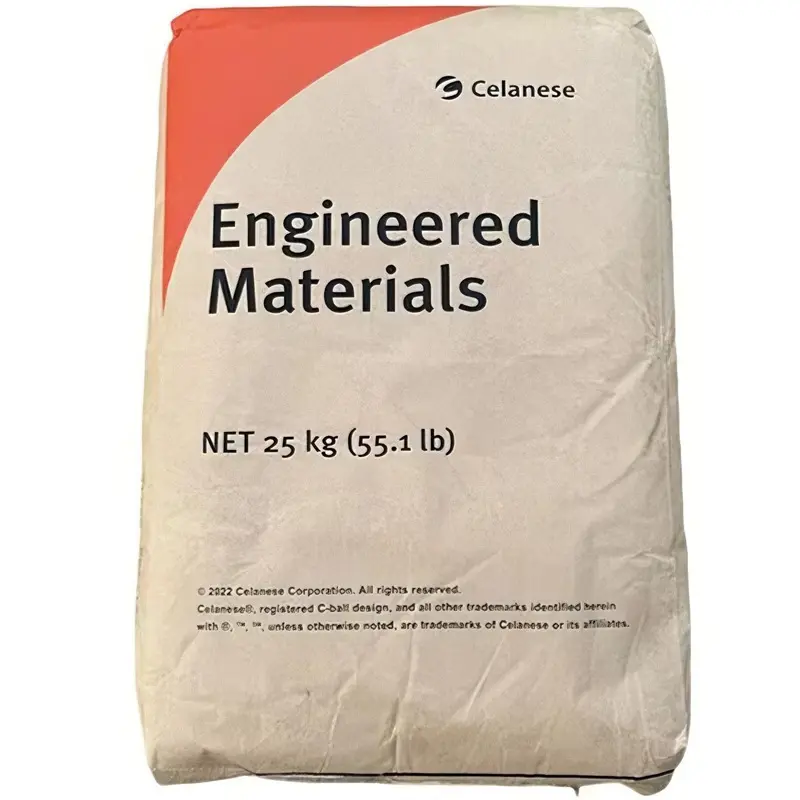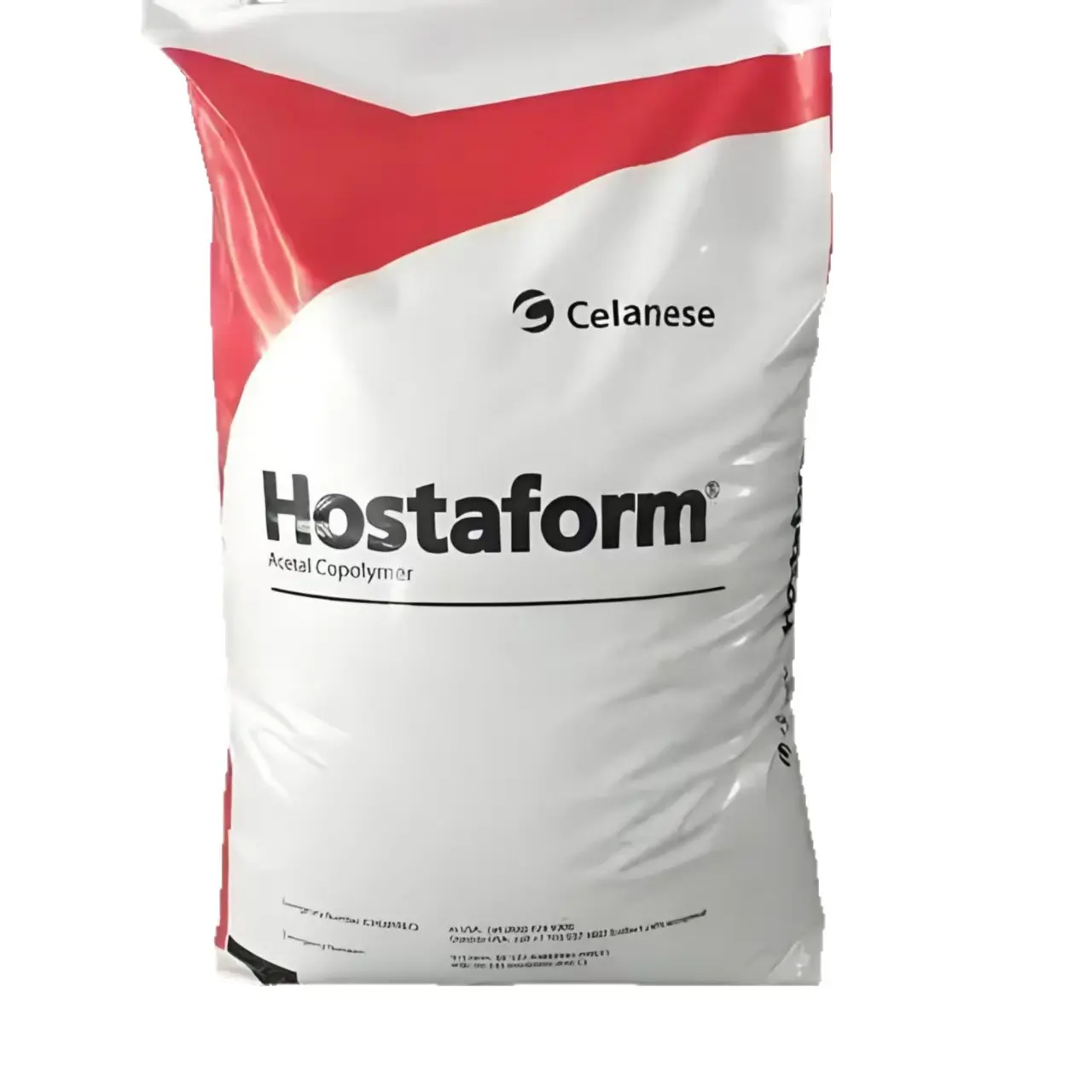
Celanese Hostaform® C 9021 is a general-purpose injection molding polyoxymethylene copolymer offering exceptional hydrolysis resistance, high rigidity, low friction, and stable dimensional control for precision gears, automotive parts, and sanitary components. Contact ZiJun Plastics for quotes and technical documents.
| Manufacturer | Celanese |
|---|---|
| Density | 1.41 g/cm³ |
| MVR | 8.0 cm³/10 min |
| Tensile Strength at Yield | 64.0 MPa |
| Elongation at Yield | 9.0 % |
Note: See the product description for additional technical specifications
Hostaform® C 9021 is a general-purpose injection molding grade of polyoxymethylene copolymer (POM-C) produced by Celanese. Featuring milk-white translucent to opaque pellets, it is a medium-viscosity, unreinforced, easy-release standard copolymer grade with a melt volume flow rate (MVR) of 8.0 cm³/10 min (190 °C, 2.16 kg). Widely recognized in the POM industry as the “global benchmark grade” for copolymerized polyoxymethylene, it has long served as the reference standard for precision engineering parts such as gears, bearings, and snap-fits since its introduction in the 1960s. Its core attributes stem from its copolymer structure, which delivers exceptional hydrolysis resistance, alkali resistance, and processing stability: a tensile yield strength of 64.0 MPa, a flexural modulus of 2700 MPa, a heat deflection temperature (HDT at 1.8 MPa) of 104 °C, an unnotched Charpy impact strength of 220 kJ/m², and a CTI of 600 V. Specifically designed for injection molding, this grade is extensively applied across the automotive, precision machinery, electrical and electronics, sanitary ware, and consumer goods sectors, making it one of the most widely referenced industrial-grade POM benchmark materials in the market.
| Physical Properties | Test Value | Test Unit | Test Standard |
| Density | 1.41 | g/cm³ | ISO 1183 |
| Melt Volume Flow Rate (190 °C, 2.16 kg) | 8 | cm³/10 min | ISO 1133 |
| Mold Shrinkage, Transverse | 1.9 | % | ISO 294-4 |
| Mold Shrinkage, Parallel | 2 | % | ISO 294-4 |
| Water Absorption, Saturated (23 °C) | 0.65 | % | ISO 62 |
| Water Absorption, Equilibrium (50% RH, 23 °C) | 0.2 | % | ISO 62 |
| Ball Indentation Hardness (30s) | 144 | MPa | ISO 2039-1 |
| Mechanical Properties | Test Value | Test Unit | Test Standard |
| Tensile Modulus | 2850 | MPa | ISO 527-2/1A |
| Tensile Strength, Yield | 64 | MPa | ISO 527-2/1A/50 |
| Tensile Strain, Yield | 9 | % | ISO 527-2/1A/50 |
| Tensile Strain, Nominal Break | 30 | % | ISO 527-2/1A/50 |
| Tensile Creep Modulus (1h) | 2500 | MPa | ISO 899-1 |
| Tensile Creep Modulus (1.0e+3 h) | 1300 | MPa | ISO 899-1 |
| Flexural Modulus (23 °C) | 2700 | MPa | ISO 178 |
| Compressive Strength (1% strain) | 24 | MPa | ISO 604 |
| Compressive Strength (6% strain) | 86 | MPa | ISO 604 |
| Charpy Impact Strength, Notched (-30 °C) | 6 | kJ/m² | ISO 179 1eA |
| Charpy Impact Strength, Notched (23 °C) | 6.5 | kJ/m² | ISO 179 1eA |
| Charpy Impact Strength, Unnotched (-30 °C) | 220 | kJ/m² | ISO 179 1eU |
| Charpy Impact Strength, Unnotched, Partial Break (23 °C) | 220 | kJ/m² | ISO 179 1eU |
| Thermal Properties | Test Value | Test Unit | Test Standard |
| Heat Deflection Temperature, Unannealed (0.45 MPa) | 160 | °C | ISO 75-2/B |
| Heat Deflection Temperature, Unannealed (1.8 MPa) | 104 | °C | ISO 75-2/A |
| Vicat Softening Point | 150 | °C | ISO 306/B50 |
| Melting Point (10 °C/min) | 166 | °C | ISO 11357-3 |
| Coefficient of Linear Thermal Expansion (CTE), Parallel | 1.10E-04 | cm/cm/°C | ISO 11359-2 |
| Coefficient of Linear Thermal Expansion (CTE), Transverse | 1.10E-04 | cm/cm/°C | ISO 11359-2 |
| Effective Thermal Diffusivity | 4.85E-08 | m²/s | Internal Method |
| Flammability Rating (1.5 mm) | HB | — | UL 94 |
| Flammability Rating (3 mm) | HB | — | UL 94 |
| Specific Heat Capacity | 2210 | J/kg/°C | — |
| Melt Thermal Conductivity | 0.16 | W/m-K | Internal Method |
| Electrical Properties | Test Value | Test Unit | Test Standard |
| Surface Resistivity | 1.00E+14 | ohms | IEC 60093 |
| Volume Resistivity | 1.00E+14 | ohms·cm | IEC 60093 |
| Dielectric Strength | 35 | kV/mm | IEC 60243-1 |
| Dielectric Constant (100 Hz) | 4 | — | IEC 60250 |
| Dielectric Constant (1.0e+6 Hz) | 4 | — | IEC 60250 |
| Dissipation Factor (100 Hz) | 2.00E-03 | — | IEC 60250 |
| Dissipation Factor (1.0e+6 Hz) | 5.00E-03 | — | IEC 60250 |
| Comparative Tracking Index (CTI) | 600 | V | IEC 60112 |
| Other Properties | Test Value | Test Unit | Test Standard |
| Melt Density | 1.2 | g/cm³ | Internal Method |
| Ejection Temperature | 140 | °C | — |
The technical data sheet (TDS) of Hostaform® C 9021 material from Celanese corporation, if there are differences, please refer to the official website of Celanese.
Outstanding Chemical and Hydrolysis Resistance: The copolymer POM molecular chain contains alternating —CH₂—O— and —CH₂—CH₂—O— units, offering exceptional resistance to strong alkalis, hot water, detergents, and most organic solvents. This significantly outperforms homopolymer POM (such as Delrin® 500P), making it the premier material choice for sanitary ware, fuel-contact applications, and industrial cleaning environments.
Balanced High Rigidity and High Strength: Featuring a tensile yield strength of 64.0 MPa, a flexural modulus of 2700 MPa, and a ball indentation hardness of 144 MPa, it exhibits prominent rigidity among unreinforced engineering plastics, enabling weight reduction by replacing metals in load-bearing structural parts.
Superior Creep Resistance and Dimensional Stability: Retains a tensile creep modulus of 2500 MPa after 1 hour and 1300 MPa after 1,000 hours, exhibiting minimal deformation under long-term loads. Combined with a parallel mold shrinkage of 2% and a transverse mold shrinkage of 1.9%, alongside low moisture absorption (0.20% at equilibrium), precision part dimensions remain highly controllable.
Excellent Wear Resistance and Low Friction: High crystallinity grants the material favorable self-lubricating properties and wear resistance, resulting in low wear rates under dry-friction operating conditions. This makes it ideal for oil-free lubricated dynamic components such as gears, bearings, and sliders.
Favorable Electrical Insulation: Features a volume resistivity of 1.0E+14 Ω·cm, a dielectric strength of 35 kV/mm, and a CTI of 600 V, making it suitable for high-voltage insulation components, connectors, and electrical switch assemblies.
Mature, Stable, and Globally Standardized: As a flagship standard grade of the Hostaform® series, C 9021 benefits from a robust global supply chain and technical support network, offering a broad processing window for both virgin and regrind materials along with high mass-production consistency.
Automotive Industry: Door lock mechanisms, window regulator rocker arms, seatbelt buckles, fuel pump module components, transmission shift forks, cooling system connectors, and HVAC damper gears.
Precision Machinery & Industry: Gears, worms, bearings, bushings, cams, sliders, chain pins, conveyor chain links, pneumatic connectors, and pump impellers.
Electronics & Electrical: Connector terminals, switch buttons, relay housings, circuit breaker components, coil formers, and potentiometer housings.
Sanitary Ware & Water Treatment: Shower knobs, faucet valve cores, flush valves, water purifier filter housings, and water pump components (leveraging its exceptional hot water and alkali resistance).
Consumer Goods: Zipper teeth, electric toothbrush gears, coffee machine drive components, ballpoint pen refills, and high-load toy structural parts.
Note: C 9021 is a copolymer POM with a flammability rating of UL 94 HB (non V-0). If a V-0 rating is strictly required for the end application, other compliant flame-retardant modified grades should be selected. POM is not resistant to strong acids (such as concentrated sulfuric acid and concentrated nitric acid) or strong oxidizing agents.
Q1: Must C 9021 be dried prior to processing? What are the recommended parameters?
A: Although POM absorbs less moisture than PA, drying copolymer POM prior to processing is still recommended to prevent silver streaks and bubbles. Hot-air drying at 80–90 °C for 3–4 hours is advised to ensure a moisture content of ≤ 0.1%. Recommended melt temperatures range from 190 to 210 °C (strictly avoiding temperatures above 230 °C, which can cause decomposition, release formaldehyde gas, and lead to performance degradation). Mold temperatures should be set at 60–100 °C (higher mold temperatures favor crystallization and dimensional stability). Medium-to-fast injection speeds with moderate screw speed and back pressure are recommended to avoid excessive shear heat.
Q2: How should one choose between C 9021 (copolymer POM) and Delrin® 500P (homopolymer POM)?
A: Both materials offer high rigidity, wear resistance, and low friction, but their core differences lie in chemical stability and processing windows. C 9021 (copolymer) offers better resistance to strong alkalis, hot-water hydrolysis, and a wider thermal processing window, making it suitable for water-contact, sanitary ware, fuel, and thick-walled parts. 500P (homopolymer) offers slightly superior rigidity, hardness, and wear resistance (with higher ball indentation hardness), making it ideal for precision drives in dry environments. Selection rule: choose copolymer C 9021 for water contact, strong alkalis, or wide processing windows; choose homopolymer for pure dry-friction and high-wear applications.
Q3: What are the compliance and certification statuses of this grade?
A: The base C 9021 grade complies with RoHS and REACH restricted substance frameworks. Food contact declarations (FDA 21 CFR 177.2470) and medical-grade documentation (USP Class VI / ISO 10993) can be provided for virgin materials based on market requirements, though final validation depends on end-product testing. A CTI rating of 600 V indicates excellent arc-tracking resistance, making it suitable for electrical insulation parts. TDS, SDS, COA, and original factory compliance statements can be requested for each batch.
Q4: How can shrinkage and warpage of molded parts be controlled when using this material?
A: POM exhibits relatively high and anisotropic mold shrinkage (2% parallel, 1.9% transverse). Mold design must account for sufficient shrinkage allowances and incorporate mold flow analysis (uniform wall thickness and avoidance of sudden transitions are recommended). Maintain uniform mold cooling water channels (temperature difference < 10 °C) during production and utilize a balanced packing pressure profile. For high-precision parts, post-mold annealing at 100–120 °C for 1–3 hours is recommended to relieve internal stress and stabilize dimensions.
Submit your inquiry today and receive a professional competitive price tailored to your project requirements.