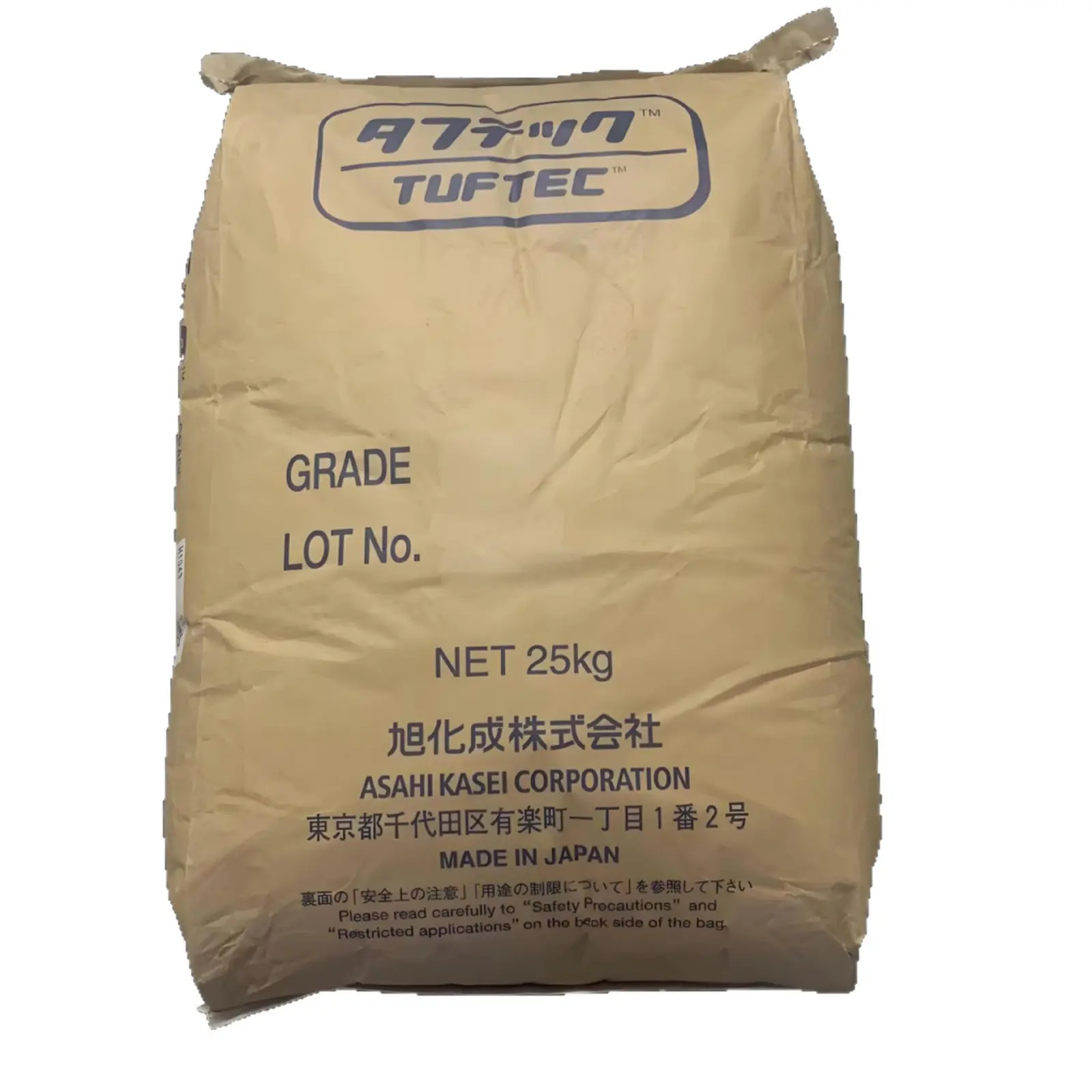
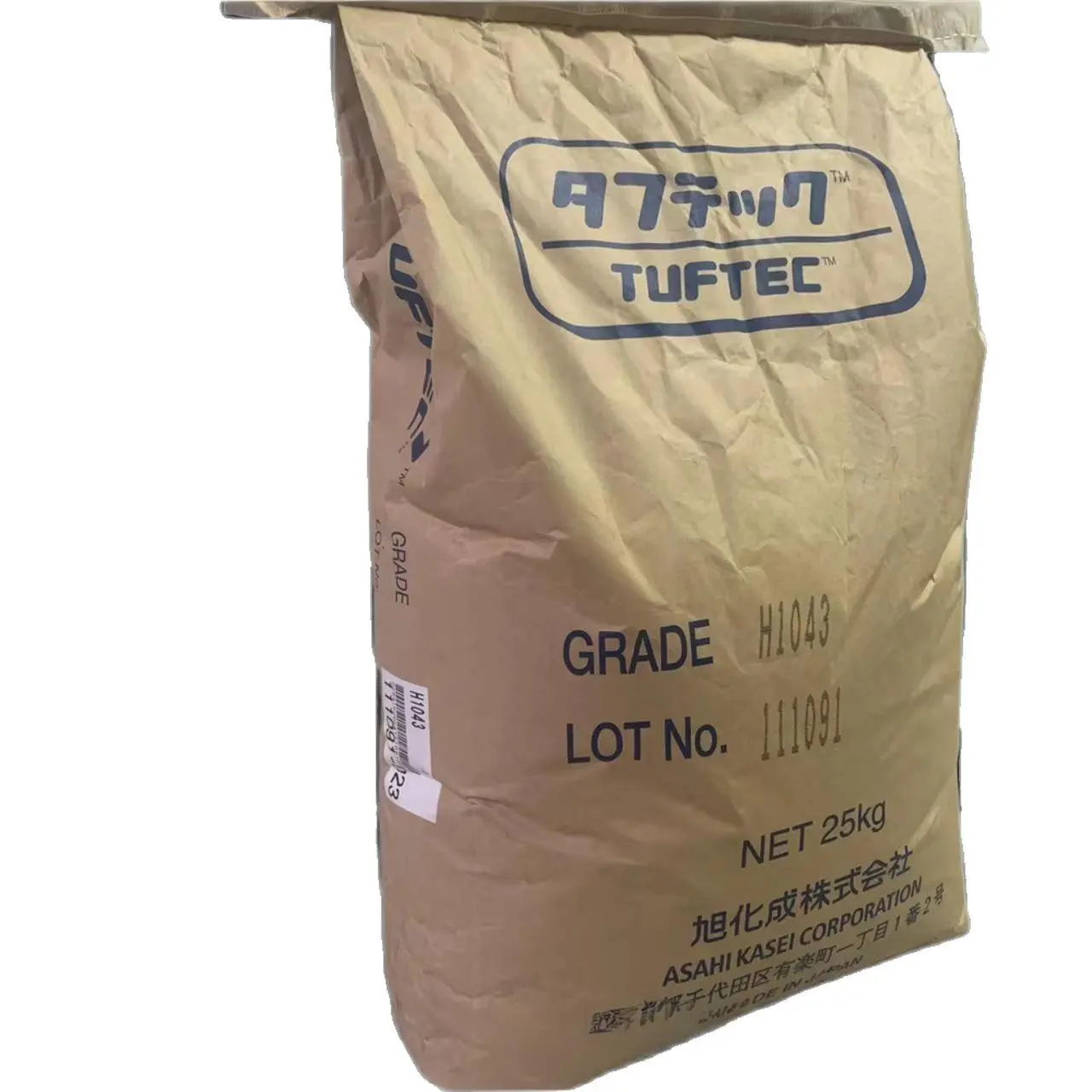
Ak Elastomers Tuftec™ H1062 SEBS is a medical-grade specialized modified SEBS thermoplastic elastomer featuring a fully hydrogenated structure, 670% elongation at break, and an 18/82 styrene-to-rubber ratio. It provides excellent low-temperature impact resistance for PP, radiation stability, and low extractables compliance, making it ideal for medical packaging, automotive modified plastics, and film applications.
| Manufacturer | Asahi Kasei |
|---|---|
| Density | 0.890 g/cm³ |
| MFR | 4.5 g/10min |
| Tensile Strength at Break | 15.0 MPa |
| Elongation at Break | 670 % |
Note: See the product description for additional technical specifications
This product is researched and produced by Ak Elastomers (formerly the Elastomers Division of Asahi Kasei). It belongs to the Tuftec™ series of fully hydrogenated styrene-ethylene-butylene-styrene (SEBS) block copolymers, positioned as a medical-grade specialized modified SEBS thermoplastic elastomer. The product appears as uniform translucent cylindrical pellets with no dust or agglomeration. The styrene-to-rubber ratio is 18/82, balancing elasticity and resin compatibility. This grade is a mainstream, mature raw material globally for PP low-temperature toughening and medical film modification, securing long-term volume applications across global medical and automotive supply chains due to its radiation stability and low extractables characteristics. The material is compatible with multiple thermoplastic processing techniques such as twin-screw compounding, film extrusion, and injection molding.
| Physical Properties | Test Value | Test Unit | Test Standard |
| Density | 0.89 | g/cm³ | ISO 1183 |
| MFR 230 °C, 2.16 kg | 4.5 | g/10min | ISO 1133 |
| Shore Hardness A | 67 | — | ISO 7619 |
| Mechanical Properties | Test Value | Test Unit | Test Standard |
| Tensile Stress300% Strain | 4.3 | MPa | ISO 37 |
| Tensile Strength at Break500 mm/min, Type 1A | 15 | MPa | ISO 37 |
| Tensile Strain at Break500 mm/min, Type 1A | 670 | % | ISO 37 |
| Other Properties | Test Value | Test Unit | Test Standard |
| Styrene / Rubber Ratio | 18/82 | — | Internal Method |
The technical data sheet (TDS) of Ak Elastomers Tuftec™ H1062 SEBS material from Ak Elastomers corporation, if there are differences, please refer to the official website of Ak Elastomers.
Fully hydrogenated molecular structure with no residual unsaturated double bonds, offering excellent weathering, heat resistance, and ozone aging resistance. It resists yellowing and embrittlement during long-term use, making it suitable for outdoor and high-temperature sterilization conditions.
Exceptional elongation at break of 670% with outstanding low-temperature toughness. When added to PP systems, it significantly improves impact resistance under room temperature and sub-zero environments, resolving the low-temperature brittleness defect of polypropylene.
Excellent compatibility with polyolefins such as polypropylene and polyethylene, featuring a stable blending interface dispersion without requiring extra compatibilizers, thereby lowering the cost of developing modified formulations.
Low extractables and low VOC formulation design, passing FDA and EU 10/2011 food and medical compliance testing, with no irritating small-molecule extractables post gamma-irradiation sterilization, meeting the strict requirements of medical packaging.
Balanced melt flowability (4.5 g/10min) with a broad processing window, adaptable to film extrusion, injection molding, twin-screw granulation, and other multi-process applications, minimizing carbon buildup and film breakage during production.
Low density of 0.890 g/cm³, reducing the raw material unit weight cost of modified products at equal addition ratios and enhancing the lightweight performance of end products.
Medical Packaging Industry: PP infusion bag films, medicinal easy-peel heat-seal films, and flexible accessories for disposable medical consumables, matching aseptic sterilization workflows via low extractables and radiation stability properties.
Automotive Modified Plastics: Filled PP bumpers, interior door panels, and unpainted airbag skins, enhancing substrate low-temperature impact resistance while improving weatherability and touch elasticity.
Film Packaging Field: Low-temperature easy-peel heat-seal films, stretch wrapping films, and toughening layers for flexible food packaging, endowing films with low-temperature heat-sealability and tear resistance.
Daily Elastomer Products: PP composite soft rubber grips, sports equipment buffer components, and transparent soft household goods, balancing rigid substrates with a soft, elastic feel.
Plastic Modification Masterbatches: Polypropylene toughening masterbatches and polyolefin compatibilizers, serving as a core modifying raw material to remedy the toughness shortcomings of general-purpose polyolefins.
Q1: Does Tuftec™ H1062 SEBS require drying prior to processing, and what are the recommended drying parameters?
A: This SEBS raw material has extremely low water absorption and can be processed directly under conventional storage environments without drying; however, if used for high-transparency medical films or stored under high humidity for prolonged periods, hot air drying at 75–80 °C for 2–3 hours is recommended, maintaining a dew point of ≤-35 °C to eliminate surface bubbles and gel points caused by trace moisture.
Q2: What is the core difference between H1062 SEBS and ordinary SBS modifiers in medical applications?
A: SBS is unhydrogenated and contains a large number of double bonds in its molecular structure, making it prone to oxidation and the leaching of odorous small molecules after ethylene oxide or gamma sterilization, rendering it unsuitable for long-term medical products contacting medicinal liquids. H1062 is a fully hydrogenated SEBS with a stable molecular structure, generating no harmful extractables post-sterilization, thereby complying with pharmaceutical packaging standards while offering weather and grease resistance vastly superior to SBS.
Q3: What international compliance certification documents are available for Ak Elastomers Tuftec™ H1062 SEBS?
A: This grade can provide original factory-stamped TDS, MSDS, and COA lot quality inspection reports, alongside matching FDA 21 CFR and EU 10/2011 food-contact compliance certificates, meeting RoHS hazardous substance control requirements; for medical terminal clients, complete testing documentation covering radiation stability and extractables leaching can be provided synchronously.
Q4: When this SEBS is used for PP modification, what is the standard recommended addition ratio range?
A: For general-purpose PP products intended solely to improve room-temperature toughness, the addition ratio is 5%–10%; when balancing low-temperature impact resistance and film heat-sealing performance, the addition ratio is 12%–18%; high-toughness automotive modified PP systems can increase up to within 20%, which can be adjusted according to product impact testing targets.
Submit your inquiry today and receive a professional competitive price tailored to your project requirements.