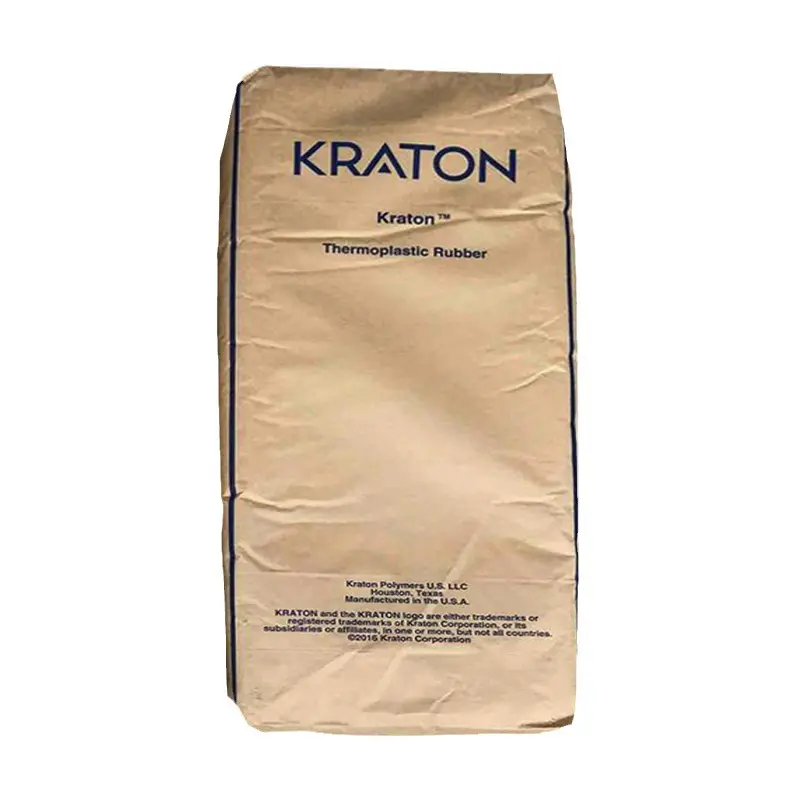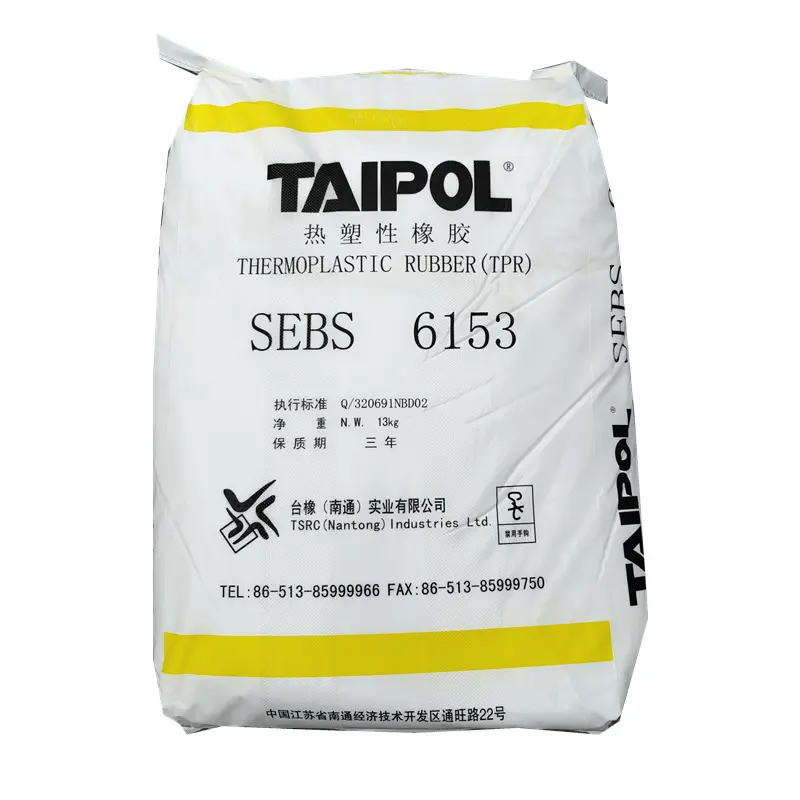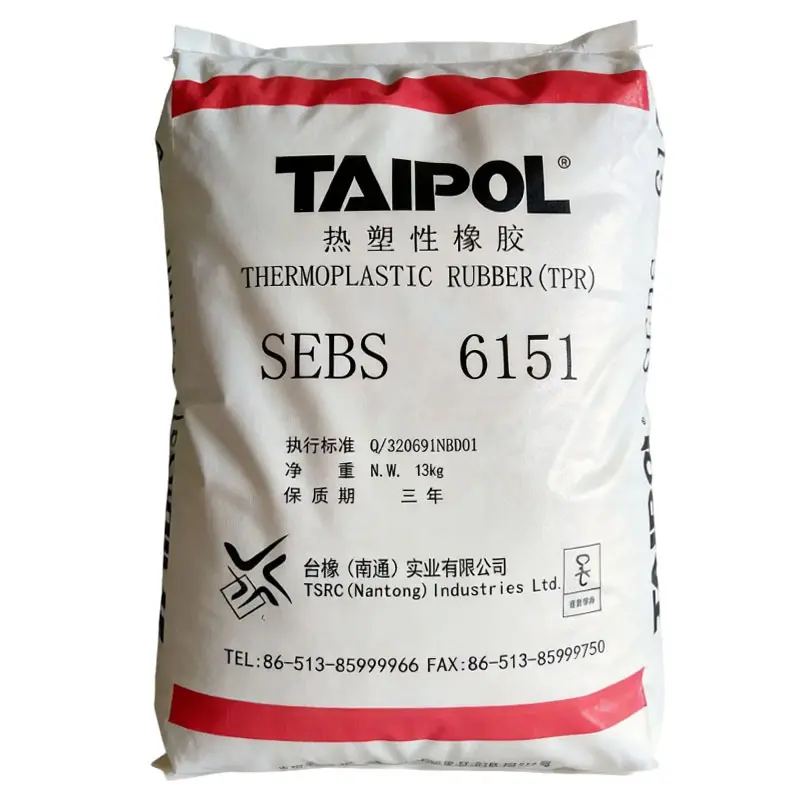
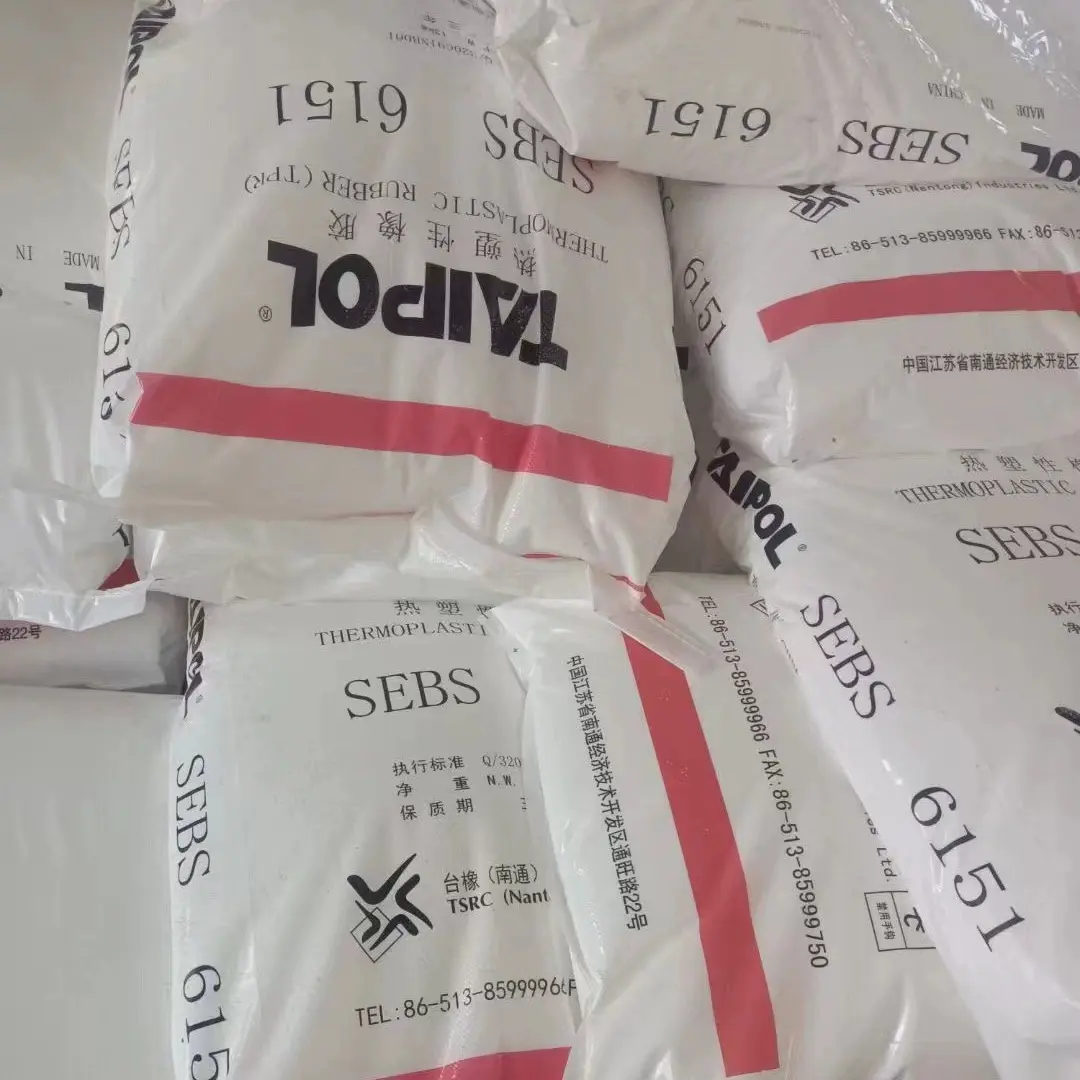
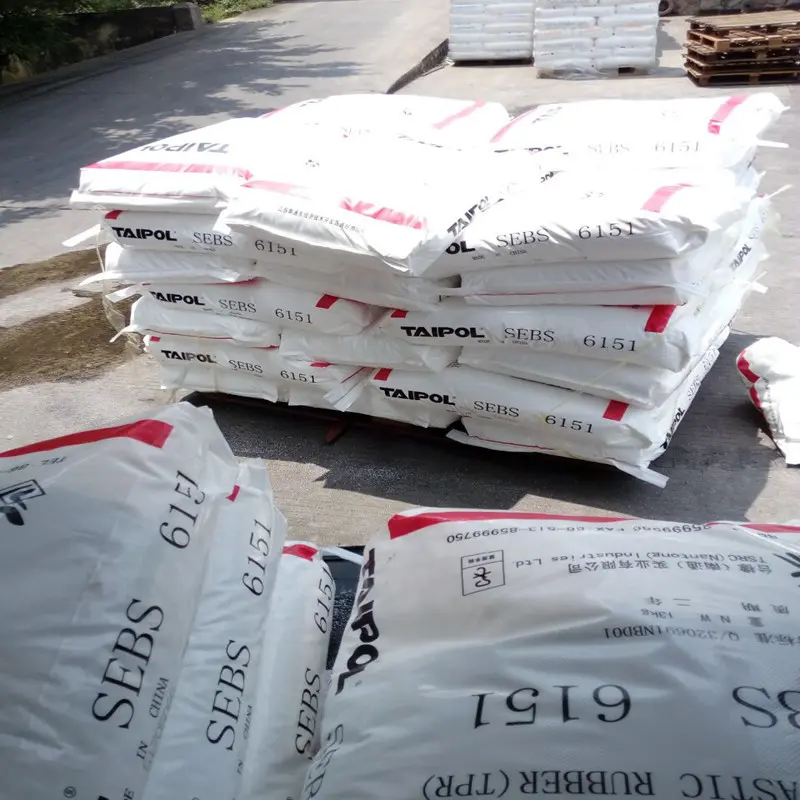
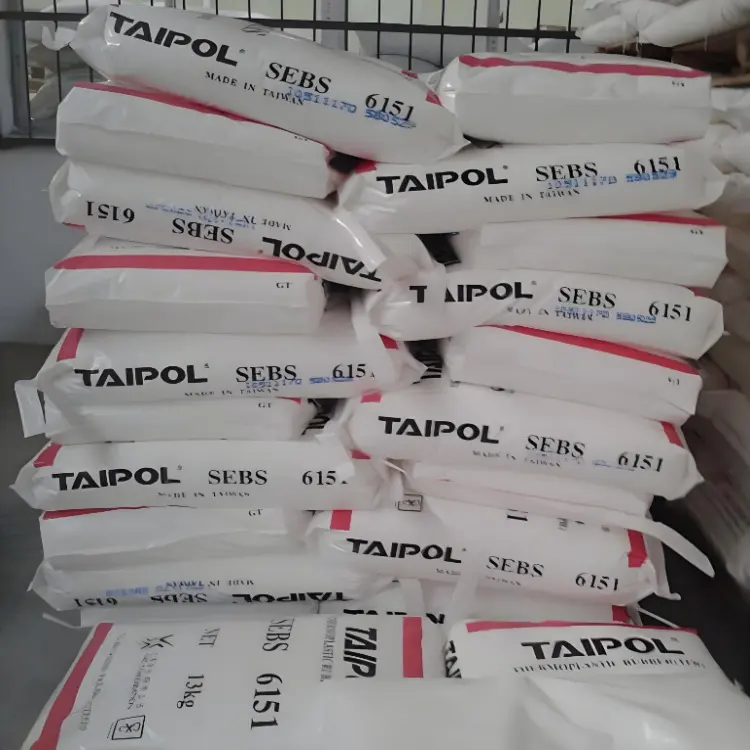
TSRC Taipol 6151 SEBS: Styrene content 31.0-34.0wt%, diblock <1wt%. Features excellent weatherability, high mechanical strength, and low volatiles. Ideal for TPE modification, automotive, consumer electronics, and medical devices.
| Manufacturer | TSRC |
|---|---|
| Diblock content | <1 wt% |
| Specific gravity | 0.91 |
| Solution viscosity | 1700 cP |
| Volatile content | 0.5 |
Note: See the product description for additional technical specifications
Manufacturer: TSRC Corporation
Material Category: SEBS (Styrene-Ethylene/Butylene-Styrene Block Copolymer)
Physical Appearance: White loose powder
Taipol® 6151 is a medium-high molecular weight, high styrene content (31.0–34.0 wt%) SEBS base polymer introduced by TSRC. As a high-end elastomer modification base material, it is renowned in the industry for its excellent purity, weatherability, and mechanical strength. This product is widely used in TPE/TPR compound pelletizing, high-end adhesives, automotive seals, and consumer electronics overmolding, providing downstream customers with a stable hydrogenated elastomer solution.
| Polymer Characteristics | Test Method | Unit | Value |
| Diblock content | TSRC Method | wt% | <1 |
| Specific gravity | ASTM D792 | – | 0.91 |
| Hardness | ASTM D2240 | Shore A | – |
| Tensile strength | ASTM D412 | MPa | – |
| Elongation | ASTM D412 | % | – |
| Solution viscosity | TSRC Method | cP | 1700 |
| Sales Specifications | Test Method | Unit | Range Min | Range Max |
| Styrene content | TSRC Method | wt% | 31 | 34 |
| Volatile content | TSRC Method | – | – | 0.5 |
| Ash content (without anti-blocking agent) | ASTM D5667 | wt% | – | 0.2 |
| Ash content (with anti-blocking agent) | ASTM D5667 | wt% | – | 1 |
| Melt index | ASTM D1238 | g/10min | – | – |
The technical data sheet (TDS) of Taipol® 6151 material from TSRC corporation, if there are differences, please refer to the official website of TSRC.
Q1: Does Taipol® 6151 require drying before blending and processing?
A1: SEBS molecules themselves do not absorb water, but 6151 is supplied in powder form and is prone to moisture absorption and caking during transportation and storage. Moist powder can easily cause bubbles, fish eyes, and strand breakage during twin-screw compounding. It is recommended to check flowability before processing; if damp, dry at 60–80 °C hot air for 2–4 hours. The key is to keep the powder loose and add antioxidants simultaneously to protect the molecular chain.
Q2: What are the advantages of Taipol® 6151 compared to ordinary SBS or low-styrene SEBS?
A2: Compared with ordinary SBS, 6151 is fully hydrogenated, completely solving the problems of easy yellowing and poor heat-oxygen aging caused by double bonds in SBS, resulting in a longer service life. Compared with low-styrene SEBS, 6151 has a higher styrene content (31.0–34.0 wt%) and medium-high molecular weight, leading to more distinct phase separation, higher tensile strength, better melt strength, and a drier surface feel, making it very suitable for TPE structural parts requiring mechanical performance and heat resistance.
Q3: How to confirm RoHS/REACH and food contact compliance for end products modified with Taipol® 6151?
A3: The Taipol® 6151 base polymer itself features low volatiles (≤0.5%) and low ash (≤0.2%), but “the grade itself” does not equal “end-product compliance.” RoHS/REACH compliance requires confirmation based on batch COA and third-party test reports. If the end product is for food contact (e.g., FDA, EU 10/2011) or medical devices, in addition to the original manufacturer’s food-grade declaration, the entire formulation system (including white oil for oil extension, antioxidants, fillers, and color masterbatches) must use food-grade compliant raw materials, and migration tests must be conducted on the final product.
Q4: What is the practical impact of diblock content control in Taipol® 6151 on end products?
A4: Taipol® 6151 strictly controls diblock content to <1 wt%. An extremely low diblock (SI/SEB two-block) content means the material has higher molecular structural regularity and phase separation purity. In actual TPE modification, this can significantly improve the product’s compression set resistance, cohesive strength, and solvent extraction resistance, preventing issues such as oil bleeding, tackiness, or rapid deterioration of mechanical properties after long-term use.
Submit your inquiry today and receive a professional competitive price tailored to your project requirements.