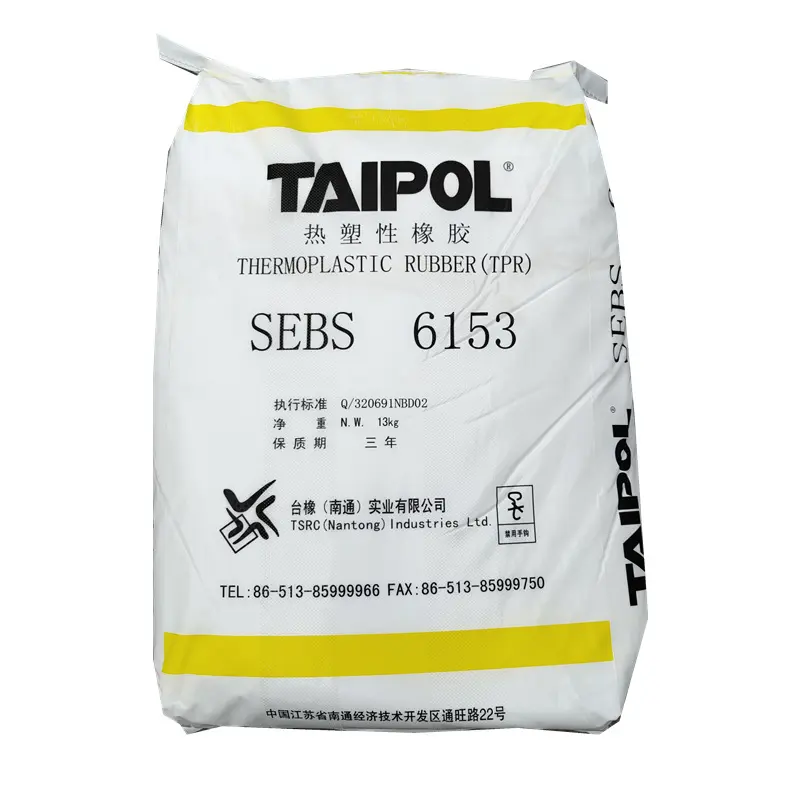
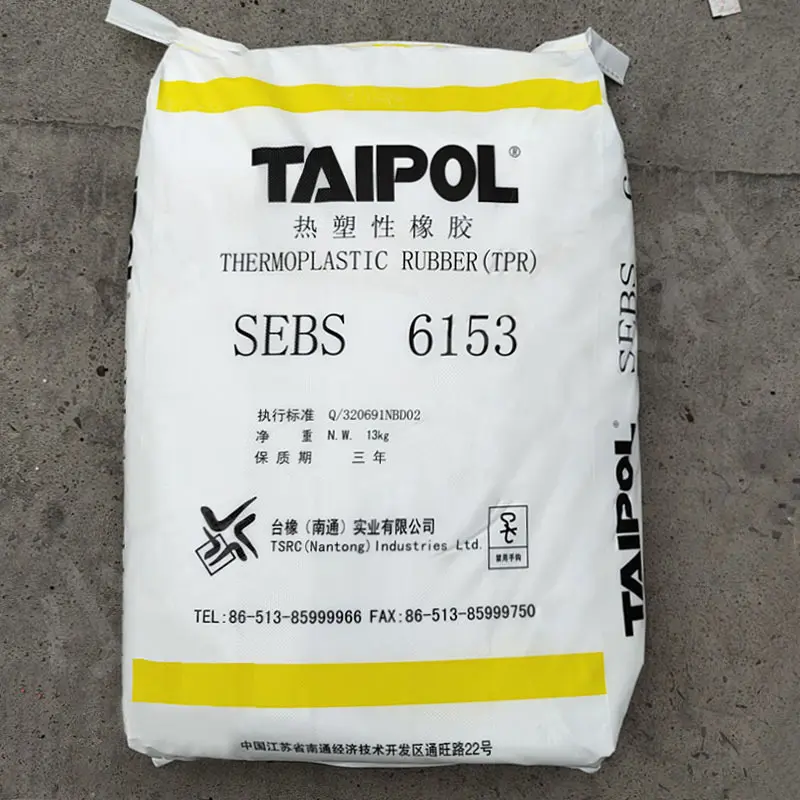
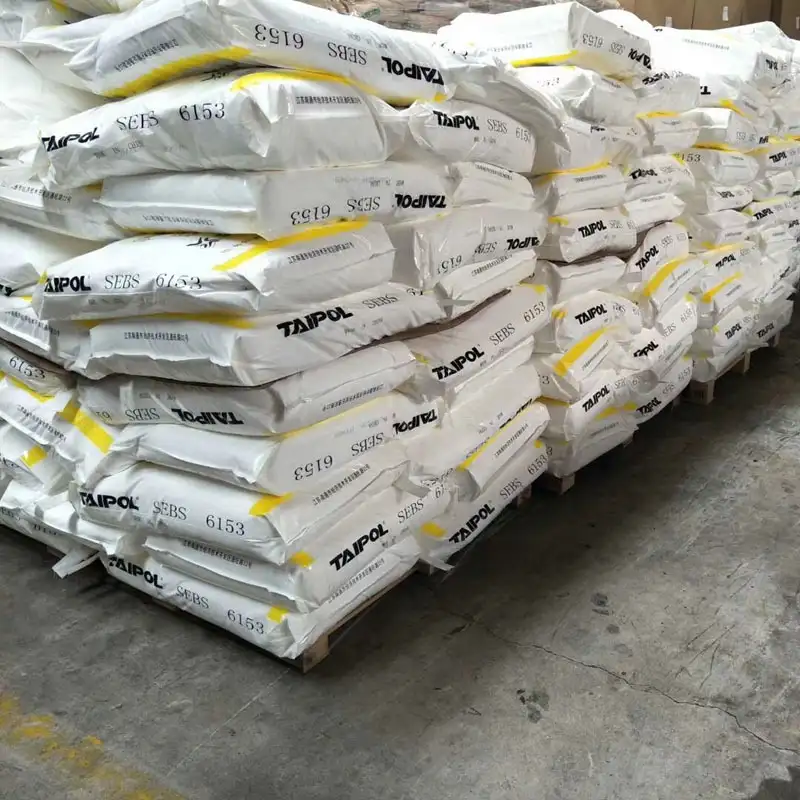
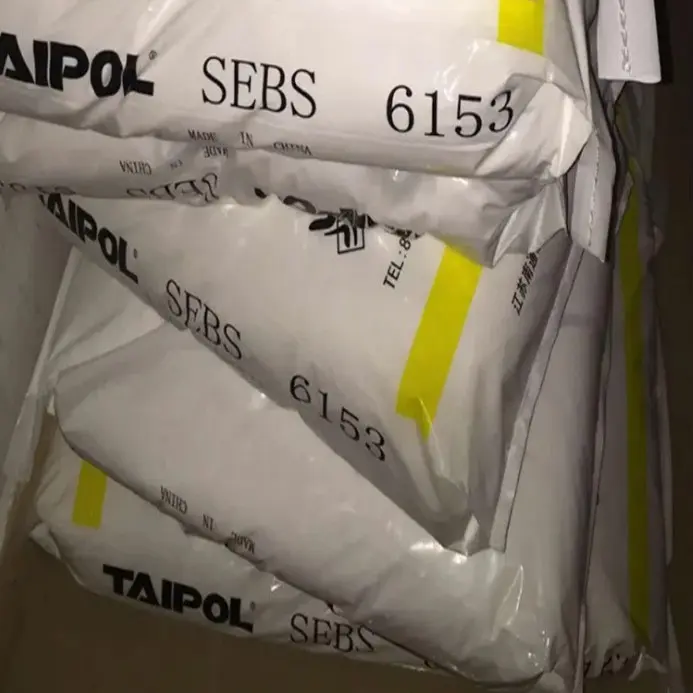
TAIPOL SEBS 6153 is a high-performance hydrogenated styrene-butadiene block copolymer (SEBS) developed and manufactured by TSRC Corporation, an internationally recognized elastomer producer.
| Manufacturer | TSRC |
|---|---|
| Density | 0.908 g/cm³ |
| Yellowness Index | < 4.0 |
Note: See the product description for additional technical specifications
TAIPOL SEBS 6153 is a high-performance hydrogenated styrene-butadiene block copolymer (SEBS) developed and manufactured by TSRC Corporation, an internationally recognized elastomer producer. The material is supplied physically as a powder or fluffy porous crumb and represents a core branch of thermoplastic elastomers (TPE/TPR). As a saturated polymer, SEBS 6153 contains no double bonds in its molecular backbone, granting it exceptionally superior stability and aging resistance. Within the industrial sector, this specific grade is widely utilized as a premium compounding base and matrix resin for plastic modification (toughening and overmolding), adhesive formulation, sealing products, overmolding, and various high-end consumer goods manufacturing, holding a critical technical and market position in the global materials supply chain.
| Property | Value | Unit | Test Method |
| Solution Viscosity | 2.0 to 3.0 | Pa·s | Internal Method |
| Density | 0.908 | g/cm³ | ASTM D792 |
| Property | Value | Unit | Test Method |
| Yellowness Index | <4.0 | – | Internal Method |
| Property | Value | Unit | Test Method |
| Bound Styrene | 27.5 to 30.5 | % | Internal Method |
The technical data sheet (TDS) of TAIPOL SEBS 6153 material from TSRC corporation, if there are differences, please refer to the official website of TSRC.
Excellent Weatherability and Aging Resistance: Because the butadiene blocks in the molecular structure are fully hydrogenated, the material exhibits high chemical inertness against ultraviolet (UV) radiation, ozone, and thermal oxidation, making it suitable for harsh outdoor or high-temperature operating environments.
Outstanding Physical Mechanical Properties and Resilience: It possesses high tensile strength, high elongation at break, and low compression set, delivering a structural performance that combines rubber-like elasticity with thermoplastic processability.
Good Thermal Stability and Processing Window: With a moderate solution viscosity (2.0-3.0 Pa·s), the material demonstrates favorable shear fluidity and thermal processing stability during melt blending, extrusion, or injection molding.
Low Yellowness Index and High Design Freedom: Its yellowness index is strictly controlled at an extremely low level (<4.0), providing a clean, white, and clear base color that offers compounding engineers a vast color-matching space when formulating high-transparency, pure white, or high-saturation color products.
Excellent Compatibility and Secondary Compounding Potential: It exhibits superb blending compatibility with matrix resins like polypropylene (PP), polystyrene (PS), and engineering plastics, making it an ideal modifier for high-end overmolding applications and thermoplastic elastomer blends.
Plastic Modification and Toughening: Utilized as a highly efficient impact modifier blended with PP, PS, PC, and engineering plastics to significantly improve the low-temperature impact strength and ductility of the resins.
Two-Shot Injection Molding and Overmolding (Soft-touch Grips): Frequently applied in manufacturing soft-touch grips and non-slip handles for hardware tools, household appliance housings, and consumer electronics (e.g., smartphone cases, sports wristbands), providing an ergonomic and comfortable tactile feel.
High-End Industrial Adhesives and Sealants: Leveraging its controlled bound styrene content (27.5-30.5%), it is widely utilized in the formulation of hot melt pressure-sensitive adhesives (HMPSA), jelly glues, sealants, and pressure-sensitive adhesives to provide high initial tack and strong shear resistance.
Automotive Interior and Exterior Trim: Engineered for manufacturing automotive weatherstrips, airbag deployment covers, mudguards, and various weather-resistant automotive soft-touch interior panels and wire and cable jackets.
Consumer Goods and Medical Packaging: Adopted in the manufacturing of high-grade toys, elastic sports equipment, wire and cable jacketing, as well as the flexible modification of eco-friendly medical non-PVC soft bags and IV fluid tubing.
Q1: Is pre-drying mandatory for TAIPOL SEBS 6153 prior to processing? What are the recommended processing parameters?
A1: Although SEBS resin itself has an extremely low water absorption rate, it is primarily supplied as a fine porous powder or crumb, which may physically adsorb trace atmospheric moisture during transit and storage. To prevent gas bubbles, silver streaks, or material degradation during melt extrusion or injection molding, it is recommended to pre-dry the material in an oven or desiccant dryer at 70°C to 80°C for 1.5 to 2 hours. The recommended melt processing temperature is typically maintained between 180°C and 230°C, which can be fine-tuned based on the melting point of other component resins (such as PP) in the compound system.
Q2: What are the core technical differences in engineering applications between SEBS 6153 and conventional SBS (Styrene-Butadiene-Styrene copolymer)?
A2: The core difference lies in the molecular saturation level. The molecular chain of SBS contains a large number of carbon-carbon double bonds, which are highly vulnerable to ultraviolet light and oxygen attacks, leading to premature aging, yellowing, and cracking; thus, it is mostly restricted to indoor or low-service-life applications. In contrast, TAIPOL SEBS 6153 is a product of hydrogenation saturation, meaning its thermal oxidative and weathering resistance is improved by several orders of magnitude compared to SBS. Additionally, SEBS possesses a significantly higher upper continuous-use temperature and stricter resistance to chemical media.
Q3: Does this material comply with environmental regulatory requirements? Can it be utilized in food-contact or skin-contact applications?
A3: The production processes of TAIPOL SEBS 6153 by TSRC strictly control the residues of heavy metals, polybrominated biphenyls, and other hazardous substances, fully satisfying the chemical compliance standards of the European Union RoHS 2.0 Directive and REACH Regulation. Due to its non-toxic, halogen-free nature and high purity, the material can successfully pass FDA or relevant medical-grade/skin-contact certifications after appropriate downstream formulation modification, making it an ideal low-carbon thermoplastic alternative to traditional PVC plastics for green supply chains.
Submit your inquiry today and receive a professional competitive price tailored to your project requirements.