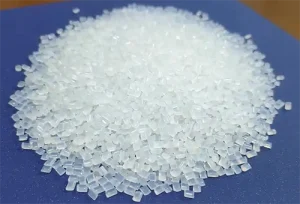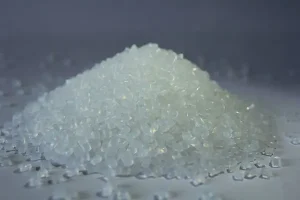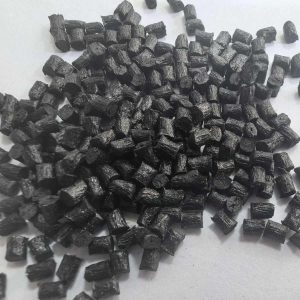
Quick answer: Nylon (polyamide, PA) — the first synthetic polymer commercialized by DuPont in 1935 — is today one of the most widely used engineering plastics in the world. It delivers high strength, toughness, and self-lubricating wear resistance, with PA6 and PA66 as the mainstream grades. Its one fatal weakness: moisture absorption. Nylon must be thoroughly dried before molding, or both performance and surface quality collapse.
What Is Nylon (Polyamide) Plastic?
Nylon, scientifically polyamide (PA), is a thermoplastic resin whose molecular backbone contains repeating amide groups (-NHCO-). First industrialized by DuPont in 1935, it was both the world’s first synthetic fiber and one of the most widely used engineering plastics.
Nylon comes in multiple grades by molecular structure: PA6 and PA66 dominate injection molding and extrusion, while PA12 (low moisture absorption), PA46 (high heat resistance), PA610/612 (low hygroscopicity), and PPA (high-temperature nylon) cover specialty needs. Glass-fiber-reinforced (GF) and flame-retardant versions further extend the application envelope.
The core value in one sentence: strength combined with toughness, self-lubricating wear resistance, and resistance to fuels and solvents — at the price of moisture sensitivity, which means every processing step starts with drying.
Nylon 6 vs Nylon 66: Key Differences
The first selection step is distinguishing PA6 from PA66 — their performance profiles are quite different:
| Comparison | PA6 (Nylon 6) | PA66 (Nylon 66) |
|---|---|---|
| Melting point | Approx. 225°C | Approx. 265°C |
| Heat resistance (HDT) | Lower | Higher — continuous use at 90–110°C |
| Toughness / impact | Better (softer, more ductile) | Higher rigidity |
| Moisture absorption | Higher (saturated ~1.5–3%) | Lower (~1.2–2.5%) |
| Dimensional stability | Fair | Better |
| Price | Lower | Higher |
Decision rule: high heat and rigidity (engine-bay parts, power tools) → PA66; high toughness and cost sensitivity (clips, general structural parts) → PA6. Both must be dried before molding.
Nylon Properties: Strengths & Limitations
| Property | Performance |
|---|---|
| Tensile strength / toughness | Excellent; fatigue-resistant, ideal for repeatedly loaded parts |
| Wear resistance / friction | Self-lubricating, low friction; can replace metal bushings |
| Chemical resistance | Resists fuels, solvents, weak alkalis; not resistant to strong acids |
| Heat resistance | PA66 melts at 265°C; GF grades reach HDT of 240°C+ |
| Moisture absorption | Weakness: absorbed moisture causes dimensional change and strength loss — drying is mandatory |
| UV resistance | Weakness: long-term outdoor exposure embrittles (UV stabilizers required) |
| Glass-fiber reinforced (GF30) | Much higher stiffness and heat resistance; shrinkage drops to 0.3–0.8% |
Nylon vs POM vs PC/ABS vs PEEK: How to Choose
| Your requirement | Recommended material | Why |
|---|---|---|
| High toughness, fatigue resistance, chemical resistance | PA6 / PA66 | Balanced performance at moderate cost |
| Precision gears, low moisture uptake, dimensional stability | POM | Water absorption only ~0.2% — minimal dimensional drift |
| High heat, high impact, thin-wall large parts | PC/ABS | Alloy balance with high value |
| Extreme heat, high strength, long-term reliability | PEEK | High-end applications, highest cost |
Decision rule: toughness + chemical resistance → nylon; dimensional stability + self-lubrication for precision parts → POM; heat resistance + thin-wall molding → PC/ABS; ultimate performance → PEEK.
Related reading: see our Victrex 450G PEEK Guide and PC/ABS Plastic Guide for deeper material comparisons.
Key Applications of Nylon Resin
- Automotive (largest application): radiator end caps, wire harness connectors, fuel system components, seatbelt and airbag parts — fuel resistance and heat resistance are the selling points;
- Electronics & machinery: gears, bearing cages, fasteners, power tool housings, pump impellers — self-lubrication cuts maintenance;
- Textiles & fibers: tire cord, industrial yarns, fishing nets — nylon’s original territory;
- 3D printing: PA12 powder is the mainstream material for industrial SLS printing;
- Consumer goods: zippers, combs, sports equipment — tough and wear-resistant.
Nylon Injection Molding: Parameters & Best Practices
Drying is the lifeline (the most critical step): nylon absorbs moisture extremely fast. Dry at 80–90°C for 3–4 hours and ensure the moisture content is below 0.2% before molding. Molding undried nylon directly produces silver streaks, bubbles, and a sharp drop in mechanical properties — the root cause of 90% of nylon defects.
| Parameter | Reference range (follow the grade’s TDS) |
|---|---|
| Barrel temperature | PA6: 230–280°C; PA66: 270–300°C |
| Mold temperature | 60–90°C (use the upper end for GF grades) |
| Mold shrinkage | 0.5–1.5% (0.3–0.8% for GF30) |
Common defects: silver streaks/bubbles (insufficient drying), sink marks (insufficient holding pressure), warpage (uneven mold temperature or glass-fiber orientation).
Nylon Resin Price & Buying Guide (2026)
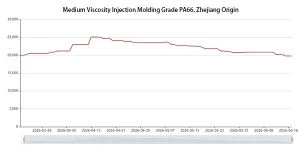
Price drivers: ① feedstock chain — PA6 tracks caprolactam, PA66 tracks adipic acid/hexamethylenediamine, and volatility passes straight through; ② modification premium — GF-reinforced grades typically cost 20–40% more than general-purpose; ③ brand and grade differences; ④ trade terms and FX (FOB/CIF/CFR).
Buying checklist:
- Request original TDS/MSDS/COA and verify grade and lot consistency;
- Run a small trial molding first to confirm batch stability before scaling;
- Confirm MOQ and lead time (engineering plastics typically start at 1 ton; trial orders accepted);
- Specify moisture-proof packaging — nylon is moisture-sensitive, so packaging and storage matter.
ZiJun Plastics (Jiangsu Zijun International Trade Co., Ltd.) has 20+ years of plastic resin export experience serving 30+ countries: 12-hour technical grade matching, custom modification (glass-fiber reinforcement, flame retardancy, color matching), and every shipment backed by original TDS/MSDS/COA compliance documents. Visit our Products page to learn more.
FAQ
Q1: What is the melting point of nylon?
A1: PA6 melts at about 225°C and PA66 at about 265°C; glass-fiber-reinforced grades offer even higher heat resistance.
Q2: Does nylon absorb water?
A2: Yes, and quickly — this is its biggest difference from POM. Dry it to below 0.2% moisture before molding, and account for moisture-driven dimensional change in long-term use.
Q3: Nylon or POM (Delrin) — which is better?
A3: It depends: choose nylon for toughness, chemical resistance, and fatigue resistance; choose POM for precision dimensional stability, low moisture uptake, and self-lubrication. They complement, not replace, each other.
Q4: Is nylon food safe?
A4: Some grades carry FDA food-contact certification — you must specify a certified grade; general-purpose grades are not compliant.
Q5: What is glass-filled nylon?
A5: Adding 10–40% glass fiber to the nylon matrix dramatically improves stiffness, heat resistance, and dimensional stability — the mainstream choice for gears and structural parts.
Q6: Why must nylon be dried before molding?
A6: The amide groups in nylon absorb moisture readily. Moisture vaporizes at melt temperatures, causing silver streaks and bubbles, and hydrolyzes the polymer — cutting molecular weight and strength. Three to four hours of drying slashes the defect rate.
Conclusion
Nylon is one of the most balanced materials in the engineering-plastic world: strong, tough, wear-resistant, and chemical-resistant — and with glass-fiber reinforcement, nearly universal. The only condition: respect its moisture sensitivity. In 2026, nylon demand keeps growing with automotive lightweighting and electrification.
Whether you are a molder in material selection or a buyer in need of a reliable supply source, contact ZiJun Plastics (Jiangsu Zijun International Trade Co., Ltd.) — over 20 years of plastic resin export experience, serving 30+ countries worldwide, with original TDS/MSDS compliance and traceable batches.