Introduction to Polyamide 6
Polyamide 6 (Polyamide 6, abbreviated as PA6), commonly known as Nylon 6 in consumer and commercial fields, is one of the most widely produced and utilized semi-crystalline thermoplastic engineering plastics in the global supply chain. Chemically, it belongs to the aliphatic polyamide category. The core raw material for PA6 is caprolactam, which undergoes a ring-opening polymerization reaction to form the polymer. Its standard molecular formula is [-NH-(CH2)5-CO]n.
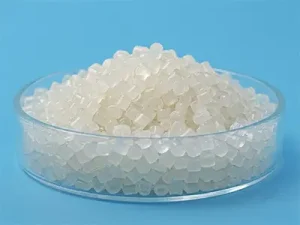
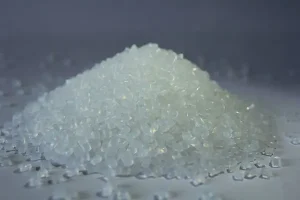
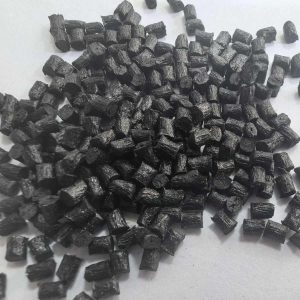
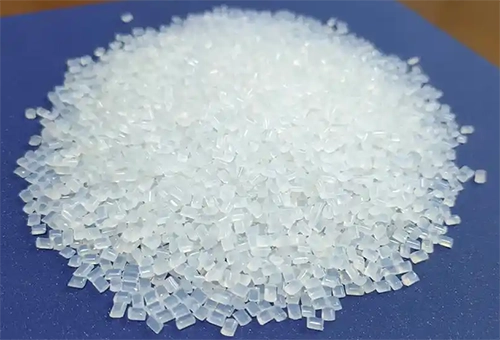
In its pure industrial form, PA6 usually appears as translucent or opaque milk-white pellets. As a high-performance structural material, PA6 achieves an excellent physical balance among lightweight properties, high toughness, wear resistance, and chemical resistance. Furthermore, it features outstanding compatibility for modification, allowing customized processing through methods such as toughening, glass fiber reinforcement, and halogen-free flame retardancy. Due to its fast crystallization rate and excellent melt flowability, it is highly suitable for injection molding into complex and precise components. It plays an indispensable role as a foundational raw material in core global industries, including automotive, electrical and electronics, mechanical transmission, textile fibers, and high-barrier packaging.
Polyamide 6 Properties
Molecular Structure
PA6 is a single-monomer polymerization product. After the caprolactam monomer ring opens, every 6 carbon atoms within the chain segment are alternately paired with a highly polar amide group (-CONH-). Because the amide groups on the long polymer chains align in a single uniform direction, a regular, one-way intermolecular hydrogen bond network is formed.
This molecular regularity stabilizes its crystallinity between 35% and 40%. On one hand, the crystalline regions provide the material with excellent rigidity and wear resistance. On the other hand, because the methylene (-CH2-) chain segments are long and highly mobile, the molecular chains exhibit extreme flexibility. This is the underlying structural reason why PA6 maintains excellent impact toughness even under dry or low-temperature conditions. Additionally, due to the high polarity of the amide groups, the material naturally absorbs moisture. Once moisture equilibrium is reached, the impact strength and fatigue life of the material improve even further.
Melting Point & Thermal Properties
- Melting Point: The melting point of PA6 is stable and fixed at 220 degrees C. A lower melting point provides a wider processing temperature window and relatively low energy consumption during processing.
- Heat Deflection Temperature (HDT): Under a low load of 0.45 MPa, its heat deflection temperature is approximately 180 degrees C. Under a high load of 1.82 MPa, it is around 65 degrees C for unreinforced grades.
- Continuous Service Temperature: The upper limit for long-term continuous operation is 120 degrees C, and short-term temperature resistance can reach 140 degrees C, making it compatible with most medium-temperature industrial environments.
Physical & Mechanical Properties
- Density: 1.13 to 1.15 g/cm3, making it lightweight and ideal for replacing steel in automotive and industrial lightweight applications.
- Tensile Strength (Dry): 70 to 85 MPa, showing strong load-bearing capacity under high tension.
- Flexural Modulus (Dry): 2500 to 3200 MPa, providing good rigidity against deformation.
- Notched Impact Strength: More than or equal to 10 kJ/m2, offering excellent resistance to shock and mechanical drops.
Chemical & Tribological Properties
- Chemical Resistance: Highly resistant to industrial alkaline solutions, most salt solutions, lubricants, fuels, hydraulic oils, and aliphatic hydrocarbon solvents. It does not easily swell or degrade chemically, though it is not resistant to strong acids, strong oxidizers, or phenols.
- Friction & Self-Lubrication: Pure PA6 exhibits a low surface friction coefficient and low wear rate. It meets the requirements of high-speed reciprocating machinery parts even under unlubricated or oil-scarce conditions.
- Electrical Insulation: Excellent dielectric performance and stable insulation properties under dry or low-voltage ambient environments.
Polyamide 6 Uses
Based on its balanced mechanical structure, PA6 is used across both civilian and high-end industrial fields. Its core applications and technical selection logic are detailed below:
Automotive Sector
- Core Components: Engine covers, radiator fans, intake manifolds, oil pipes, oil seals, fuel filter housings, door trim frames, intake grilles, and floor mat clips.
- Technical Suitability: Engine compartments and chassis parts are exposed to various oils and continuous medium-temperature vibrations. PA6 offers excellent oil resistance, thermal stability, and lightweight characteristics, lowering vehicle weight and resisting fatigue failure under cyclic stress.
Electrical & Electronics
- Core Components: Industrial connectors, circuit breaker housings, switches, sockets, relay bases, cable ties, and motor end covers.
- Technical Suitability: Electrical parts require high insulation strength, creep resistance, and impact toughness. PA6 can be easily modified to achieve a UL 94 V-0 flame-retardant rating. Its excellent melt flowability fits precise thin-walled injection molding, ensuring long-term dimensional stability.
General Machinery & Transmission
- Core Components: Industrial gears, worm gears, guide rails, pulleys, bearing cages, conveyor belt parts, pump bodies, and valve liners.
- Technical Suitability: Traditional metal transmission parts are heavy, noisy, and require frequent maintenance. PA6 utilizes its low friction coefficient and self-lubricating wear resistance to operate smoothly without oil, lowering noise and extending mechanical lifespan.
Textiles & Packaging
- Core Components: Nylon fibers for apparel, high-strength industrial tire cords, fishing nets, ropes, and food-grade BOPA films.
- Technical Suitability: High molecular chain flexibility grants PA6 excellent elongation at break (often exceeding 120%), making it easy to spin into high-strength fibers. In packaging, its crystalline structure blocks oxygen and gases while resisting low temperatures and punctures, which is ideal for food preservation.
Emerging Energy Applications
- Core Components: EV charging gun housings, photovoltaic inverter brackets, and lithium battery module insulation spacers.
- Technical Suitability: Harsh outdoor renewable energy conditions require modified PA6, which provides excellent weatherability, UV resistance, and high-low voltage alternating insulation performance.
Polyamide 6 vs 66
In the engineering plastics supply chain, PA6 and PA66 are two mainstream grades often compared with each other. Though both belong to the nylon family, they feature distinct technical differences:
| Property | Polyamide 6 (PA6) | Polyamide 66 (PA66) |
| Structure | Single monomer; high chain flexibility; moderate hydrogen bond density. | Dual monomer; highly regular chain alignment; denser hydrogen bonds. |
| Melting Point | 220 degrees C | 260 degrees C (Better short & long-term heat resistance) |
| Mechanical | Excellent toughness and flexibility; superior low-temperature impact resistance. | Higher rigidity, hardness, tensile strength, and better creep resistance. |
| Dimensions | Higher moisture absorption; higher toughness when wet but minor size changes. | Lower moisture absorption; superior dimensional stability for precise parts. |
| Wear & Friction | Better self-lubrication and wear resistance at room temp or high-lubrication. | Better wear stability under heavy loads, high speeds, or high temperatures. |
| Processing | Excellent melt flow; lower processing temperature; shorter cycle times. | Narrow processing window; high melting temperature; needs precise control. |
| Cost | Ample raw material supply; simple production; 15% to 25% lower cost than PA66. | High technology barrier for precursors; high and volatile pricing. |
| Application | Focuses on high toughness, complex thin walls, and cost efficiency. | Focuses on extreme heat, high load rigidity, and strict dimensional accuracy. |
Polyamide PA 6 Market
- Capacity & Scale: PA6 is the most widely consumed polyamide grade globally, accounting for over 60% of the entire nylon market. Global annual production is stable at over 8 million metric tons. The Asia-Pacific region, especially China and Southeast Asia, acts as the world center for electronics and automotive manufacturing, holding the largest production and consumption networks. International corporations like BASF, Envalior, and Mitsubishi Chemical lead the high-end modified market, while companies in China drive the large-scale production of general and fiber-grade chips.
- Market Drivers: Global market growth relies on three main trends: global automotive lightweighting, which increases modified nylon usage per vehicle; the global renewable energy boom (EV charging infrastructure and solar brackets), which creates high demand for flame-retardant plastics; and automated industrial logistics systems, which require low-maintenance, wear-resistant transmission parts.
- Future Trends: The international engineering plastics supply chain is moving toward custom modification and low-carbon sustainability. General resins are transitioning toward high-value-added products like ultra-high glass fiber reinforced, long fiber nylon, halogen-free flame-retardant, and food/medical grade PA6. Additionally, with global carbon reduction strategies, bio-based PA6 and post-consumer recycled PA6 (PCR PA6) face stricter compliance standards in high-end export markets like Europe, the US, Japan, and South Korea, forming a core green competitiveness for international trade.