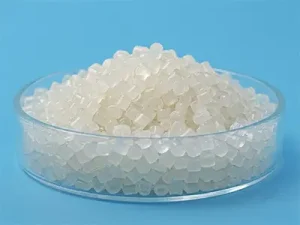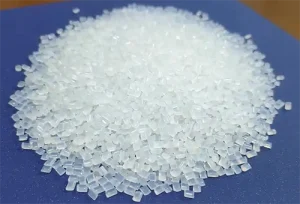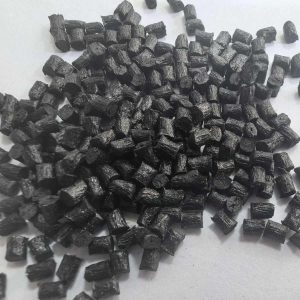
In the field of engineering plastics, Polyamide 6 (PA6, also known as Nylon 6) has long held a dominant position due to its excellent mechanical strength, wear resistance, and chemical corrosion resistance. As a significant modified category within the PA6 family, the high-flow version addresses many pain points of traditional PA6 in processing complex products through its unique melt flow characteristics. It has become the preferred material for high-end component production in the automotive, electronics, and machinery industries. This article will analyze the core value of modified high-flow PA6 from the perspectives of technical principles, processing technology, and core advantages, while exploring the high-flow modification potential of Polyamide 6 Glass Fiber 30% Resin (PA6 GF30 Resin) to provide practical technical reference for industry professionals.
Core Definition and Technical Principles of High Fluidity PA6
This type of modified PA6 is essentially a product that significantly improves the Melt Flow Rate (MFR) while maintaining the excellent mechanical properties of traditional PA6 through chemical modification (such as molecular weight regulation or molecular structure optimization) or physical modification (such as the addition of flow modifiers). The core technical logic lies in optimizing the molecular chain structure to reduce chain entanglement caused by hydrogen bonding between molecules, thereby lowering melt viscosity and allowing the material to flow more easily and fill molds more smoothly during processing.
Compared to standard PA6, its melt flow rate is typically increased by more than 30% (specific values vary by modification process). Crucially, this does not sacrifice key mechanical properties—tensile strength and flexural strength still meet the requirements for most engineering components, while the inherent oil resistance, self-lubrication, and impact resistance of PA6 are preserved. This balance of “high flow + high performance” distinguishes it from ordinary modified PA6, making it better suited for the production of complex, thin-walled, and high-precision products.
Core Technical Advantages (Processing and Application Dimensions)
The advantages of this modified material are concentrated in three areas: processing efficiency, product quality, and application adaptability. Especially in mass production scenarios, it can significantly reduce production costs and enhance product competitiveness.
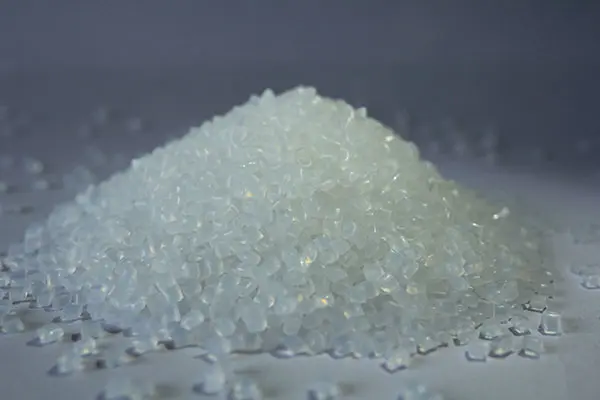
- Significant Increase in Processing Efficiency and Lower Production Costs Due to superior melt fluidity, this modified PA6 can quickly fill mold cavities under lower injection pressure and temperature during injection molding. It is especially suitable for molds with complex structures, thin walls (as low as 0.8mm), or multiple cavities. Compared to standard PA6, the injection cycle can be shortened by 15%-25%, reducing the residence time of the melt in the barrel. This not only improves production efficiency but also reduces equipment energy consumption and mold wear. Additionally, the plasticization effect is more uniform, reducing defects such as uneven plasticization, short shots, or material shortage. The product yield can be increased to over 98%, significantly reducing waste and production loss.
- More Stable Product Quality and Higher Precision The uniform melt fluidity allows the material to fully fill every detail of the mold, including fine textures and holes. This effectively avoids common defects found in standard PA6, such as sink marks, bubbles, and warpage, resulting in smoother surfaces and higher dimensional accuracy (dimensional tolerances can be controlled within ±0.02mm). For components requiring subsequent assembly (such as electronic connectors or precision automotive gears), improved dimensional accuracy reduces assembly gaps and enhances stability and service life. Uniform flow also reduces internal stress, lowering the risk of cracking or deformation during use.
- Wider Application Scenarios Adapting to High-End Demands The adaptability of high-flow modified PA6 is extremely strong, especially in industries with high requirements for precision and efficiency:
- Automotive Industry: Used for engine peripheral components (such as intake manifolds, fuel system components) and interior parts (dashboards, center consoles). It enables complex shape molding and reduces vehicle weight through lightweight design.
- Electrical and Electronics Industry: Used for manufacturing miniaturized, high-precision electronic connectors, relay housings, and sensor housings, meeting the trend toward miniaturized and lightweight electronic products.
- Machinery Industry: Used for producing precision gears, bearings, and sliders. Its high flow and good wear resistance improve transmission efficiency and service life.
Notably, Polyamide 6 Glass Fiber 30% Resin (PA6 GF30 Resin) can also achieve high-flow characteristics through the same modification processes. This glass-fiber-reinforced material with high-flow properties retains the extreme strength, rigidity, and dimensional stability provided by 30% glass fiber while gaining processing advantages. It solves traditional issues of poor flow, glass fiber exposure (wicking), and insufficient filling in reinforced PA6, achieving a dual advantage of “high strength + high flow” for high-end load-bearing components like engine brackets and electronic equipment housings.
Key Processing Essentials (Injection Molding Process Detail)
The processing technology for high-flow modified PA6 shares similarities with standard PA6 but requires precise control of temperature, pressure, and mold design to fully leverage its advantages.
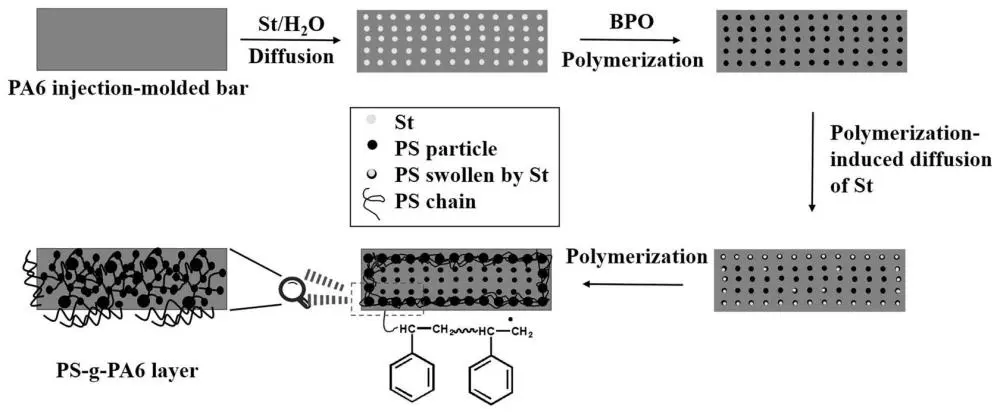
- Processing Temperature Control (Core Parameter) The processing temperature window is relatively narrow. It is recommended to use sectional temperature control (parameters may be fine-tuned based on specific grades):
- Rear Barrel Zone: 210-230°C (Preheating to avoid uneven plasticization).
- Middle Barrel Zone: 230-250°C (Core plasticization zone for complete melting).
- Front Barrel Zone: 220-240°C (Adjusting melt viscosity; avoiding degradation).
- Nozzle Temperature: 215-235°C (Slightly lower than the front zone to prevent drooling or stringing).
- Mold Temperature: 40-80°C (40-60°C for general products; 60-80°C for precision or high-crystallinity parts).
Special Note: When processing high-flow Polyamide 6 Glass Fiber 30% Resin (PA6 GF30 Resin), the barrel temperature should be increased by 10-20°C, but it is recommended not to exceed 290°C to avoid thermal degradation of the PA6 matrix, which would lead to decreased product performance.
- Injection Pressure and Speed Since the melt viscosity is lower, injection pressure can be significantly lower than for standard PA6, with a suggested range of 60-100 MPa (standard PA6 is typically 100-150 MPa). Injection speed can be appropriately increased (30-60 mm/s) to ensure rapid filling. However, excessive speed should be avoided to prevent turbulence, bubbles, or charring. Holding pressure should be 50%-70% of injection pressure, with a holding time of 10-20s to ensure the product is fully compacted and free of sink marks.
- Drying Treatment and Mold Design PA6 is inherently hygroscopic. High moisture content leads to bubbles, silver streaks, and cracking. Materials must be dried at 80-100°C for 4-6 hours. Ensure moisture content is below 0.1% (below 0.05% for precision products). Regarding mold design, larger gates and runners are recommended to reduce resistance, and proper venting slots must be set to prevent trapped air.
Common Types and Application Differentiation
- Standard High Fluidity PA6: Non-reinforced. Excellent flow with mechanical properties close to standard PA6. Suitable for complex, thin-walled, non-load-bearing precision parts like electronic connectors and gears.
- High Fluidity Polyamide 6 Glass Fiber 30% Resin (PA6 GF30 Resin): 30% glass fiber reinforced with high-flow modification. Significantly superior strength, rigidity, and heat resistance. Suitable for high-end load-bearing components like automotive engine brackets and large structural parts.
Application Trends and Precautions
As automotive lightweighting and electronic miniaturization trends grow, the demand for high-flow modified PA6 will continue to rise. Future development will focus on glass-fiber-reinforced high-flow products (like PA6 GF30 Resin) to meet both strength and efficiency requirements. In practice, ensure the use of stable-performance materials from reputable manufacturers and adjust processing parameters—particularly temperature and pressure—based on specific product needs.
Summary
High-flow PA6 provides new solutions for high-end precision products by offering superior processing and stable mechanical properties. Whether improving production efficiency, product quality, or expanding application scenarios, this modified material demonstrates unique value, with High Fluidity PA6 GF30 Resin further meeting the needs of high-end load-bearing components.