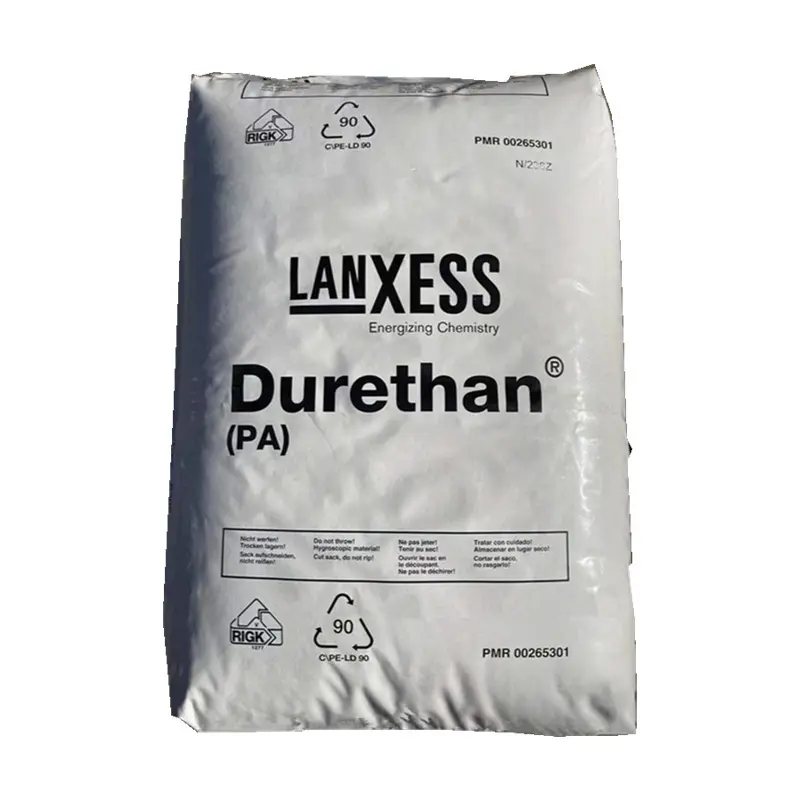
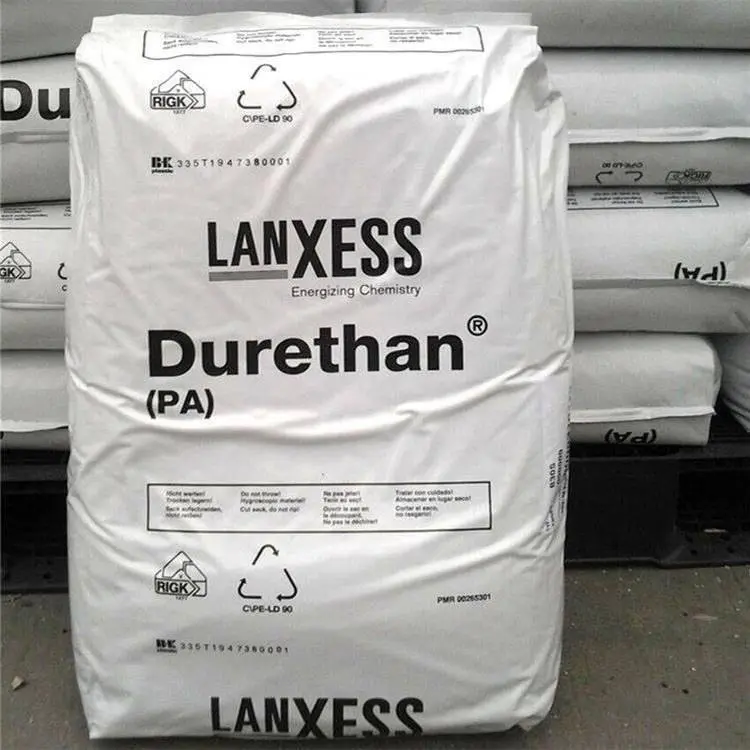
LANXESS Durethan PA66 AKV30 is a 30% glass fiber reinforced injection molding resin featuring high rigidity, thermal stability, and excellent electrical insulation.
| Manufacturer | Lanxess |
|---|---|
| Density | 1.36 g/cm³ |
| Tensile Strength at Break | 185 MPa |
| Flexural Modulus | 8400 MPa |
| Tensile Modulus | 10600 MPa |
Note: See the product description for additional technical specifications
Manufacturer: LANXESS
Brand/Series: Durethan®
Product Grade: PA66 AKV30
Category: PA66, 30% Glass Fiber Reinforced Injection Molding Grade Polyamide (PA66-GF30)
Appearance: Natural/uncolored pellets, opaque
Durethan® AKV30 is a classic 30% short glass fiber reinforced PA66 injection molding grade from LANXESS. It serves as a fully market-proven, supply-chain-mature, high-rigidity structural base material in global engineering plastics markets. Formulated with a PA66 matrix, this grade achieves high tensile strength, high flexural modulus, excellent heat deflection temperature, and superior dimensional stability through glass fiber reinforcement, while retaining PA66’s inherent resistance to oil, grease, and electrical insulation properties.
In automotive, electrical/electronics, industrial drive systems, and home appliance structural components, AKV30 is frequently utilized as a standard benchmark grade for metal replacement, lightweighting, and high-load plastic parts. For overseas buyers, its core value lies in its complete OEM technical support, traceable ISO and UL dataset, uniform glass fiber distribution, and exceptional batch-to-batch consistency, making it well-suited for long-term bulk imports and locked-in machine processing parameters.
| Properties | Test Conditions | Property Values | Units | Test Methods |
|
Water Absorption
|
Conditioned at 23 °C | 5.5 | % | ISO 62 |
| 23 °C; 50% RH | 2 | % | ISO 62 | |
| Density | — | 1.36 | g/cm³ | ISO 1183 |
| Molding Shrinkage | Normal, 150x105x3 mm; 280 °C/MT, 80 °C, 400 bar | 1.46 | % | ISO 2577 |
|
Post Shrinkage
|
Normal, 150x105x3 mm; 120 °C, 4 h | 0.05 | % | ISO 2577 |
| Parallel, 150x105x3 mm; 120 °C, 4 h | 0.04 | % | ISO 2577 | |
| Molding Shrinkage | Parallel, 150x105x3 mm; 280 °C/MT, 80 °C, 400 bar | 0.35 | % | ISO 2577 |
| Properties | Test Conditions | Property Values | Units | Test Methods |
| Tensile Modulus | 1 mm/min | 10600 | MPa | ISO 527-1,-2 |
| Flexural Modulus | 2 mm/min | 8400 | MPa | ISO 178 |
| Flexural Strain | 2 mm/min | 4 | % | ISO 178 |
| Tensile Stress at Break | 5 mm/min | 185 | MPa | ISO 527-1,-2 |
|
Izod Notched Impact Strength
|
-30 °C | <10 | kJ/m² | ISO 180/1A |
| -40 °C | <10 | kJ/m² | ISO 180/1A | |
| Tensile Strain at Break | 5 mm/min | 3 | % | ISO 527-1,-2 |
| Flexural Strength | 2 mm/min | 290 | MPa | ISO 178 |
|
Charpy Notched Impact Strength
|
23 °C | 10 | kJ/m² | ISO 179/1eA |
| -30 °C | 10 | kJ/m² | ISO 179/1eA |
| Properties | Test Conditions | Property Values | Units | Test Methods |
|
Heat Deflection Temperature (HDT)
|
8.00 MPa | 135 | °C | ISO 75-1,-2 |
| 1.80 MPa | 250 | °C | ISO 75-1,-2 | |
| 0.45 MPa | 250 | °C | ISO 75-1,-2 | |
|
Coefficient of Linear Thermal Expansion (CLTE)
|
Transverse, 23 to 55 °C | 0.1 | 1/°C | ISO 11359-1-2 |
| Parallel, 23 to 55 °C | 0.025 | 1/°C | ISO 11359-1-2 | |
| Melting Temperature | 10 °C/min | 263 | °C | ISO 11357-1-3 |
| Vicat Softening Temperature | 50 N; 120 °C/h | >230 | °C | ISO 306 |
| Properties | Test Conditions | Property Values | Units | Test Methods |
| Electric Strength | 1 mm; d.a.m. | 40 | kV/mm | IEC 60243-1 |
| Surface Resistivity | d.a.m. | 1.00E+14 | ohms | IEC 60093 |
|
Dissipation Factor
|
1 MHz | 180 | dimensionless | IEC 60250 |
| 100 Hz | 90 | dimensionless | IEC 60250 | |
|
Comparative Tracking Index
(CTI) |
Solution B | 400M | V | IEC 60112 |
| Solution A | 600 | V | IEC 60112 | |
|
Relative Permittivity
|
1 MHz | 4 | dimensionless | IEC 60250 |
| 100 Hz | 4 | dimensionless | IEC 60250 | |
| Volume Resistivity | d.a.m. | 1.00E+13 | ohms·m | IEC 60093 |
| Properties | Test Conditions | Property Values | Units | Test Methods |
|
Flammability Rating
|
3.2 mm | HB | dimensionless | UL 94 |
| 1.6 mm | HB | dimensionless | UL 94 | |
| Limiting Oxygen Index (LOI) | Method A | 23 | % | ISO 4589-2 |
| Glow Wire Flammability Index (GWFI) | 2.0 mm | 600 | °C | IEC 60695-2-12 |
| Properties | Test Conditions | Property Values | Units | Test Methods |
| Filler Content | Glass fiber/Glass beads | 30 | % | ISO 3451-1 |
|
Charpy Unnotched Impact Strength
|
-30 °C | 70 | kJ/m² | ISO 179/1eU |
| 23 °C | 90 | kJ/m² | ISO 179/1eU |
Notice: The technical data sheet (TDS) of Durethan® PA66 AKV30 material from LANXESS corporation, if there are differences, please refer to the official website of LANXESS.
High Structural Rigidity & Load-Bearing Capacity: Featuring a tensile modulus of 10,600 MPa and flexural modulus of 8,400 MPa, parts display minimal deformation under medium-to-high loads, making it ideal for load-bearing structures such as brackets, housings, and gearbox components.
Thermal Endurance & Dimensional Stability: Reaches a heat deflection temperature of 250 °C under 1.8 MPa and a melting point of 263 °C. Combined with glass fiber orientation that reduces anisotropic shrinkage, it preserves excellent dimensional retention under high-temperature assembly conditions.
Superior Electrical Insulation: Possesses a volume resistivity of 1E13 Ω·m, dielectric strength of 40 kV/mm, and a CTI (Solution A) rating of 600 V, making it well-suited for connectors, control boxes, and low-voltage electrical insulation parts.
Oil & Chemical Resistance: Demonstrates reliable resistance against engine oils, greases, coolants, and most alcoholic media, fitting automotive under-the-hood and industrial equipment peripheral components.
Mature Injection Processing: Melt flowability satisfies filling requirements for ribbed structures, metal inserts, and multi-cavity molds. Wear-resistant screws and adequate mold venting are recommended for this glass-reinforced system.
Traceable UL 94 HB & Glow Wire Data: Provides 1.6 mm / 3.2 mm flammability ratings and GWFI 600 °C references, facilitating preliminary compliance benchmarking during electrical part material selection.
Automotive Components: Air intake system components, wiring harness brackets, accelerator pedal bases, water pump housings, filter brackets, window lifter mechanisms, and non-directly heated structural parts surrounding the engine compartment.
Electronics & Electrical: Circuit breaker housings, terminal block strips, relay bases, controller enclosures, plug/socket insulators, and motor end shields, relying on its insulation performance, rigidity, and heat resistance.
Industrial Machinery: Gears, racks, sliders, guide seats, pump impellers, flanges, and handle structural components, suited for applications enduring sustained mechanical loads and mild wear.
Home Appliances & Power Tools: Power drill housings, cutter guards, vacuum cleaner motor brackets, and heat-resistant structural parts for coffee makers and kitchen appliances, balancing strength, thermal stability, and electrical safety.
Consumer Structural Parts: Premium hinges, luggage cart connectors, and fitness equipment load-bearing members where dimensional precision and drop-impact reliability are required for industrial-grade plastic components.
Application Boundary Notice: AKV30 is a non-flame-retardant reinforced PA66 with a UL 94 HB rating; it is not equivalent to V-0/V-1 flame-retardant grades. For strict flame-retardancy certifications, long-term hot/humid outdoor weatherability, or food-contact scenarios, corresponding modified grades should be selected and audited against end-product compliance reports.
Q1: Is pre-drying mandatory before processing AKV30? What are the recommended drying parameters?
A1: Pre-drying is mandatory. PA66 is sensitive to moisture; molding without proper drying easily leads to silver streaks, voids, reduced tensile strength, and brittleness. Desiccant drying at 80–100 °C for 2–6 hours is recommended, targeting a moisture content controlled to approximately 0.03%–0.06% (strictly not exceeding 0.10%). Extend drying duration during humid seasons and transfer dried resin in airtight hoppers to prevent moisture regain. Refer to actual lot TDS and on-site dew point conditions.
Q2: How to choose among AKV30, unreinforced PA66, and PA6 GF30?
A2:
vs. Unreinforced PA66: AKV30 offers significantly superior rigidity, heat resistance, and dimensional stability, though notched impact is more brittle and part surfaces display glass fiber textures; it is suited for structural load-bearing parts.
vs. PA6 GF30: PA66 AKV30 yields higher heat deflection temperature, thermal resistance, and mechanical property retention, though performance reduction post-moisture absorption must still be noted. PA6 is slightly more forgiving in cost and processing window, but its high-temperature rigidity is generally lower than equivalent PA66-GF30.
Selection Principle: Prioritize AKV30 for high-temperature, high-rigidity, and sustained-load conditions. Unreinforced grades should be chosen for purely cosmetic or non-load-bearing components.
Q3: How to address floating fibers or warpage in glass-reinforced molded parts?
A3: Check four primary factors first: thoroughness of resin drying, sufficiency of mold temperature, runner/gate balance, and venting adequacy. Elevating mold temperature promotes surface smoothness and uniform crystallization; a mold temperature of 80–120 °C is recommended for glass-reinforced systems, alongside a stepped holding pressure profile to prevent warpage caused by localized high pressure. Tool steel selection and gate design must account for glass fiber abrasion.
Q4: How to verify RoHS, REACH, and UL documents?
A4: Shipments include TDS and MSDS/SDS; batch COAs are issued per actual order. RoHS and REACH SVHC rely on OEM declarations and third-party testing reports. UL 94 HB compliance requires verifying that the grade, color, thickness, and UL File number match, rather than relying solely on the grade name for end-product certification. Medical, food-contact, rail transit, or automotive projects should incorporate end-use standards into procurement technical agreements in advance.
Q5: What are the procurement and delivery details?
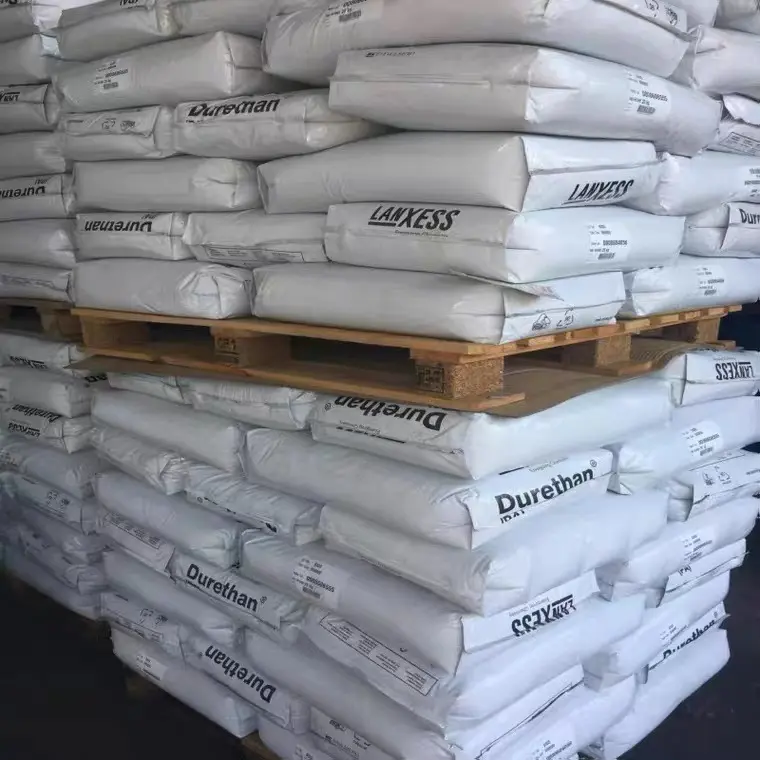
A5: Standard packaging follows factory specifications, typically 25 kg bags, classified as non-dangerous goods (Non-DG), supporting FCL/LCL. TDS, MSDS, COA, and compliance declaration pre-reviews are available. Trade terms accept FOB Chinese ports, CIF, and CFR, with payment via T/T or sight L/C per contract terms. Sampling trials should proceed through drying and small-scale injection runs to lock in melt temperature, mold temperature, moisture content, and shrinkage allowances prior to mass production.
Submit your inquiry today and receive a professional competitive price tailored to your project requirements.