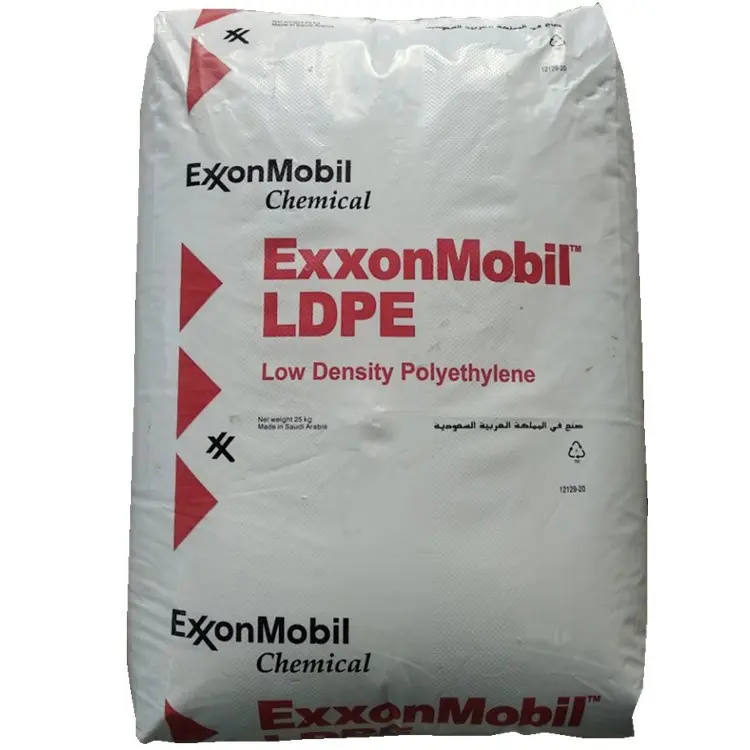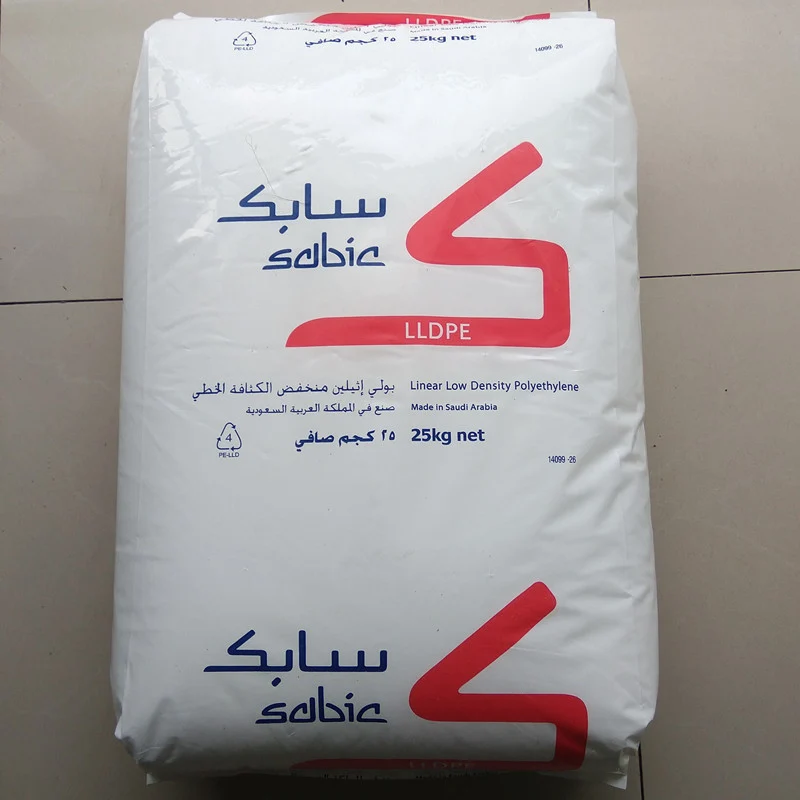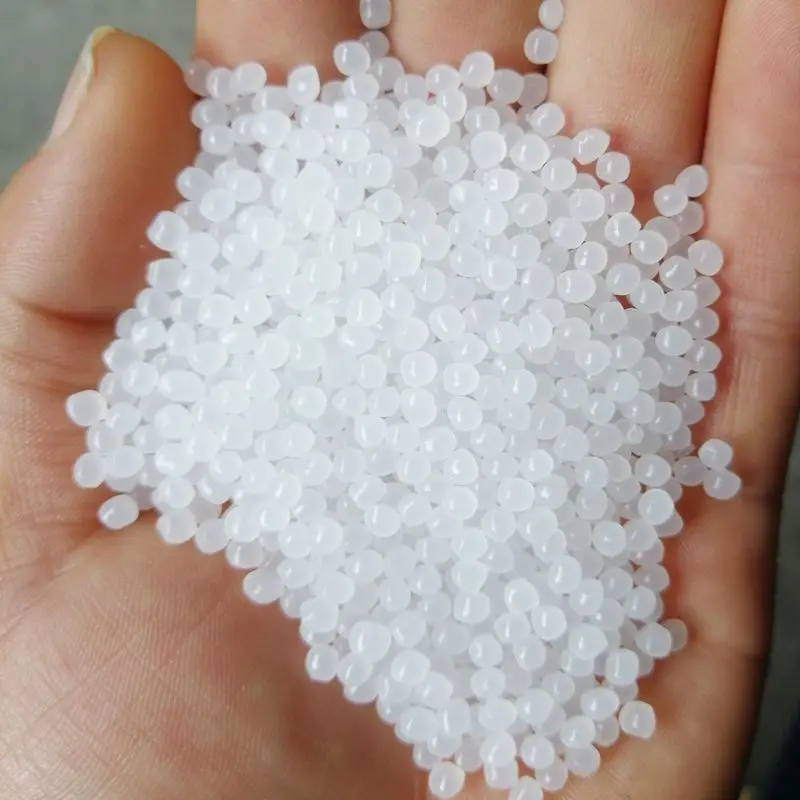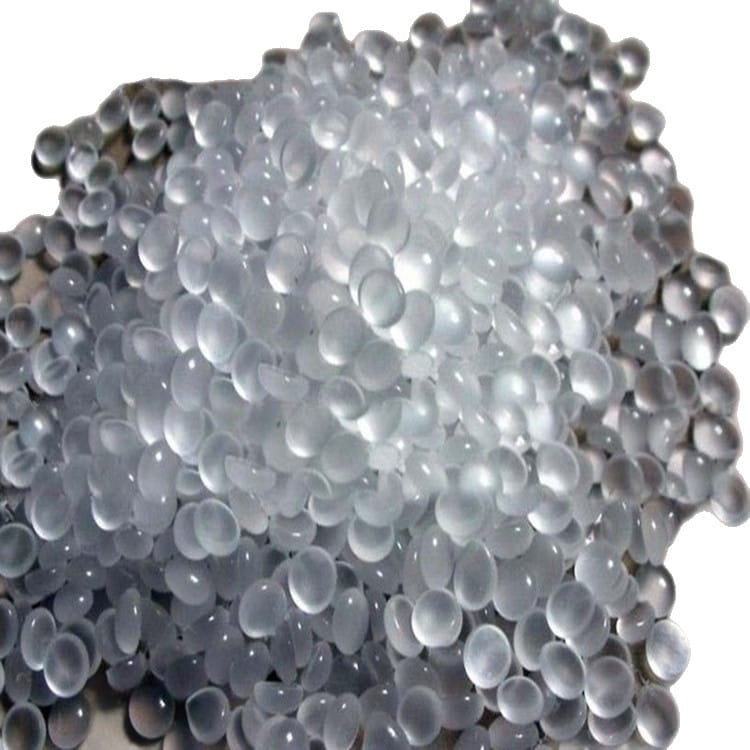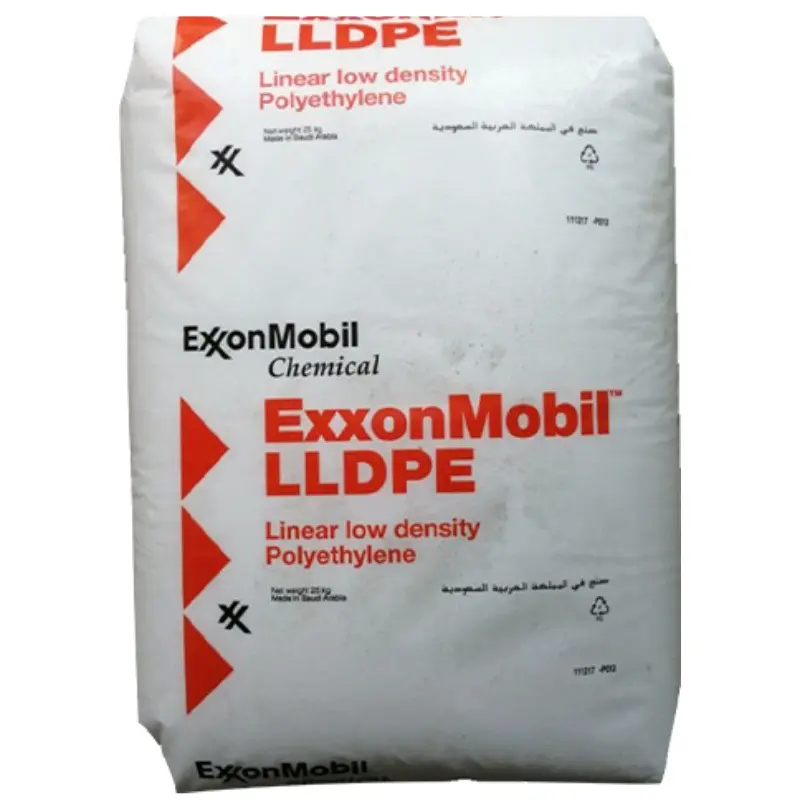
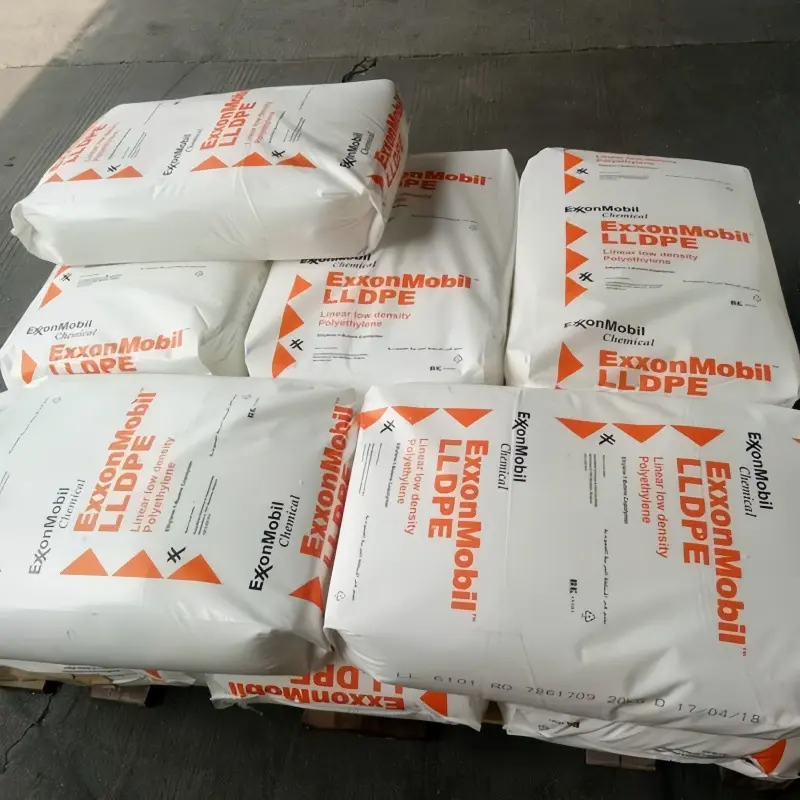
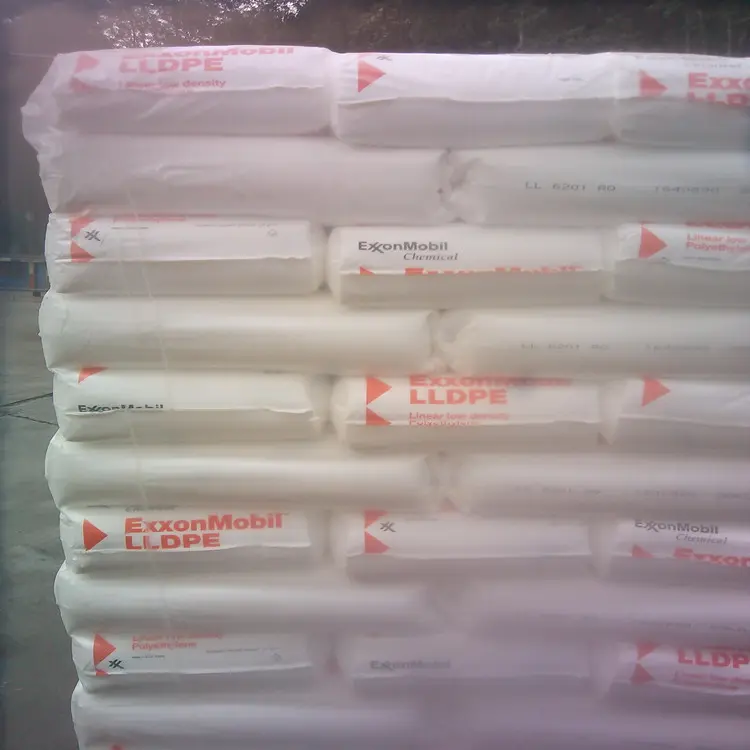
High-clarity ExxonMobil LLDPE LL1002AY blown film polymer featuring 1.7% haze, 98 gloss, and high tear strength. Ideal for food packaging and heavy-duty bags.
| Manufacturer | ExxonMobil |
|---|---|
| MFR | 2 g/10 min |
| Density | 0.918 g/cm³ |
| Tensile Strength at Break | 25 MPa |
| Melting Temperature | 120 °C |
Note: See the product description for additional technical specifications
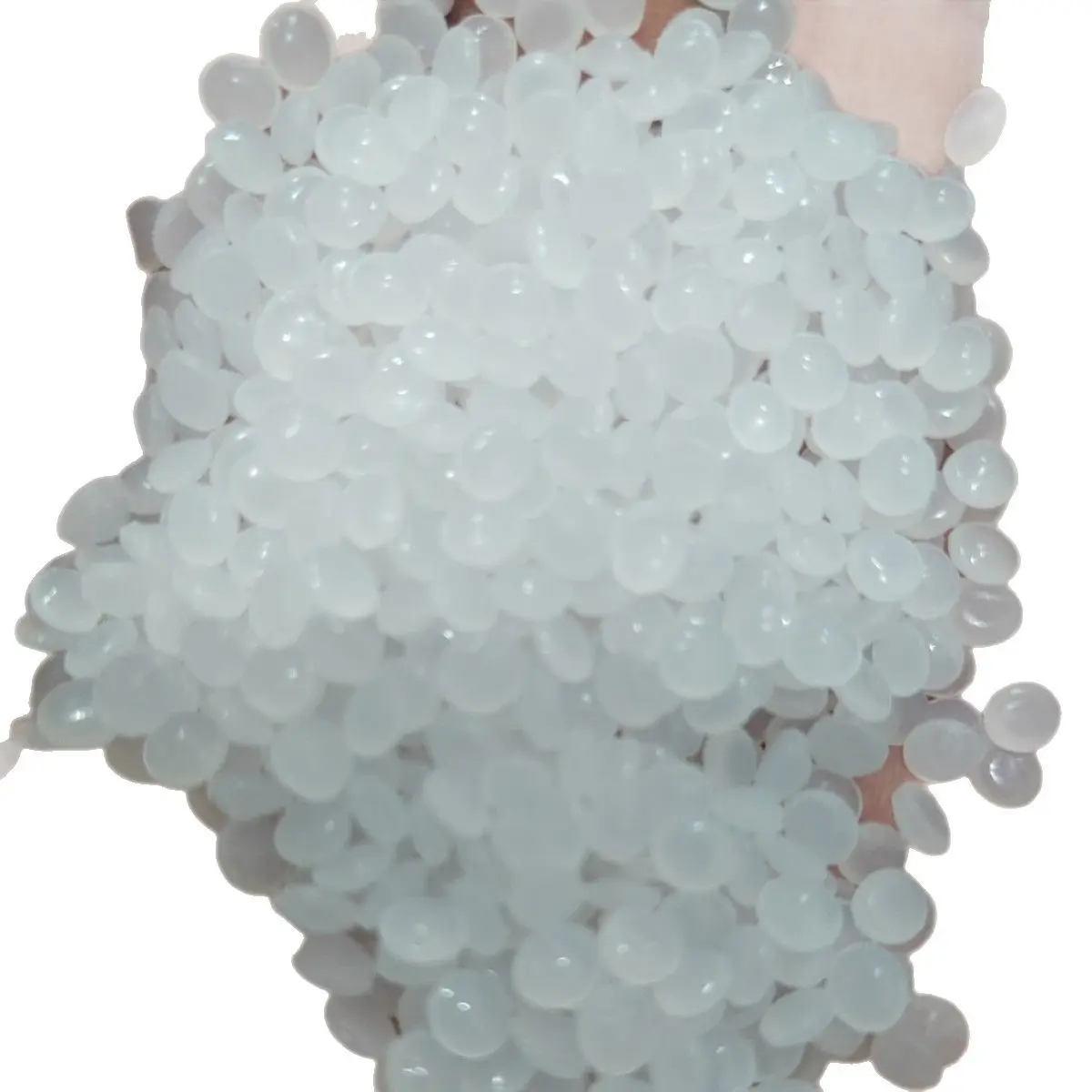
ExxonMobil LLDPE LL1002AY is a soft, hexene-free, butene-copolymerized linear low-density polyethylene (LLDPE) produced by ExxonMobil Chemical. Catalytically synthesized from ethylene and 1-butene monomers, it exhibits a density of 0.918 g/cm³ and a Melt Flow Rate (MFR) of 2 g/10 min (ASTM D1238, 190 °C / 2.16 kg). Supplied as natural pellets, the resin features uniform granule size and good melt flowability, making it well-suited for blown film extrusion, cast film processing, and resin blending with LDPE.
Within ExxonMobil’s polyethylene product lineup, the LL 1002 platform represents a classical, general-purpose blown-film grade series widely adopted as a standard resin benchmark by flexible packaging convertors worldwide. Among this series, LL1002AY is a key representative grade distinguished by high surface gloss, excellent draw-down ratios, and balanced film toughness. Formulated without slip agents, antiblock additives, or processing aids—containing thermal stabilizers only—it gives converting plants full autonomy to tailor slip properties and coefficient of friction (COF) via masterbatches. This clean formulation minimizes small-molecule migration risks, making LL1002AY highly favored in food packaging and personal care packaging where formula purity is critical.
Primary applications cover a broad range of flexible packaging films, including laminated films, food packaging, multilayer structures, produce bags on a roll, shopping bags, trash liners, industrial packaging sacks, garment bags, agricultural films, and freezer packaging.
In a nutshell: A benchmark general-purpose blown film LLDPE grade featuring outstanding optical clarity, broad processing latitude, and a ultra-clean additive formulation.
| Physical Properties | Test Condition | Value | Unit | Test Method |
| Melt Flow Rate (MFR) | 190 °C / 2.16 kg | 2 | g/10 min | ASTM D1238 |
| Density | — | 0.918 | g/cm³ | Internal Method |
| Mechanical Properties | Value | Unit | Test Method |
| Dart Drop Impact | < 48 | g | ASTM D1709 |
| Tensile Strength at Break, TD | 25 | MPa | ASTM D882 |
| Tensile Strength at Break, MD | 62 | MPa | ASTM D882 |
| Secant Modulus, TD | 130 | MPa | ASTM D882 |
| Secant Modulus, MD | 110 | MPa | ASTM D882 |
| Tensile Elongation at Break, TD | 830 | % | ASTM D882 |
| Tensile Elongation at Break, MD | 420 | % | ASTM D882 |
| Elmendorf Tear Strength, TD | 430 | g | ASTM D1922 |
| Elmendorf Tear Strength, MD | 21 | g | ASTM D1922 |
| Thermal Properties | Test Condition | Value | Unit | Test Method |
| Melting Temperature | — | 120 | °C | Internal Method |
| Optical Properties | Test Condition | Value | Unit | Test Method |
| Haze | — | 1.7 | % | ASTM D2457 |
| Gloss (45°) | 45° | 98 | — | ASTM D2457 |
| Other Properties | Test Condition | Value | Unit | Test Method |
| Puncture Force | — | 34.2 | N | Internal Method |
| Puncture Energy | — | 2 | J | Internal Method |
Disclaimer: The technical data sheet (TDS) of ExxonMobil LLDPE LL1002AY material from ExxonMobil corporation, if there are differences, please refer to the official website of ExxonMobil.
Superior Optical Clarity & Gloss: Haze as low as 1.7% with a 45° gloss rating of 98 (ASTM D2457), delivering outstanding film transparency and surface luster suited for high-end retail shelf packaging.
High Transverse Tear Strength & Puncture Resistance: Features a film puncture force of 34.2 N, puncture energy of 2 J, and a transverse Elmendorf tear strength of 430 g (ASTM D1922), effectively reducing bag breakage during transit and pallet stacking.
Balanced Tensile Strength & Stiffness: Machine direction (MD) tensile strength at break reaches 62 MPa alongside a transverse (TD) secant modulus of 130 MPa (ASTM D882), maintaining film structural stiffness and easy bag opening.
Wide Processing Window for High-Speed Extrusion: A 2 g/10 min melt index ensures stable bubble stability, uniform gauge control, and high draw-down capability, compatible with both blown film and cast film processes.
Clean Formulation Free of Additive Interference: Formulated without slip agents, antiblock, or processing aids (thermal stabilizers only); TnPP (Tris(nonylphenyl)phosphite) is not intentionally added, allowing convertors to freely adjust COF according to order requirements.
Ideal Blending Partner: Serves as an effective resin blend component with LDPE to enhance film toughness, puncture resistance, and extrusion line output.
The performance balance of LL1002AY (high gloss + high TD tear + balanced stiffness) makes it a versatile resin across flexible packaging lines:
Food & Consumer Packaging Films: Food barrier films, multilayer laminates, personal care packaging, and hygiene films—benefiting from low 1.7% haze and clean additive formulation.
Sack & Bag Conversion: Retail shopper bags, garbage sacks, institutional can liners, produce bags on a roll, garment bags, and laundry sacks.
Industrial & Logistics Packaging: Heavy-duty packaging films, liners, pallet shrink/stretch hoods, and general protective film wraps.
Cast & Stretch Films: Cast stretch film substrates and packaging film layers balancing optics and tensile strength.
Agricultural Films: Produce packaging films, agricultural mulch films, and greenhouse films leveraging its tear and puncture resistance.
Cold Chain & Frozen Packaging: Deep-freeze packaging films benefiting from good low-temperature flexibility and impact resistance.
Resin Blending: Blended into LDPE matrixes to improve mechanical properties and processing speed, or used as functional layers in coextrusion lines.
Further Reading: Our internal guide 《Complete Guide to Processing and Melting Temperatures of LLDPE》 details temperature settings for blown film, cast film, and injection molding processes; 《HDPE, LDPE, and LLDPE: A Comprehensive Guide to the Differences and Applications of the Three Main Polyethylenes》 helps you determine the material selection boundaries among the three polyethylene types.
Q1: Is drying required before processing LL1002AY? What are the drying conditions?
Routine pre-drying is not required. Polyethylene is a non-hygroscopic resin with extremely low equilibrium moisture absorption. Under intact packaging and dry warehouse conditions, pellets can be fed directly into extrusion hoppers.
Short-time drying is only recommended if bags are damaged, stored in high-humidity environments for prolonged periods, or exposed to surface condensation after cold-chain transit. In such cases, hot-air drying at ~80 °C for 1–2 hours is sufficient. Avoid excessive drying temperatures to prevent pellet agglomeration in the hopper.
Q2: What are the key differences between LL1002AY, LDPE, and HDPE? How should I select?
This is a core material selection question for converting plants, determined mainly by molecular chain architecture:
| Comparison Dimension | LLDPE LL1002AY | LDPE | HDPE |
| Molecular Architecture | Linear backbone + short branches (1-butene) | Long-chain branched | Linear with minimal branching |
| Density | 0.918 g/cm³ | 0.910–0.940 g/cm³ | 0.941–0.965 g/cm³ |
| Tensile & Puncture Resistance | High | Moderate | High (Higher stiffness) |
| Tear & Toughness | Superior (TD tear 430 g) | Moderate | Lower |
| Clarity & Gloss | High (Haze 1.7%) | High | Low (Opaque) |
| Target Positioning | General flexible packaging, laminations | High-clarity films, resin blends | Rigid containers, pipes |
Selection Guide: Choose LL1002AY when flexible films require both high transparency and superior puncture/tear resistance. Choose LDPE if high clarity is needed without high puncture demands. Choose HDPE when high stiffness and moisture barrier are paramount. For cost-performance optimization, blend LL1002AY into LDPE formulations.
Q3: Does LL1002AY carry RoHS, REACH, Food Contact, or UL certifications?
Compliance details should be distinguished across three categories:
RoHS / REACH: Pure LLDPE base resin inherently contains no RoHS-restricted substances (heavy metals, PBDEs, etc.). Formal declarations are subject to official ExxonMobil statements, and batch-specific TDS, SDS, and COA documents can be provided with shipments for customs clearance.
Food Contact Compliance: ExxonMobil’s official technical datasheet states that food contact compliance status (e.g., FDA, EU, HPFB) must be verified directly with ExxonMobil customer representatives. Food contact approval should not be assumed based solely on base resin datasheets. Furthermore, while TnPP is not intentionally added, trace levels from manufacturing processes cannot be entirely excluded.
UL & Other Certifications: Official datasheets do not list UL yellow card ratings. If your project requires UL 94 flame retardancy ratings, please confirm suitability prior to ordering—standard LLDPE packaging films typically do not require UL 94 certification.
Medical Devices: Official technical datasheets explicitly state that LL1002AY is not designed or intended for medical device applications.
Q4: What is the recommended blown film processing temperature for LL1002AY?
LLDPE has a crystalline melting point around 120–130 °C, with LL1002AY typically melting at 120 °C. In blown film extrusion, barrel and die setpoint temperatures are generally controlled between 170–220 °C. For pipe/profile extrusion, temperatures range between 180–230 °C, while injection molding operates between 200–260 °C.
Actual settings should be fine-tuned based on screw geometry, output rates, and ambient humidity. Excessively high melt temperatures risk thermal degradation, gels, and odor development, while insufficient temperatures result in unplasticized fish-eyes and hazy streaking.
Q5: Does this grade contain slip or antiblock additives? How does it affect film opening?
No. Official formulation data confirms that LL1002AY contains no antiblock agents, no slip agents, and no processing aids, containing thermal stabilizers only.
This provides converting plants with total control over film opening characteristics and coefficient of friction (COF). Slip and antiblock masterbatches can be precisely dosed during film extrusion to match specific automated packaging line requirements without risking additive blooming or formulation interference.
Submit your inquiry today and receive a professional competitive price tailored to your project requirements.