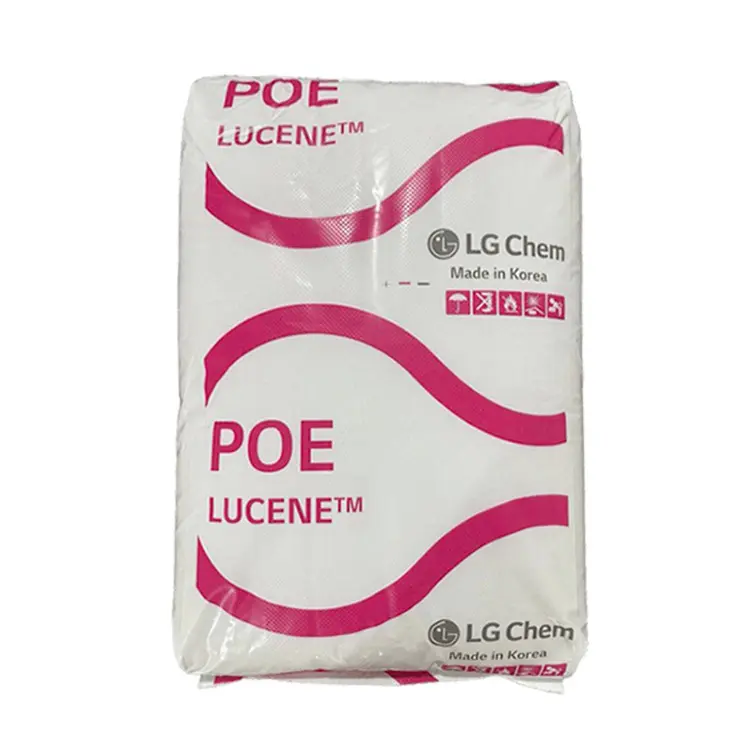
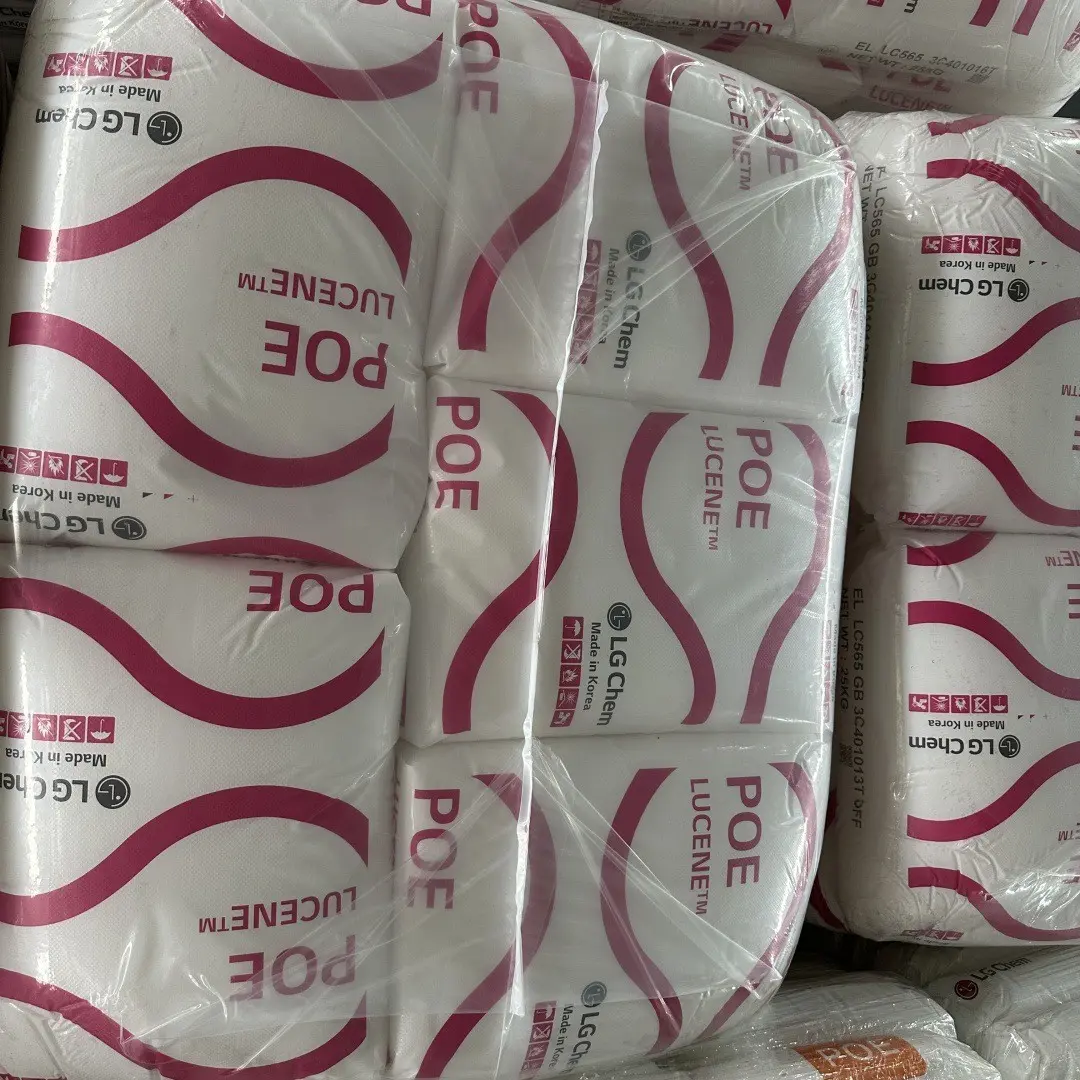
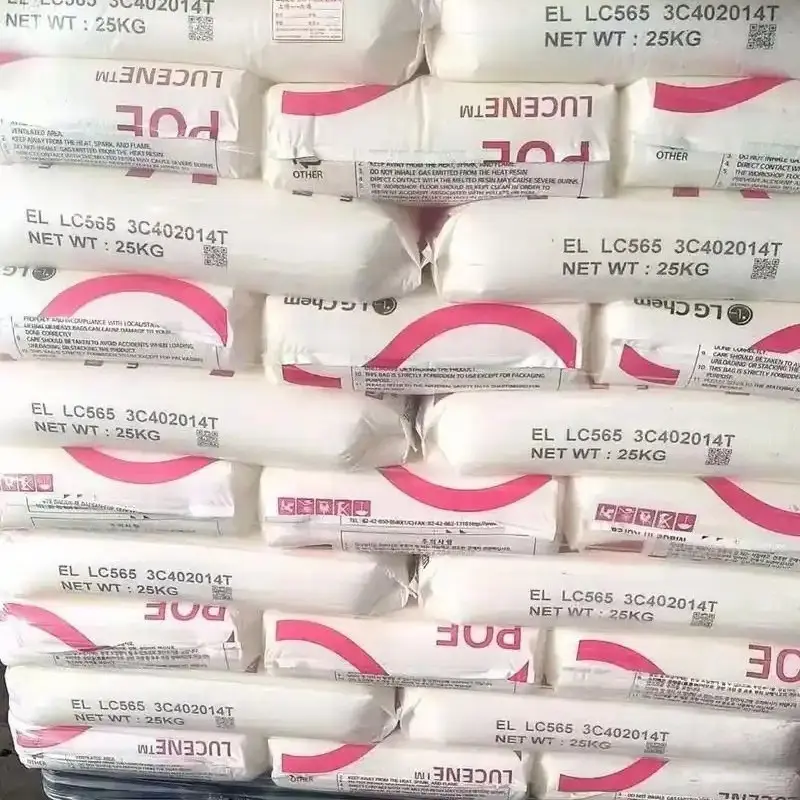
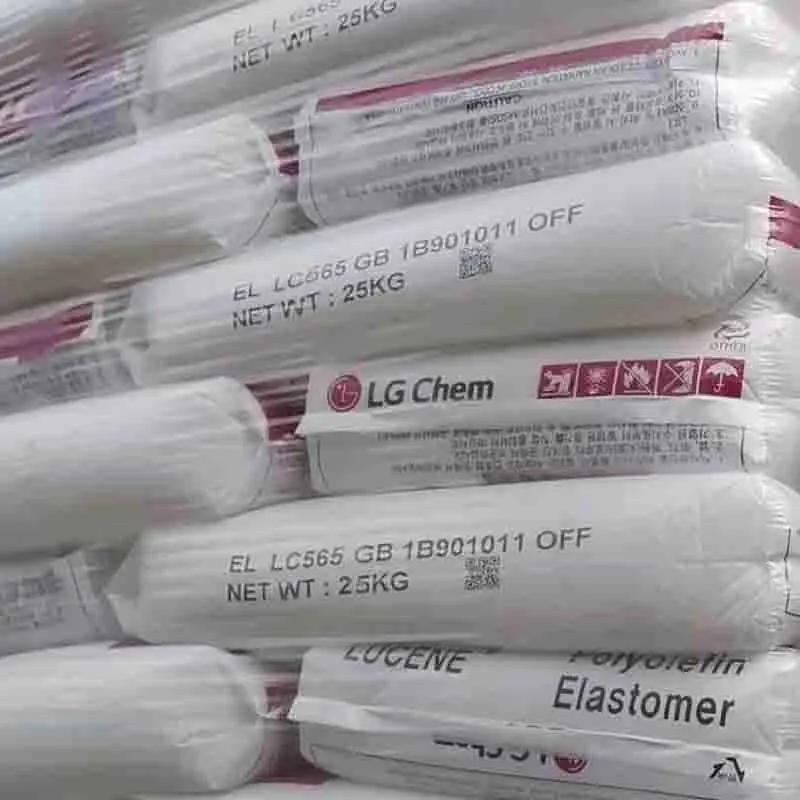
LG Chem Lucene™ LC565 POE is a high-performance polyolefin elastomer featuring low glass transition temperature and ultra-high elongation, ideal for polyolefin toughening modification and automotive applications.
| Manufacturer | LG Chem |
|---|---|
| Density | 0.865 g/cm³ |
| MFR | 5.0 g/10min |
| Tensile Strength at Break | 1.8 MPa |
| Elongation at Break | >550 % |
Note: See the product description for additional technical specifications
Manufacturer: LG Chem
Material Classification: POE (Polyolefin Elastomer)
Physical Appearance: Translucent pellet raw material
LG Chem Lucene™ LC565 is a high-performance polyolefin elastomer (POE) belonging to the Lucene™ series of elastomer products. It has a mature and stable market application in the field of modified plastic toughening and is a commonly used toughening base material in the compounding and plastics modification industry. The material features an extremely low glass transition temperature, excellent low-temperature toughness, and high elongation. It can be used for the toughening modification of polyolefin materials such as PP and PE, and is widely applied in automotive components, modified plastics, extruded products, elastomer accessories, and other fields.
| Physical Properties | Test Value | Test Unit | Test Standard |
| Density | 0.865 | g/cm³ | ASTM D1505 |
| Melt Index, Mass (190 ℃, 2.16 kg) | 5 | g/10min | ASTM D1238 |
| Mooney Viscosity ML1+4 (121 ℃) | 8 | MU | ASTM D1646 |
| Shore Hardness A | 54 | — | ASTM D2240 |
| Mechanical Properties | Test Value | Test Unit | Test Standard |
| Tensile Strength, Break, Compression Molded (500 mm/min) | 1.8 | MPa | ASTM D638 |
| Tensile Strain, Break, Compression Molded (500 mm/min) | > 550 | % | ASTM D638 |
| Flexural Modulus – 1% Secant, Compression Molded | 8 | MPa | ASTM D790 |
| Tear Strength | 20 | kN/m | ASTM D624 |
| Thermal Properties | Test Value | Test Unit | Test Standard |
| Glass Transition Temperature (Tg) | -54 | ℃ | Internal Method |
The technical data sheet (TDS) of Lucene™ LC565 POE material from LG Chemical corporation, if there are differences, please refer to the official website of LG Chemical.
Excellent low-temperature toughness: Glass transition temperature as low as -54 ℃, maintaining good elasticity in low-temperature environments and resisting brittle fracture.
Ultra-high elongation at break (>550%): Excellent elasticity and high resistance to deformation, making it ideal as a toughening modifier.
Good polyolefin compatibility: Can be blended and modified with PP and PE substrates to enhance the impact resistance of the base material.
Stable processing performance: Melt index of 5.0 g/10min, suitable for processing technologies such as extrusion, injection molding, and compounding granulation.
Low density (0.865 g/cm³): Helps reduce unit weight and control raw material costs for finished products.
Good tear resistance: Tear strength of 20.0 kN/m, enhancing the tear-resistant durability of modified products.
Automotive Modified Plastics: PP-modified automotive bumpers and interior parts, improving low-temperature impact resistance and reducing the risk of component cracking in cold environments.
Plastic Toughening Modification: PP and PE substrate toughening agents used for compounding and granulation to enhance the toughness of general-purpose and engineering plastics.
Elastic Extrusion Products: Hoses, weatherstripping, and elastic films utilizing high elongation and elasticity to produce flexible rubber-plastic accessories.
Wire and Cable Materials: Used as a toughening component in polyolefin cable compounds to improve the low-temperature elasticity of cable jackets.
Daily and Industrial Elastic Accessories: Flexible gaskets, cushioning and shock-absorbing parts, and plastic toy toughening modification.
Q1: Does LG Chem Lucene™ LC565 POE need to be dried before processing?
A1: Lucene™ LC565 POE has extremely low water absorption and generally does not require pre-drying under normal storage conditions. If the raw material is exposed to a high-humidity environment for a long time, it is recommended to dry it at 60–80 ℃ for 2–4 hours to avoid bubble defects on the product surface.
Q2: Which plastics are primarily modified by LC565 POE? Can it be blended with PA and PC?
A2: This POE grade has optimal compatibility with PP and PE polyolefin substrates and is primarily used for PP/PE toughening. Ungrafted LC565 has poor direct compatibility when blended with PA and PC; if toughening nylon or PC is required, grafted POE grades are recommended.
Q3: Does LG Chem Lucene™ LC565 meet RoHS environmental requirements?
A3: LG Chem’s original Lucene™ series products can provide RoHS compliance reports, and original manufacturer material certificates can be provided with shipments for projects exporting to the EU. Specific compliance documents can be requested from ZiJun Plastics.
Q4: How does LC565 compare to other POE grades, and what application scenarios is it suitable for?
A4: LC565 has a Shore hardness of 54A and medium fluidity, with standout advantages being an extremely low Tg and ultra-high elongation. It is primarily recommended for low-temperature toughening scenarios. If higher hardness or a higher melt index POE is needed, other grades in LG Chem’s Lucene series can be referenced: LG Chem Resin Products
Submit your inquiry today and receive a professional competitive price tailored to your project requirements.