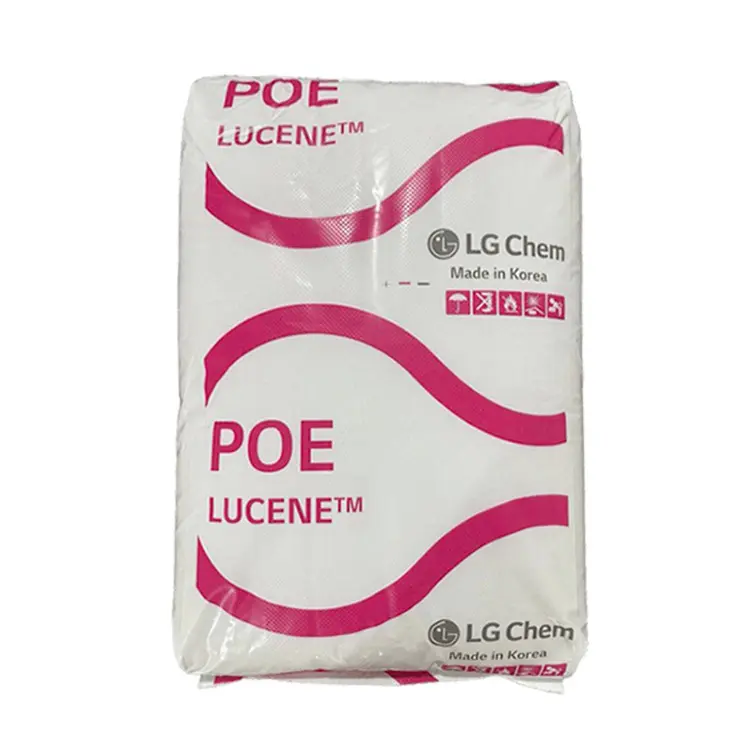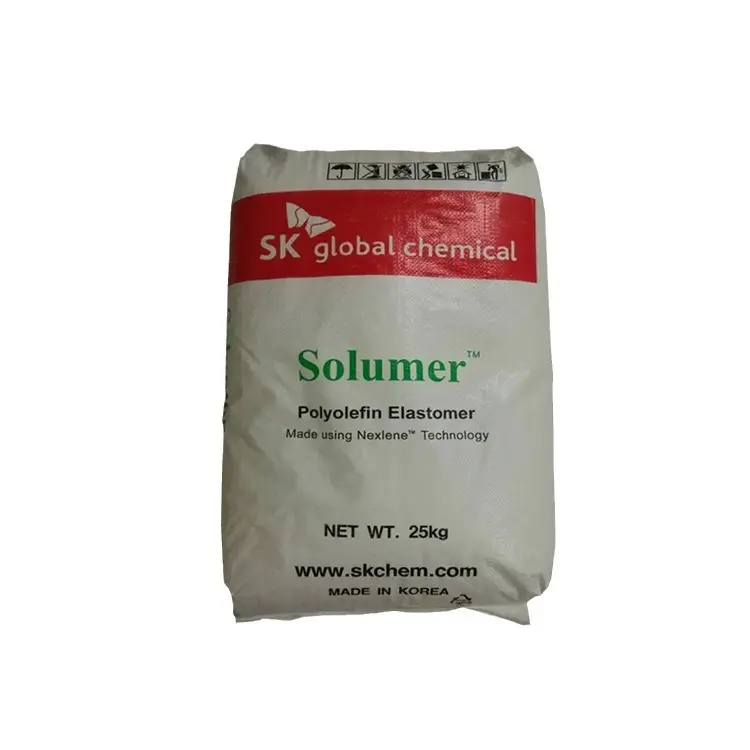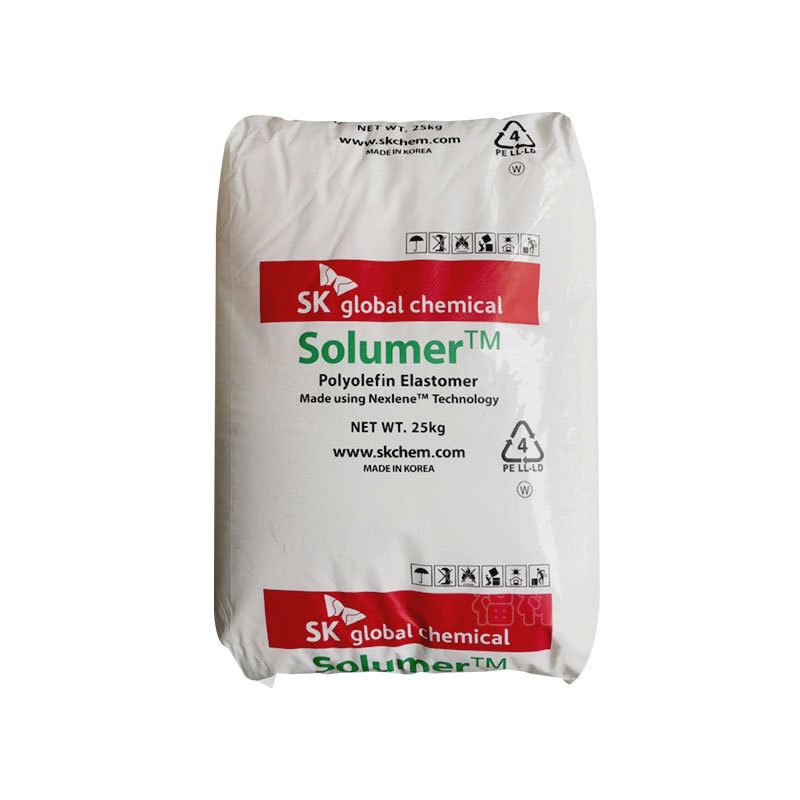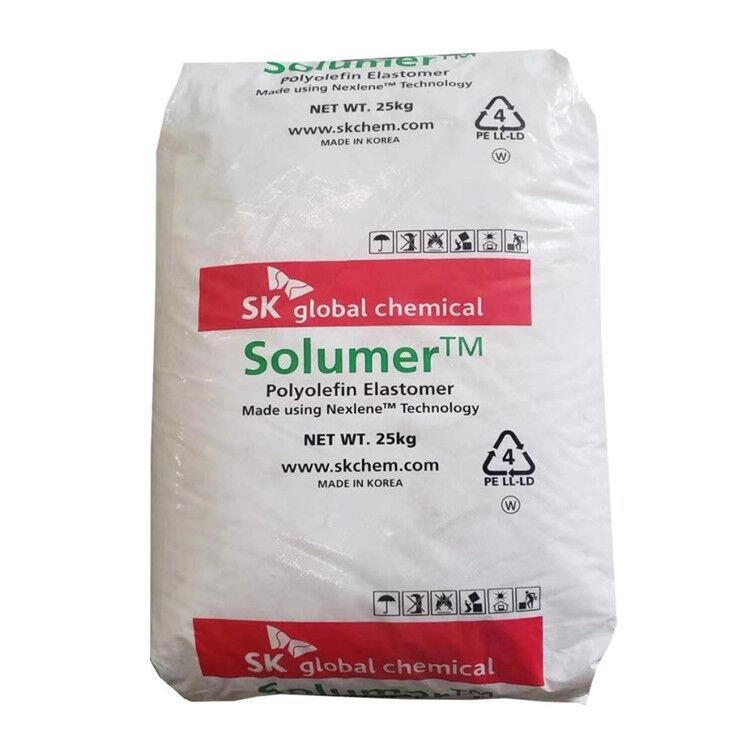
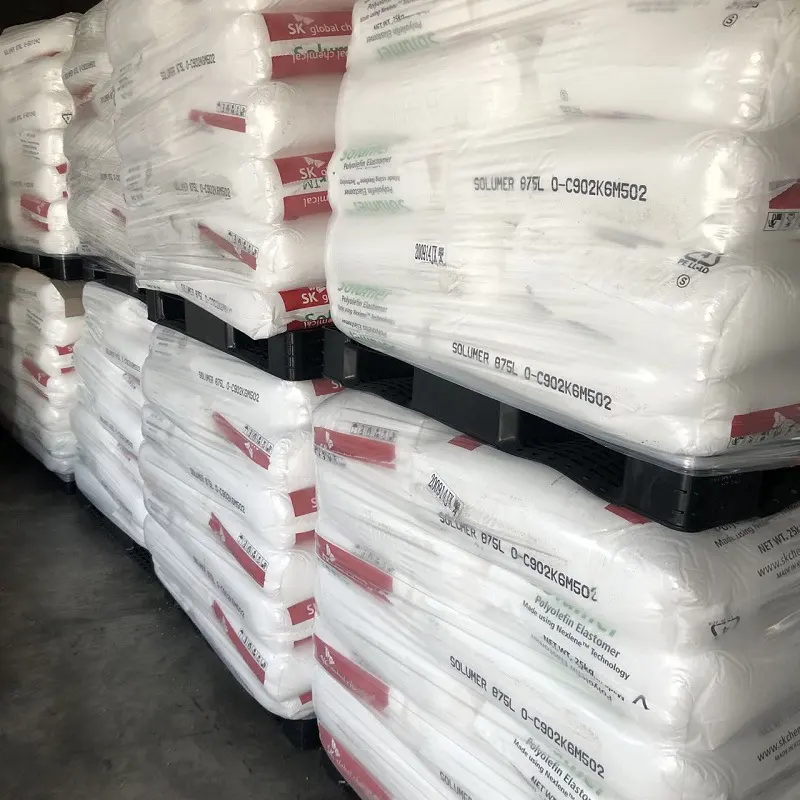
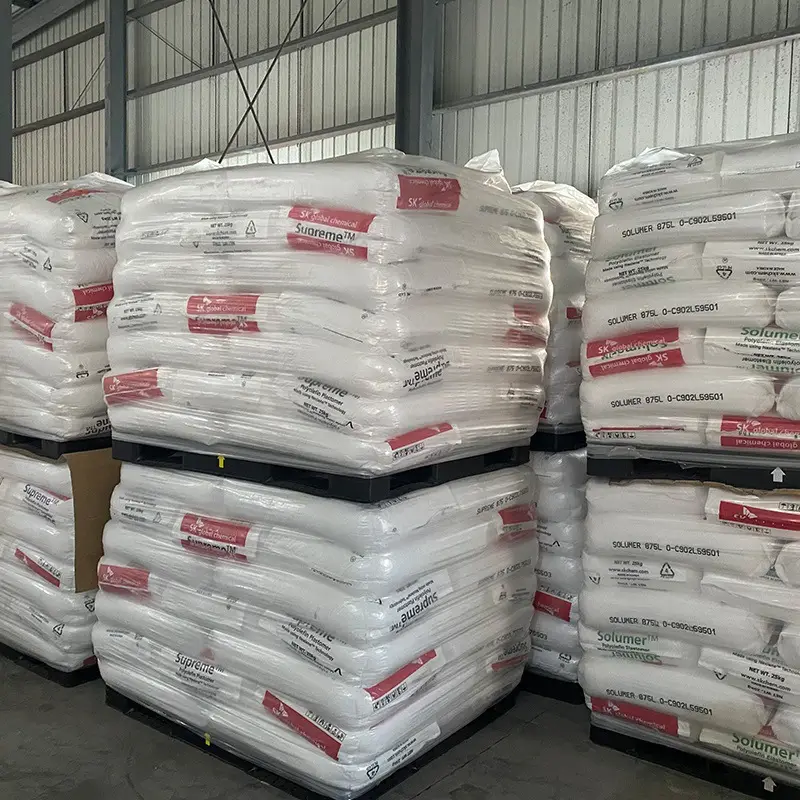
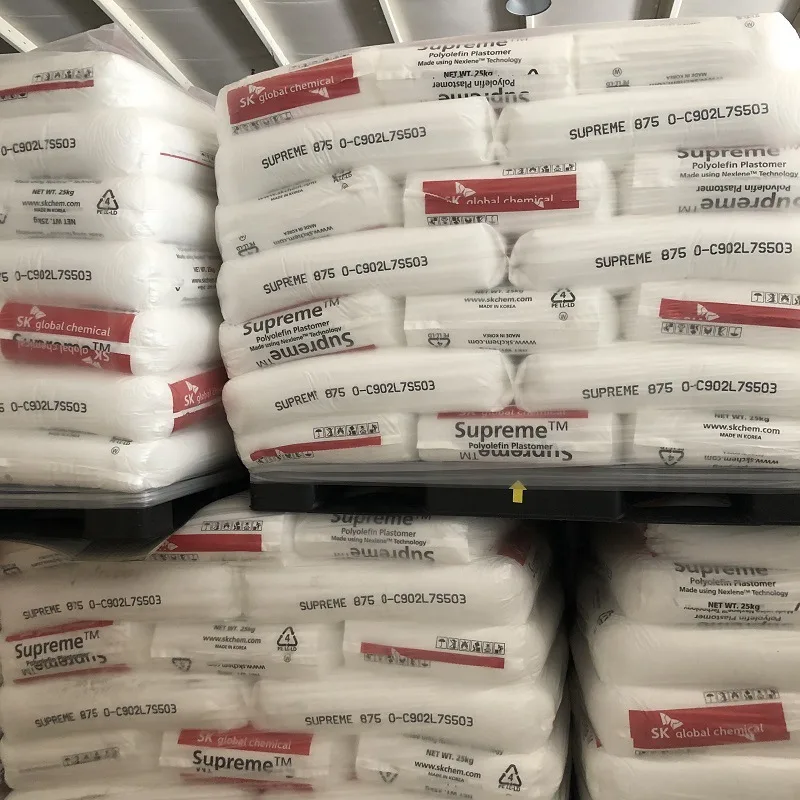
Technical data sheet of SK POE 871 polyolefin elastomer plastic raw material. Features 0.868 g/cm³ density, 1.0 g/10min MFR, and -52.0°C Tg for cable compounds and PP modification.
| Manufacturer | SK chemicals |
|---|---|
| Density | 0.868 g/cm³ |
| MFR | 1.0 g/10min |
| Glass Transition Temperature | -52 °C |
| Melting Temperature | 62 °C |
Note: See the product description for additional technical specifications
SK POE 871 is a high-performance polyolefin elastomer (Polyolefin Elastomer, POE) toughening resin produced by the well-known polymer manufacturer SK Functional Polymer. Belonging to the ethylene-octene copolymer class, this material is synthesized utilizing advanced metallocene catalyst technology and an in-situ polymerization process, which achieves a narrow molecular weight distribution and uniform short-chain branching distribution along the polymer backbone.
Physical Appearance: The product is supplied as free-flowing, cylindrical, semi-transparent to transparent plastic granules. This specific physical form ensures smooth, consistent feeding in automatic hopper systems of industrial extruders or injection molding machines, and facilitates efficient dry-blending and uniform dispersive mixing with matrix resins such as polypropylene (PP) or polyethylene (PE).
Application Status: As a premium thermoplastic elastomer (TPE) and high-performance impact modifier, SK POE 871 holds a core market share globally in industrial sectors such as plastics impact modification, highly-filled halogen-free flame retardant (HFFR) cable compounds, foamed footwear compounds, and high-performance packaging films.
| Physical Properties | Test Value | Unit | Test Standard |
| Density | 0.868 | g/cm³ | ASTM D792 |
| Melt Flow Rate (190 °C, 2.16 kg) | 1 | g/10min | ASTM D1238 |
| Thermal Properties | Test Value | Unit | Test Standard |
| Glass Transition Temperature (Tg) | -52 | °C | Internal Method |
| Melting Temperature | 62 | °C | Internal Method |
Ultra-Low Material Density (0.868 g/cm³): The exceptionally low density enables significant lightweight design in final molded components, while offering distinct overall economic advantages in formulations calculated on a cost-per-volume basis.
Exceptional Low-Temperature Flexibility and Impact Resistance: With a glass transition temperature (Tg) down to -52.0°C, it ensures that host matrices (such as polypropylene PP) retain excellent ductile behavior and impact strength under extreme sub-zero environments, preventing brittle failure.
Optimized Melt Strength for Extrusion and Impact Modification: Featuring a melt flow rate (MFR) of 1.0 g/10min at 190°C/2.16kg, its balanced grade viscosity and high melt strength make it ideally suited for cable jacket extrusion and film blowing processes, while providing sufficient shear intensity for filler dispersion during compounding.
High Filler Acceptance and Excellent Compatibility: The fully amorphous molecular structure grants a robust capacity for incorporating inorganic flame retardants and minerals (such as aluminum hydroxide, magnesium hydroxide, and active calcium carbonate), maintaining stable mechanical toughness and surface aesthetics even at high loading levels.
Superior Weatherability and Chemical Resistance: The saturated molecular backbone contains no double bonds, inherently rendering the material highly resistant to ozone degradation, ultraviolet (UV) irradiation, and thermal aging, which drastically extends the service life of outdoor end products.
Wire and Cable Industry (Jacket & Insulation Modification): Utilizing its 1.0 g/10min extrusion-grade melt index and high compatibility, SK POE 871 is extensively used as a primary base resin for compounding halogen-free flame retardant (HFFR/LSZH) wire and cable jackets, effectively balancing the trade-off between high flame-retardant filler loadings and low-temperature flexibility.
Automotive Industry (PP/PE/PA TPE Alloys): Widely implemented in the melt-blending modification of polypropylene (PP) for automotive exterior and interior trim components, including bumpers, fascia, fenders, instrument panels, and door inner panels. Incorporating POE 871 establishes a microscopic core-shell or sea-island morphology that acts as a “molecular spring” to dramatically elevate energy absorption during high-rate impact events.
Footwear and Sporting Goods (High-Resilience Foamed Midsoles): Co-blended with EVA resin in cross-linked foaming processes for premium athletic footwear midsoles to enhance the rebound resilience, reduce compression set (low permanent deformation), and yield a lighter compound with extended cushioning longevity.
High-Performance Packaging Films (POP / Extrusion Blending): Applied in the production of multi-layer co-extruded packaging films to serve as a puncture-resistant damping layer, a low seal-initiation temperature (SIT) heat-seal layer, or high-clarity stretch wrap films, vastly upgrading the tear strength and mechanical integrity of the film.
Q: Since SK POE 871 has a Melt Flow Rate (MFR) of 1.0 g/10min, is it more suitable for injection molding or extrusion processing?
A: This grade represents a typical low-MFR, high-viscosity POE. Due to its robust melt strength and viscous behavior in the molten state, it is preferentially suited for extrusion processing (such as wire jacket extrusion, pipe profile extrusion, and co-extrusion film blowing) and as a compounding impact modifier for plastics. For pure injection molding of complex, thin-walled components, processing resistance may be high if used neat; it is generally recommended to blend it with high-flow resins or opt for a higher MFR POE grade.
Q: What is the conventional dosage of SK POE 871 when modifying PP (Polypropylene), and how does it affect the rigidity of the material?
A: For commercial impact modification, the typical loading level ranges between 8% and 20% by weight. Within this concentration regime, room-temperature and low-temperature impact strength alongside elongation at break exhibit a pronounced linear increase as more POE 871 is incorporated. However, because POE is inherently an elastomeric modifier, high loading levels (e.g., exceeding 20%) will lead to a certain reduction in the tensile strength and flexural modulus (rigidity) of the host matrix. The exact ratio must be tailored via trial formulations to achieve the desired stiffness-toughness balance.
Q: The datasheet shows that the glass transition temperature (Tg) and melting temperature are tested via an “Internal Method”. How does this affect technical evaluation?
A: “Internal Method” signifies that the manufacturer, SK Functional Polymer, utilizes its own standardized proprietary thermal analysis protocols, which are typically baseline Differential Scanning Calorimetry (DSC) runs optimized for internal quality control and consistency. The resulting values of -52.0°C for Tg and 62.0°C for melting point offer extreme reliability for cross-batch comparison and processing parameter configurations. For benchmarking against third-party materials, it is best practice to use these original factory values as baseline indicators and replicate tests using equivalent heating rates and equipment parameters.
Submit your inquiry today and receive a professional competitive price tailored to your project requirements.