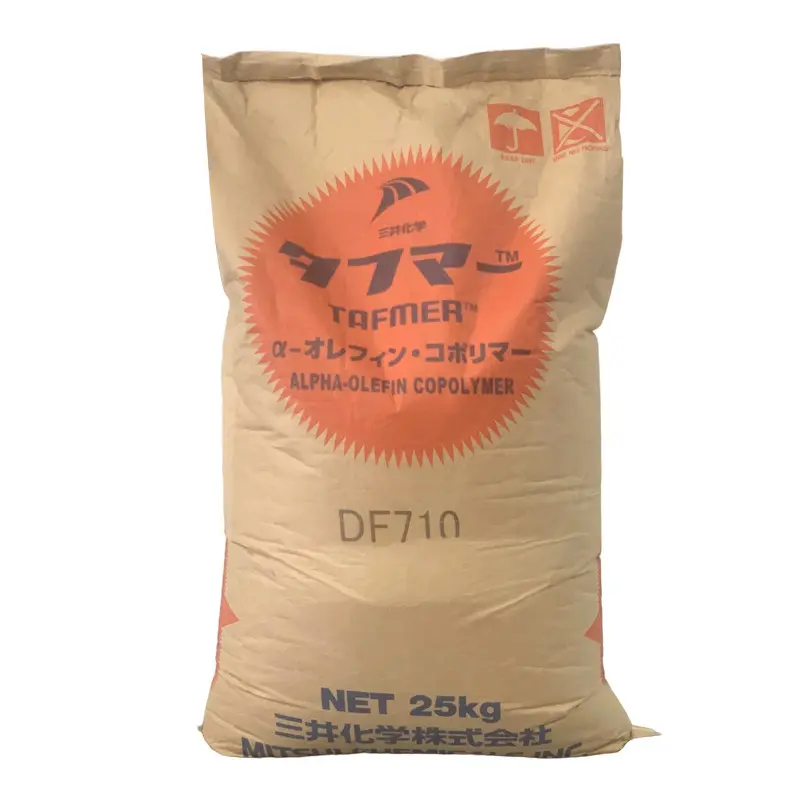
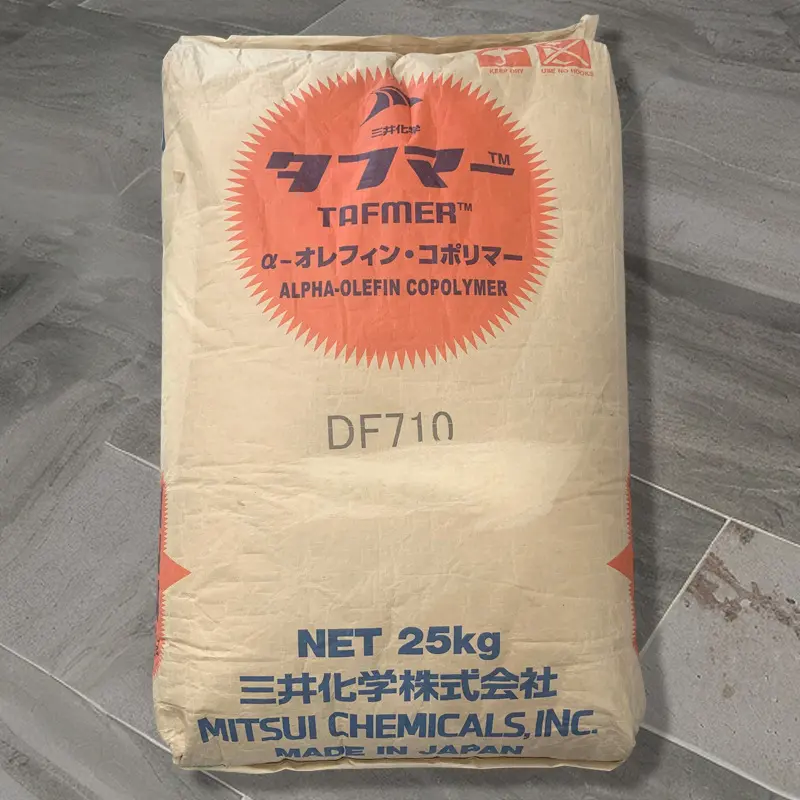
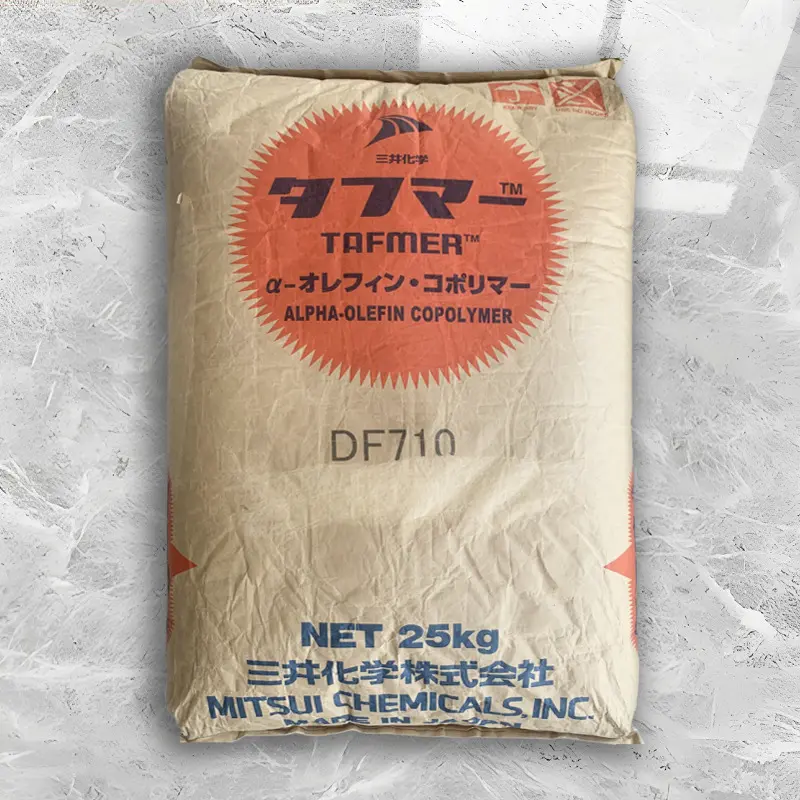
Mitsui Chemicals TAFMER DF710 POE is a high-performance polyolefin elastomer featuring a density of 0.870 g/cm³, Shore A 73 hardness, and exceptional low-temperature toughness for superior plastic modification.
| Manufacturer | Mitsui Chemicals |
|---|---|
| Density | 0.870 g/cm³ |
| MFR | 1.2 g/10 min |
| Tensile Strength | ≥ 12 MPa |
| Elongation at Break | >1000 % |
Note: See the product description for additional technical specifications
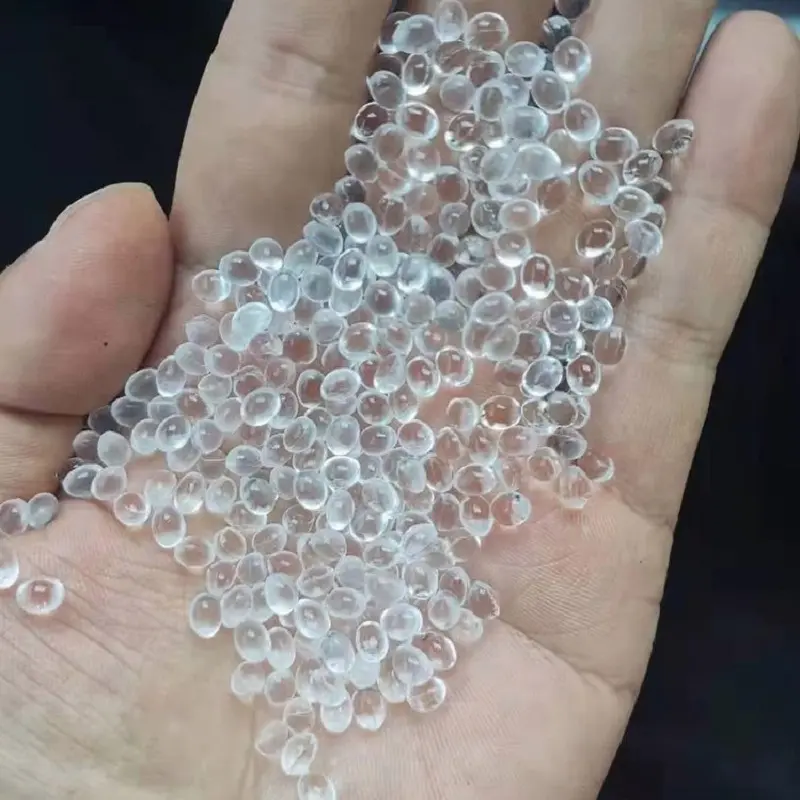
Mitsui Chemicals TAFMER™ DF710 POE is a high-performance polyolefin elastomer (POE) specialized grade produced by Mitsui Chemicals. The product appears as milky-white to transparent cylindrical pellets, belonging to advanced alpha-olefin copolymers based on metallocene catalysis technology.
As one of the benchmark products in the global high-performance elastomer market, the TAFMER™ series enjoys an exceptional reputation in the fields of resin modification and material toughening due to its outstanding molecular structure design. The DF710 grade is specially designed to enhance the impact resistance, flexibility, and low-temperature toughness of plastic blends, and is widely applied in core industrial sectors such as automotive component toughening, plastic modification (such as PP/PE modification), hot-melt adhesives, wire and cables, and high-end packaging films.
| Property | Testing Condition | Value | Unit | Test Method |
| Melt Flow Rate (MFR) | 190°C, 2.16kg | 1.2 | g/10 min | ASTM D1238 |
| Density | — | 0.87 | g/cm³ | ASTM D1505 |
| Property | Testing Condition | Value | Unit | Test Method |
| Shore Hardness (Shore A) | Shore A | 73 | — | ASTM D2240 |
| Tensile Strength (Break) | — | ≥ 12 | MPa | ASTM D638 (or JIS K7113) |
| Elongation at Break | — | ≥ 1000 | % | ASTM D638 |
| Property | Testing Condition | Value | Unit | Test Method |
| Brittleness Temperature | — | < -70 | °C | ASTM D746 |
| Melting Point | — | 55 | °C | ASTM D2117 / DSC |
The technical data sheet (TDS) of Mitsui Chemicals TAFMER™ DF710 POE material from Mitsui Chemicals corporation, if there are differences, please refer to the official website of Mitsui Chemicals.
Outstanding Low-Temperature Impact Resistance: Backed by an extremely low brittleness temperature (below -70 °C) and an excellent elastic network, it can significantly improve the impact and drop resistance of plastic substrates in cold or low-temperature environments.
Exceptional Compatibility and Modification Capability: Serving as a premium blend modifier, it exhibits superb compatibility with polyolefins (such as PP and PE), effectively achieving uniform dispersion of islands-in-the-sea structures and substantially enhancing material toughness without significantly sacrificing rigidity.
Good Processing Fluidity: Featuring a moderate melt flow rate (1.2 g/10 min), it possesses favorable thermal stability and processing rheological properties, making it suitable for various forming processes including extrusion, injection molding, and blow molding.
Superior Flexibility and Elastic Recovery: Possessing a relatively low Shore hardness (Shore A 73) and an ultra-high elongation at break (≥ 1000%), it endows end products with excellent tactile feel, flexibility, and elastic recovery capabilities.
Superlative Environmental and Regulatory Compliance: Classified as a non-dangerous chemical, it complies with mainstream global environmental and food contact compliance standards (such as RoHS and REACH), meeting the demands of green manufacturing.
Automotive Industry: Widely utilized for PP modification and toughening in automotive bumpers, instrument panels, interior door trim, and weatherstrips, enhancing vehicle crash safety performance and lightweight design.
Plastic Modification and Blending: Serving as a high-efficiency impact modifier for polypropylene (PP) and polyethylene (PE) to manufacture high-strength industrial turnover boxes, plastic pallets, and daily containers.
Cables and Pipes: Applied in special cable insulation layers, jacketing materials, and flexible pipes to provide outstanding environmental stress crack resistance and flexural endurance.
Hot-Melt Adhesives and Sealing Materials: Owing to its favorable adhesive properties and low crystallinity, it is frequently employed as a base resin or modifying component for hot melt pressure-sensitive adhesives (HMA), as well as various high-end sealing strips and vibration-damping pads.
Q1: Is pre-drying treatment required before using Mitsui Chemicals TAFMER™ DF710 POE?
A1: POE belongs to polyolefin elastomers and has an extremely low moisture absorption rate. Under well-sealed packaging conditions, it can usually be fed directly into production without requiring special drying treatment. However, if the raw material is exposed to damp or high-humidity environments for extended periods, hot-air drying at 70 °C to 80 °C for 1 to 2 hours is recommended to completely eliminate trace surface moisture and ensure processing stability.
Q2: What are the core differences between DF710 POE and traditional thermoplastic elastomers (such as TPE/TPV)?
A2: DF710 is an ethylene-alpha-olefin copolymer polymerized via metallocene catalysis, characterized by high molecular structure saturation and the absence of unsaturated double bonds. Consequently, it exhibits more prominent weather resistance, thermal-oxidative aging resistance, and blending compatibility with polypropylene (PP). In contrast, traditional TPE/TPV often requires complex dynamic vulcanization or multiblock structures, whereas TAFMER™ POE offers greater cost-effectiveness and processing simplicity when acting as a high-efficiency toughening modifier for PP matrices.
Q3: Does this product comply with RoHS and related food contact regulatory requirements?
A3: Yes. Mitsui Chemicals TAFmer™ DF710 POE is manufactured in strict accordance with international environmental and safety standards, complying with the substance restriction requirements of the European Union RoHS directive and REACH regulations. For applications requiring specific food contact packaging or medical auxiliary sectors, official Declarations of Conformity (DoC) meeting FDA or relevant food contact regulations can be requested from the supplier.
Submit your inquiry today and receive a professional competitive price tailored to your project requirements.