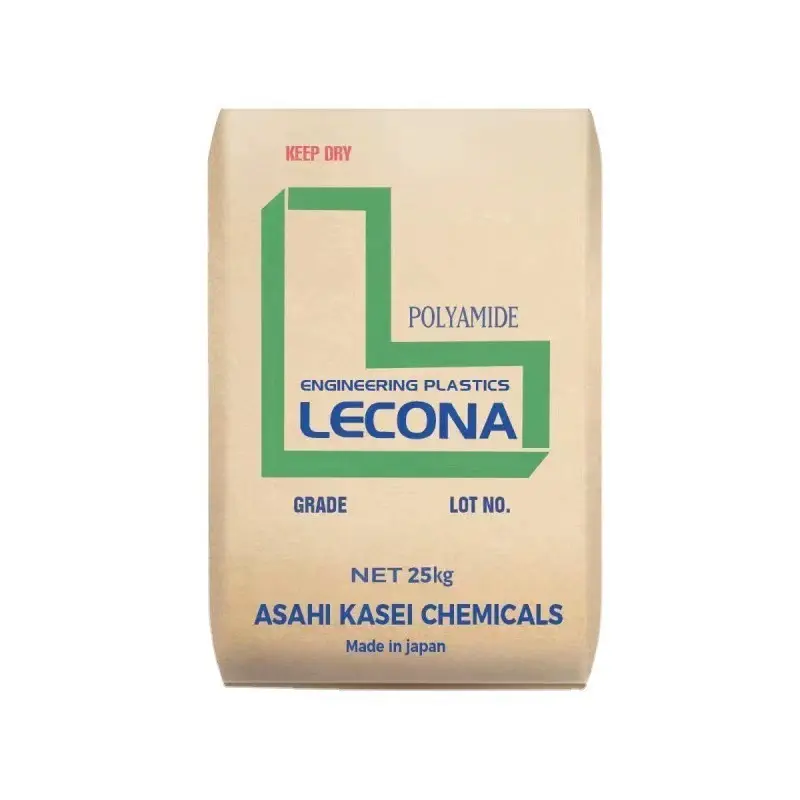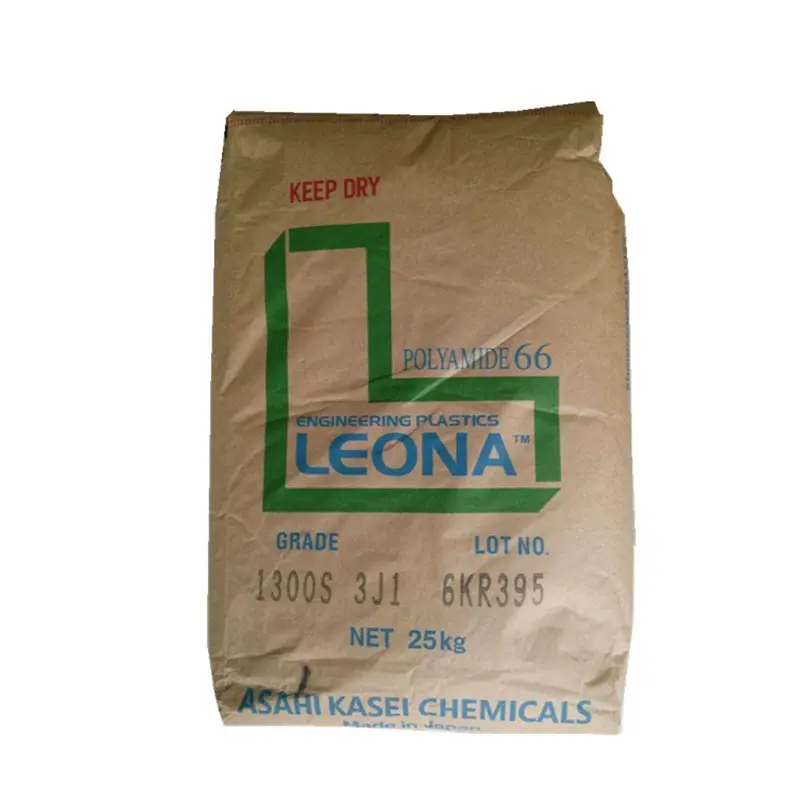
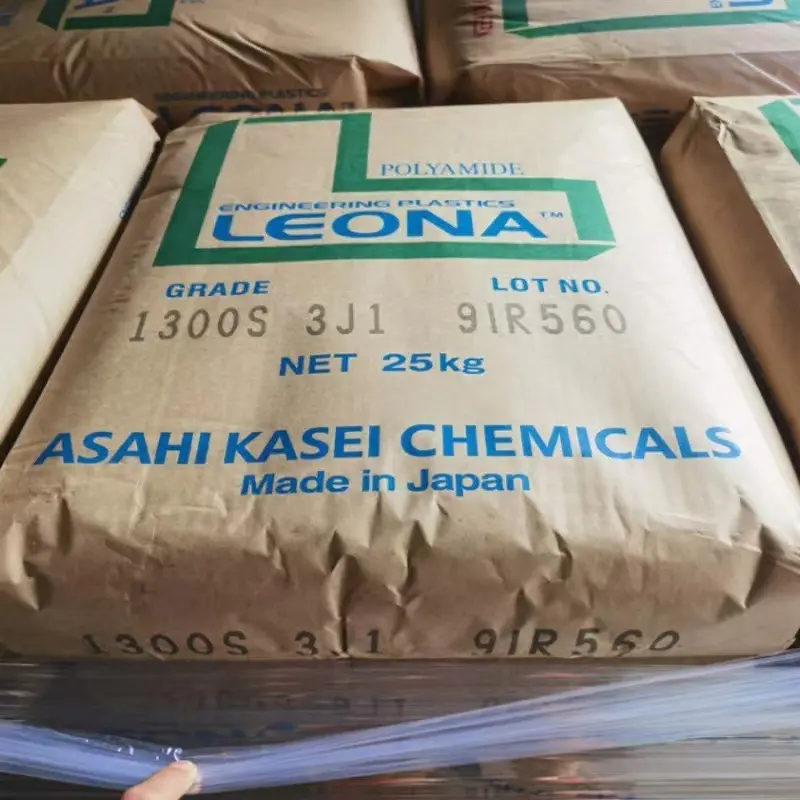
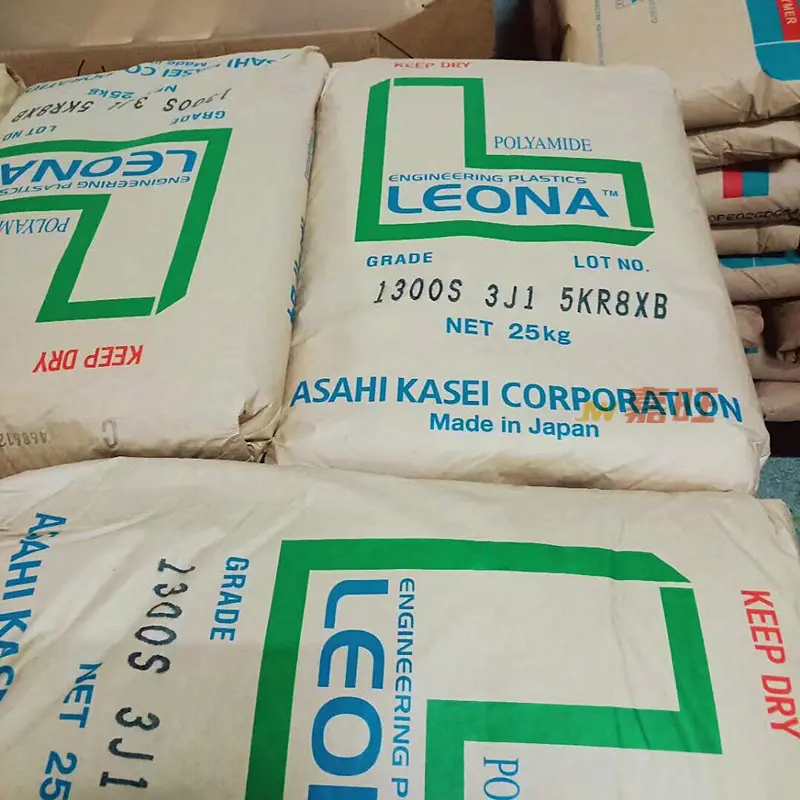
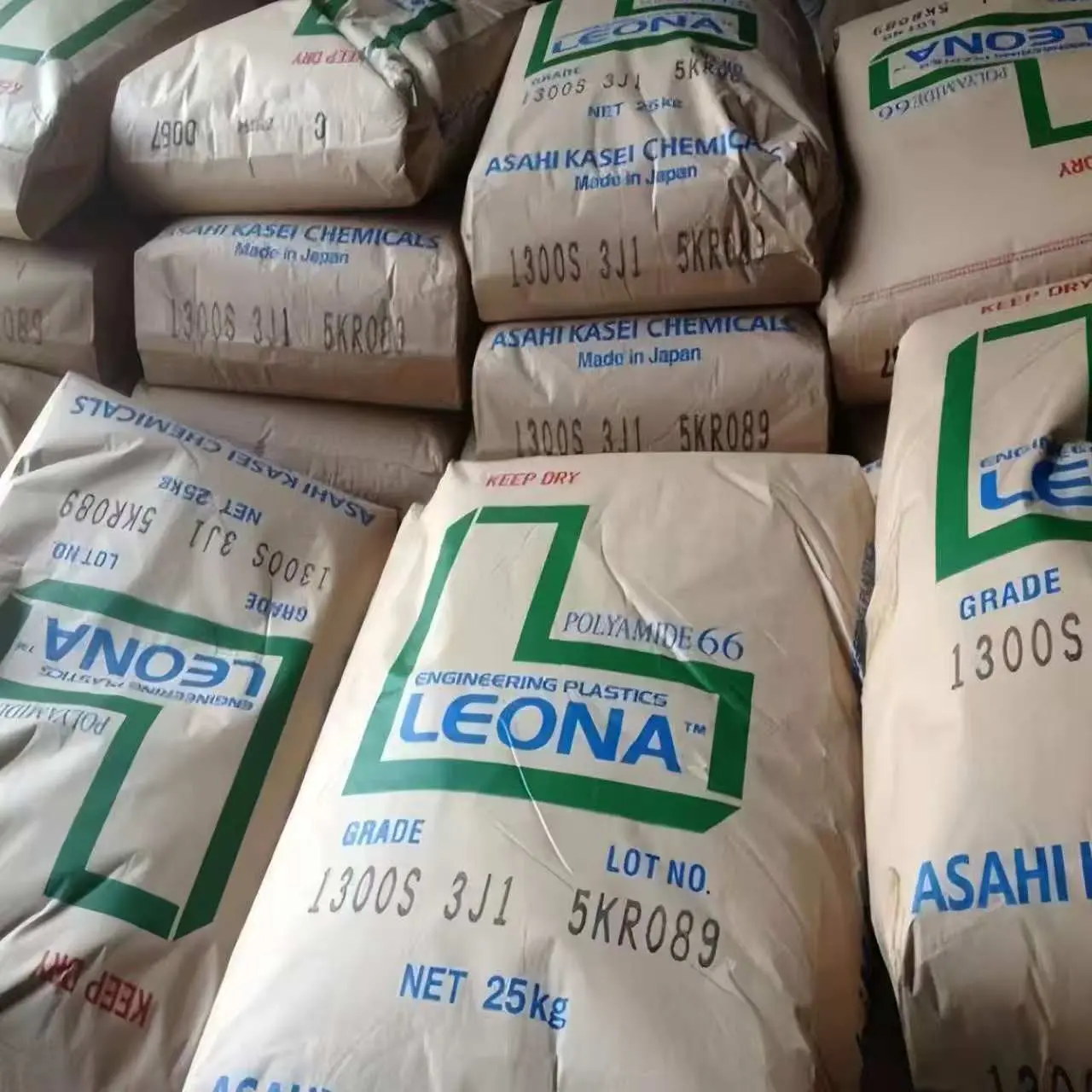
Asahi Kasei Leona™ 1300S PA66 is an unreinforced general-purpose injection molding nylon resin featuring high rigidity, wear resistance, and excellent electrical insulation for automotive and electronic components.
| Manufacturer | Asahi Kasei |
|---|---|
| Density | 1.14 g/cm³ |
| Tensile Strength at Yield | 82 MPa |
| Elongation at Yield | 4 % |
| Elongation at Break | 50 % |
Note: See the product description for additional technical specifications
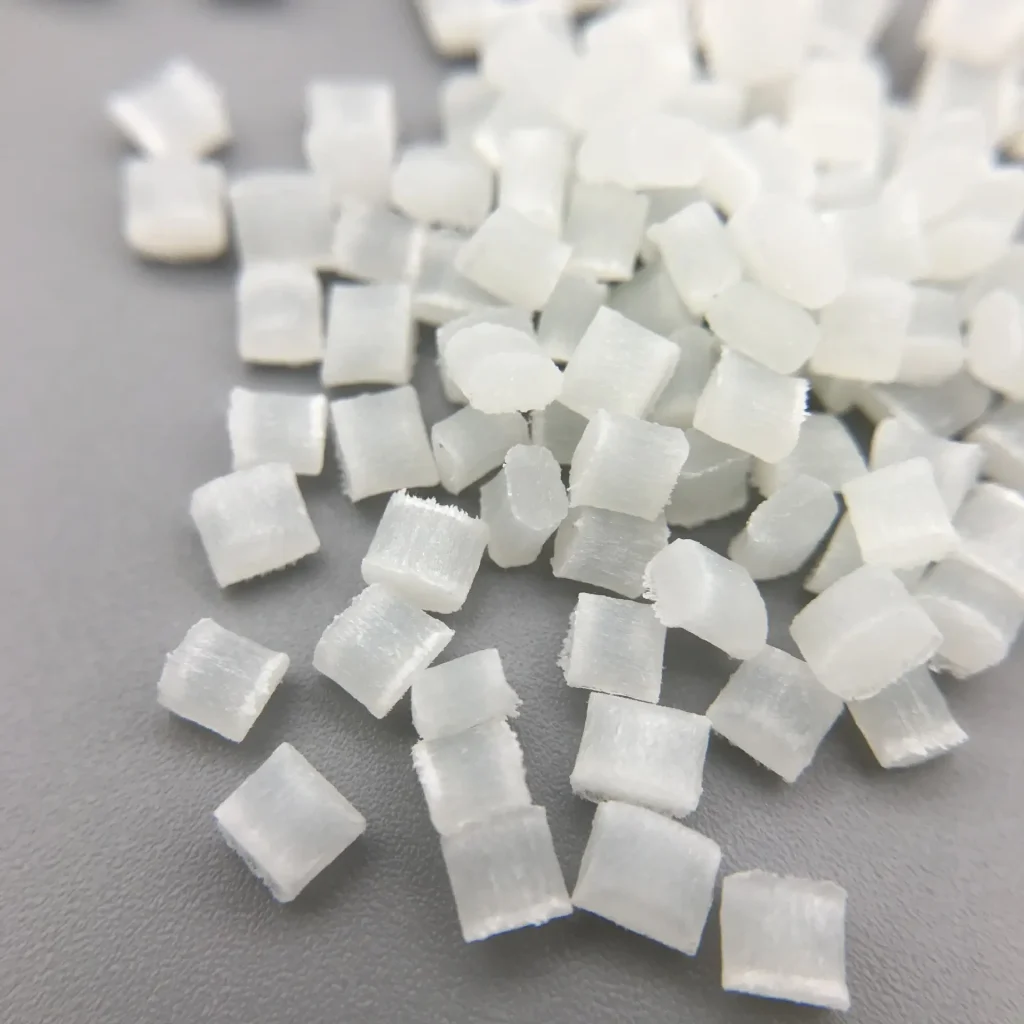
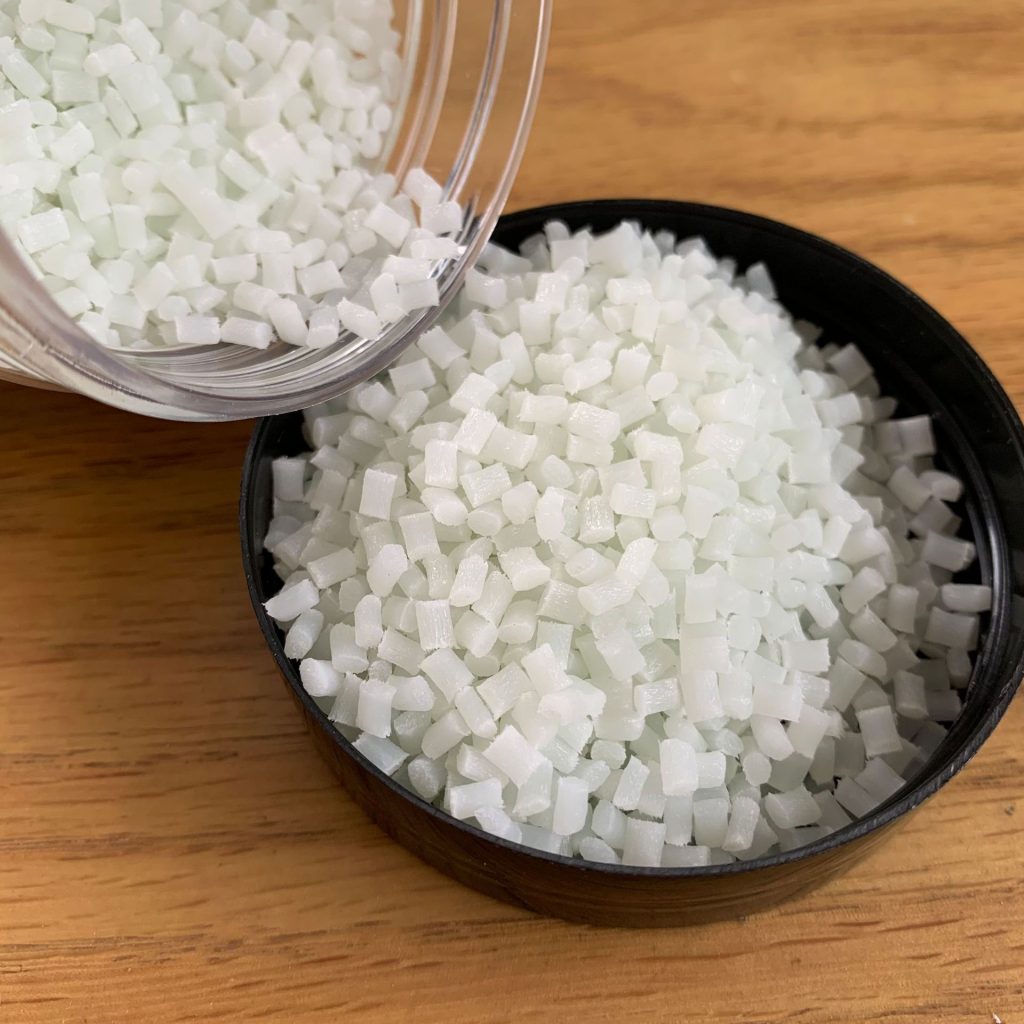
Leona™ 1300S is an unreinforced, general-purpose injection molding grade of polyamide 66 (PA66 / Nylon 66) resin manufactured by Asahi Kasei Corporation, belonging to the Leona™ engineering plastics series. The material is presented as natural, translucent, milky-white cylindrical pellets, free of glass fiber, mineral fillers, or flame retardant modifications. It is a benchmark standard-viscosity virgin resin grade with high trading volume and thorough downstream validation within Asahi Kasei’s PA66 product matrix.
The industry position of 1300S lies in its ability to condense the inherent properties of PA66—such as high rigidity, wear resistance and self-lubrication, resistance to oils and mild chemical media, alongside moisture dependency where toughness significantly increases after water absorption—into an injection molding grade with a wide processing window. In dry state, its tensile strength is 79–82 MPa, flexural modulus is 2700–3000 MPa, and Rockwell hardness is M80 (M-scale) and R120 (R-scale); upon conditioning, the notched Izod impact strength increases from a dry-state 39 J/m to 150 J/m (ASTM D256), and the notched Charpy impact strength increases from 6 kJ/m² to 15 kJ/m² (ISO 179), reflecting the typical “wetter is tougher” behavior of PA66. Rather than being a high-flow thin-wall specialty material or a glass fiber reinforced structural material, it serves as a general-purpose primary virgin resin targeted at automotive general clips, electronic connectors, industrial wear-resistant small parts, and consumer goods structural components.
Primary applications cover: automotive harness clips/cable ties/interior functional parts, electronic and electrical connectors and terminal blocks, coil bobbins, industrial gears/sliders/bearing liners, power tool housing accessories, and sporting goods and daily-use structural parts.
| Item | Test Value | Test Unit | Test Standard |
| Density | 1.14 | g/cm³ | ASTM D792 / ISO 1183 |
| Mold Shrinkage, Parallel | 1.3–2 | % | Internal Method |
| Water Absorption, Equilibrium (50 % RH, 23 ℃) | 2.5 | % | ISO 62 |
| Rockwell Hardness M | 80 | — | ASTM D785 / ISO 2039-2 |
| Rockwell Hardness R | 120 | — | ASTM D785 / ISO 2039-2 |
| Item | Test Value | Test Unit | Test Standard |
| Tensile Modulus, Dry (23 ℃) | 3000 | MPa | ISO 527-1 |
| Tensile Modulus, Moist (23 ℃) | 1200 | MPa | ISO 527-1 |
| Tensile Strength, Yield, Dry (23 ℃) | 82 | MPa | ISO 527-2 |
| Tensile Strength, Yield, Moist (23 ℃) | 52 | MPa | ISO 527-2 |
| Tensile Strength, Dry | 79 | MPa | ASTM D638 |
| Tensile Strength, Moist | 57 | MPa | ASTM D638 |
| Tensile Strain, Yield, Dry (23 ℃) | 4 | % | ISO 527-2 |
| Tensile Strain, Yield, Moist (23 ℃) | 24 | % | ISO 527-2 |
| Tensile Strain, Break, Dry | 50 | % | ASTM D638 |
| Tensile Strain, Break, Moist | 250 | % | ASTM D638 |
| Tensile Strain, Break, Dry | > 100 | % | ISO 527-2 |
| Flexural Modulus, Dry (23 ℃) | 2800 | MPa | ASTM D790 |
| Flexural Modulus, Dry | 2700 | MPa | ISO 178 |
| Flexural Modulus, Moist | 1200 | MPa | ASTM D790 |
| Flexural Modulus, Moist (23 ℃) | 1100 | MPa | ISO 178 |
| Flexural Strength, Dry | 118 | MPa | ASTM D790 |
| Flexural Strength, Moist | 54 | MPa | ASTM D790 |
| Flexural Strength, Dry (23 ℃) | 113 | MPa | ISO 178 |
| Flexural Strength, Moist (23 ℃) | 42 | MPa | ISO 178 |
| Taber Abrasion Resistance (1.0e+3 Cycles) | 7 | mg | ASTM D1044 |
| Charpy Impact Strength, Notched, Dry | 6 | kJ/m² | ISO 179 |
| Charpy Impact Strength, Notched, Moist | 15 | kJ/m² | ISO 179 |
| Charpy Impact Strength, Notched, Dry | No Break | — | ISO 179 |
| Charpy Impact Strength, Notched, Moist | No Break | — | ISO 179 |
| Izod Impact Strength, Notched, Dry | 39 | J/m | ASTM D256 |
| Izod Impact Strength, Notched, Moist | 150 | J/m | ASTM D256 |
| Item | Test Value | Test Unit | Test Standard |
| Heat Deflection Temperature, Unannealed (0.45 MPa) | 230 | ℃ | ASTM D648 |
| Heat Deflection Temperature, Unannealed (0.45 MPa) | 190 | ℃ | ISO 75-2/B |
| Heat Deflection Temperature, Unannealed (1.8 MPa) | 70 | ℃ | ISO 75-2/A / ASTM D648 |
| Coefficient of Linear Thermal Expansion (CTE), Parallel | 8.00E-05 | cm/cm/℃ | ASTM D696 |
| Specific Heat | 1670 | J/kg/℃ | — |
| Thermal Conductivity | 0.2 | W/m/K | — |
| Flame Retardancy Rating (0.75 mm) | V-2 | — | UL 94 |
| Glow Wire Flammability Index (GWFI) (3 mm) | 960 | ℃ | IEC 60695-2-12 |
| Oxygen Index | 26 | % | ASTM D2863 |
| Item | Test Value | Test Unit | Test Standard |
| Surface Resistivity | 1.00E+13 | ohms | ASTM D257 / IEC 60093 |
| Volume Resistivity | 1.00E+14 | ohms·cm | ASTM D257 |
| Volume Resistivity (23 ℃) | 1.00E+14 | ohms·cm | IEC 60093 |
| Dielectric Strength | 20 | kV/mm | ASTM D149 / IEC 60243-1 |
| Comparative Tracking Index (CTI) (3 mm) | 600 | V | IEC 60112 |
The technical data sheet (TDS) of Leona™ 1300S material from Asahi Kasei corporation, if there are differences, please refer to the official website of Asahi Kasei.
Balanced Rigidity and Toughness with Significant Moisture Toughening: High dry-state rigidity (tensile 82 MPa, flexural modulus 2800 MPa) with greatly increased impact strength after conditioning (Izod notched 39 → 150 J/m), making it suitable for application conditions requiring “hard assembly and fracture-resistant usage” such as clips, hinges, and repeated assembly parts.
Wear-Resistant and Self-Lubricating, Suitable for Sliding Parts: Taber wear of 7 mg/1000 cycles with a low friction coefficient, serving as a virgin resin solution for low-oil or oil-free friction scenarios such as gears, sliders, bearing liners, and cable ties.
Excellent Electrical Insulation and Tracking Resistance: Volume resistivity of 1.0e+14 Ω·cm, CTI of 600 V, and dielectric strength of 20 kV/mm, applicable to low-voltage electrical structural components like connectors, terminal blocks, and coil bobbins.
Standard Viscosity with High Injection Molding Processing Latitude: Neither as difficult to fill as ultra-high viscosity grades nor sacrificing weld line strength like high-flow grades; multi-cavity molds, ribbed shells, and clip-and-snap assemblies can be stably molded.
Resistance to Oils and Mild Chemical Media: Provides basic resistance to lubricating oils, greases, fuels, weak acids and bases, and most inorganic salt solutions; unsuitable for long-term contact with strong acids, strong oxidizing agents, or polar solvents such as phenol/formic acid.
UL 94 V-2 + GWFI 960 ℃: Possesses general flammability reference and certain glow-wire performance, though it is not a V-0 flame-retardant material; suitable for non-mandatory flame-retardant housings and internal functional parts.
Automotive General Parts: Harness clips, cable ties, interior clips, small sensor housings, air damper wheels, and non-engine compartment limit blocks—Note: 1300S lacks a long-term heat-stabilized formula, so long-term high-temperature zones in the engine compartment should utilize heat-stabilized grades like Leona™ 1502S.
Electrical and Electronics: Connector bodies, terminal blocks, relay housings, coil bobbins, switch toggles, and internal socket components—high CTI and high insulation are its core selling points.
Industrial Machinery: Small gears, conveyor wheels, guide sliders, non-load-bearing pump parts, small textile machine parts, and wear-resistant liners for automation equipment.
Power Tools and Home Appliances: Drill housing accessories, vacuum cleaner clips, washing machine dispenser box mechanisms, small appliance button mechanisms, and small printer paper feed mechanism parts.
Consumer Goods and Daily Commodities: Sports equipment connection parts, luggage fasteners, stationery structural components, non-load-bearing sanitary accessories, and toy load-bearing small parts.
Note: 1300S is a non-reinforced, non-V-0-flame-retardant, non-anti-UV, and non-hydrolysis-resistant specialized grade. Outdoor usage without coatings will cause yellowing and embrittlement due to UV and thermal-oxidative aging; long-term hot water/coolant immersion requires hydrolysis-resistant PA66 (such as the Leona™ CR series); high-rigidity structural parts should select 30% GF PA66.
Q1: Must Leona™ 1300S be dried prior to processing? What are the recommended conditions?
A1: Drying must be prioritized. PA66 has strong hygroscopicity, and undried or high moisture content will cause silver streaks, bubbles, tensile strength reduction, and melt degradation during injection molding. General manufacturer/industry recommendations: hot air drying at 80–90 ℃ for 2–3 hours; if packaging has been opened, environmental humidity is high, or moisture regain is significant, vacuum drying at 105 ℃ for 12 hours can be applied. Target moisture content is typically controlled below ≤ 0.08%–0.1%. Dried materials should be transferred to a 75–85 ℃ insulated hopper to prevent secondary moisture absorption.
Q2: How should one differentiate between 1300S, PMMA, and PC during material selection?
A2: They do not belong to the same material system. PMMA is transparent, hard, and brittle; PC is transparent, highly impact-resistant, high-heat-resistant but requires strict drying and high cost; 1300S is opaque PA66, where the core characteristic is not “transparency”, but rigidity-toughness + wear resistance + oil resistance + electrical insulation + moisture toughening. Rule of thumb: choose PMMA/PC for transparent appearance parts; choose PA66 for clips, connectors, gears, and oil/wear-resistant structural parts; 1300S is a general-purpose virgin resin, not a transparent engineering plastic substitute.
Q3: Can UL 94 V-2 be directly used in high flame-retardant scenarios like chargers or socket panels?
A3: No. 1300S is rated UL 94 V-2 at 0.75 mm, not V-0; charger housings, power sockets, and components close to electric arcs/fire sources typically require V-0 or higher. If the end application strictly mandates V-0, flame-retardant PA66 grades should be substituted (halogen-free or halogenated types selected according to terminal certification). 1300S is more suitable for internal electrical functional parts, connector bodies, and non-exposed structural components.
Q4: PA66 dimensions and rigidity both change after water absorption; how should this be explained to customers during procurement?
A4: This is an inherent physical behavior of PA66, not a defect of the grade. The equilibrium water absorption of 1300S is approximately 2.5% (23 ℃ / 50 % RH), after which the tensile modulus drops from 3000 MPa to about 1200 MPa, and dimensions expand slightly along the moisture absorption direction. For precision gears, connectors, and gauge parts, design should reserve moisture expansion clearance, or finished products should be conditioned under “application environment temperature and humidity” before precision finishing; for automotive/electronic batch parts, terminal verification should preferably be based on “conditioned properties” rather than dry-state data acceptance alone.
Submit your inquiry today and receive a professional competitive price tailored to your project requirements.