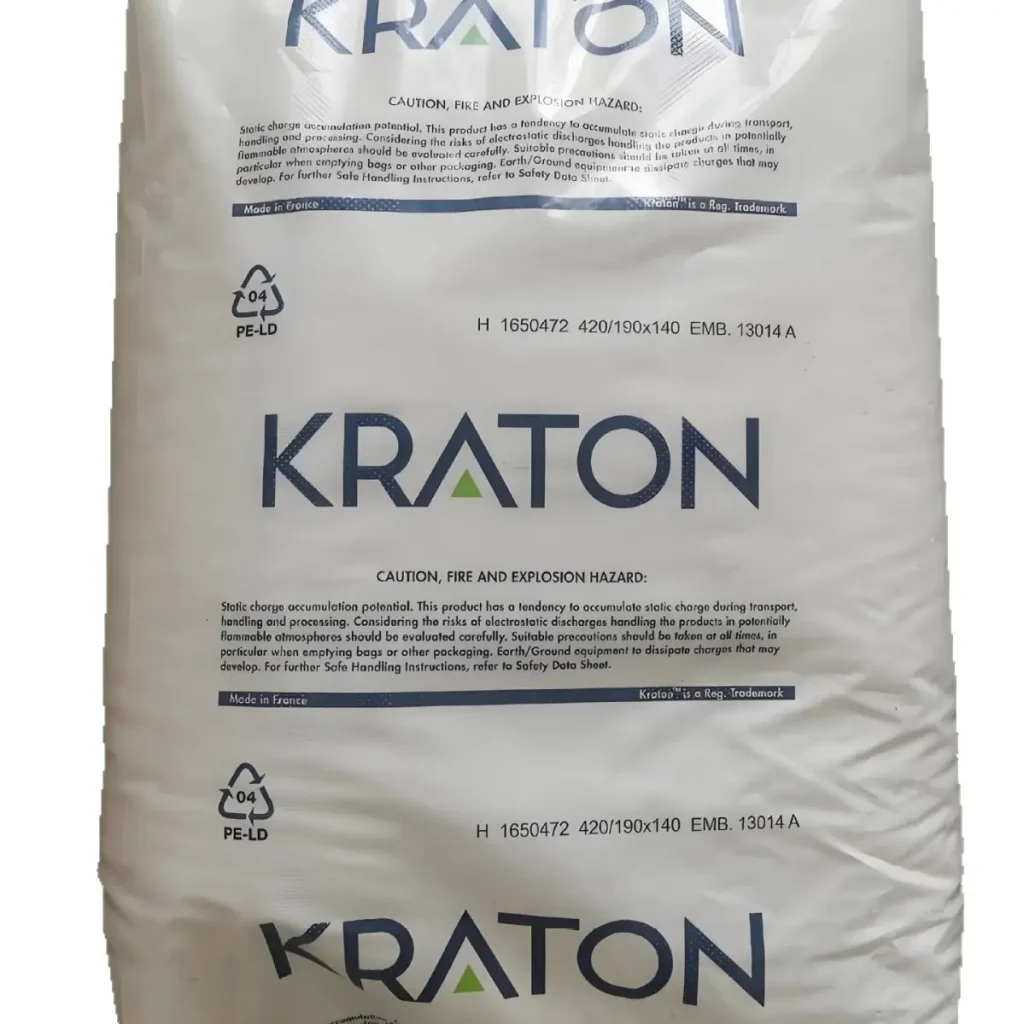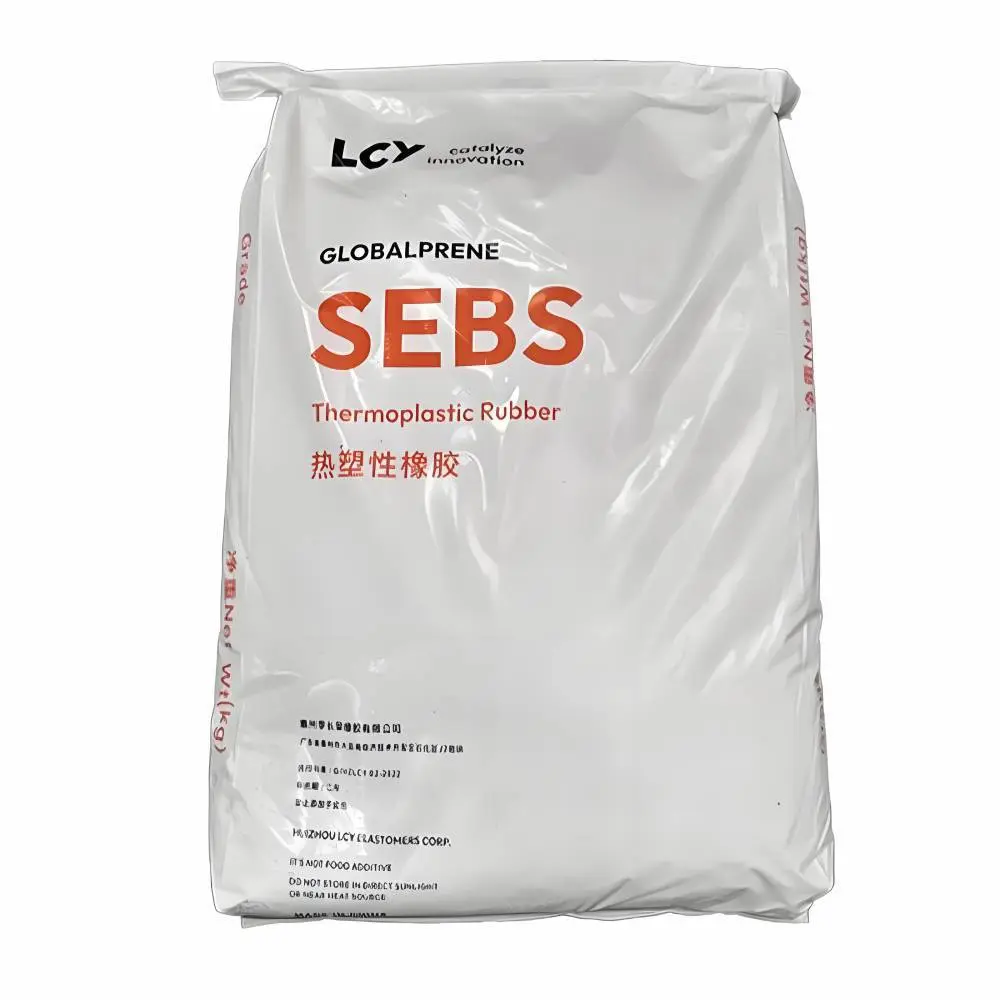
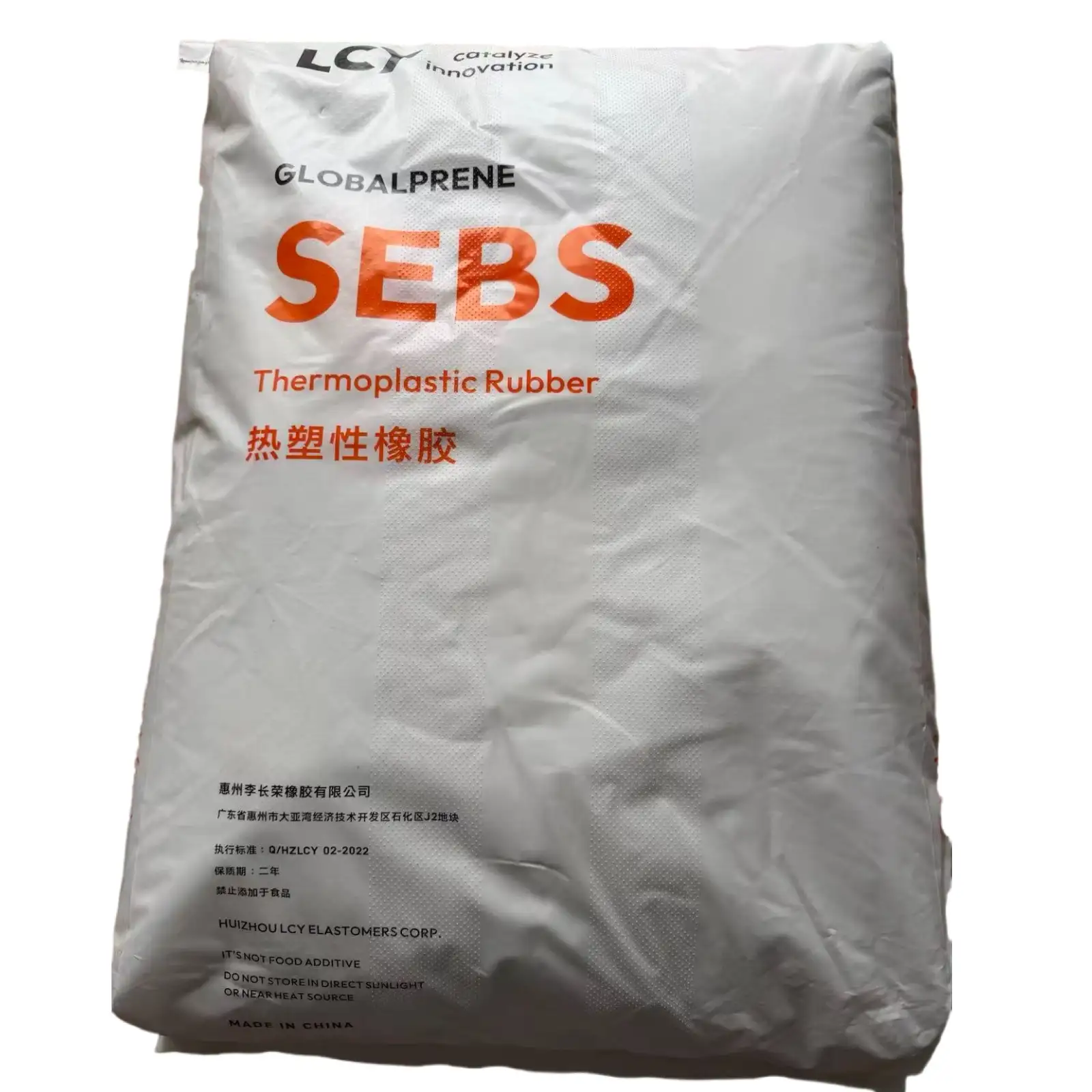
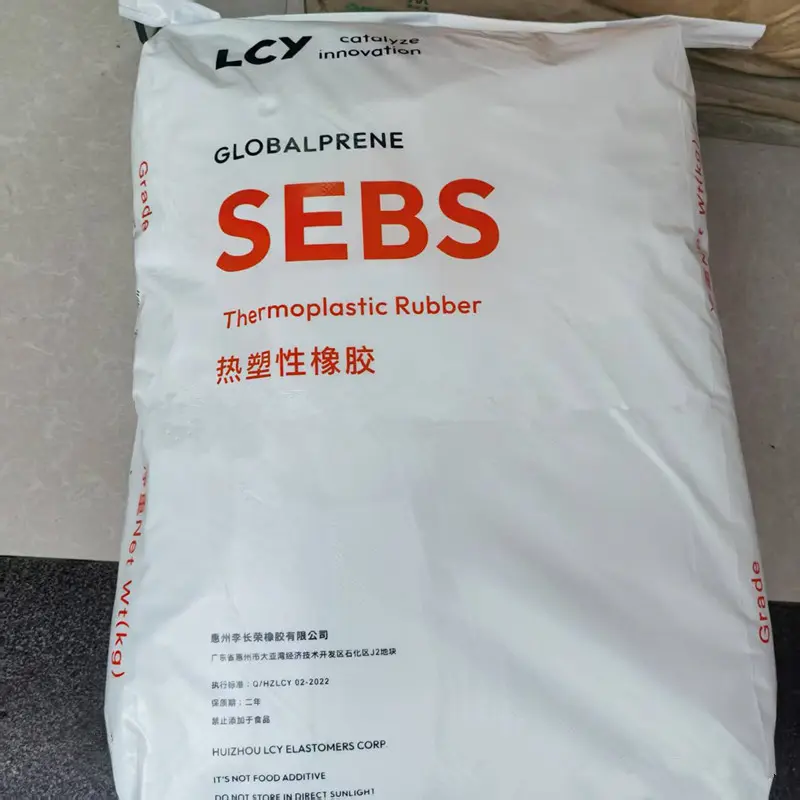
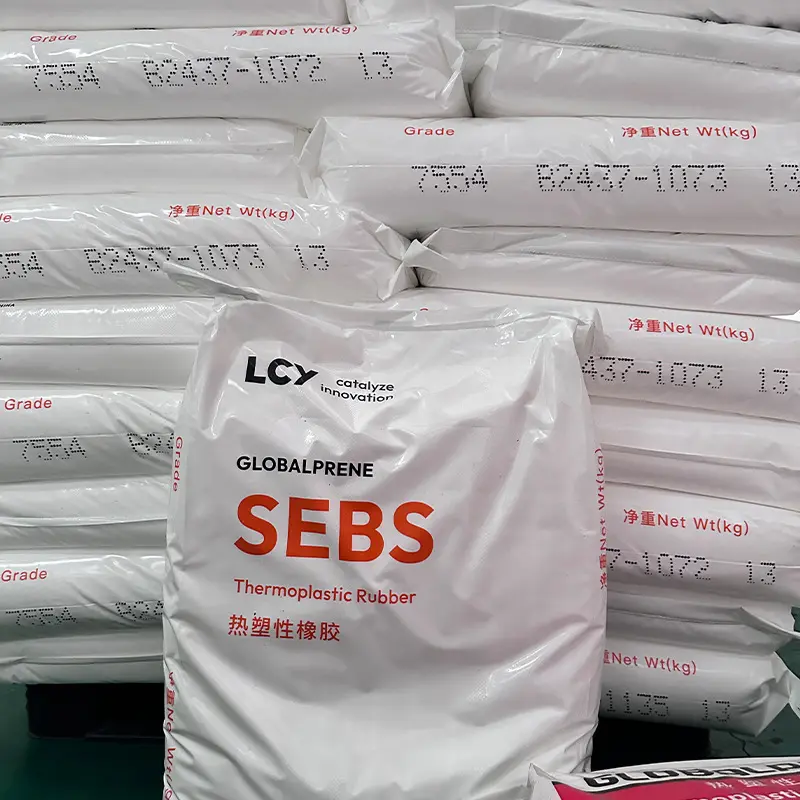
GLOBALPRENE™ 7554 is a high-performance hydrogenated SEBS base polymer from LCY Chemical Corp. Featuring excellent weathering resistance, soft touch, and high elasticity, it is widely utilized for TPE modification, overmolding, and industrial applications.
| Manufacturer | LCY Chemical |
|---|---|
| MFR | <1 g/10min |
| Density | 0.91 g/cm³ |
| Styrene Content | 31 wt% |
| Volatile Matter | ≤0.5 wt% |
Note: See the product description for additional technical specifications
GLOBALPRENE™ 7554 is a hydrogenated styrene-butadiene block copolymer (SEBS) base polymer produced by LCY Chemical Corp. The material appears as white or slightly yellowish porous pellets (fluffy form), belonging to a low styrene content (31 wt%), medium-high molecular weight linear SEBS grade, with a melt flow rate (MFR) of less than 1 g/10 min (230 °C/5 kg). In the SEBS industry, 7554 is positioned as a general-purpose soft-segment matrix resin—its 31% styrene content endows it with moderate rigidity and resilience, a density of only 0.91 g/cm³, and an elongation at break of up to 350%, combining a soft touch with excellent weathering and anti-UV performance. This grade is rarely used alone for injection molding; it is primarily utilized as a modification matrix, blending toughening agent, and adhesive formulation raw material. It is widely applied in TPE overmolding, soft-touch handles, medical devices, wires and cables, and hot-melt adhesive fields, making it one of LCY’s core flagship grades in the styrenic thermoplastic elastomer (TPS) market.
| Property | Test Condition | Value | Unit | Test Method |
| Styrene Content | — | 31 | wt% | Internal Method |
| Density | — | 0.91 | g/cm³ | Internal Method |
| Volatile Matter | — | ≤0.5 | wt% | Internal Method |
| Ash | — | ≤1 | wt% | Internal Method |
| Melt Flow Rate (MFR) | 230℃/5kg | <1 | g/10min | Internal Method |
| Property | Test Condition | Value | Unit | Test Method |
| Shore Hardness | A | >70 | — | Internal Method |
| Tensile Strength | — | ≥20 | MPa | Internal Method |
| Elongation at Break | — | 350 | % | Internal Method |
The technical data sheet (TDS) of GLOBALPRENE™ 7554 material from LCY Chemical Corp. corporation, if there are differences, please refer to the official website of LCY Chemical Corp.
Excellent Weathering and Anti-UV Performance: The SEBS main chain features a saturated structure (ethylene/butylene segment) without double bonds, making it resistant to degradation or yellowing under long-term ultraviolet radiation, ozone, and heat-moisture environments. It is vastly superior to unsaturated SBS and suitable for long-term outdoor exposure applications.
Soft Touch and High Elasticity: With an elongation at break of 350% and good resilience, it can be formulated into soft TPE products within the Shore A 0–70 range, widely used for soft-touch handles, grips, baby products, and skin-contact components.
Low Density and Lightweighting: The density is only 0.91 g/cm³, which is lower than most rubbers and plastics. This helps reduce the weight of end products, offering distinct advantages in footwear, sports equipment, and automotive lightweighting components.
Good Chemical Resistance: It is stable against water, alcohols, dilute acids, dilute alkalis, and most polar solvents, allowing for long-term use in humid or aqueous environments. Its chemical resistance boundary can be further expanded when used with polypropylene (PP).
Strong Compatibility and Easy Blending Modification: As a matrix resin, it can be blended with large amounts of extender oils and resins such as PP, PS, PE, white oil, and calcium carbonate to flexibly adjust hardness, gloss, flowability, and cost. It is a “platform-type” raw material in the TPE compounding industry.
Food Contact and Medical Potential: The SEBS base polymer itself can pass FDA 21 CFR §177.2600 and EU 10/2011 food contact compliance evaluations, making it suitable for high-end scenarios such as medical infusion tubes and food seals (requiring compliant oils and formulations).
TPE Blend Modification: Blended as a matrix with PP, white oil, and fillers to produce SEBS-based TPE pellets, supplied to injection molders for soft-touch overmolding (toothbrush handles, power tool handles, razor grips).
Automotive Industry: Dashboard soft skins, airbag cover wrap layers, automotive door weatherstrips, dust covers, and cable sheens, utilizing advantages in weather resistance, ozone resistance, and low VOC.
Medical and Hygiene: Medical catheters, infusion tubes, respirator mask sealing rings, and medical glove linings. The biocompatibility and low allergen-icity of SEBS make it a viable PVC alternative.
Consumer and Household Goods: Soft-touch stationery, children’s toys (such as TPE soft building blocks), sports equipment grips, shoe midsoles, and transparent soft packaging.
Adhesives and Sealants: Used as a base material for hot melt pressure-sensitive adhesives (HMPSA) in labels, tapes, hygiene products (diaper ear waistbands), and industrial bonding.
Note: 7554 is a pure SEBS base polymer, unextended with oil and unblended with PP, featuring an extremely low melt flow rate (<1) and cannot be directly injection molded. It must be blend-modified with PP, white oil, and fillers using a twin-screw extruder before being used for injection molding or extrusion processing.
Q1: Can 7554 be directly injection molded, or does it need to be modified first?
A1: It cannot be directly injection molded. 7554 is a pure SEBS base rubber with a high molecular weight, an MFR of <1 g/10 min, extremely poor melt flowability, and is neither oil-extended nor formulated with PP. Processing it alone makes mold filling difficult and yields hard, brittle parts. The correct application is to use it as a matrix, compounding it in a twin-screw extruder with PP (to provide processing flowability and rigidity), white oil/naphthenic oil (to provide softness), and fillers (to reduce cost) to produce TPE pellets of the target hardness before injection molding or extrusion.
Q2: What are the core differences between SEBS 7554 and SBS (such as the unhydrogenated precursor of 7554)?
A2: The core difference lies in the backbone saturation. The butadiene segment of SBS contains double bonds, making it susceptible to thermal-oxygen and UV attacks, leading to degradation, yellowing, and a short outdoor lifespan. 7554 undergoes hydrogenation, converting the butadiene segment into saturated ethylene/butylene segments, which significantly enhances weathering, thermal-oxygen resistance, and ozone resistance. Its outdoor service life can reach 5–10 times that of SBS. The trade-off is that SEBS is more expensive than SBS and requires higher processing temperatures.
Q3: What is the compliance and food contact status of this grade?
A3: As a pure SEBS polymer, 7554 itself can pass FDA 21 CFR §177.2600 (rubber articles) and EU 10/2011 food contact evaluations, provided that all components in the blending formulation (PP, oils, fillers, additives) also comply with food-grade standards. Pure 7554 pellets do not equal a compliant end product; final TPE articles must be submitted to third-party testing for verification. TDS, SDS, COA, and original factory compliance declarations are available for each batch.
Q4: What practical points should be noted when processing 7554 blended TPE?
A4: The key points are three:
① Although SEBS has low moisture absorption, its porous surface easily traps dust, so drying at 70–80 °C for 1–2 hours is recommended;
② Pre-blending and swelling with white oil for 4–8 hours during compounding can significantly reduce twin-screw torque and improve dispersion uniformity;
③ Processing temperatures generally range between 180–220 °C, avoiding temperatures exceeding 240 °C to prevent main-chain degradation and chain scission of SEBS. Higher oil extension ratios yield better flowability but lower strength, requiring a balance between softness and mechanical performance.
Submit your inquiry today and receive a professional competitive price tailored to your project requirements.