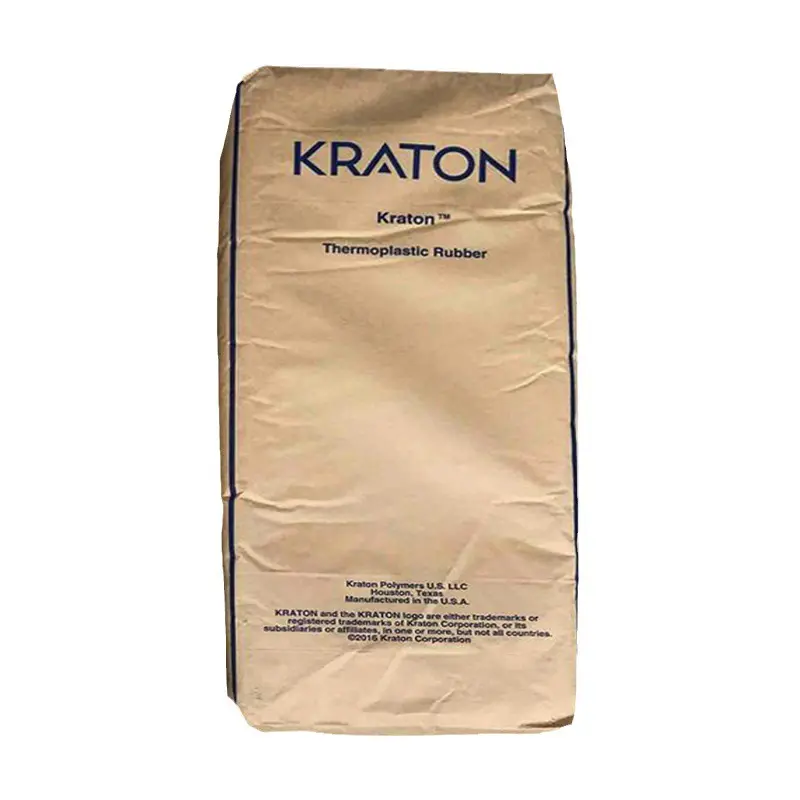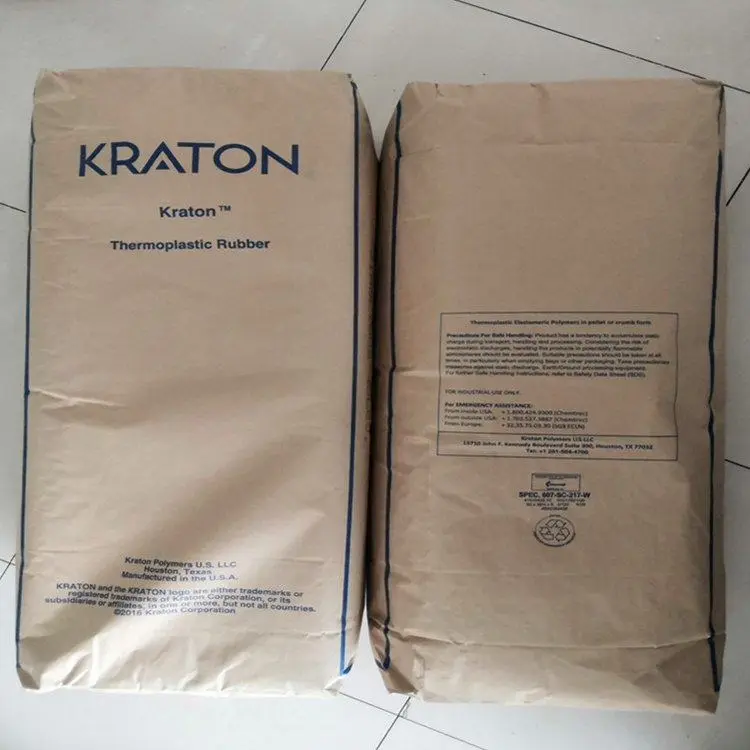
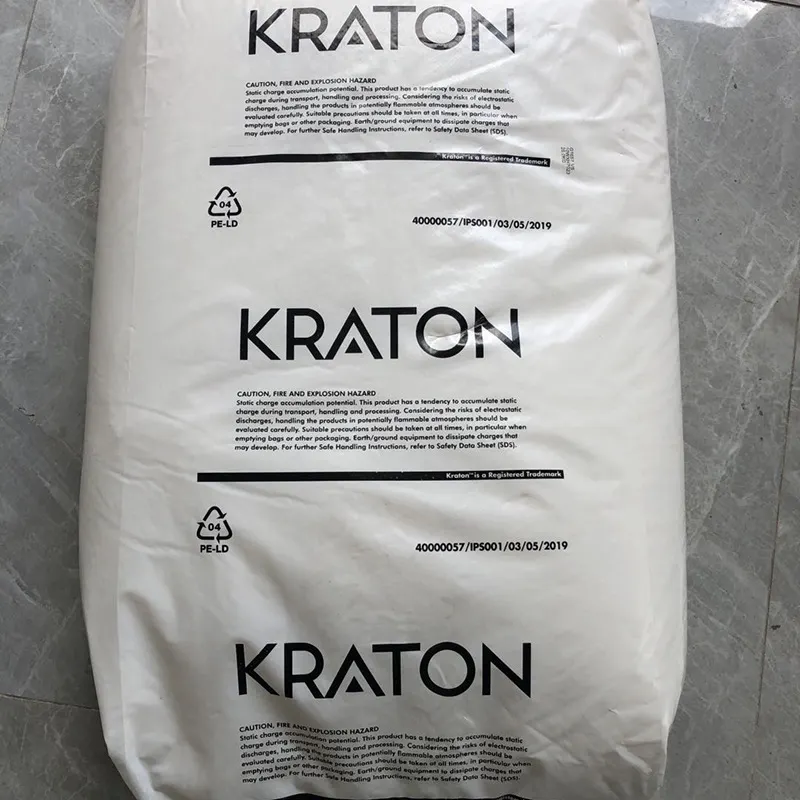
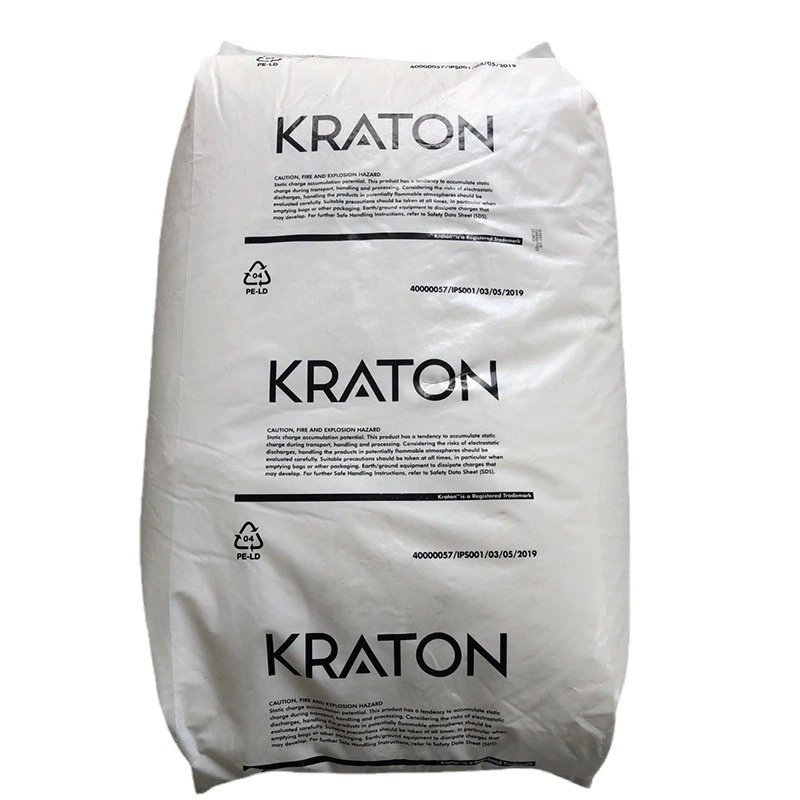
Technical overview and specifications of Kraton G1657 M SEBS polymer plastic raw material. Covers its 13% polystyrene content, 47 Shore A hardness, features, and industrial applications.
| Manufacturer | Kraton |
|---|---|
| MFR | 22 g/10 min |
| Tensile Strength at Break | 3400 MPa |
| Elongation at Break | 750 % |
Note: See the product description for additional technical specifications
Manufacturer: Kraton Corporation (USA)
Category: Hydrogenated Styrene-Ethylene/Butylene-Styrene Block Copolymer (SEBS / Hydrogenated Styrenic Block Copolymer – HSBC)
Appearance: Clear/Transparent Pellets (Supplied as free-flowing pellets mixed with a dusting agent, such as G1657 MS / G1657 MO)
Kraton™ G1657 M is a flagship grade within Kraton’s second-generation styrenic block copolymers (SBC). It is a linear triblock copolymer structurally engineered with hard polystyrene endblocks and a highly saturated, rubbery poly(ethylene-butylene) midblock (S-EB-S). Since its rubber midblock is completely hydrogenated to full saturation, Kraton G1657 M exhibits exceptional UV resistance, thermal aging stability, and hot shear performance that far surpass traditional elastomeric alternatives (such as SBS and SIS).
The defining technical feature of this grade lies in its low polystyrene content (only 13%) blended with approximately 30% diblock copolymer structure. This precise formulation endows the material with low hardness, outstanding flexibility, superior melt processability, and crystal-clear clarity. In the international plastics trade and high-end compounding industries, Kraton G1657 M is highly utilized as an impact modifier, compatibilizer, and base polymer for high-performance thermoplastic elastomers (TPE), as well as a core resin for specialty adhesives, sealants, and coatings.
The following physical and chemical performance parameters are sourced directly from the official technical data sheets and sales specifications published by Kraton Corporation. All units are presented in an independent column:
| Property | Test Method | Units | Specification Range |
| Polystyrene Content | KM 03 | %m | 12.3 ~ 14.3 |
| Antioxidant Content | KM 08 | %m | 0.03 ~ 0.10 |
| Volatile Matter | KM 04 | %m | ≤ 1.0 |
| Total Extractables | KM 05 | %m | ≤ 1.5 |
| Solution Viscosity (Toluene Sol., 20.0%w @25°C) | BAM 922 | cP (mPa·s) | 1,200 ~ 1,800 |
| Ash / Silica Dusting Agent (For MS Grade) | BAM 908 | %w | 0.02 ~ 0.12 |
Note: Typical values are intended as engineering references for processing and compounding development and are not part of product sales specifications.
| Property | Test Method | Units | Typical Value |
| Melt Flow Rate (Melt Index @230°C, 5kg) | ASTM D1238 | g/10 min | 22 |
| Hardness (Shore A, 10s) | ASTM D2240 | — | 47 |
| Tensile Strength | ASTM D-412 | psi (MPa) | 3400 (23.4) |
| 300% Modulus | ASTM D-412 | psi (MPa) | 350 (2.41) |
| Elongation at Break | ASTM D-412 | % | 750 |
| Diblock Content | Internal Method | % | 30 |
| Styrene / Rubber Ratio | — | — | 13 / 87 |
The technical data sheet (TDS) of Kraton G1657 M SEBS Polymer Plastic Raw Material material from Kraton Corporation corporation, if there are differences, please refer to the official website of Kraton Corporation.
Low Hardness & Ultra-Soft Tactile Feel: Its 13% low polystyrene content and 30% diblock configuration maintain its hardness at a stable 47 Shore A. It delivers an exceptionally soft, skin-friendly, and highly elastic touch without requiring an excessive amount of mineral oil, making it an ideal base polymer for premium overmolding applications and soft-touch protective sleeves.
Excellent Transparency & Ease of Coloration: As a crystal-clear linear copolymer, G1657 M features superior light transmittance and an extremely low yellowness index. It can be used directly to manufacture transparent elastomeric items or compounded seamlessly into high-saturation, vibrant colored products.
High Flowability & Superior Melt Processing: Under the condition of 230°C/5kg, its melt flow rate (MFR) reaches 22 g/10 min. This excellent melt flow characteristics greatly broadens its processing window, ensuring complete mold filling and a smooth surface finish free of flow marks whether subjected to complex thin-wall injection molding, high-speed profile extrusion, or blow molding.
Outstanding Weatherability & Anti-Aging Durability: Thanks to the fully hydrogenated midblock (saturated Ethylene/Butylene structure), the polymer possesses inherent resistance to thermal degradation, oxidation, ozone, and ultraviolet (UV) radiation. It prevents degradation, stickiness, or embrittlement under long-term outdoor exposure or elevated temperature environments.
Versatile Compounding & Compatibility Enhancement: It functions effectively when melt-blended with polyolefins (PP, PE) and select engineering plastics. When deployed as an impact modifier, it significantly enhances the low-temperature toughness and environmental stress cracking resistance (ESCR) of the matrix plastic without causing significant loss of its original transparency.
High-End Plastic Modification & Overmolding (TPE Overmolding): Frequently utilized as a premium toughening agent for Polypropylene (PP) and Polyethylene (PE) compounds to produce automotive interior trims (e.g., dashboard skins, door panel seals), consumer electronics protective cases, and power tool handles, achieving a durable, soft-grip tactile feel via multi-shot injection molding.
Specialty Adhesives, Sealants, & Coatings: Owing to its good solubility in common aromatic solvents like toluene (solution viscosity of 1200–1800 cP at 20%w) and its diblock structure which naturally improves green strength, it is widely formulated into high-performance hot melt pressure-sensitive adhesives (HMPSA), architectural sealants, waterproofing coatings, and anti-corrosive industrial primers.
Medical & Healthcare Equipment: Benefiting from Kraton’s precise synthesis technologies, the polymer exhibits high purity with low volatiles (≤1.0%) and minimal extractables (≤1.5%). In medical-grade TPE compounds, it is ideal for disposable IV infusion sets, dialysis masks, syringe plunger tips, and soft-touch parts for personal care products.
Clear Packaging & Consumer Housewares: Employed to manufacture soft packaging films and shrink wrap sheets that require both mechanical flexibility and clear aesthetics. It is also used for premium children’s toys, sports equipment grips (e.g., bicycle handlebars, golf club grips), and various everyday consumer household gaskets and seals.
Q1: Does Kraton G1657 M require pre-drying before injection molding or extrusion? What are the recommended processing temperatures?
A1: Because Kraton G1657 M is a hydrogenated polymer with negligible moisture absorption, it can generally be processed directly without mandatory pre-drying, provided the original packaging has been kept intact and stored in a dry environment. However, if the packaging is exposed to high humidity during transit, pre-drying at 70°C–80°C in a desiccant or hot air dryer for 2–3 hours is recommended. For melt processing, since it is a highly stable second-generation HSBC, the recommended melt temperature range is 190°C to 250°C. To prevent material degradation from prolonged residence time, the maximum processing temperature should be strictly limited to below 280°C.
Q2: What is the main technical distinction between Kraton G1657 M and unhydrogenated polymers or conventional SBS (such as Kraton D series)?
A2: The fundamental difference lies in the saturation level of the polymer midblock and the resulting weatherability. Traditional SBS contains unsaturated double bonds that easily break down, discolor, or become sticky when exposed to UV light, heat, and atmospheric oxygen. In contrast, Kraton G1657 M (part of the Kraton G series) features a completely hydrogenated rubber midblock that is highly stable, multiplying its resistance to UV, ozone, and outdoor weathering. Furthermore, its unique 13% low polystyrene combined with 30% diblock design provides superior melt flowability (MFI of 22) and a more flexible balance of stiffness compared to standard SEBS grades.
Q3: Does this grade comply with environmental, food contact, or medical regulations? How should one choose between suffixes like MS?
A3: The base chemical composition of Kraton G1657 M features high technical purity. Specific manufacturing lots comply with US FDA food contact regulations, as well as mainstream international environmental directives such as RoHS and REACH. Regarding the suffixes: G1657 MS signifies that the pellets are dusted with an inorganic silica parting agent to prevent blocking (clumping) of the soft pellets during warehouse storage and stacking. G1657 MO denotes the use of an organic dusting agent. The core polymer properties of both variants are identical, and international buyers can select the appropriate type based on their downstream sensitivity to surface dusting.
Submit your inquiry today and receive a professional competitive price tailored to your project requirements.