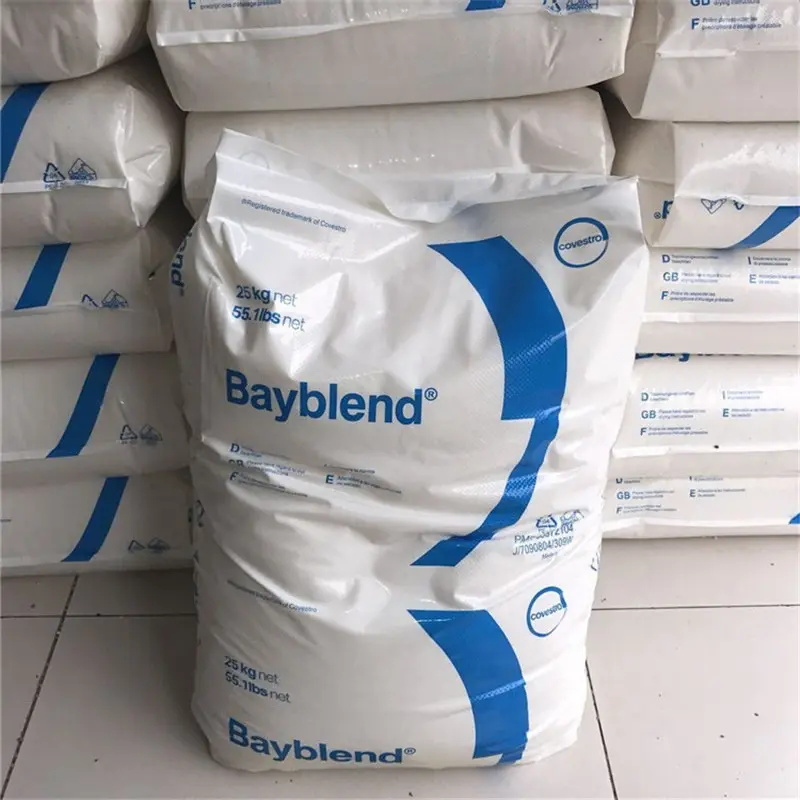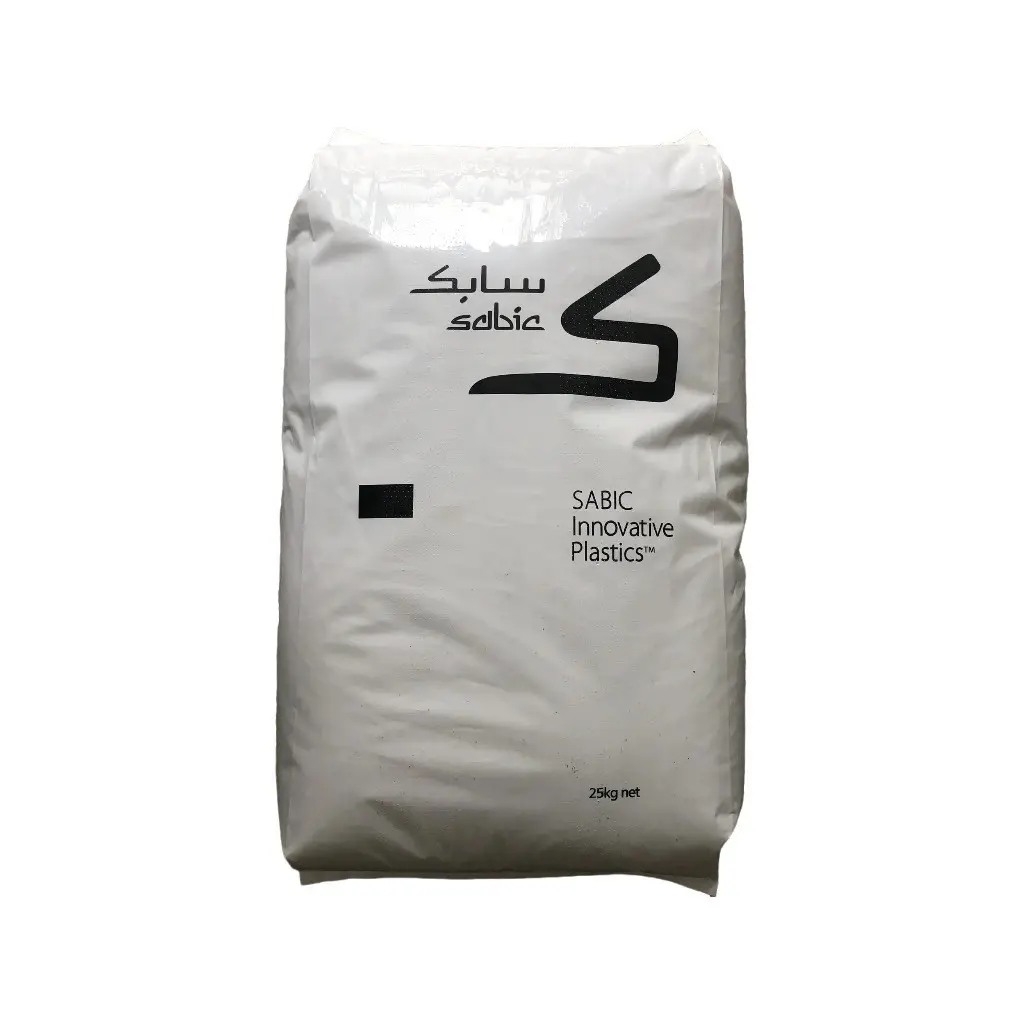
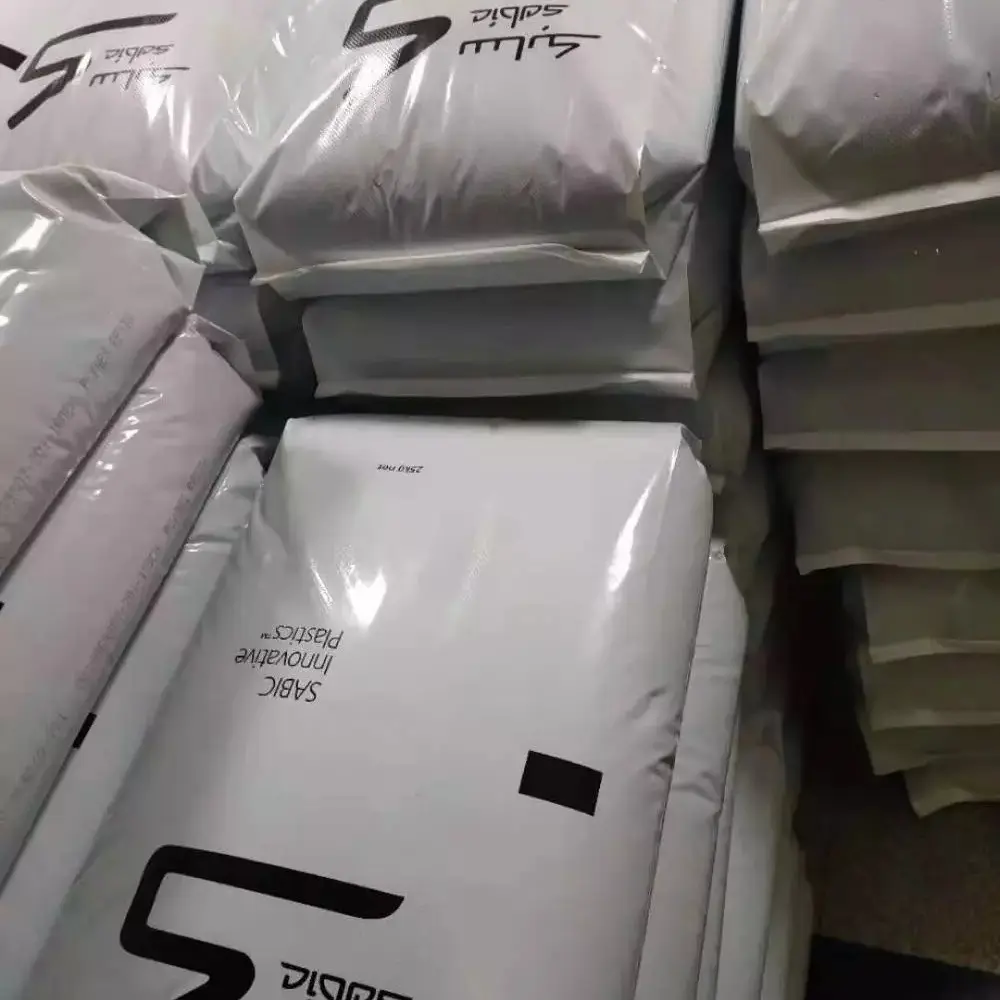
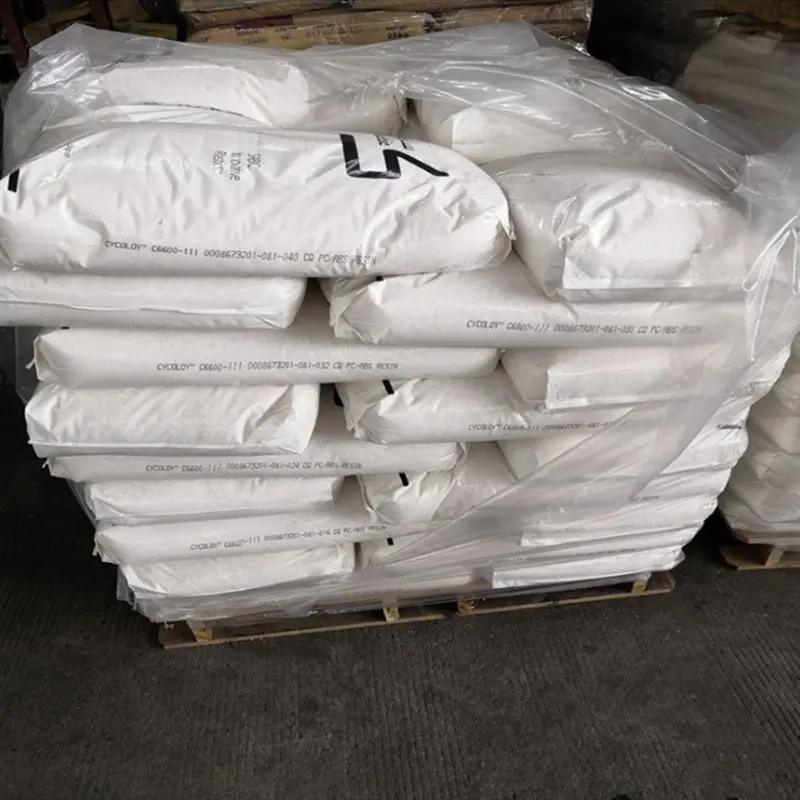
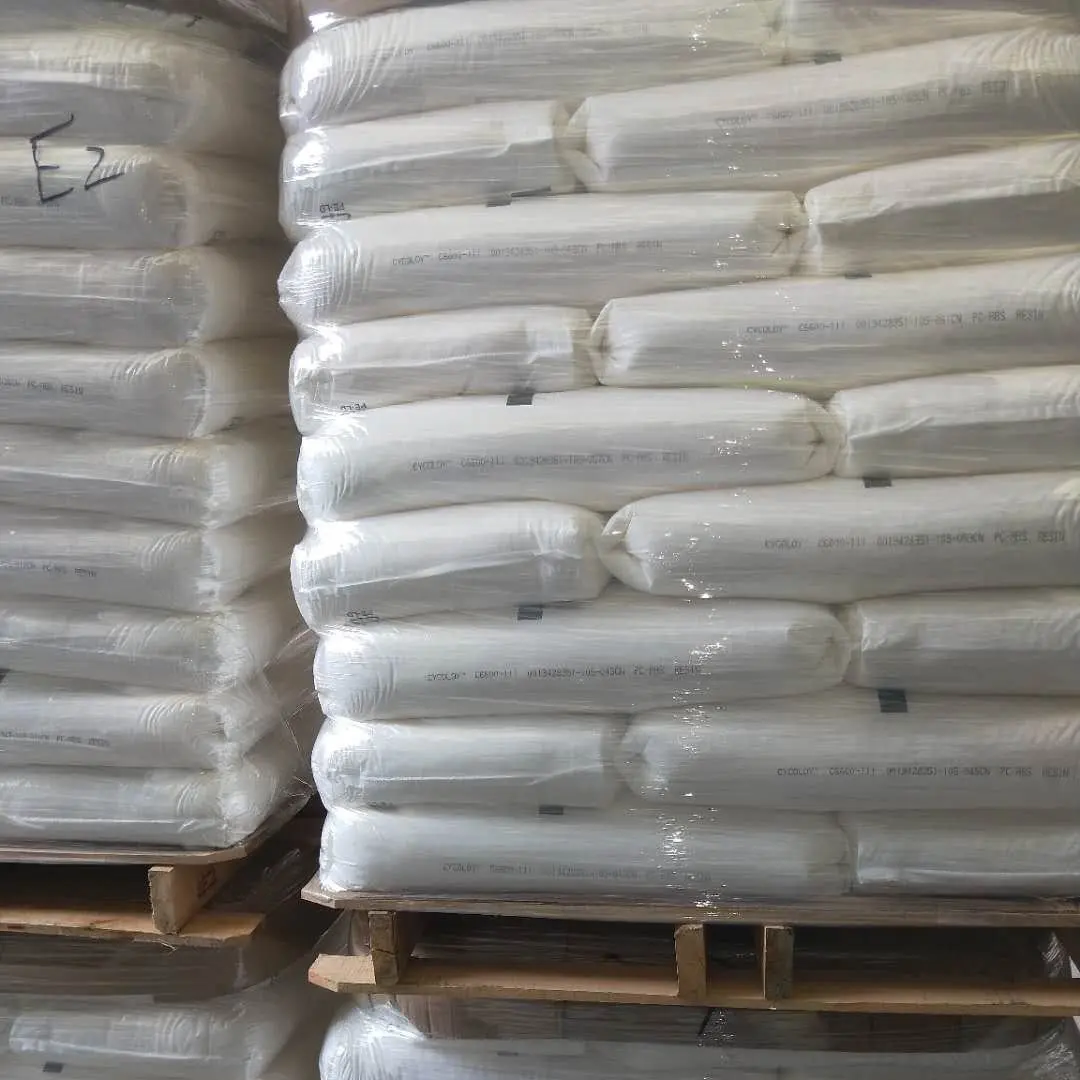
Discover CYCOLOY™ C6600, a high-flow, flame-retardant PC/ABS alloy from SABIC. Offering balanced impact resistance, superior processability, and multi-level UL certifications, it is ideal for consumer electronics, automotive interiors, and appliance housings.
| Manufacturer | SABIC |
|---|---|
| MFR | 21.5 g/10 min |
| Flexural Modulus | 2620 MPa |
| Izod Notched Impact | 550 J/m |
| Tensile Modulus | 3000 MPa |
Note: See the product description for additional technical specifications
C6600 PC/ABS is produced by SABIC, belonging to the CYCOLOY™ series of polycarbonate-acrylonitrile butadiene styrene alloy materials. The product’s natural color is opaque pellets, supporting the customization of various solid colors. CYCOLOY™ C6600 is an industry-mature, high-flow flame-retardant PC/ABS alloy grade, combining the impact resistance of PC with the processing fluidity of ABS, while featuring multi-level UL flame retardancy certifications. This material is primarily processed via injection molding and is widely used in fields such as consumer electronics housings, automotive interior components, household appliances, and office automation equipment casings.
| MECHANICAL | Test Condition | Typical Value | Unit | Standard |
| Tensile Stress, yield | Type I, 50 mm/min | 63 | MPa | ASTM D 638 |
| Tensile Stress, break | Type I, 50 mm/min | 49 | MPa | ASTM D 638 |
| Tensile Strain, yield | Type I, 50 mm/min | 4 | % | ASTM D 638 |
| Tensile Strain, break | Type I, 50 mm/min | 80 | % | ASTM D 638 |
| Tensile Modulus | 50 mm/min | 3000 | MPa | ASTM D 638 |
| Flexural Stress, yield | 1.3 mm/min, 50 mm span | 94 | MPa | ASTM D 790 |
| Flexural Modulus | 1.3 mm/min, 50 mm span | 2620 | MPa | ASTM D 790 |
| IMPACT | Test Condition | Typical Value | Unit | Standard |
| Izod Impact, notched | 23℃ | 550 | J/m | ASTM D 256 |
| Instrument Impact Total Energy | 23℃ | 51 | J | ASTM D 3763 |
| Instrument Impact Total Energy | -30℃ | 51 | J | ASTM D 3763 |
| THERMAL | Test Condition | Typical Value | Unit | Standard |
| Vicat Softening Temperature | Rate B/50 | 99 | ℃ | ASTM D 1525 |
| HDT, 1.82 MPa, 3.2mm, unannealed | 1.82 MPa, 3.2mm, unannealed | 83 | ℃ | ASTM D 648 |
| HDT, 0.45 MPa, 6.4mm, unannealed | 0.45 MPa, 6.4mm, unannealed | 98 | ℃ | ASTM D 648 |
| HDT, 1.82 MPa, 6.4mm, unannealed | 1.82 MPa, 6.4mm, unannealed | 90 | ℃ | ASTM D 648 |
| Relative Temperature Index, electrical | – | 80 | ℃ | UL 746B |
| Relative Temperature Index, mechanical w/ impact | – | 70 | ℃ | UL 746B |
| Relative Temperature Index, mechanical w/o impact | – | 80 | ℃ | UL 746B |
| PHYSICAL | Test Condition | Typical Value | Unit | Standard |
| Specific Gravity | – | 1.19 | – | ASTM D 792 |
| PHYSICAL | Test Condition | Typical Value | Unit | Standard |
| Water Absorption | 24 hours | 0.11 | % | ASTM D 570 |
| Mold Shrinkage, flow | Flow direction, 3.2 mm | 0.4‑0.6 | % | SABIC Method |
| Melt Flow Rate (MFR) | 260℃/2.16 kgf | 21.5 | g/10 min | ASTM D 1238 |
| ELECTRICAL | Test Condition | Typical Value | Unit | Standard |
| Volume Resistivity | – | >1.E+15 | Ohm‑cm | IEC 60093 |
| Surface Resistivity | ROA | >1.E+15 | Ohm | IEC 60093 |
| Dielectric Strength | in oil, 3.2 mm | 17 | kV/mm | IEC 60243‑1 |
| Relative Permittivity | 50/60 Hz | 2.7 | – | IEC 60250 |
| Relative Permittivity | 1 MHz | 2.7 | – | IEC 60250 |
| Dissipation Factor | 50/60 Hz | 0.004 | – | IEC 60250 |
| Dissipation Factor | 1 MHz | 0.006 | – | IEC 60250 |
| FLAME CHARACTERISTICS | Test Condition | Typical Value | Unit | Standard |
| UL 94 Flame Class Rating | – | 0.75 | mm | UL 94 |
| UL 94 Flame Class Rating | – | 1.5 | mm | UL 94 |
| UL 94 5VB Rating | – | 2 | mm | UL 94 |
| Parameter | Typical Value | Unit |
| Drying Temperature | 80‑90 | ℃ |
| Drying Time | 3‑4 | hrs |
| Maximum Drying Time | 8 | hrs |
| Maximum Moisture Content | 0.04 | % |
| Melt Temperature | 245‑275 | ℃ |
| Nozzle Temperature | 245‑275 | ℃ |
| Front – Zone 3 Temperature | 245‑275 | ℃ |
| Middle – Zone 2 Temperature | 220‑275 | ℃ |
| Rear – Zone 1 Temperature | 220‑255 | ℃ |
| Mold Temperature | 60‑80 | ℃ |
| Back Pressure | 0.3‑0.7 | MPa |
| Screw Speed | 40‑70 | rpm |
| Shot to Cylinder Size | 30‑80 | % |
| Vent Depth | 0.038‑0.076 | mm |
The technical data sheet (TDS) of SABIC CYCOLOY™ C6600 PC/ABS material from SABIC corporation, if there are differences, please refer to the official website of SABIC.
High Melt Flow: MFR reaches 21.5 g/10min, making it suitable for thin-walled and complex-cavity parts, reducing injection pressure, shortening molding cycles, and adapting to mass production.
Wide Temperature Range Impact Performance: Maintains high impact energy in both ambient and -30°C low-temperature environments, preventing brittle cracking under low temperatures and ensuring stable drop-resistance for components.
Multi-level UL Flame Retardancy: Achieves various UL 94 flame retardant ratings such as V-2, V-0, and 5VB, meeting the fire safety design requirements of electrical and electronic components.
Stable Electrical Insulation: Features high volume and surface resistivity, with minimal fluctuations in dielectric constant and dissipation factor, suitable for low-voltage electronic insulation parts.
Controllable Molding Shrinkage: Mold shrinkage ranges between 0.4‑0.6%, facilitating mold design and ensuring dimensional consistency for shell-type components.
Good Colorability: The natural base material supports various surface color schemes such as solid colors, matte, and high gloss, meeting diverse visual requirements for exterior parts.
Consumer Electronics: Laptop housings, monitor back covers, router casings, printer and copier components, audio equipment housings, and structural parts for various portable electronic devices.
Automotive Components: Automotive interior panels, center console surrounding trim parts, in-vehicle multimedia housings, interior functional button assemblies, and non-load-bearing interior decorative shells.
Household Appliances: Small appliance housings, air conditioner control panels, kitchen appliance structural parts, washing machine decorative components, and fan housings.
Office Automation Equipment: Scanner housings, projector casings, printer consumable brackets, and terminal equipment shells.
Electrical & Electronics Industry: Low-voltage electrical enclosures, instrument cases, power adapter housings, and non-load-bearing industrial accessories requiring flame retardant ratings.
Q1: What are the drying requirements for CYCOLOY™ C6600 PC/ABS before injection molding?
A: The material is prone to moisture absorption, which can cause silver streaks and bubble defects during molding. A dehumidifying dryer is recommended with a drying temperature of 80‑90℃ and a drying time of 3‑4 hours. The cumulative drying duration should not exceed 8 hours, and the maximum moisture content must be controlled below 0.04%. Once dried, the raw material should avoid prolonged exposure to air.
Q2: How to choose between CYCOLOY™ C6600 PC/ABS and general-purpose PC grades?
A: Neat PC offers higher heat resistance and room temperature impact strength, but lower melt flowability, making it more difficult to process thin-walled and complex parts. As a PC/ABS alloy, CYCOLOY™ C6600 provides better fluidity, a wider processing window, and flame retardancy, though its heat resistance is lower than neat PC. It is preferentially recommended for shell products that emphasize processing efficiency, high appearance aesthetics, and medium heat resistance requirements. Trial molding verification is recommended before mass production.
Q3: How to obtain UL flame retardancy and RoHS compliance documents for this grade?
A: CYCOLOY™ C6600 holds UL 94 series flame retardancy certifications. RoHS compliance statements must be requested from the raw material supplier as official SABIC reports. The technical data sheet cannot be used directly as compliance proof for finished product exports, and end products must complete regulatory testing in the target region prior to export.
Q4: Is CYCOLOY™ C6600 suitable for parts in long-term contact with chemical solvents?
A: This grade exhibits certain resistance to most household cleaners and greases, but is not resistant to strong organic solvents, strong acids, or strong alkalis. Long-term exposure to solvent environments may lead to stress cracking risks. Product designs should evaluate internal stress levels, and immersion testing is recommended in advance if the application involves chemical contact.
Submit your inquiry today and receive a professional competitive price tailored to your project requirements.