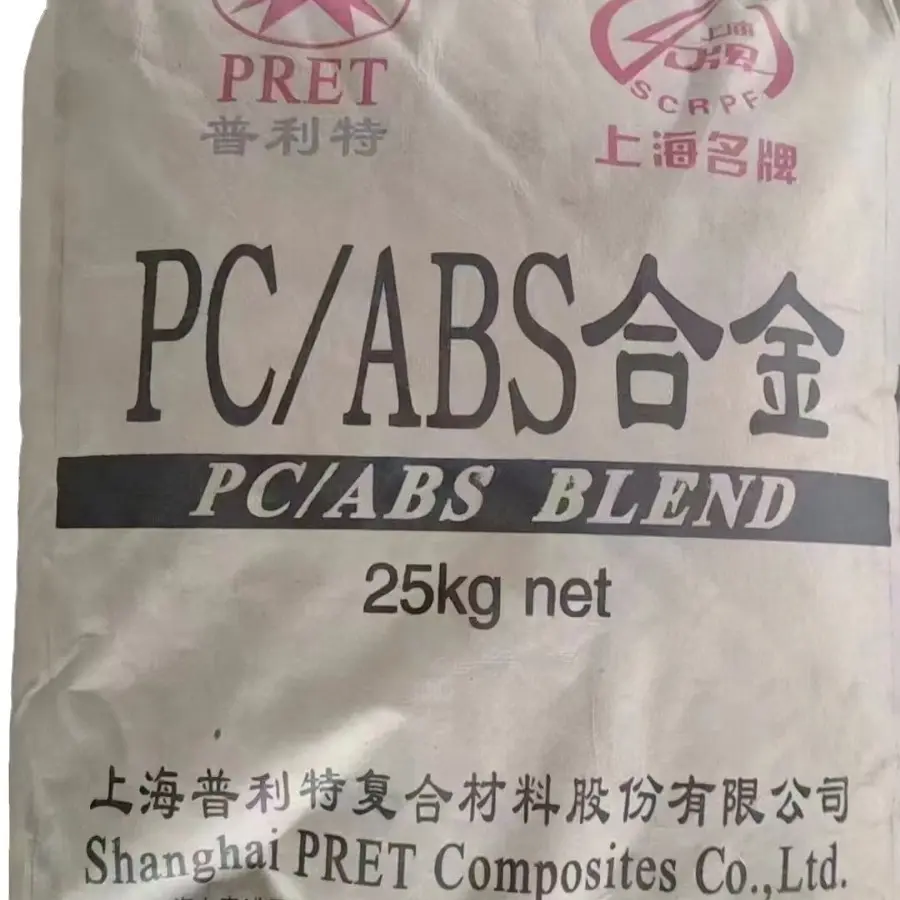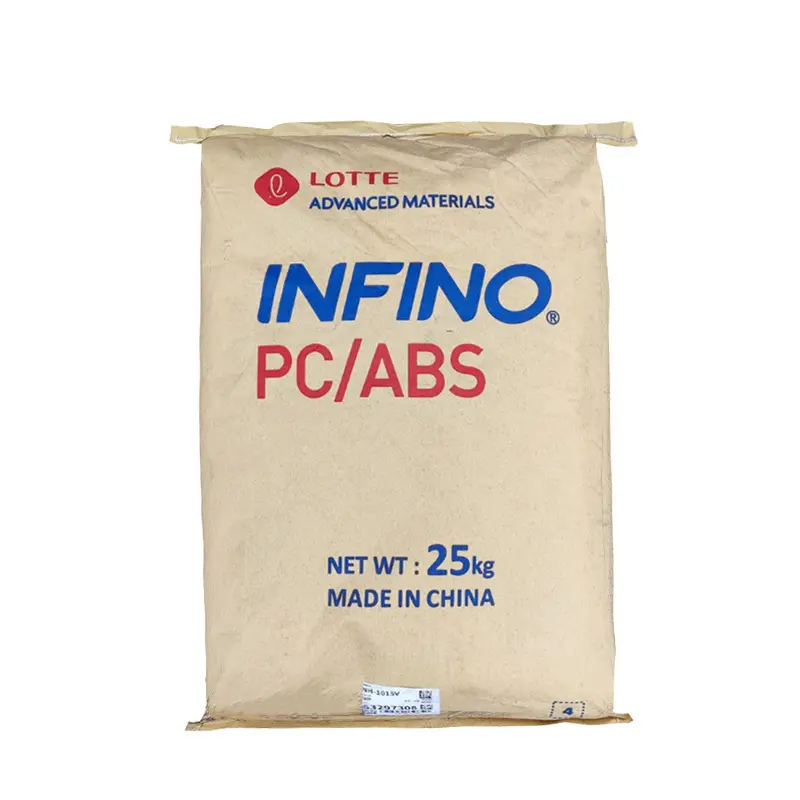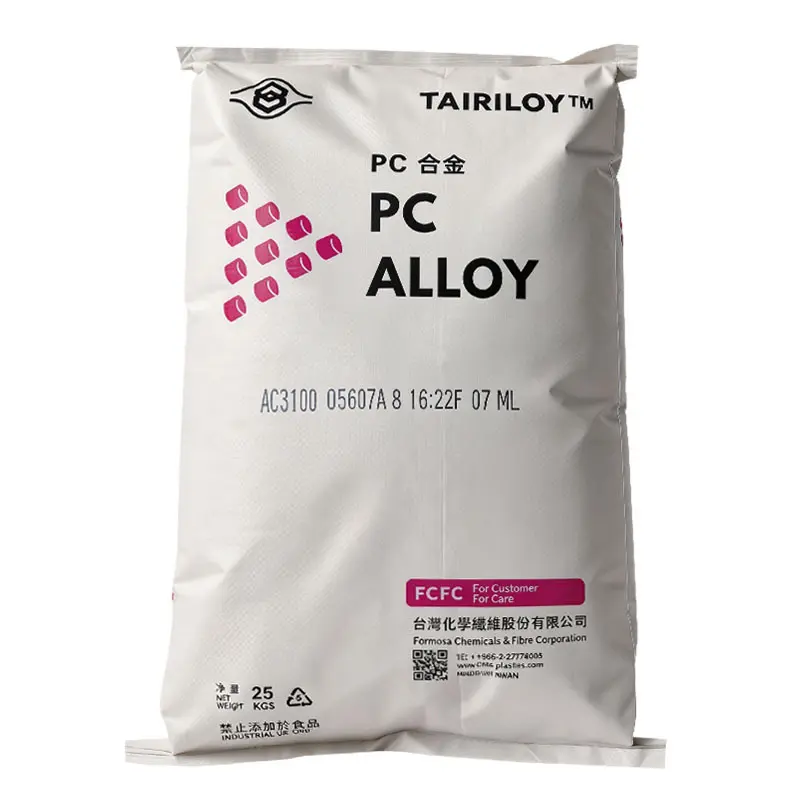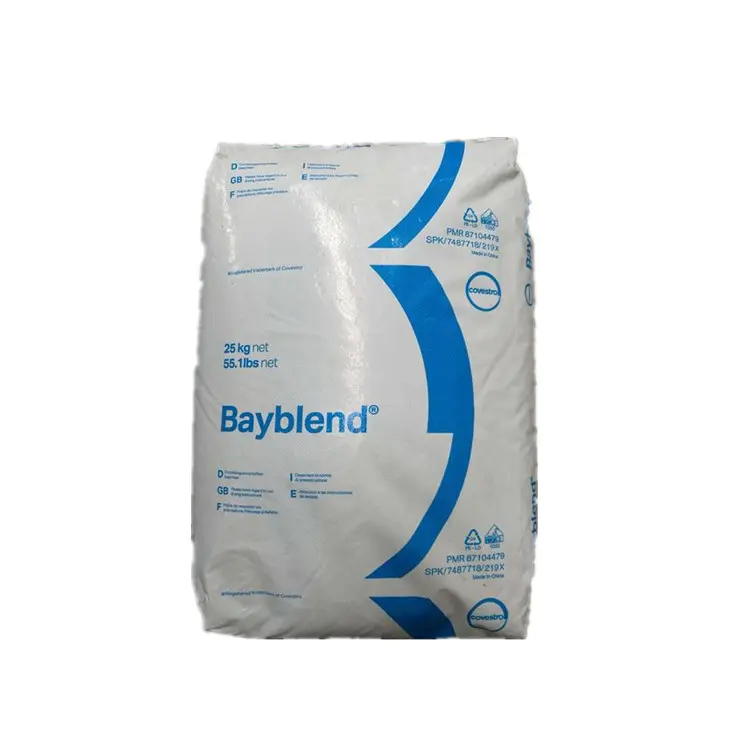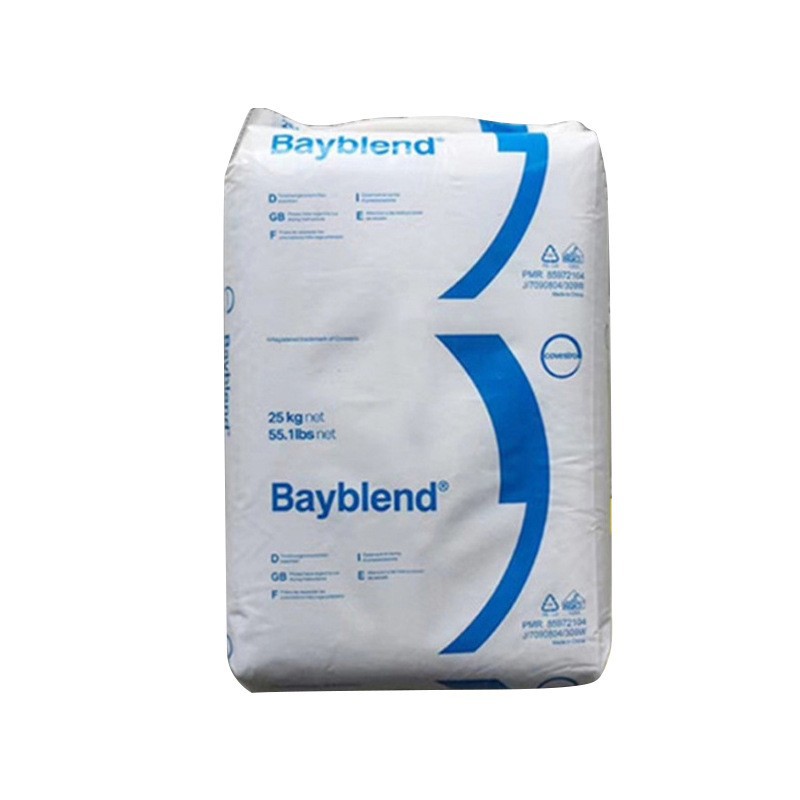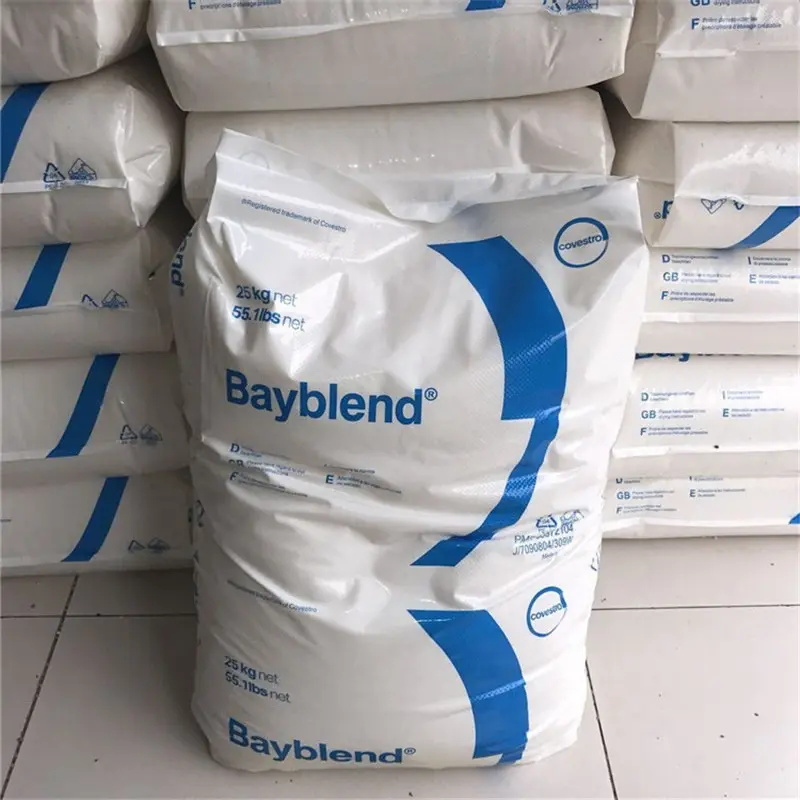
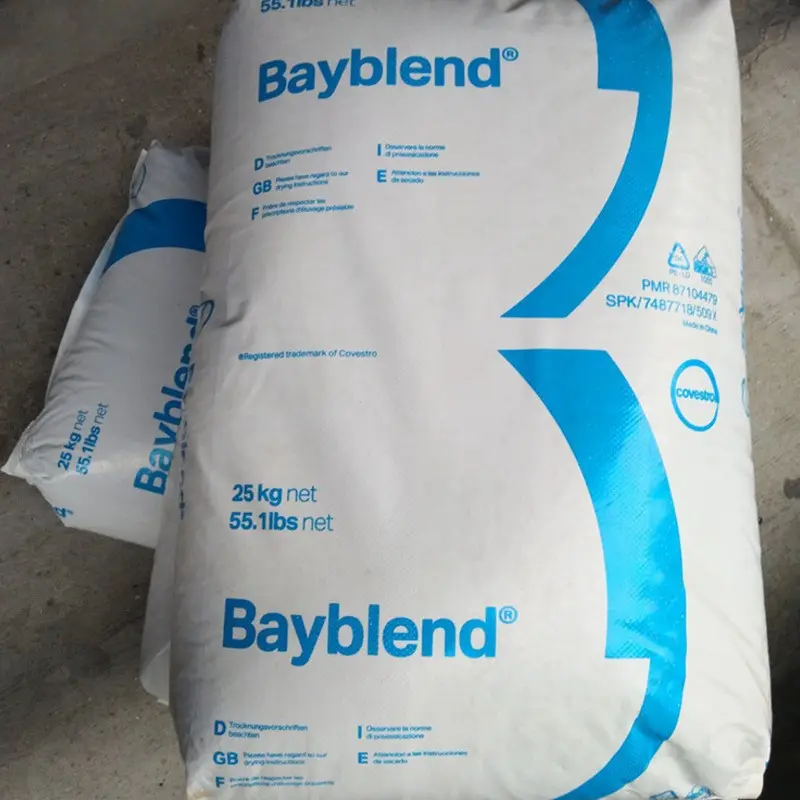
Covestro Bayblend T45PG is an unreinforced electroplating-grade PC/ABS alloy resin. It offers high heat resistance, low-temperature toughness, and excellent dimensional stability for automotive interiors, electronics, and consumer appliances. Read TDS and specifications.
| Manufacturer | Covestro |
|---|---|
| Density | 1.1 g/cm³ |
| MVR | 12 cm³/10 min |
| Tensile Strength at Yield | 49 MPa |
| Tensile Strength at Break | 40 MPa |
Note: See the product description for additional technical specifications
Covestro Bayblend T45PG is an electroplating-grade PC/ABS alloy engineering plastic developed and manufactured by Covestro. It is an unreinforced blend of polycarbonate (PC) and acrylonitrile-butadiene-styrene (ABS). Appearing as milky-white pellets, this product combines the high strength and heat resistance of PC with the excellent processing fluidity of ABS, making it one of the benchmarking grades for high-end PC/ABS alloys globally.
As a core grade in the Covestro Bayblend portfolio, T45PG is renowned for its balanced overall performance, outstanding electroplating compatibility, and stable low-temperature toughness. It is widely used in demanding applications across automotive, electrical and electronics (E&E), and consumer goods industries where surface aesthetics and structural strength are critical, serving as a key material for metal-to-plastic lightweighting.
| Physical Properties | Value | Unit | Standard |
| Density(23 °C) | 1.1 | g/cm³ | ASTM D792ISO 1183 |
| MVR(260 °C, 5 kg) | 12 | cm³/10 min | ISO 1133 |
| Mold Shrinkage, Normal (260 °C, MT 80 °C, 3 mm, 150x105x3mm) |
0.55-0.75 | % | ISO 2577 |
| Mold Shrinkage, Parallel (260 °C, MT 80 °C, 3 mm, 150x105x3mm) |
0.55-0.75 | % | ISO 2577 |
| Water Absorption, Saturation(23 °C) | 0.7 | % | ISO 62 |
| Water Absorption, Equilibrium(50% RH, 23 °C) | 0.2 | % | ASTM D570ISO 62 |
| Melt Viscosity(260 °C, 1000s-1) | 200 | Pa·s | ISO 11443-A |
| Mechanical Properties | Value | Unit | Standard |
| Tensile Modulus(1 mm/min) | 2000 | MPa | ISO 527-2/1 |
| Tensile Strength at Yield(50 mm/min) | 49 | MPa | ISO 527-2/50 |
| Tensile Strength at Break(50 mm/min) | 40 | MPa | ISO 527-2/50 |
| Tensile Strain at Yield(50 mm/min) | 3.7 | % | ISO 527-2/50 |
| Tensile Strain at Break(50 mm/min) | > 50 | % | ISO 527-2/50 |
| Izod Notched Impact Strength(-30 °C) | 36 | kJ/m² | ISO 180/1A |
| Izod Notched Impact Strength(23 °C) | 40 | kJ/m² | ISO 180/1A |
| Izod Unnotched Impact Strength(-30 °C) | No Break | — | ISO 180 |
| Izod Unnotched Impact Strength(23 °C) | No Break | — | ISO 180 |
| Thermal Properties | Value | Unit | Standard |
| Deflection Temperature Under Load, Unannealed (0.45 MPa) |
112 | °C | ISO 75-2/B |
| Deflection Temperature Under Load, Unannealed (1.8 MPa) |
92 | °C | ISO 75-2/A |
| Vicat Softening Temperature | 110 | °C | ISO 306/B50 |
| Vicat Softening Temperature | 112 | °C | ISO 306/B120 |
| Coefficient of Linear Thermal Expansion, Parallel (23 – 55 °C) |
8.50E-05 | cm/cm/°C | ISO 11359-2 |
| Coefficient of Linear Thermal Expansion, Normal (23 – 55 °C) |
9.00E-05 | cm/cm/°C | ISO 11359-2 |
| Flammability Class(0.9 mm) | HB | — | UL 94 |
| Limiting Oxygen Index | 20 | % | ISO 4589-2 |
| Electrical Properties | Value | Unit | Standard |
| Surface Resistivity | 1.00E+16 | ohms | IEC 60093 |
| Volume Resistivity | 1.00E+14 | ohms · cm | IEC 60093 |
| Electric Strength(23 °C, 1 mm) | 35 | kV/mm | IEC 60243-1 |
| Relative Permittivity(100 Hz, 23 °C) | 3.1 | — | IEC 60250 |
| Relative Permittivity(23 °C, 1.0e+6 Hz) | 3 | — | IEC 60250 |
| Dissipation Factor(100 Hz, 23 °C) | 3.50E-03 | — | IEC 60250 |
| Dissipation Factor(23 °C, 1.0e+6 Hz) | 8.50E-03 | — | IEC 60250 |
| Comparative Tracking Index, Solution A | 275 | V | IEC 60112 |
The technical data sheet (TDS) of Covestro Bayblend T45PG material from Covestro corporation, if there are differences, please refer to the official website of Covestro.
Outstanding Electroplating Performance: Specifically optimized for plating processes, ensuring high coating adhesion and a smooth surface free of pinholes. It can directly replace chrome-plated metal parts, significantly reducing costs and weight.
Excellent Low-Temperature Toughness: Maintains a high notched impact strength of 36 kJ/m² even at -30°C, preventing brittle failures in cold outdoor environments.
High Dimensional Stability: Low and isotropic mold shrinkage paired with low water absorption ensures precise dimensions are maintained under varying temperature and humidity conditions, ideal for complex precision parts.
Good Heat Resistance: Vicat softening temperature ranges from 110°C to 112°C with a long-term service temperature of up to 90°C, capable of withstand elevated temperatures in automotive interiors and household appliances.
Superb Processing Fluidity: Featuring an MVR of 12 cm³/10 min, it easily fills complex molds during injection molding. This makes it highly suitable for producing thin-walled and fine-structured components, boosting production efficiency.
Excellent Chemical Resistance: Offers good resistance to acids, alkalis, oils, and common cleaning agents, preventing corrosion and extending the service life of finished products.
Exterior Parts: Chrome-plated grilles, side-mirror housings, door handles, and window trims, leveraging high gloss and strong plating adhesion to enhance premium visual quality.
Interior Parts: Center console panels, A/C vents, and door trim panels, delivering a perfect balance of heat resistance, impact strength, and surface aesthetics.
Appliance Housings: Washing machine control panels, refrigerator handles, and coffee maker casings, characterized by cleaning agent resistance, impact resistance, and ease of coating.
Consumer Electronics: Laptop casings, charger housings, and audio panels, offering high gloss, dimensional stability, and suitability for surface metallization.
Power Tools: Enclosures and handles, providing high impact resistance, vibration damping, and excellent electrical insulation.
Sanitary Products: Faucet bodies and showerhead bases, highly compatible with electroplating while offering resistance to water and corrosion.
Q1: Does Covestro Bayblend T45PG require pre-drying before processing? What are the parameters?
A: Yes, pre-drying is necessary. PC/ABS alloys are highly hygroscopic. Excess moisture can cause silver streaks or bubbles on the finished product and severely compromise plating quality and mechanical properties. It is recommended to use a desiccant dryer to dry the material at 100-110°C for 2-4 hours, with a bed depth of ≤30mm, ensuring the moisture content is controlled at ≤0.02%.
Q2: What are the core differences between T45PG and general-purpose PC/ABS?
A: T45PG is a dedicated plating-grade material whose formulation and compounding process are optimized specifically for electroplating, yielding far superior plating adhesion and a defect-free surface. In contrast, general-purpose PC/ABS grades focus on versatile properties and are prone to peeling or pinholes after plating. Additionally, T45PG offers superior low-temperature toughness (remaining highly impact-resistant at -30°C) and better dimensional stability, making it ideal for high-end aesthetic parts and precision structural components.
Q3: Does Covestro Bayblend T45PG comply with environmental and safety standards?
A: Yes. The product complies with EU RoHS and REACH environmental regulations and does not contain hazardous substances such as lead or mercury. It carries a flammability rating of UL 94 HB (at 0.9mm), meeting standard electrical fire safety requirements. Covestro can provide Certificate of Analysis (COA), Safety Data Sheets (SDS), and UL Yellow Card documents to satisfy automotive and electronic industry qualification standards.
Submit your inquiry today and receive a professional competitive price tailored to your project requirements.