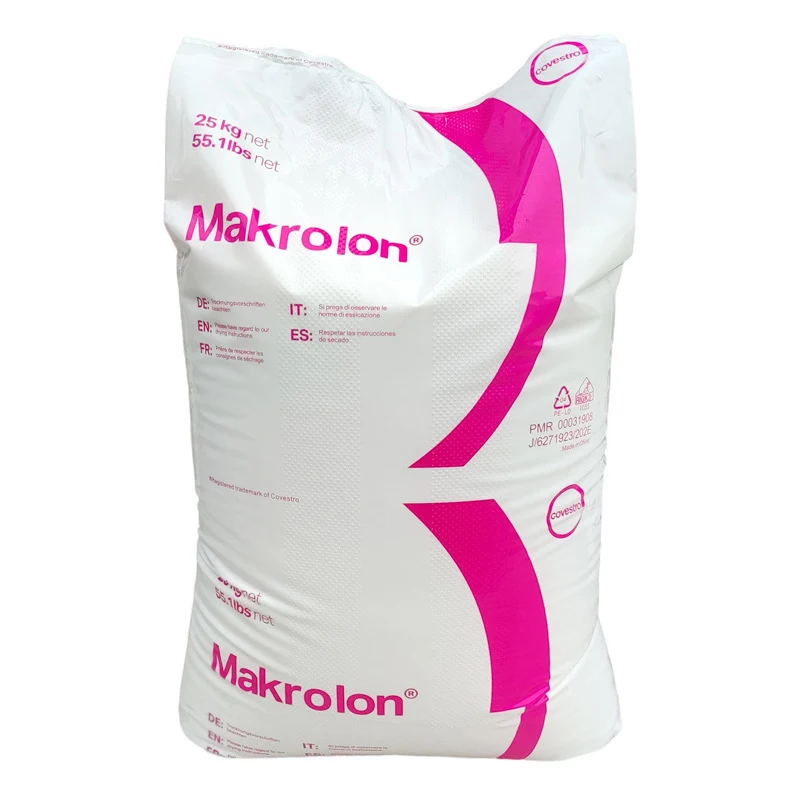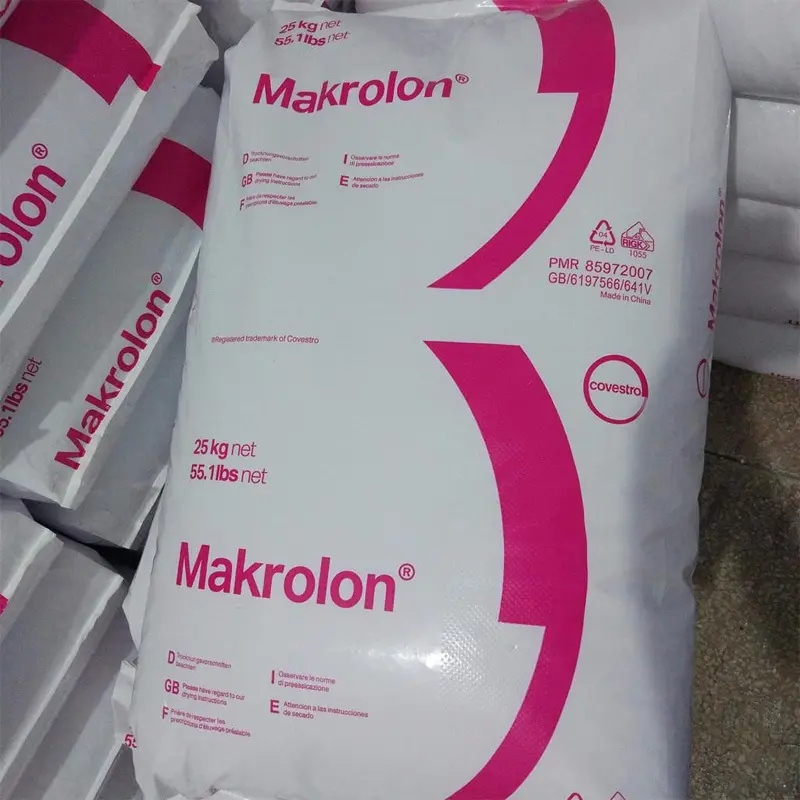
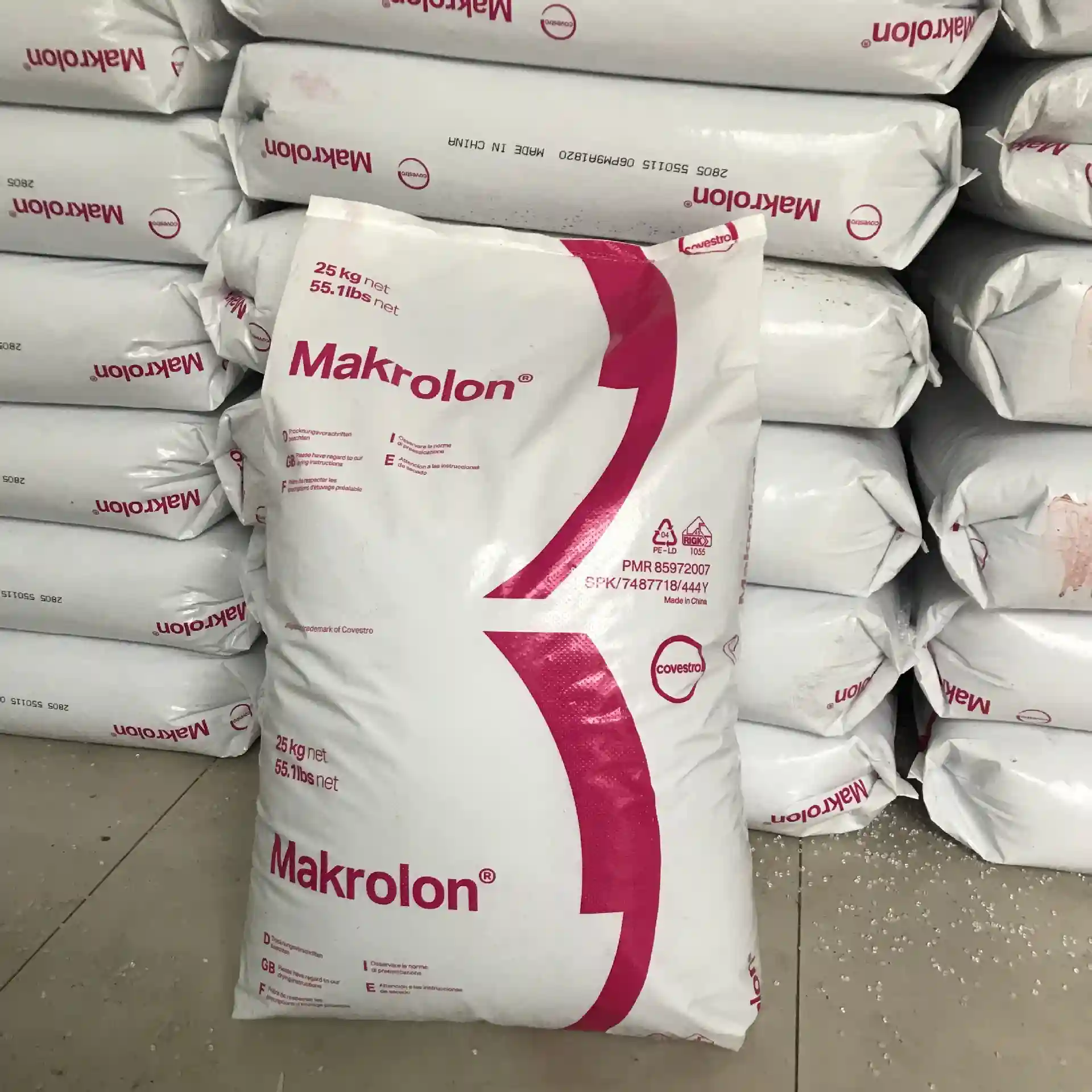
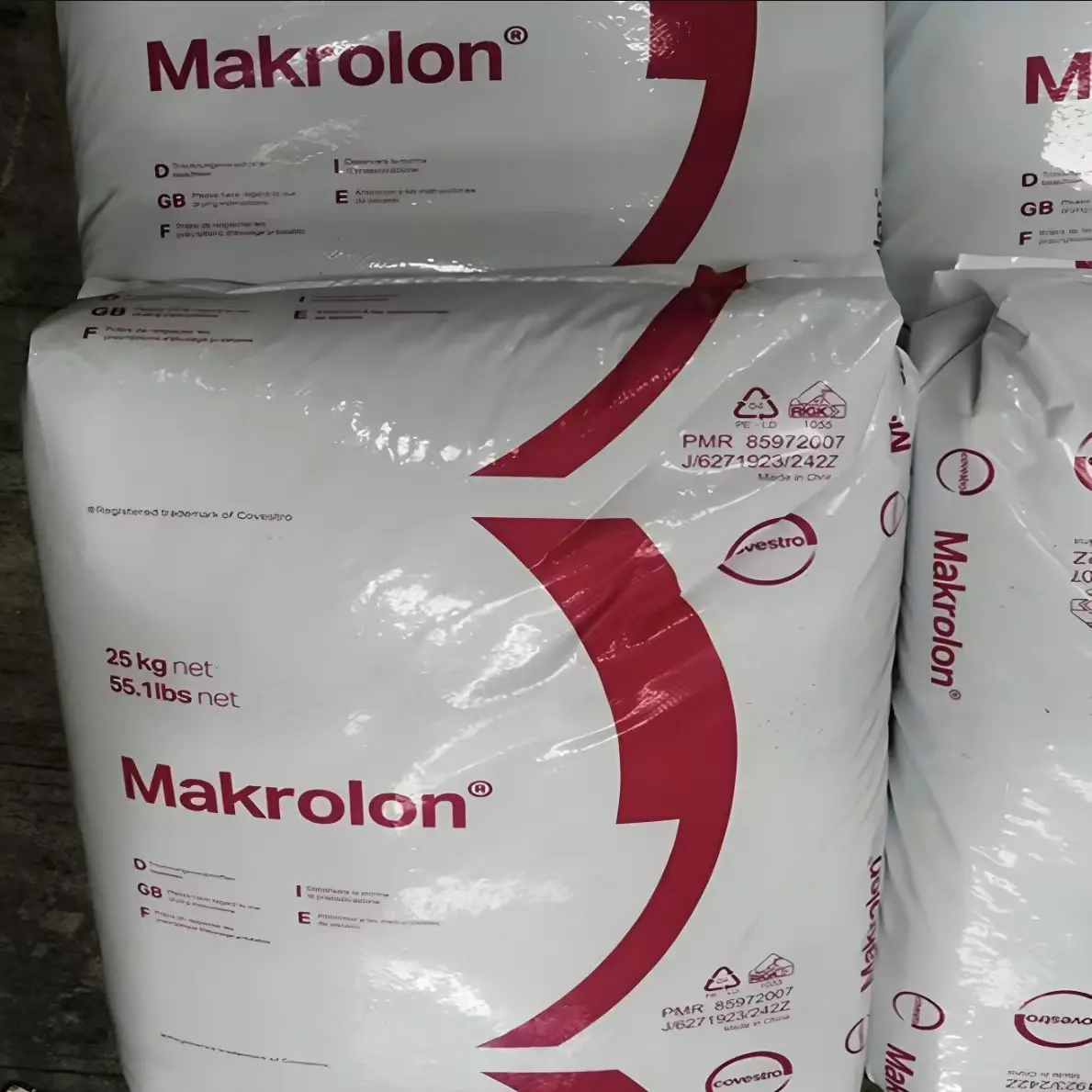
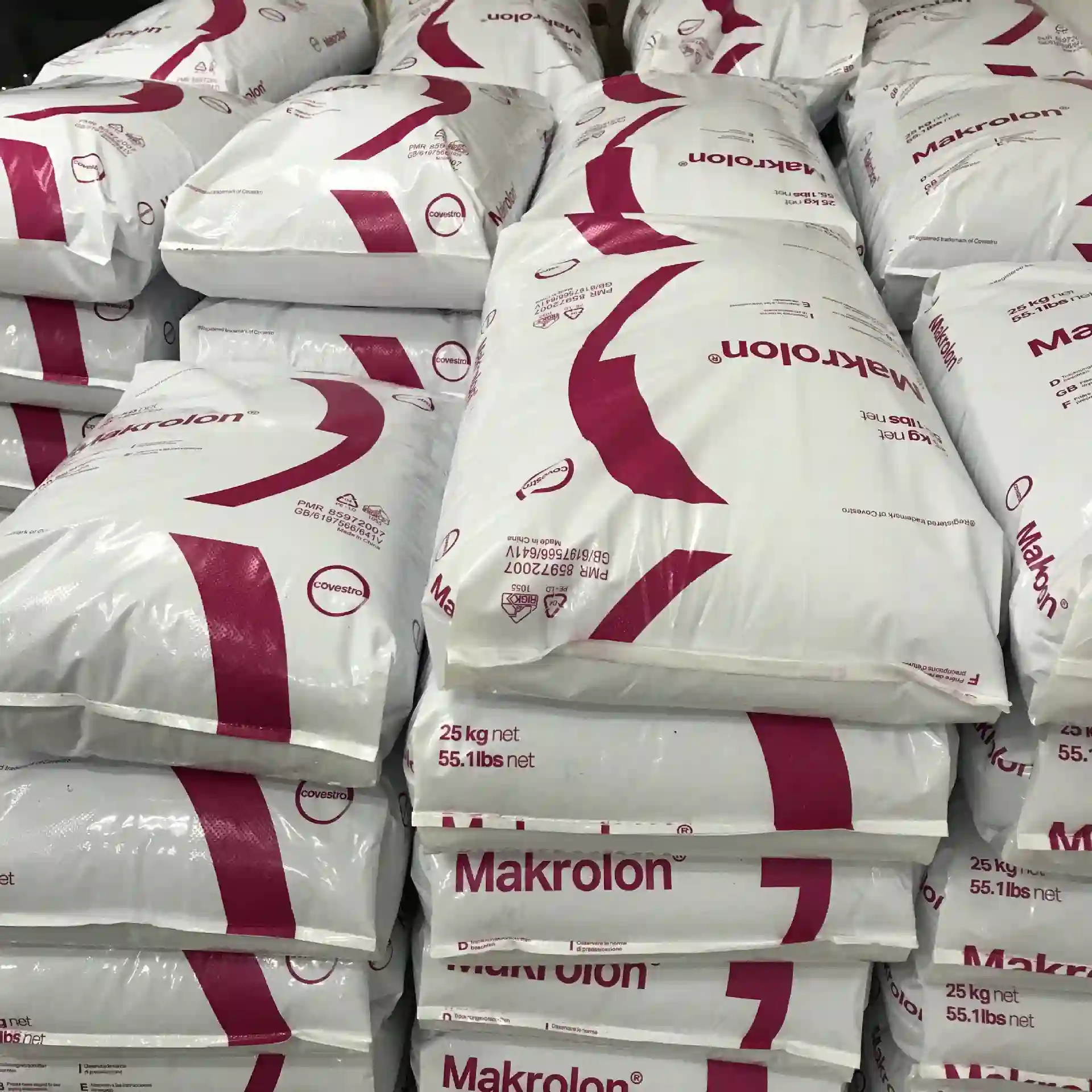
Covestro Makrolon 2407 PC is a high-viscosity extrusion-grade polycarbonate resin with built-in UV stabilization. It features high transparency, weather resistance, balanced mechanical properties and electrical insulation performance, and is applied in extrusion sheets, electrical and electronics, and industrial packaging fields. Full technical specifications are available.
| Manufacturer | Covestro |
|---|---|
| Density | 1.20 g/cm³ |
| MFR | 20 g/10min |
| Tensile Strength at Yield | 66 MPa |
| Tensile Strength at Break | 65 MPa |
Note: See the product description for additional technical specifications
Manufacturer: Covestro (formerly Bayer MaterialScience)
Material Category: Extrusion Grade Polycarbonate (PC)
Physical Appearance: Colorless transparent granular resin
Makrolon® 2407 is a weatherable polycarbonate grade from Covestro’s Makrolon series, developed specifically for extrusion processes with proven industrial application track records. This high-viscosity formulation incorporates a built-in UV-stabilized weathering system, maintaining stable optical and mechanical properties under long-term outdoor exposure. The material combines high transparency, balanced impact resistance and reliable electrical insulation properties, and is compatible with extrusion and other mainstream processing technologies. It is widely used in construction sheets, electrical and electronics, industrial packaging and other fields.
| Physical Properties | Test Condition | Test Value | Unit | Test Standard |
| Density | 23℃ | 1.2 | g/cm³ | ISO 1183 |
| Apparent Density | — | 0.66 | g/cm³ | ISO 60 |
| Melt Mass Flow Rate (MFR) | 300℃, 1.2 kg | 20 | g/10min | ISO 1133 |
| Melt Volume Flow Rate (MVR) | 300℃, 1.2 kg | 19 | cm³/10 min | ISO 1133 |
| Mold Shrinkage (Transverse) | — | 0.5-0.7 | % | ISO 2577 |
| Mold Shrinkage (Longitudinal) | — | 0.5-0.7 | % | ISO 2577 |
| Mold Shrinkage (Transverse) | 2 mm, 500 bar, 60×60×2mm, 280℃ | 0.7 | % | ISO 294-4 |
| Mold Shrinkage (Longitudinal) | 2 mm, 500 bar, 60×60×2mm | 0.65 | % | ISO 294-4 |
| Water Absorption (Saturated) | 23℃ | 0.3 | % | ISO 62 |
| Water Absorption (Equilibrium) | 50 % RH, 23℃ | 0.12 | % | ISO 62 |
| Ball Indentation Hardness | — | 116 | MPa | ISO 2039-1 |
| Water Vapor Transmission Rate | 85% RH, 100 μm, 23℃ | 15 | g/m²/24hr | ISO 15106-1 |
| Carbon Dioxide Permeability | 25.4 μm, 23℃ | 18900 | cm³/m²/bar/24hr | ISO 2556 |
| Mechanical Properties | Test Condition | Test Value | Unit | Test Standard |
| Tensile Modulus | 23℃ | 2400 | MPa | ISO 527-2/1 |
| Tensile Strength (Yield) | 23℃ | 66 | MPa | ISO 527-2/50 |
| Tensile Strength (Break) | 23℃ | 65 | MPa | ISO 527-2/50 |
| Tensile Strain (Yield) | 23℃ | 6 | % | ISO 527-2/50 |
| Tensile Strain (Break) | 23℃ | > 50 | % | ISO 527-2/50 |
| Tensile Creep Modulus | 1 h | 2200 | MPa | ISO 899-1 |
| Tensile Creep Modulus | 1000 h | 1900 | MPa | ISO 899-1 |
| Flexural Modulus | 2 mm/min, 23℃ | 2350 | MPa | ISO 178 |
| Flexural Strength | 2 mm/min, 23℃ | 98 | MPa | ISO 178 |
| Flexural Strength | 2 mm/min, 3.5% Strain, 23℃ | 74 | MPa | ISO 178 |
| Flexural Strain | 2 mm/min, 23℃ | 7 | % | ISO 178 |
| Gas Permeability (CO₂) | 100 μm | 4800 | cm³/m²/bar/24hr | ISO 2556 |
| Gas Permeability (N₂) | 25.4 μm | 630 | cm³/m²/bar/24hr | ISO 2556 |
| Gas Permeability (N₂) | 100 μm | 160 | cm³/m²/bar/24hr | ISO 2556 |
| Gas Permeability (O₂) | 25.4 μm | 3150 | cm³/m²/bar/24hr | ISO 2556 |
| Gas Permeability (O₂) | 100 μm | 800 | cm³/m²/bar/24hr | ISO 2556 |
| Charpy Impact Strength (Notched, Complete Break) | -30℃, 3 mm | 14 | kJ/m² | ISO 179 1eA |
| Charpy Impact Strength (Notched, Partial Break) | 23℃, 3 mm | 65 | kJ/m² | ISO 179 1eA |
| Charpy Impact Strength (Unnotched) | -60℃ | No Break | — | ISO 179 1eU |
| Charpy Impact Strength (Unnotched) | -30℃ | No Break | — | ISO 179 1eU |
| Charpy Impact Strength (Unnotched) | 23℃ | No Break | — | ISO 179 1eU |
| Izod Impact Strength (Notched, Complete Break) | -40℃, 3 mm | 12 | kJ/m² | ISO 180/1A |
| Izod Impact Strength (Notched, Partial Break) | 23℃, 3 mm | 65 | kJ/m² | ISO 180/1A |
| Multi-axial Instrumented Impact Test (Total Energy) | -30℃ | 65 | J | ISO 6603-2 |
| Multi-axial Instrumented Impact Test (Total Energy) | 23℃ | 55 | J | ISO 6603-2 |
| Multi-axial Instrumented Impact Test (Peak Force) | -30℃ | 6000 | N | ISO 6603-2 |
| Multi-axial Instrumented Impact Test (Peak Force) | 23℃ | 5100 | N | ISO 6603-2 |
| Thermal Properties | Test Condition | Test Value | Unit | Test Standard |
| Heat Deflection Temperature (Unannealed) | 0.45 MPa | 136 | ℃ | ISO 75-2/B |
| Heat Deflection Temperature (Unannealed) | 1.8 MPa | 124 | ℃ | ISO 75-2/A |
| Glass Transition Temperature (Tg) | 10℃/min | 143 | ℃ | ISO 11357-2 |
| Vicat Softening Temperature | — | 143 | ℃ | ISO 306/B50 |
| Vicat Softening Temperature | — | 145 | ℃ | ISO 306/B120 |
| Ball Pressure Test | 135℃ | Pass | — | IEC 60695-10-2 |
| Coefficient of Linear Thermal Expansion (Parallel) | 23-55℃ | 6.50E-05 | cm/cm/℃ | ISO 11359-2 |
| Coefficient of Linear Thermal Expansion (Transverse) | 23-55℃ | 6.50E-05 | cm/cm/℃ | ISO 11359-2 |
| Thermal Conductivity (Perpendicular to Surface) | 23℃ | 0.2 | W/m-K | ISO 8302 |
| Relative Thermal Index (RTI), Electrical | 1.5 mm | 125 | ℃ | UL 746 |
| Relative Thermal Index (RTI), Impact | 1.5 mm | 115 | ℃ | UL 746 |
| Relative Thermal Index (RTI), Tensile | 1.5 mm | 125 | ℃ | UL 746 |
| Flame Rating | 2.7 mm | HB | — | UL 94 |
| Flame Rating | 0.75 mm | V-2 | — | UL 94 |
| Glow Wire Flammability Index (GWFI) | 0.75 mm | 850 | ℃ | IEC 60695-2-12 |
| Glow Wire Flammability Index (GWFI) | 1.5 mm | 875 | ℃ | IEC 60695-2-12 |
| Glow Wire Flammability Index (GWFI) | 3 mm | 930 | ℃ | IEC 60695-2-12 |
| Glow Wire Ignition Temperature (GWIT) | 0.75 mm | 875 | ℃ | IEC 60695-2-13 |
| Glow Wire Ignition Temperature (GWIT) | 1 mm | 875 | ℃ | IEC 60695-2-13 |
| Glow Wire Ignition Temperature (GWIT) | 1.5 mm | 875 | ℃ | IEC 60695-2-13 |
| Glow Wire Ignition Temperature (GWIT) | 3 mm | 875 | ℃ | IEC 60695-2-13 |
| Oxygen Index (Procedure A) | — | 27 | % | ISO 4589-2 |
| Small Burner Test (Method K and F) | — | K1-F1 | — | DIN 53438-1-3 |
| Burning Rate | > 1 mm | passed | — | ISO 3795 |
| Flash Ignition Temperature | — | 480 | ℃ | ASTM D1929 |
| Needle Flame Test (Method K) | 1.5 mm | 5 sec / 60.0 sec | — | IEC 60695-11-5 |
| Needle Flame Test (Method K) | 2 mm | 5 sec / 120 sec | — | IEC 60695-11-5 |
| Needle Flame Test (Method K) | 3 mm | 10 sec / 120 sec | — | IEC 60695-11-5 |
| Autoignition Temperature | — | 550 | ℃ | ASTM D1929 |
| Electrical Properties | Test Condition | Test Value | Unit | Test Standard |
| Surface Resistance | — | 1.00E+16 | Ohms | IEC 60093 |
| Volume Resistivity | 23℃ | 1.00E+16 | ohms·cm | IEC 60093 |
| Dielectric Strength | 23℃, 1 mm | 34 | kV/mm | IEC 60243-1 |
| Dielectric Constant | 100 Hz, 23℃ | 3.1 | — | IEC 60250 |
| Dielectric Constant | 1.0e+6 Hz, 23℃ | 3 | — | IEC 60250 |
| Dielectric Dissipation Factor | 100 Hz, 23℃ | 5.00E-04 | — | IEC 60250 |
| Dielectric Dissipation Factor | 1.0e+6 Hz, 23℃ | 9.00E-03 | — | IEC 60250 |
| Comparative Tracking Index (CTI), Solution A | — | 2.50E+02 | V | IEC 60112 |
| Comparative Tracking Index (CTI), Solution B | — | 125 | V | IEC 60112 |
| Chemical Properties | Test Condition | Test Value | Unit | Test Standard |
| Electrochemical Corrosion | 23℃ | A1 | — | IEC 60426 |
| Optical Properties | Test Condition | Test Value | Unit | Test Standard |
| Refractive Index | — | 1.58E+00 | — | ISO 489 |
| Light Transmittance | 1 mm | 8.90E+01 | % | ISO 13468-2 |
| Light Transmittance | 2 mm | 89 | % | ISO 13468-2 |
| Light Transmittance | 3 mm | 88 | % | ISO 13468-2 |
| Light Transmittance | 4 mm | 87 | % | ISO 13468-2 |
| Haze | 3 mm | < 0.8 | % | ISO 14782 |
The technical data sheet (TDS) of Covestro Makrolon® 2407 PC material from Covestro corporation, if there are differences, please refer to the official website of Covestro.
Q1: Is drying required before processing Covestro Makrolon® 2407 PC? What are the recommended drying parameters?
A: Polycarbonate resin is highly hygroscopic. Pre-drying is mandatory before processing, otherwise silver streaks, bubbles or even hydrolytic degradation will occur, resulting in reduced mechanical properties. Recommended drying process: 120℃ hot air circulation drying for 4–6 hours, moisture content after drying must be controlled below 0.02%. Material bed thickness should be controlled during drying to avoid local overheating and agglomeration.
Q2: What is the difference between Makrolon® 2407 and 2805 PC? How to select?
A: The two grades differ significantly in core positioning and application scenarios:
Q3: What is the flame retardant and compliance status of Makrolon® 2407 PC? Is it suitable for export?
A: This grade achieves UL 94 V-2 flame rating at 0.75mm thickness, and official UL Yellow Card certification is available. It also complies with EU RoHS directive. Original manufacturer compliance statements and material certificates can be provided to meet regulatory requirements for export to EU, North America and other major markets.
Q4: Can Makrolon® 2407 be used in injection molding process?
A: 2407 is primarily positioned as extrusion grade PC. Its high viscosity is more suitable for sheet, film and profile extrusion. If used for injection molding, it is only recommended for large thick-walled parts. For thin-wall products and high-volume injection molding, higher melt flow injection molding PC grades are recommended to ensure complete mold filling and production efficiency.
Submit your inquiry today and receive a professional competitive price tailored to your project requirements.