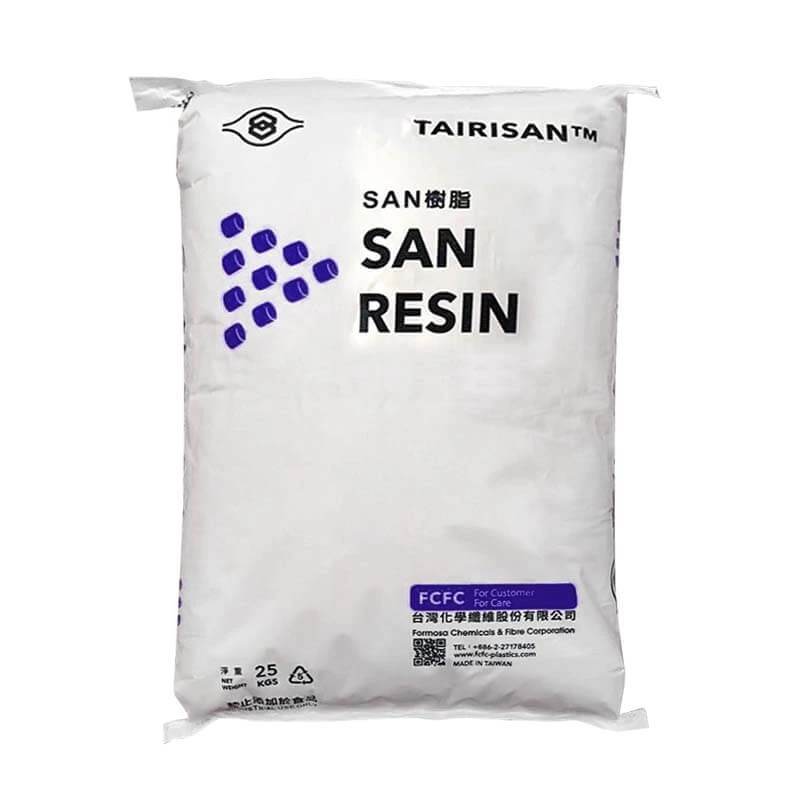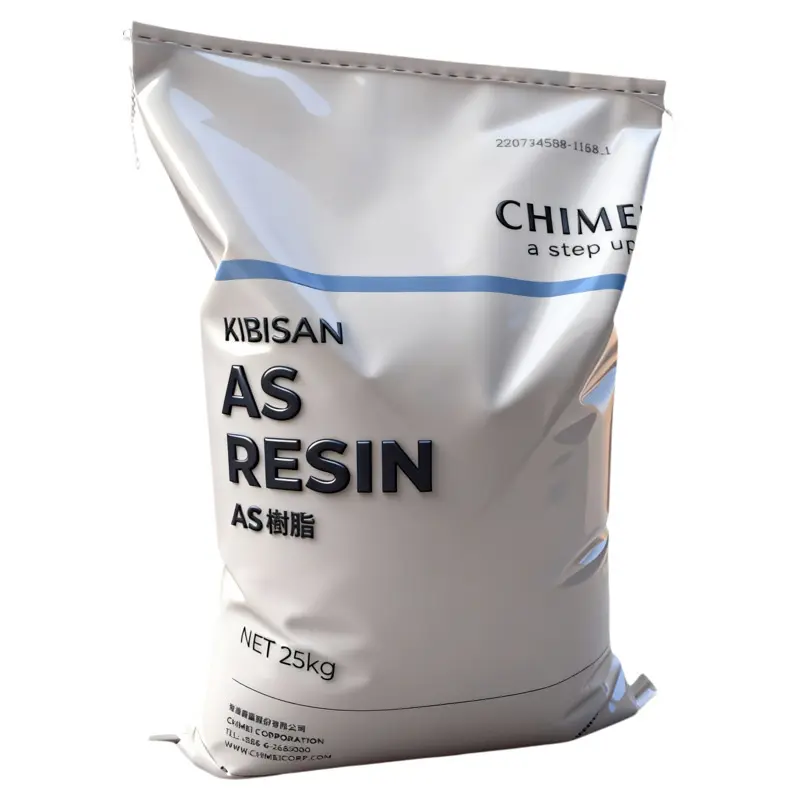
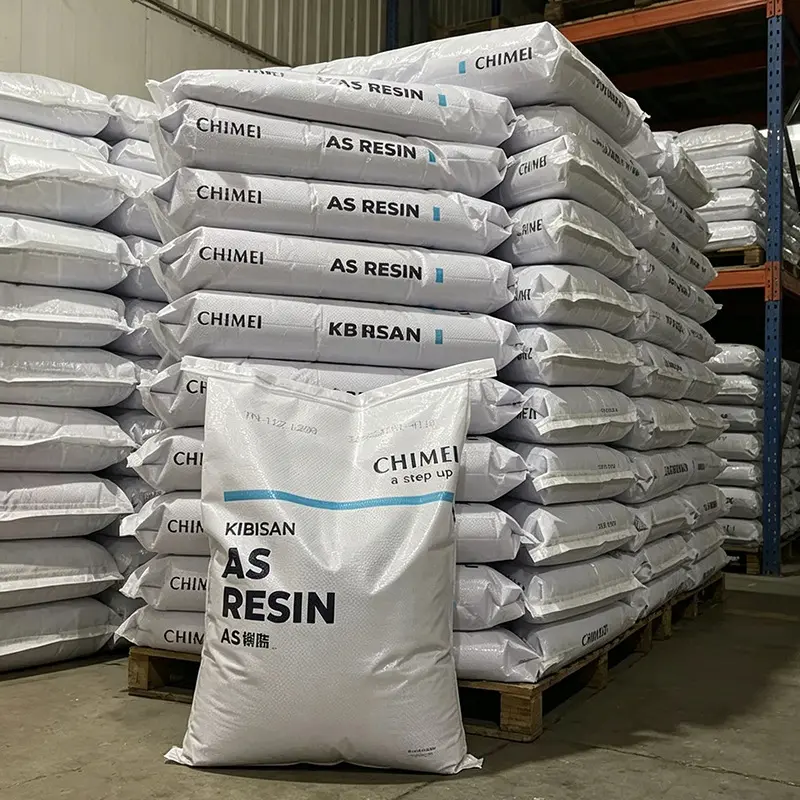
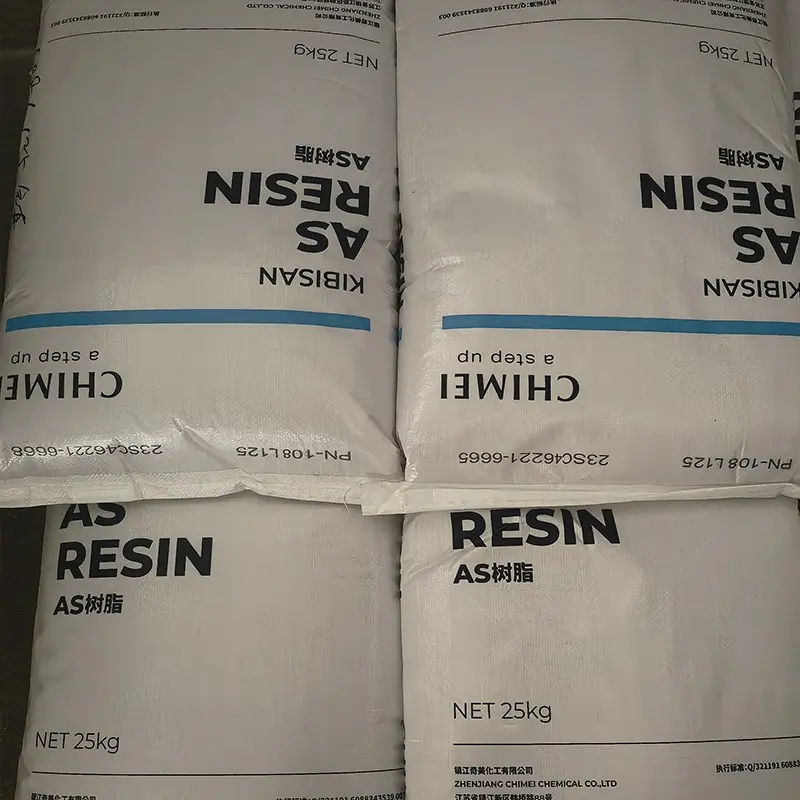
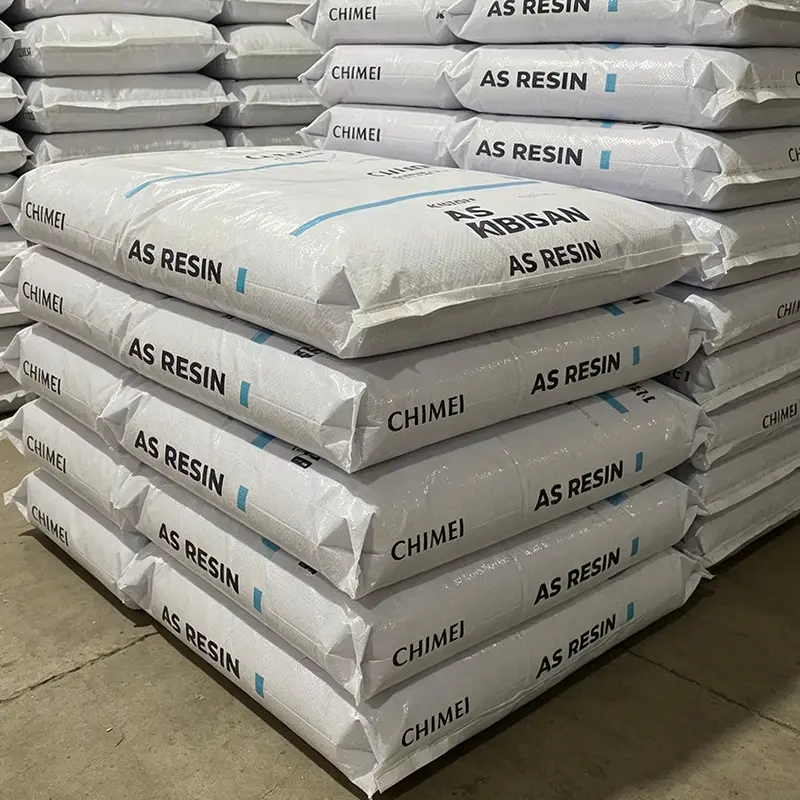
Chimei KIBISAN PN-108L125 SAN is a high-transparency injection molding grade styrene-acrylonitrile copolymer offering excellent rigidity, surface hardness, and grease resistance, complete with technical specifications and applications.
| Manufacturer | Chimei |
|---|---|
| Density | 1.07 g/cm³ |
| MVR | 5.0 cm³/10 min |
| Elongation at Break | 5.0 % |
| Izod Notched Impact | 3.8 kJ/m² |
Note: See the product description for additional technical specifications
PN-108L125 is a styrene-acrylonitrile (SAN) copolymer produced by the KIBISAN® brand under ChiMei Corporation. The material is presented as colorless, transparent to light amber spherical plastic pellets, belonging to a high-transparency, medium-flow injection molding grade with a melt mass-flow rate (5 kg, 220°C) of 5.0 cm³/10 min. While maintaining the inherent rigidity and surface hardness of SAN, PN-108L125 features favorable dimensional stability and grease resistance, making it widely applied in industrial components requiring high transparency, aesthetic gloss, and chemical wipe resistance. This grade is specifically designed for injection molding processes and is suitable for fields such as appliance panels, daily chemical packaging, stationery, and consumer electronics transparent structural parts.
| Physical Properties | Test Value | Test Unit | Test Standard |
| Melt Volume-Flow Rate (MVR), 220 ℃, 5 kg | 5 | cm³/10 min | ISO 1133 |
| Rockwell Hardness, M Scale | 83 | — | ASTM D785 |
| Density (23°C) | 1.07 | g/cm³ | ISO 1183 |
| Mechanical Properties | Test Value | Test Unit | Test Standard |
| Tensile Strength (50 mm/min) | 67 | MPa | ISO 527 |
| Tensile Strain at Break (50 mm/min) | 5 | % | ISO 527 |
| Flexural Strength (2 mm/min) | 101 | MPa | ISO 178 |
| Flexural Modulus (2 mm/min) | 3400 | MPa | ISO 178 |
| Charpy Notched Impact Strength (23°C, 4 mm) | 3.8 | kJ/m² | ISO 180 |
| Thermal Properties | Test Value | Test Unit | Test Standard |
| Vicat Softening Temperature (50 °C/hr) | 105 | °C | ISO 306 |
| Heat Deflection Temperature, Unannealed (1.8 MPa) | 86 | °C | ISO 75-2 |
| Flammability Rating (1.5 mm) | HB | — | UL-94 |
The technical data sheet (TDS) of KIBISAN® PN-108L125 material from Chimei corporation, if there are differences, please refer to the official website of Chimei.
High Transparency and Gloss: The inherent transparent characteristics of SAN resin grant PN-108L125 a clear appearance and high surface gloss, making it suitable for products requiring visual display, visible scales, or content recognition.
Excellent Surface Hardness and Rigidity: Featuring a Rockwell hardness of M 83 and a flexural modulus of 3,400 MPa, the material’s surface scratch resistance is superior to soft plastics, maintaining the aesthetic integrity of finished products during long-term handling and use.
Good Chemical and Grease Resistance: Possesses a certain tolerance to common daily chemical media such as oils and cleaning agents, making it suitable for cosmetics containers, kitchenware, and other scenarios that may come into contact with oily substances.
Dimensional Stability and Processing Consistency: A heat deflection temperature of 86°C (1.8 MPa) and a moderate melt flow rate, combined with a low molding shrinkage tendency, facilitate precision structural component tolerance control and batch consistency.
Mature Injection Moldability: Can be processed stably on conventional screw injection molding machines with predictable mold-filling behavior, rendering it suitable for the mass production of complex, thin-walled transparent parts.
Home Appliances and Consumer Electronics: Transparent covers for juicers/coffee makers, meter windows, control panel shields, internal transparent light-guide/isolation parts for printers, and small appliance housings.
Daily Chemicals and Packaging Containers: Cosmetic bottles, perfume bottle outer caps, transparent caps for personal care products, toothpaste tube caps, and small laboratory reagent bottles (for non-strongly corrosive media).
Stationery and Office Supplies: Transparent folder clips, rulers, pen barrels, business card holders, and internal transparent structural components for projectors and scanners.
Toys and Leisure Goods: Transparent building blocks, model parts, and transparent protective covers for amusement equipment, among other non-high-impact toy components.
Q1: What are the recommended drying conditions for PN-108L125 prior to processing? Can SAN be injection-molded directly without drying?
A: SAN is somewhat hygroscopic. If raw materials are exposed to high-humidity environments for prolonged periods, moisture can cause silver streaks, bubbles, or reduced transparency in finished products. Hot-air drying at 70–80°C for 2–3 hours is recommended, maintaining a moisture content below 0.1%. If packaging remains intact and environmental humidity is low, short-term production can be simplified accordingly, but the first article in mass production must be inspected for appearance and internal stress performance.
Q2: How should PN-108L125 (SAN) be selected in comparison with PMMA or GPPS for transparent products?
A: Compared to GPPS, SAN offers higher hardness and better grease resistance, though with slightly lower transparency. Compared to PMMA, SAN features lower cost and a wider processing window, but its surface hardness, weatherability, and light transmittance are slightly inferior. If an application requires a certain degree of rigidity, chemical wipe resistance, and cost sensitivity, choose SAN; if pursuing ultimate light transmittance, UV resistance, or high surface hardness, PMMA is preferred; if only the lowest cost transparent part is needed without grease contact, GPPS may be considered.
Q3: Does this grade comply with RoHS and UL certification requirements? What documents can be provided?
A: The base grade of PN-108L125 complies with RoHS and REACH restricted substance requirements and possesses a UL 94 HB flammability rating (1.5 mm). TDS, MSDS/SDS, and COA can be provided for each batch. If the end application involves food contact or specific industry certifications, requesting corresponding compliance statements and third-party test reports is recommended to confirm whether the formulation status meets specific regulatory boundaries.
Submit your inquiry today and receive a professional competitive price tailored to your project requirements.