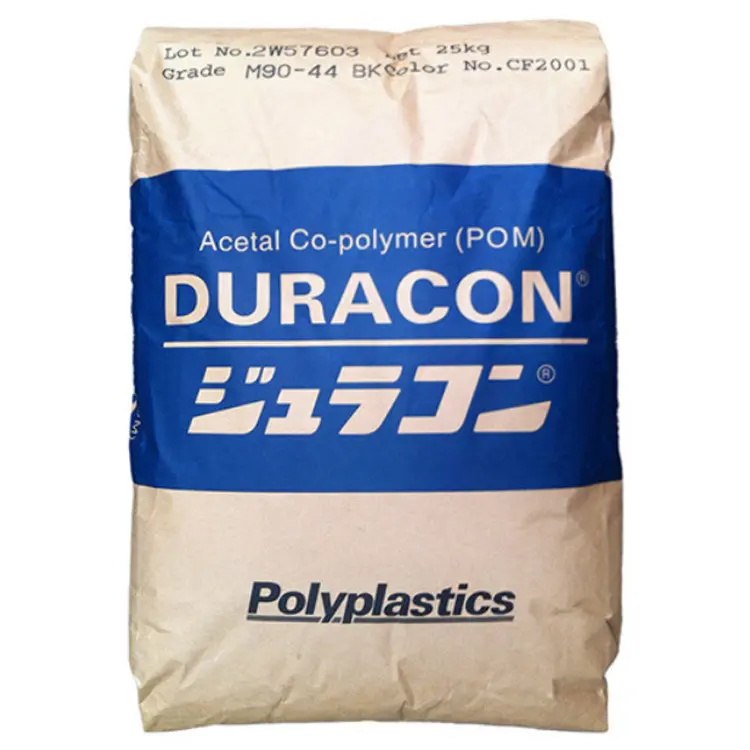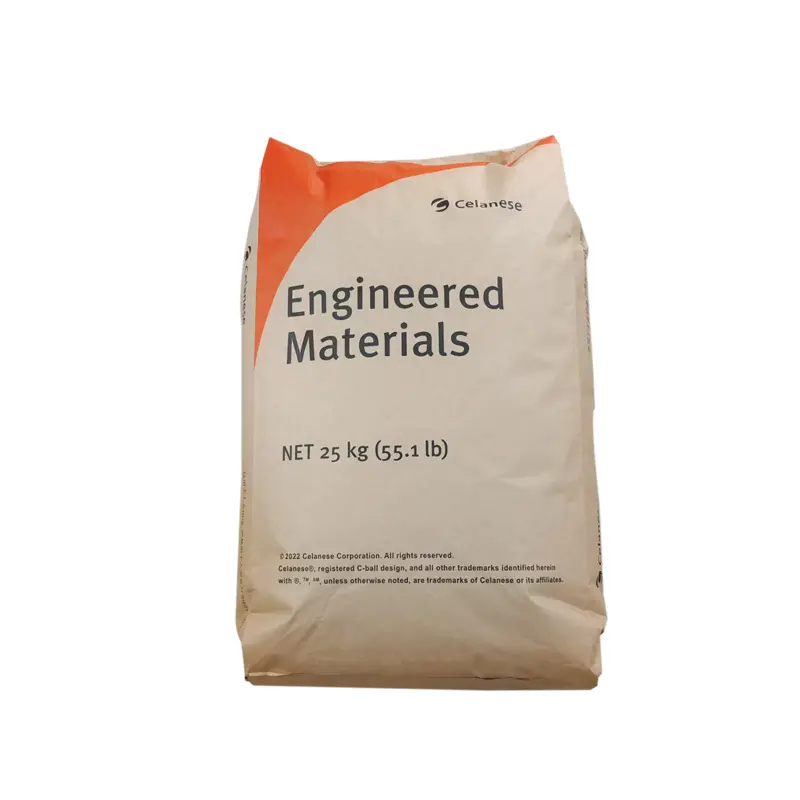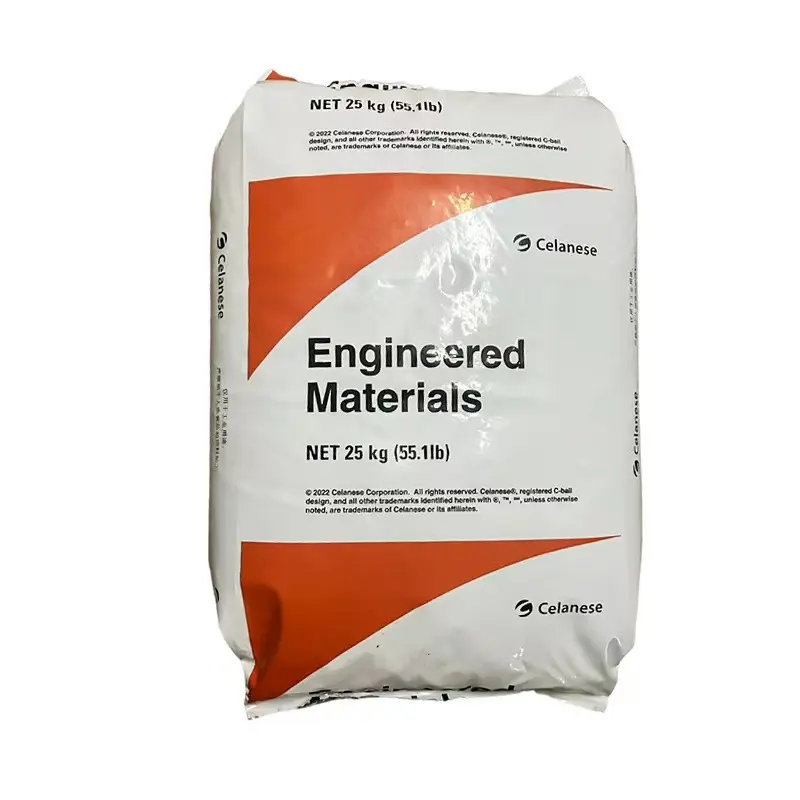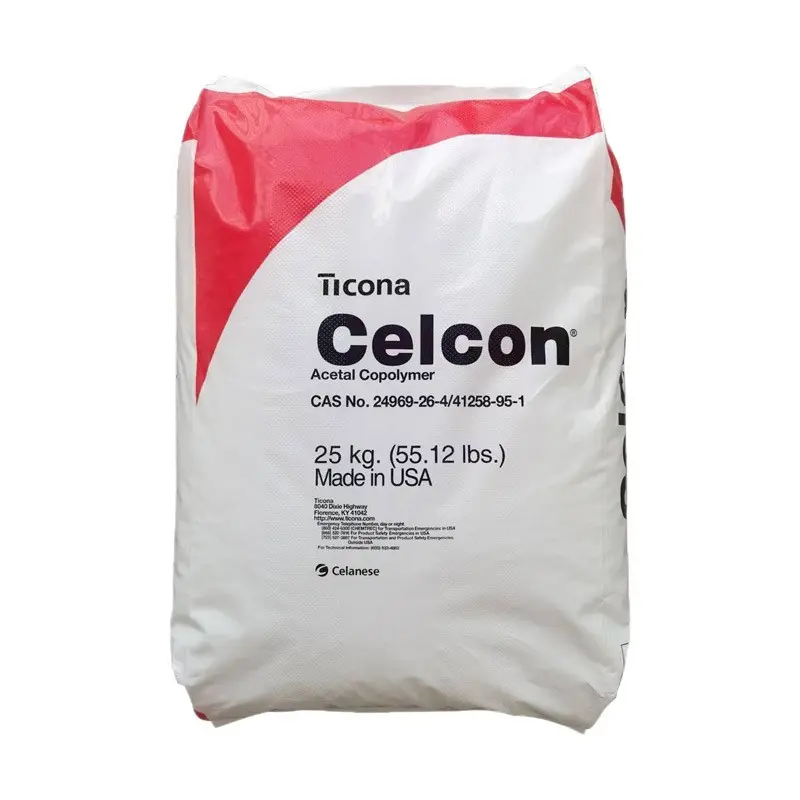
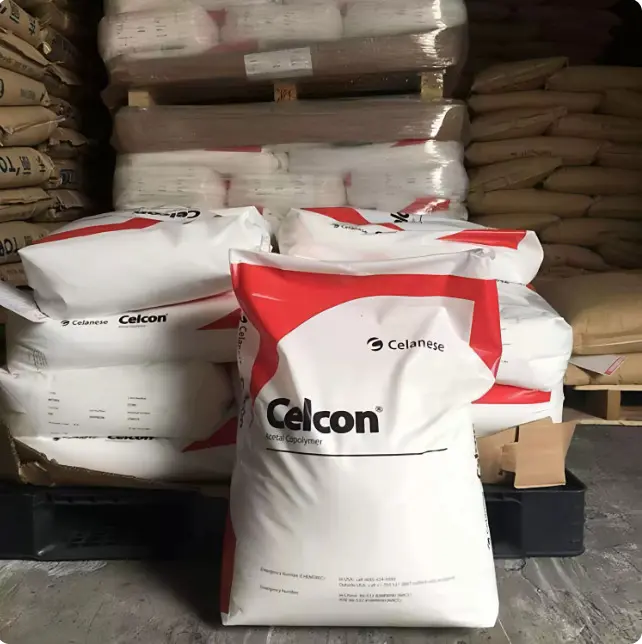

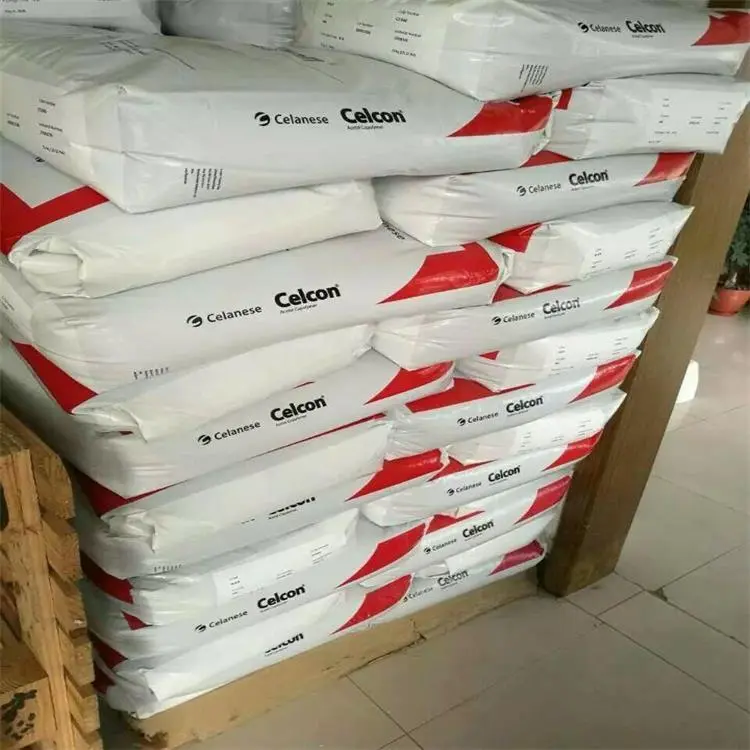
Celanese Celcon® M90 is a standard injection molding acetal copolymer (POM) offering an 8.0 MVR, high rigidity, and low friction for gears and automotive parts.
| Manufacturer | Celanese |
|---|---|
| Density | 1.41 g/cm³ |
| MVR | 8.0 cm³/10 min |
| Tensile Strength at Yield | 65 MPa |
| Elongation at Yield | 10% |
Note: See the product description for additional technical specifications
Manufacturer: Celanese
Category: POM (Polyoxymethylene / Acetal Copolymer)
Appearance: Natural opaque white pellets, uniform particle size, free from visible mechanical impurities
Celanese Celcon® M90 is a globally recognized standard general-purpose injection molding grade acetal copolymer resin. Featuring a melt volume-flow rate (MVR, 190 °C / 2.16 kg) of 8.0 cm³/10 min, a tensile modulus of 2760 MPa, and a flexural modulus of 2550 MPa, it achieves a high balance among mechanical rigidity, surface wear resistance, chemical solvent resistance, and injection moldability.
Within Celanese’s engineering polymer portfolio, Celcon® M90 serves as a benchmark reference grade for the global precision machinery, automotive component, and consumer electronics industries due to its exceptional long-term thermal stability and batch-to-batch consistency. For mold designers and materials engineers, this grade not only offers extremely low water absorption (equilibrium water absorption at 23 °C is only 0.2%) and reliable creep resistance, but also enables stable molding of high-precision, low-friction structural parts within a wide processing window. It is widely used in the large-scale continuous production of precision gears, slide bearings, fuel system components, plumbing valve cores, and home appliance power-transmission parts.
| Property | Value / Unit | Test Standard |
| Density | 1.41 g/cm³ | ISO 1183 |
| Melt Flow Rate, Volume (190 °C, 2.16 kg) | 8.0 cm³/10 min | ISO 1133 |
| Mold Shrinkage, Normal | 1.9 % | ISO 294-4 |
| Mold Shrinkage, Parallel | 2 % | ISO 294-4 |
| Water Absorption, Saturation (23 °C) | 0.75 % | ISO 62 |
| Water Absorption, Equilibrium (50 % RH, 23 °C) | 0.2 % | ISO 62 |
| Property | Value / Unit | Test Standard |
| Tensile Modulus | 2760 MPa | ISO 527-2/1A |
| Tensile Strength, Yield | 65 MPa | ISO 527-2/1A/50 |
| Tensile Strain, Yield | 10 % | ISO 527-2/1A/50 |
| Tensile Creep Modulus (1 h) | 2450 MPa | ISO 899-1 |
| Tensile Creep Modulus (1.0e+3 h) | 1350 MPa | ISO 899-1 |
| Flexural Modulus (23 °C) | 2550 MPa | ISO 178 |
| Flexural Strength (3.5% Strain) | 73 MPa | ISO 178 |
| Compressive Strength (1% Strain) | 26 MPa | ISO 604 |
| Compressive Strength (6% Strain) | 88 MPa | ISO 604 |
| Charpy Impact Strength, Notched (-30 °C) | 6 kJ/m² | ISO 179 1eA |
| Charpy Impact Strength, Notched (23 °C) | 6 kJ/m² | ISO 179 1eA |
| Charpy Impact Strength, Unnotched (-30 °C) | 180 kJ/m² | ISO 179 1eU |
| Charpy Impact Strength, Unnotched (23 °C) | 190 kJ/m² | ISO 179 1eU |
| Izod Impact Strength, Notched (-30 °C) | 5.5 kJ/m² | ISO 180/1A |
| Izod Impact Strength, Notched (23 °C) | 5.7 kJ/m² | ISO 180/1A |
| Property | Value / Unit | Test Standard |
| Heat Deflection Temperature, Unannealed (0.45 MPa) | 158 °C | ISO 75-2/B |
| Heat Deflection Temperature, Unannealed (1.8 MPa) | 101 °C | ISO 75-2/A |
| Vicat Softening Temperature | 161 °C | ISO 306/B50 |
| Melting Temperature | 165 °C | — |
| Melting Point (10 °C/min) | 166 °C | ISO 11357-3 |
| Coefficient of Linear Thermal Expansion (CTE), Flow | 1.2E-4 cm/cm/°C | ISO 11359-2 |
| Coefficient of Linear Thermal Expansion (CTE), Transverse | 1.2E-4 cm/cm/°C | ISO 11359-2 |
| Effective Thermal Diffusivity | 4.85E-8 m²/s | Internal Method |
| Melt Thermal Conductivity | 0.16 W/m-K | Internal Method |
| Property | Value / Unit | Test Standard |
| Surface Resistivity | 3.0E+16 ohms | IEC 60093 |
| Volume Resistivity | 8.0E+14 ohms·cm | IEC 60093 |
| Property | Value / Unit | Test Standard |
| Melt Density | 1.20 g/cm³ | Internal Method |
| Ejection Temperature | 140 °C | — |
| Specific Heat Capacity | 2210 J/kg/°C | — |
The technical data sheet (TDS) of Celcon® M90 POM material from Celanese corporation, if there are differences, please refer to the official website of Celanese.
Exceptional Mechanical Rigidity & Creep Resistance: Features a high tensile modulus of up to 2760 MPa and a yield tensile strength of 65 MPa. Its 1000-hour long-term tensile creep modulus remains at 1350 MPa, ensuring that stressed gears, snap-fits, and springs resist stress relaxation and permanent deformation under prolonged mechanical loads.
Low Moisture Absorption & High Dimensional Stability: The equilibrium water absorption is only 0.2% at 23 °C and 50% RH, with a saturation water absorption of just 0.75%. This significantly minimizes dimensional expansion caused by fluctuating hot and humid environments, safeguarding precise mating tolerances.
Wide-Temperature Impact Resistance & Thermal Stability: The notched Charpy impact strength remains stable at 6 kJ/m² at both 23 °C and -30 °C, preventing brittle fracture in low-temperature settings. The heat deflection temperature reaches 158 °C at 0.45 MPa, balancing elevated temperature tolerance with broad processing thermal stability.
Outstanding Self-Lubricating Wear Resistance & Chemical Durability: The copolymer molecular chains impart an extremely low dynamic friction coefficient and excellent fatigue life to molded parts, while maintaining resistance against gasoline, diesel, lubricating oils, alcohols, weak acids and bases, and various organic solvents without stress cracking risks.
Balanced Melt Flowability & Excellent Electrical Insulation: A standard melt volume-flow rate (MVR) of 8.0 cm³/10 min accommodates conventional injection molding machines with smooth demolding and short cycles. A volume resistivity of up to 8.0E+14 ohms·cm satisfies the insulation safety requirements of mechatronic components.
Automotive Components: Fuel pump module brackets, fuel cap locking mechanisms, power window sliders, internal mechanical parts of seatbelt buckles, door latch actuator gears, and interior snap-fits.
Precision Mechanical & Transmission Parts: Modular gears, cams, pulleys, conveyor chain links, bearing cages, fasteners, and leaf springs.
Electrical, Electronics & Office Equipment: Printer and copier paper-feed drive gears, micro-switch housings, internal relay brackets, power tool transmission gearboxes, and connector latches.
Plumbing, Sanitary & Home Appliances: Thermostatic mixing valve cores, water meter impellers and casings, shower diverter mechanisms, and heat-resistant water circuit connectors for coffee machines and dishwashers.
Consumer Hardware & Sporting Goods: High-strength zipper teeth, luggage buckles, curtain slide rails, ski binding components, and aerosol valve assemblies.
Q1: Does Celanese Celcon® M90 require pre-drying before injection molding? What are the recommended processing parameters?
A1: Celcon® M90 features extremely low moisture absorption and generally does not require drying when kept in its original sealed moisture-proof packaging. If the material has been opened and exposed to humid environments for a prolonged period, hot-air drying at 80–90 °C for 2–3 hours is recommended to maintain moisture content below 0.1%. During injection molding, barrel temperatures should be controlled between 185–205 °C (avoiding prolonged holding above 220 °C to prevent thermal decomposition and formaldehyde release), and mold temperatures should be set at 80–100 °C to enhance crystallinity and stabilize part dimensions.
Q2: What are the core differences in engineering selection between copolymer POM (Celcon® M90) and homopolymer POM?
A2: Celcon® M90 is an acetal copolymer. Compared to homopolymer POM, it offers superior long-term thermal stability, resistance to strong alkalis, and hot water hydrolysis resistance. It features a broader processing temperature window, reduces the risk of thermal degradation inside the barrel, and exhibits lower center porosity. While homopolymer POM provides roughly 10%–15% higher short-term tensile strength, hardness, and rigidity, Celcon® M90 delivers comprehensive advantages in applications involving contact with hot water, detergents, fuels, or requirements for extended continuous stable injection molding.
Q3: What is the relationship between Celcon® M90 and another classic Celanese grade, Hostaform® C9021? Can they be interchanged?
A3: Celcon® M90 (formerly a primary North American grade under Ticona) and Hostaform® C9021 (a primary European grade) both belong to Celanese’s standard general-purpose injection molding acetal copolymer family. They share comparable melt volume-flow rates (MVR approx. 8.0 cm³/10 min), density (1.41 g/cm³), and core mechanical properties, allowing them to serve as equivalent interchangeable grades in the vast majority of general injection molding projects. For automotive OEM or potable water certified projects, verification against specific customer drawing specifications and corresponding batch COAs is recommended.
Q4: Does this grade comply with RoHS and REACH environmental regulations as well as food contact/potable water certifications? How are procurement delivery and documentation configured?
A4: Standard virgin material batches of Celcon® M90 comply with EU RoHS directives and REACH SVHC regulations. Its foundational formulation holds compliance qualifications for food contact (such as FDA 21 CFR 177.2470) and potable water contact (such as NSF/ANSI 61) in major countries (specific certification scopes are subject to original manufacturer batch-specific declarations). We supply standard packaging in 25 kg moisture-proof bags. Classified as non-dangerous goods (Non-DG), it supports global FOB / CIF / CFR ocean freight and air sample express deliveries. Each shipment is accompanied by original COA (Certificate of Analysis), TDS, and MSDS/SDS documents.
Submit your inquiry today and receive a professional competitive price tailored to your project requirements.