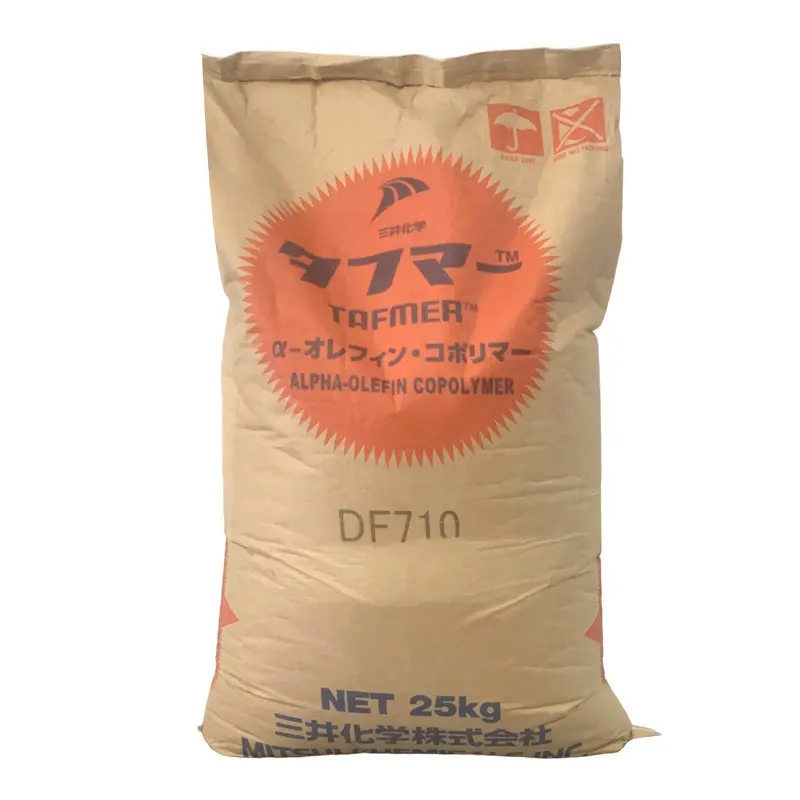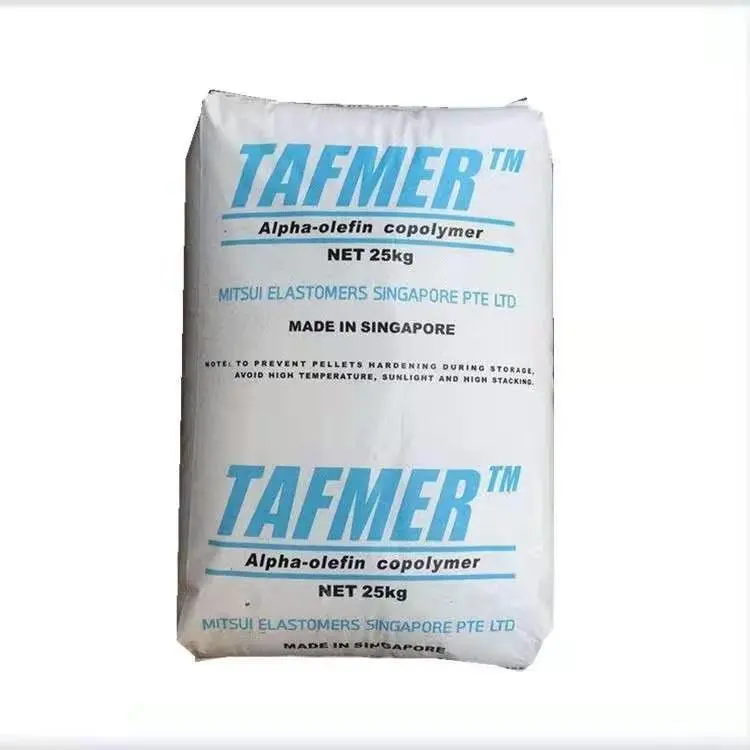
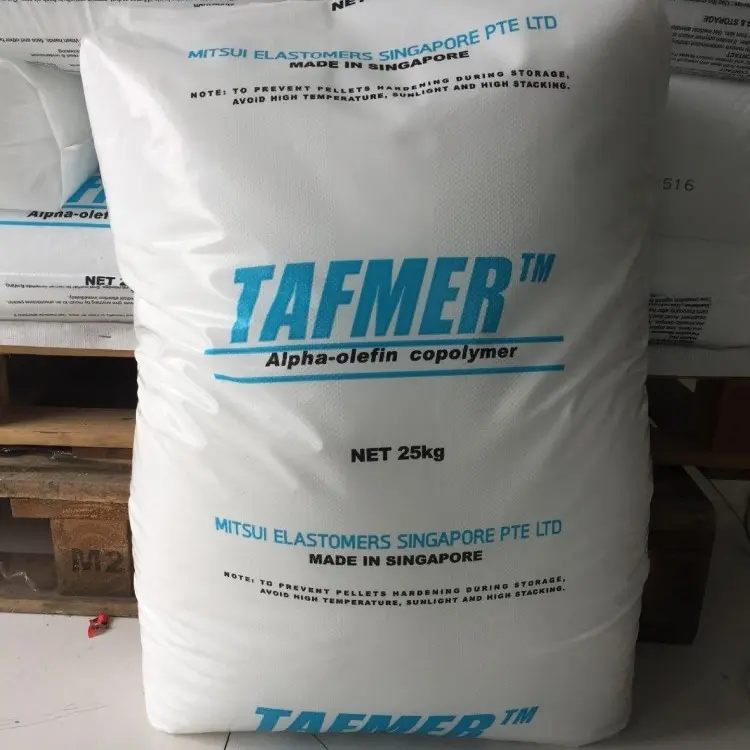
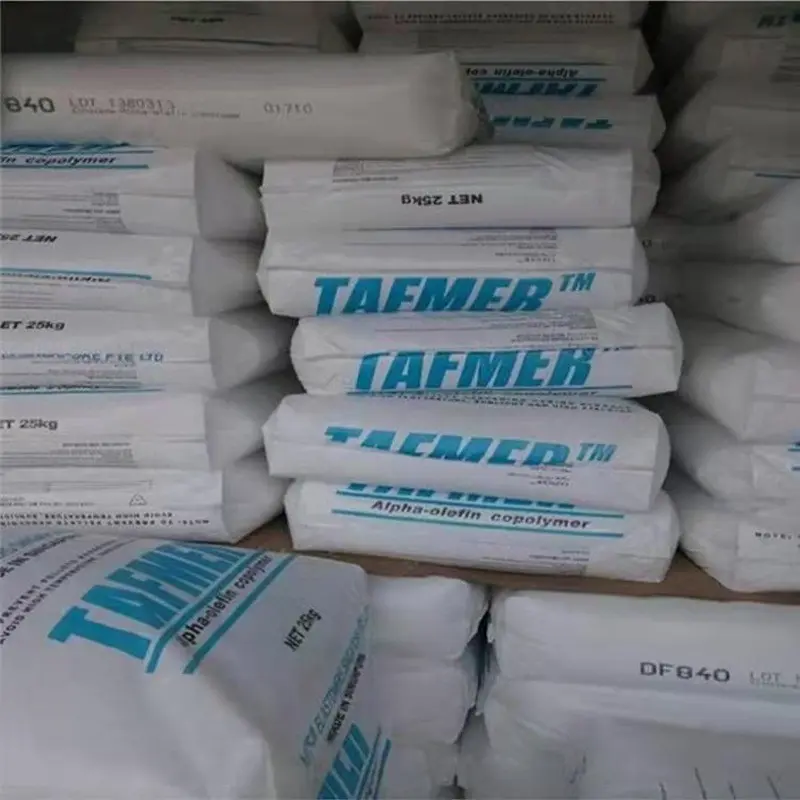
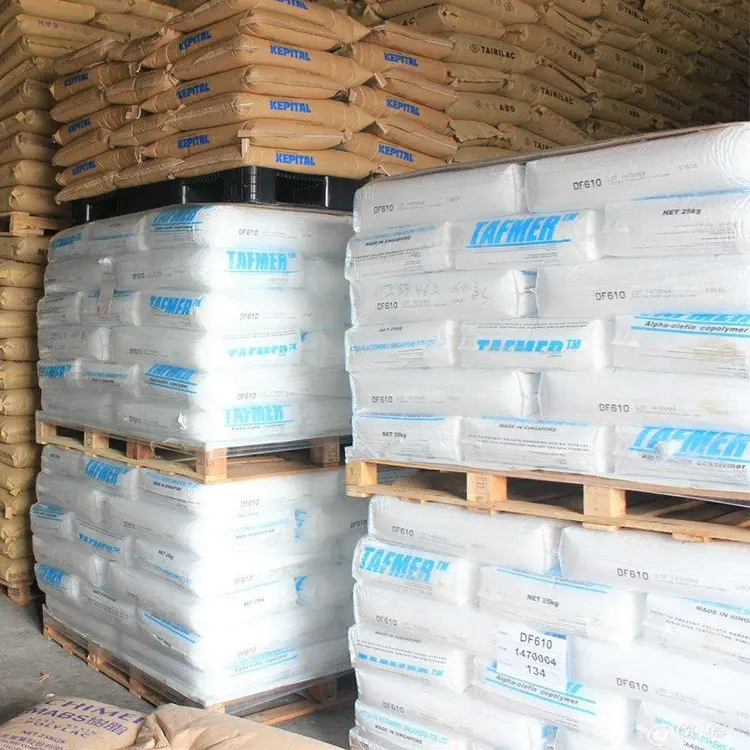
Mitsui TAFMER DF840 POE is a high-flow, low-density polyolefin elastomer ideal for PP/PE impact modification, cold resistance, and flexible packaging.
| Manufacturer | Mitsui Chemicals |
|---|---|
| MFR | 3.6 g/10 min |
| Density | 0.885 g/cm³ |
| Tensile Strength at Break | >22 MPa |
| Torsional Modulus | 9 MPa |
Note: See the product description for additional technical specifications
Manufacturer: Mitsui Chemicals, Inc.
Category: Polyolefin Elastomer (POE), Ethylene-Butene Copolymer
Appearance: Natural color, translucent cylindrical pellets with excellent flexibility and anti-blocking properties
Processing Method: Injection Molding, Extrusion, Blow Molding, and Compounding / Pelletizing
Industry Standing & Application Overview
Mitsui TAFMER™ is a globally benchmarked brand series in the fields of polyolefin modification and elastomers. As a flagship grade within the series featuring ultra-high fluidity and low density, TAFMER™ DF840 is widely regarded as a premier choice for high-efficiency impact modification of polypropylene (PP) and polyethylene (PE) resins. DF840 imparts exceptional notch impact toughness to base polymers even at sub-zero temperatures while maintaining good transparency and compatibility. It is extensively utilized in automotive plastic components, precision electronic packaging, cold-resistant daily necessities, and compounding/modification engineering.
| Property | Test Condition | Value | Unit | Test Method |
| Melt Mass-Flow Rate (MFR) | 190°C, 2.16kg | 3.6 | g/10 min | ASTM D1238 |
| Melt Mass-Flow Rate (MFR) | 230°C, 2.16kg | 6.7 | g/10 min | ASTM D1238 |
| Density | — | 0.885 | g/cm³ | ASTM D1505 |
| Property | Test Condition | Value | Unit | Test Method |
| Shore Hardness | Shore A | 86 | — | JIS K6253 |
| Tensile Strength at Break | — | > 22 | MPa | JIS K7113 |
| Torsional Modulus | — | 9 | MPa | ASTM D1043 |
| Elongation at Break | — | > 800 | % | JIS K7114 |
| Property | Test Condition | Value | Unit | Test Method |
| Brittleness Temperature | — | < -70 | °C | ASTM D746 |
| Melting Point | — | 66 | °C | ASTM D2117 |
| Vicat Softening Point | — | 55 | °C | ASTM D1525 |
Notice: The technical data sheet (TDS) of Mitsui Chemical TAFMER™ DF840 POE material from Mitsui Chemicals corporation, if there are differences, please refer to the official website of Mitsui Chemicals.
Superior Low-Temperature Impact Toughening: With a brittleness temperature below -70 °C, it significantly enhances the low-temperature notched impact strength of base resins like PP and PE in extreme cold conditions, effectively preventing plastic parts from becoming brittle or cracking.
High Fluidity & Excellent Processability: Reaches an MFR of 6.7 g/10 min at 230 °C, offering outstanding melt flow characteristics. During compounding modification or direct injection molding, it effectively reduces system back pressure, improves dispersion uniformity, and shortens molding cycles.
Low Density & Lightweight Advantage: Possessing a density of only 0.885 g/cm³, it is lighter than traditional EPDM and conventional elastomers, enabling lightweight design for automotive and consumer parts while lowering material usage costs.
Excellent Polyolefin Compatibility & Transparency: As an ethylene-butene copolymer, it inherently shares interfacial compatibility with PP and PE, resulting in fine domain size dispersion. It maintains high light transmittance and minimizes stress whitening when modifying transparent or translucent PP.
Good Electrical Insulation & Chemical Stability: Its molecular structure contains no double bonds, providing robust resistance to aging, weather, acid/alkali corrosion, and excellent dielectric properties, extending the service life of end-use applications.
Automotive Plastic Component Modification: Used for PP modification and toughening in automotive bumpers, instrument panels, door trims, and exterior components, offering superior drop-impact resistance and low-warpage dimensional stability.
Plastic Packaging & Films: Applied in heavy-duty industrial packaging films, frozen food packaging bags, and food container lids, imparting high puncture resistance, low-temperature freeze-cracking resistance, and heat-sealing capability.
Footwear & Consumer Electronics: Used as a modification additive in foamed outsoles, midsoles, and protective covers for electronic devices, delivering excellent resilience, tactile feel, and touch characteristics.
Wire & Cable Compounds: Serves as a base polymer or modifier in Halogen-Free Flame Retardant (HFFR) wire and cable compounds, enhancing cable flexibility, extrusion surface smoothness, and high loading capacity for inorganic fillers (e.g., ATH/MDH).
Household Plastics & Appliance Housings: Applied in washing machine tubs, freezer drawers, outdoor storage crates, and drop-resistant toys, significantly enhancing product impact durability.
Q1: Does Mitsui TAFMER™ DF840 require pre-drying prior to processing? What are the recommended drying conditions?
As a non-hygroscopic polyolefin elastomer, TAFMER™ DF840 exhibits extremely low moisture absorption under normal conditions. If the original packaging remains sealed and stored in a dry, cool environment, it can generally be processed directly without pre-drying. However, if the packaging is damaged, exposed to humid environments for extended periods, or used for precision molding requiring superior surface quality, pre-drying with a desiccant dryer at 60 °C – 70 °C for 1 – 2 hours is recommended to remove trace surface condensation.
Q2: What are the primary advantages of TAFMER™ DF840 compared to traditional EPDM in PP impact modification?
Compared to traditional EPDM, DF840 offers three core advantages:
No Pre-Grinding Required: DF840 comes as free-flowing pellets that can be dry-blended directly with PP pellets before entering the extruder or injection machine, dispersing faster and more uniformly;
Superior Compatibility & Transparency: DF840 disperses into smaller domain sizes within PP matrices, resulting in significantly better surface finish and transparency than EPDM-modified systems;
Lower Density & Weathering Resistance: Features lower density and lacks unsaturated double bonds in its molecular chain, yielding superior and more stable aging resistance compared to EPDM.
Q3: Does Mitsui TAFMER™ DF840 comply with international environmental and food contact standards (e.g., RoHS / REACH)?
Yes. The production process of Mitsui TAFMER™ DF840 strictly complies with international environmental standards, fully meeting EU RoHS directives and REACH regulations for Substances of Very High Concern (SVHC) restriction limits. Furthermore, under specific conditions, this grade complies with FDA and EU food contact regulations. For specific regulatory compliance statements (such as CoC, RoHS reports, or Food Contact Declarations), please contact our sales team to obtain batch compliance certificates.
Submit your inquiry today and receive a professional competitive price tailored to your project requirements.