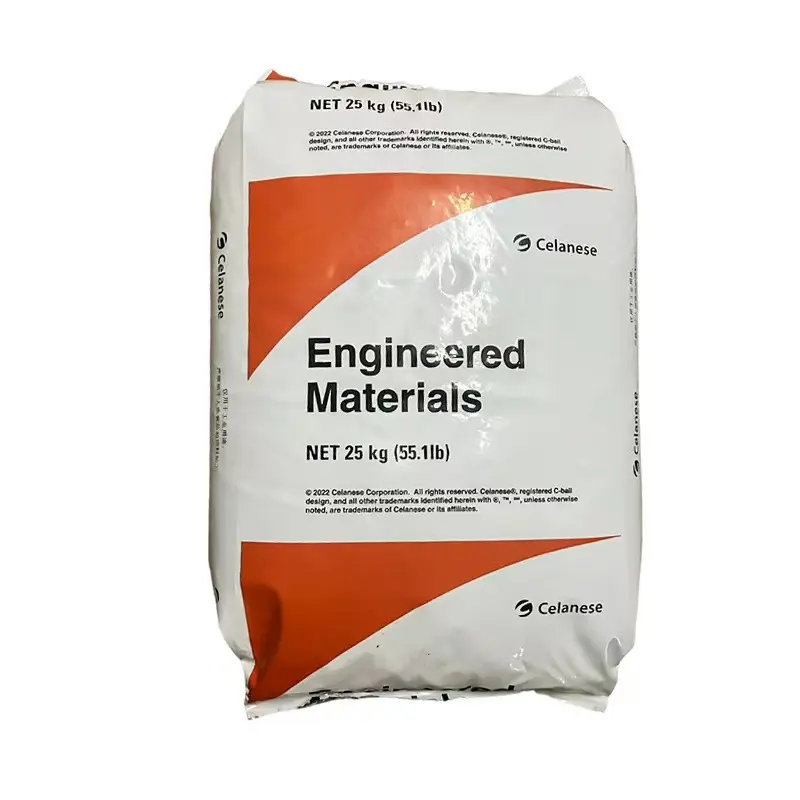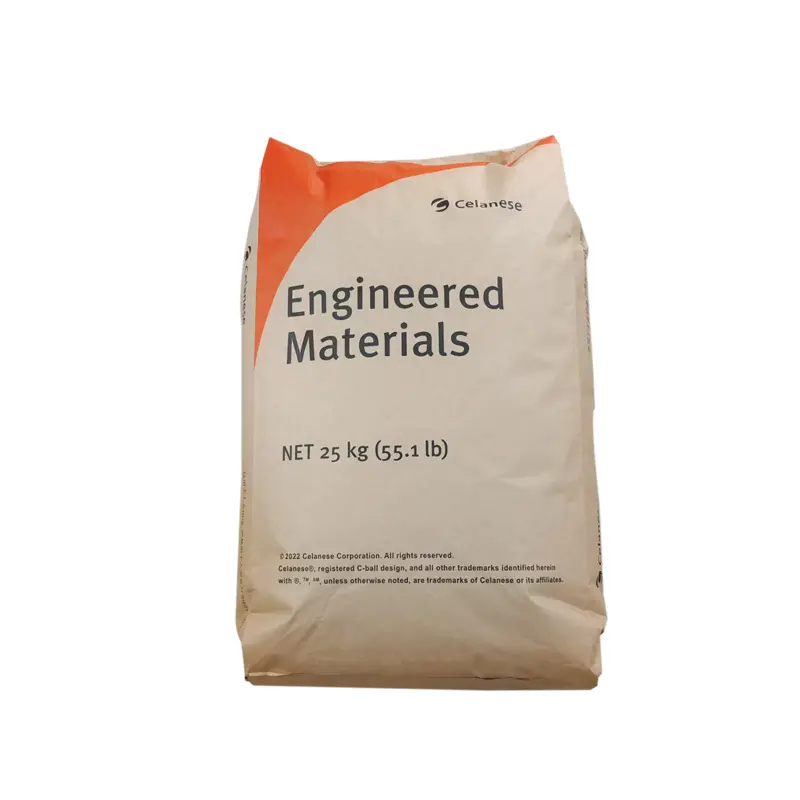
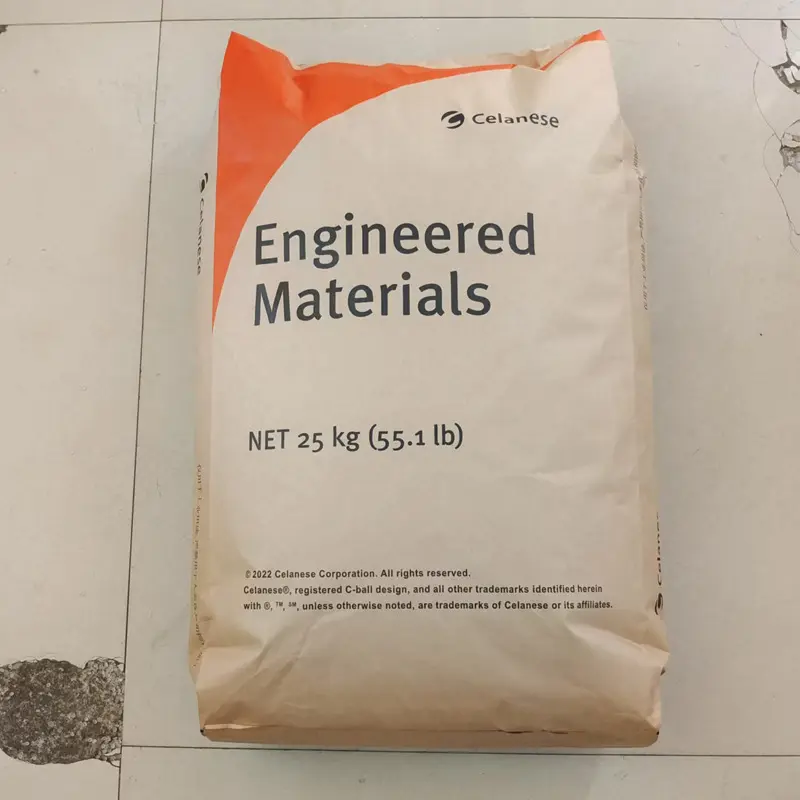
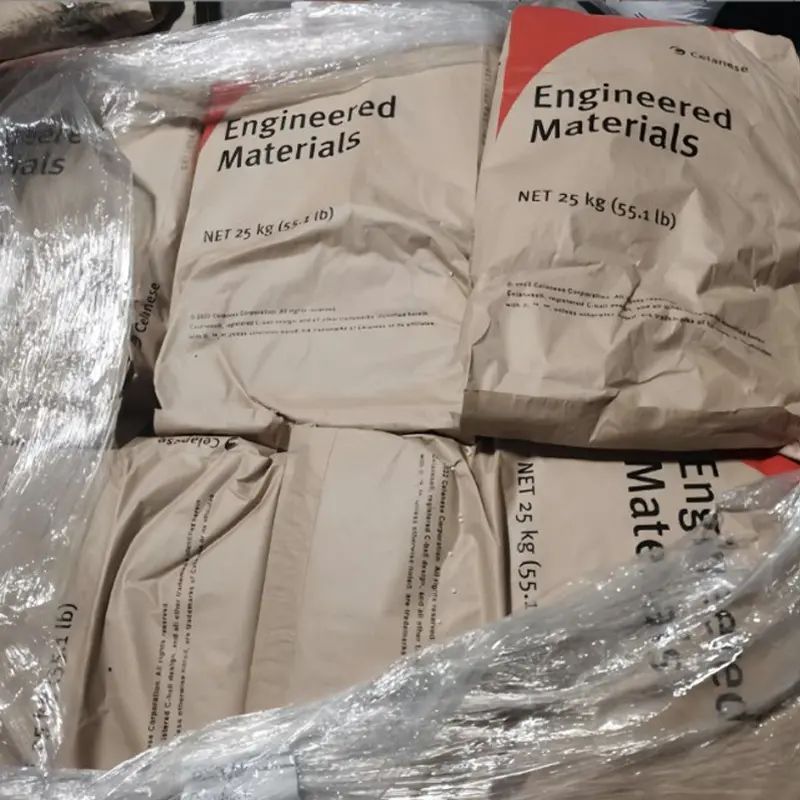
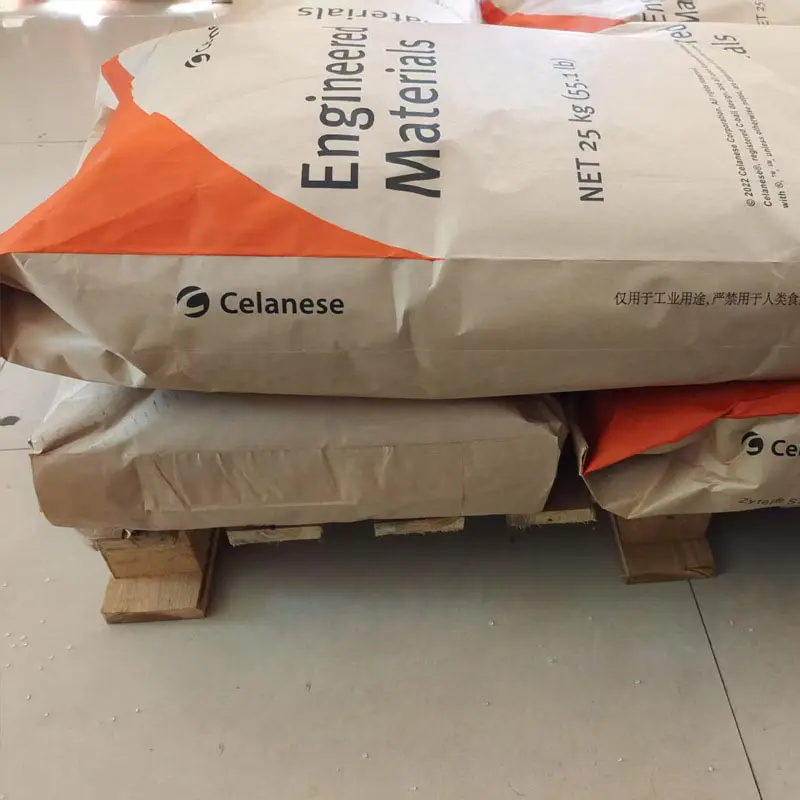
Celanese Zytel 73G30L NC010 is a 30% glass fiber-reinforced PA6 injection molding resin offering high rigidity, 210°C HDT, and excellent CTI electrical performance.
| Manufacturer | Celanese |
|---|---|
| Density | 1.36 g/cm³ |
| Tensile Strength at Break | 180 MPa |
| Elongation at Break | 3.5 % |
| Flexural Modulus | 8500 MPa |
Note: See the product description for additional technical specifications
Celanese Zytel® 73G30L NC010 is a 30% glass fiber-reinforced injection molding grade polyamide 6 (PA6) resin. Available in natural color pellets, it combines high rigidity, a heat deflection temperature of 210 °C, and a comparative tracking index of 600 V, making it one of the most widely used general-purpose glass-fiber-reinforced nylons in electrical structural parts and industrial load-bearing components.
Manufacturer: Celanese Corporation (Zytel® brand; formerly part of DuPont Engineering Plastics, acquired by Celanese in 2022)
Material Category: PA6 (Polyamide 6 / Nylon 6), 30% glass fiber reinforced, injection molding grade, containing release lubricant additives
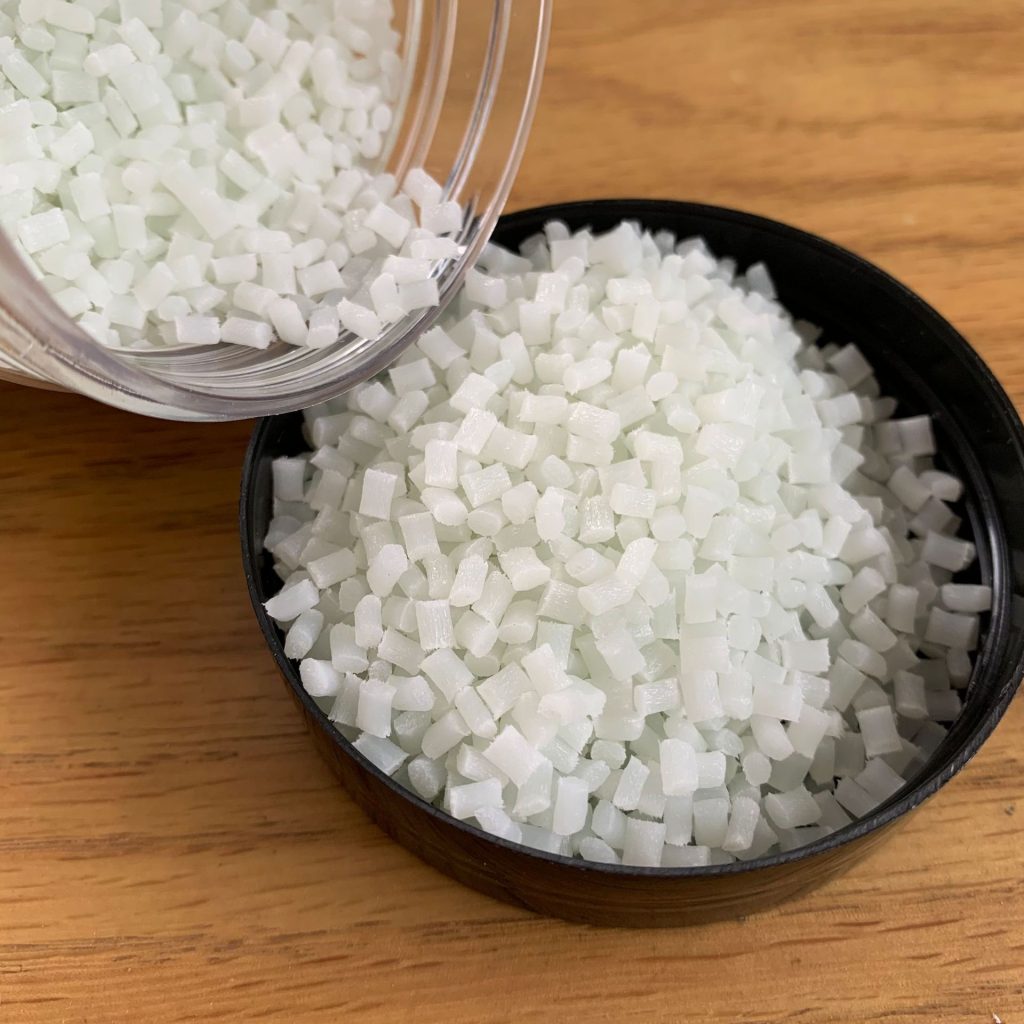
Physical Appearance: Natural color (NC010) ivory to light beige cylindrical pellets containing chopped glass fibers, with subtle fiber textures visible on the surface
Density: 1.36 g/cm³
Melting Temperature: 221 °C
Heat Deflection Temperature: 210 °C (1.8 MPa)
Processing Method: Injection molding
Industry Standing
Zytel® is one of the most representative brand series in the field of engineering nylons, and its nomenclature system and technical documents have long served as the industry benchmark for PA6/PA66 material selection. Within the mainstream category of 30% glass-fiber-reinforced PA6, 73G30L is a general-purpose flagship grade in the series—offering a comprehensive combination of rigidity, heat resistance, and electrical performance, formulated primarily with mold release lubricants without additional heat stabilizers, toughening agents, or flame retardant systems.
| Property | Value | Unit | Test Standard |
| Density, dry | 1.36 | g/cm³ | ISO 1183 |
| Molding shrinkage, normal, dry | 0.6 | % | ISO 294-4 |
| Molding shrinkage, parallel, dry | 0.2 | % | ISO 294-4 |
| Water absorption, saturated (23 °C, 2 mm) | 6.3 | % | ISO 62 |
| Water absorption, equilibrium (50 % RH, 23 °C, 2 mm) | 2.1 | % | ISO 62 |
| Viscosity number, dry | 140 | cm³/g | ISO 307 |
| Ball indentation hardness, dry (H 961/30 0) | 233 | MPa | ISO 2039-1 |
| Ball indentation hardness, conditioned (H 961/30 0) | 147 | MPa | ISO 2039-1 |
| Odor, dry | 3.5 | — | VDA 270 |
| Emission of organic compounds, dry | 8.5 | μgC/g | VDA 277 |
| Property | Value | Unit | Test Standard |
| Tensile modulus, dry | 10000 | MPa | ISO 527-2 |
| Tensile modulus, conditioned | 6000 | MPa | ISO 527-2 |
| Tensile stress at break, dry | 180 | MPa | ISO 527-2 |
| Tensile stress at break, conditioned | 120 | MPa | ISO 527-2 |
| Tensile strain at break, dry | 3.5 | % | ISO 527-2 |
| Tensile strain at break, conditioned | 6 | % | ISO 527-2 |
| Tensile creep modulus, conditioned, 1 h | 5500 | MPa | ISO 899-1 |
| Tensile creep modulus, conditioned, 1.0e+3 h | 4500 | MPa | ISO 899-1 |
| Flexural modulus, dry | 8500 | MPa | ISO 178 |
| Flexural modulus, conditioned | 5500 | MPa | ISO 178 |
| Flexural strength, dry | 240 | MPa | ISO 178 |
| Compressive strength, dry | 160 | MPa | ISO 604 |
| Shear strength, dry | 60 | MPa | ASTM D732 |
| Poisson’s ratio, dry | 0.34 | — | — |
| Poisson’s ratio, conditioned | 0.35 | — | — |
| Charpy notched impact strength, dry, −40 °C | 11 | kJ/m² | ISO 179 1eA |
| Charpy notched impact strength, dry, −30 °C | 11 | kJ/m² | ISO 179 1eA |
| Charpy notched impact strength, dry, 23 °C | 14 | kJ/m² | ISO 179 1eA |
| Charpy notched impact strength, conditioned, −30 °C | 21 | kJ/m² | ISO 179 1eA |
| Charpy notched impact strength, conditioned, 23 °C | 23 | kJ/m² | ISO 179 1eA |
| Charpy unnotched impact strength, dry, −30 °C | 80 | kJ/m² | ISO 179 1eU |
| Charpy unnotched impact strength, dry, 23 °C | 90 | kJ/m² | ISO 179 1eU |
| Charpy unnotched impact strength, conditioned, −30 °C | 80 | kJ/m² | ISO 179 1eU |
| Charpy unnotched impact strength, conditioned, 23 °C | 100 | kJ/m² | ISO 179 1eU |
| Izod notched impact strength, dry, −40 °C | 11 | kJ/m² | ISO 180/1A |
| Izod notched impact strength, dry, −30 °C | 11 | kJ/m² | ISO 180/1A |
| Izod notched impact strength, dry, 23 °C | 15 | kJ/m² | ISO 180/1A |
| Izod notched impact strength, conditioned, −30 °C | 11 | kJ/m² | ISO 180/1A |
| Izod notched impact strength, conditioned, 23 °C | 20 | kJ/m² | ISO 180/1A |
| Izod unnotched impact strength, dry, −30 °C | 90 | kJ/m² | ISO 180/1U |
| Izod unnotched impact strength, dry, 23 °C | 100 | kJ/m² | ISO 180/1U |
| Property | Value | Unit | Test Standard |
| Heat deflection temperature, dry, unannealed, 0.45 MPa | 220 | °C | ISO 75-2/B |
| Heat deflection temperature, dry, unannealed, 1.8 MPa | 210 | °C | ISO 75-2/A |
| Glass transition temperature (Tg), dry, 10 °C/min | 60 | °C | ISO 11357-2 |
| Melting temperature, dry, 10 °C/min | 221 | °C | ISO 11357-3 |
| Coefficient of linear thermal expansion (CLTE), parallel | 1.40E-05 | cm/cm/°C | ISO 11359-2 |
| Coefficient of linear thermal expansion (CLTE), parallel, −40 to 23 °C | 2.60E-05 | cm/cm/°C | ISO 11359-2 |
| Coefficient of linear thermal expansion (CLTE), parallel, 55 to 160 °C | 1.40E-05 | cm/cm/°C | ISO 11359-2 |
| Coefficient of linear thermal expansion (CLTE), normal | 1.00E-04 | cm/cm/°C | ISO 11359-2 |
| Coefficient of linear thermal expansion (CLTE), normal, −40 to 23 °C | 7.50E-05 | cm/cm/°C | ISO 11359-2 |
| Coefficient of linear thermal expansion (CLTE), normal, 55 to 160 °C | 1.30E-04 | cm/cm/°C | ISO 11359-2 |
| Burning rate, dry, 1 mm, FMVSS 302 | 25 | mm/min | ISO 3795 |
| Flammability rating, dry, 1.5 mm | HB | — | IEC 60695-11-10 / UL 94 / IEC 60695-11-20 |
| Flammability rating, dry, 3 mm | HB | — | IEC 60695-11-10 / UL 94 / IEC 60695-11-20 |
| Oxygen index, dry | 21 | % | ISO 4589-2 |
| FMVSS flammability, dry | B | — | FMVSS 302 |
| Fogging, F, dry | 95 | % | ISO 6452 |
| Fogging, G, condensable constituents, dry | 1.00E-04 | g | ISO 6452 |
| Property | Value | Unit | Test Standard |
| Volume resistivity, dry | 1.00E+10 | ohms·cm | IEC 62631-3-1 |
| Dielectric constant, dry, 100 Hz | 3.8 | — | IEC 62631-2-1 |
| Dissipation factor, dry, 100 Hz | 0.022 | — | IEC 62631-2-1 |
| Comparative tracking index (CTI), dry | PLC 0 | — | UL 746 |
| Comparative tracking index (CTI), dry | 600 | V | IEC 60112 |
Notice: The technical data sheet (TDS) of Zytel® 73G30L NC010 material from Celanese corporation, if there are differences, please refer to the official website of Celanese.
High rigidity and strength from 30% glass fiber: Dry tensile modulus of 10,000 MPa, flexural modulus of 8,500 MPa, tensile strength of 180 MPa, and flexural strength of 240 MPa. This level of rigidity enables 73G30L to replace certain metal die-castings and thick-walled structural components, achieving wall thickness reduction and weight savings under identical loading.
Heat deflection temperature of 210 °C, suitable for medium-high temperature assembly and short-term overloads: HDT reaches 210 °C at 1.8 MPa load, 220 °C at 0.45 MPa, with a melting point of 221 °C. It meets the requirements of conventional motor end parts and high-temperature baking/painting processes, though note that this grade is not heat-stabilized, and long-term high-temperature applications should use heat-stabilized grades from the same series.
Outstanding electrical performance with a CTI of 600 V (PLC 0): Comparative tracking index of 600 V, PLC 0 class, volume resistivity of 1e+10 ohms·cm, and dielectric constant of 3.8 (100 Hz). In low-voltage appliances, circuit breakers, contactors, and connectors, this metric directly determines creepage distance design and miniaturization space, making it one of the most valuable engineering properties in glass-fiber-reinforced PA6.
Post-absorption toughness enhancement, creating a rigid-flexible balance: Dry notched Charpy impact is 14 kJ/m², rising to 23 kJ/m² after moisture equilibrium; elongation at break increases from 3.5% to 6.0%. The trade-off is a modulus drop from 10,000 MPa to 6,000 MPa. This “rigid when dry, tough when wet” characteristic makes parts less prone to brittle fracture under actual service conditions after assembly, but design verification must be based on moisture-conditioned values.
Low odor and low fogging, adaptable to interiors and confined spaces: VDA 270 odor rating of 3.5, fogging value of 95% (F method), and condensate of 1.0E-4 g. For automotive interior parts, appliance internal components, and sealed equipment enclosures, this means lower volatile emissions and reduced fogging risks.
Optimized fluidity and mold release: The “L” in the grade indicates a formulation containing lubricating/mold release additives, maintaining a wide processing window despite the high viscosity brought by 30% glass fiber reinforcement, reducing short shots, weld lines, and ejection scratches, making it ideal for molds with complex structures and many inserts.
Low-voltage electrical and power distribution components: Circuit breaker housings and bases, contactor bodies, relay brackets, busbar insulation parts. The combination of 600 V CTI and 210 °C HDT enables miniaturized designs within limited creepage distances while withstanding transient high temperatures during interruption.
Connectors and coil formers: Industrial connector housings, terminal blocks, transformer and motor coil formers. High rigidity and low warpage (parallel shrinkage of 0.2%) ensure dimensional stability of pin spacing, preventing misalignment and stress concentration during assembly.
Power tools and garden machinery housings: Housings and gearboxes for drills, angle grinders, and lawnmowers. The 30% glass fiber provides flexural rigidity, while the post-absorption toughness improvement enhances performance under drop and impact conditions.
Industrial machinery and pump/valve parts: Pump casings, impellers, gears, bearing cages, textile machinery connecting rods. Resistant to oil, weak acids, and alkalis, combined with creep modulus data (4,500 MPa at 1,000 h) for long-term load verification.
Automotive non-high-temperature structural and interior parts: Door module brackets, seat frame accessories, instrument panel internal structures, trim parts. Low odor and low fogging metrics are prerequisites for interior applications; continuous high-temperature engine compartment zones require heat-stabilized grades.
Sporting goods and leisure equipment: Bicycle accessories, fitness equipment structural parts, outdoor equipment connectors. High specific rigidity (density of only 1.36 g/cm³) offers clear advantages in weight-reduction-focused applications.
General machinery and decorative parts: Equipment shields, brackets, handles, housing components. Natural color NC010 can be used directly or color-matched as needed.
Q1: Is pre-drying mandatory before processing? What are the drying conditions?
Pre-drying is mandatory. PA6 has a saturation water absorption rate as high as 6.3%, and undried pellets in a melt above 260 °C will undergo hydrolytic degradation, manifested as molecular weight drop, splay, bubbles, surface roughness, and significant strength loss. It is recommended to use a desiccant dryer at 80 °C for 2–4 hours to reduce moisture content below 0.2% prior to processing; dried pellets should be transferred to a sealed hopper to prevent secondary moisture absorption. Specific parameters should follow Celanese’s official processing guide.
Q2: How should 73G30L and 73G30HSL be selected?
Both are 30% glass-fiber-reinforced PA6, with the difference lying in the heat stabilization system. 73G30L is a general-purpose grade containing mold release lubricants, suitable for room to medium-temperature applications where rigidity, electrical performance, and processability are primary requirements; 73G30HSL incorporates heat stabilization and (in some specifications) hydrolysis-resistant systems, suitable for long-term heat exposure above 120 °C, engine compartment surroundings, or applications requiring long-term thermal-oxidative aging. The selection criterion is the long-term service temperature and thermal lifetime requirement rather than short-term peak temperature.
Q3: Why does rigidity decrease while impact strength increases after moisture absorption?
Water molecules enter the amorphous phase of PA6 and act as a plasticizer, shifting the glass transition temperature (60 °C in dry state) closer to room temperature and enhancing molecular chain mobility. Macro-level manifestations are a drop in modulus (10,000 → 6,000 MPa), an increase in elongation at break (3.5% → 6.0%), and an increase in notched impact strength (14 → 23 kJ/m²). This is a reversible physical process, not degradation. The engineering implication is: rigid parts should be verified based on dry state values, while impact resistance and dimensional stability should be verified based on moisture-equilibrium state values; the two cannot be mixed.
Q4: Can this material be used for food contact or medical applications?
Material category alone cannot determine this. Food contact and medical uses depend on whether the specific grade has obtained corresponding regulatory compliance declarations and migration test reports; NC010 only denotes natural color, not food-grade or medical-grade status. If terminal applications involve such scenarios, compliance documents for the specific market (such as FDA 21 CFR, EU 10/2011, or GB 4806 series) should be directly requested from the manufacturer, and finalized based on end-part test results.
Submit your inquiry today and receive a professional competitive price tailored to your project requirements.