Quick Answer: Polypropylene (PP) is a plastic polymerized from propylene gas and is the world’s second-highest-volume plastic. Lighter than water (density 0.90–0.91 g/cm³), it softens around 160–170 °C, resists water, acids, alkalis, and cleaning agents, can be molded into almost any shape, and carries the recycling code 5. It is found everywhere from food containers and car bumpers to medical syringes, nonwoven face masks, and hot water pipes.
What is PP?
In a Nutshell
PP is a plastic made from propylene gas. Its molecules consist of very long chains arranged quite neatly—imagine a bundle of closely packed straws rather than a tangled mess. This neat arrangement allows PP to maintain rigidity and hold its shape while remaining lightweight.
Plastics can generally be divided into two categories: one with ordered, tightly packed molecular chains that behave like a solid structure, and another with randomly entangled chains that resemble a frozen liquid. PP belongs to the former, which is why it often replaces metal and glass in various everyday products.
Where Does PP Come From?
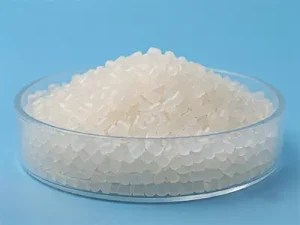
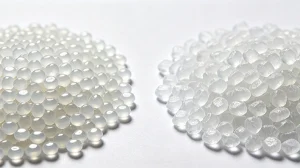
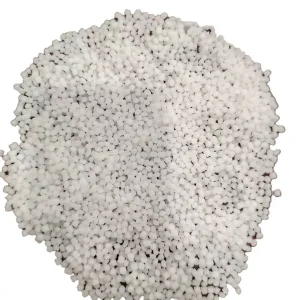
Propylene is primarily derived from steam cracking and catalytic cracking units in oil refineries, as well as propane dehydrogenation (PDH) units. In the presence of a suitable catalyst, propylene molecules link together into long chains—much like stringing thousands of identical beads into a necklace. After polymerization, the material is cooled, pelletized, dried, and packed into 25 kg bags or bulk super sacks. This is the batch of polypropylene pellets that factories purchase, melt down, and mold into finished products.
Because its raw materials originate from the petrochemical industry, PP is classified as a fossil-based plastic. Bio-based PP produced from renewable feedstock also exists on the market, though its share remains very small.
The Three “Personalities” of PP
Not all polypropylenes perform the same way. By adjusting the composition of molecular chains during production, three primary families are formed:
| Type | Key Difference | Characteristics | Typical Applications |
| Homopolymer PP (PP-H) | Polymerized solely with propylene | Hardest and most heat-resistant, but relatively brittle; prone to cracking under hard impact | Rigid containers, bottle caps, daily goods, industrial parts |
| Random Copolymer PP (PP-R) | Small amounts of ethylene randomly inserted into the molecular chain | Softer, higher transparency, slightly lower melting point | Transparent packaging, hot water pipes, thin-walled parts |
| Impact Copolymer PP (PP-C) | Tiny rubber particles dispersed within the PP matrix | Absorbs energy upon impact rather than cracking; durable at low temperatures | Car bumpers, turnover boxes, toys, home appliance components |
A quick way to remember them: PP-H is the rigid one, PP-R is the transparent and flexible one, and PP-C is the impact-resistant “unbreakable” one. Which one a factory chooses depends on whether the finished product requires rigidity, transparency, or impact resistance. For example, homopolymer polypropylene is typically used for injection-molded rigid parts, while random and impact copolymer grades cover transparent products and impact-resistant applications, respectively.
Why Is PP Everywhere?
The reasons can be boiled down to two points. First, it is inexpensive and easy to process. Second, it is highly capable: lightweight, resistant to water and most household chemicals, and compliant grades can directly contact food. This combination makes it the world’s second-highest-volume plastic, trailing only polyethylene.
Advantages of PP Materials
Lightweight
With a density of 0.90–0.91 g/cm³, PP is among the lightest common plastics, floating on water. For products requiring handling, transport, or overall weight reduction—such as packaging, containers, and automotive parts—this is a direct advantage: replacing it with other plastics would usually result in a heavier part.
Resistant to Water, Acids, Alkalis, and Oils
PP is virtually non-hygroscopic. Soaking a PP container in water for a week will not cause it to swell, soften, or change dimensions. This stands in sharp contrast to nylon (PA), which absorbs moisture rapidly and must be dried before processing to avoid bubbles and silver streaks. Common acids, alkalis, salt solutions, detergents, and animal/vegetable fats (such as edible oils) have little effect on PP, making it widely used in kitchenware, edible oil bottle caps, laundry baskets, and chemical containers.
Exceptions do exist: PP has poor resistance to aromatic hydrocarbons (such as benzene and toluene), chlorinated hydrocarbons (such as chloroform and paint thinners), and strong oxidizing acids (such as fuming nitric acid); prolonged contact can cause swelling or degradation. Furthermore, while resistant to oils at room temperature, due to molecular spacing permitting gas/liquid permeability, single-layer PP is not suitable as a long-term fuel-sealing container requiring high barrier performance (such as automotive main fuel tanks).
Adequate Heat Resistance
PP has a melting point of approximately 160–170 °C, with molded parts capable of long-term service at around 90–100 °C. This means PP can hold hot food, go into the dishwasher, and be used in microwaves—feats that cheaper soft plastics cannot achieve.
Rigid Yet Tough
Homopolymer PP offers high rigidity, holding its shape firmly without easy bending, while impact copolymer PP relies on internal rubber particles to absorb impacts without cracking. Thus, the same material family can produce both rigid bottle caps and car bumpers.
Easy Processing Lowers Costs
PP is compatible with almost all common plastics processing techniques: injection molding, extrusion, blow molding, thermoforming, blow film extrusion, and fiber spinning. More importantly, it requires no pre-drying prior to processing because it does not absorb moisture. This saves energy, equipment, and time, which is why PP products are generally affordable.
Electrical Insulation
PP is an excellent electrical insulating material, making it ideal for appliance housings, cable insulation layers, and capacitor films.
Safe and Recyclable
When utilizing certified grades, PP is widely used in food packaging and medical devices. It also bears the recycling code 5 and is one of the higher-value recyclable plastics, as detailed in Sections 4 and 5.
Essential Limitations
Evaluating pros and cons objectively is more useful than listening only to advantages. PP has several distinct weaknesses:
| Limitation | Consequence | Countermeasure / Solution |
| UV Vulnerability | Long-term outdoor exposure causes embrittlement and yellowing as ultraviolet rays break molecular chains | Select weather-resistant (UV-stabilized) grades |
| Low-Temperature Brittleness | Standard homopolymer PP tends to crack below freezing | Switch to impact copolymer grades or incorporate a rubber phase |
| Flammability | Burns and drips | Utilize flame-retardant modified formulations |
| Post-Cooling Shrinkage | Parts shrink by 1.0–2.5% with uneven shrinkage across directions | Allow for dimensional compensation during part and mold design |
| Poor Paint/Adhesion Properties | The surface chemistry is “too slick,” making coatings and glues difficult to bond | Apply specialized surface treatments or dedicated adhesives |
In short: PP performs exceptionally well in scenarios avoiding direct sunlight, extreme cold, and fire sources; if these conditions are unavoidable, additives or grade substitutions are required.
Application Areas
Packaging — The Largest Volume Application
PP dominates the packaging sector. Biaxially oriented polypropylene (BOPP) films wrap biscuits, bread, and labels; thin-walled PP containers hold yogurt, butter, and takeout food; PP caps seal various bottles; and PP woven fabrics are made into packaging sacks and bulk bags (FIBCs used for resin pellet transport). Packaging highly values PP’s low cost, low weight, and excellent moisture barrier properties.
Automotive
Automotive bumpers and exterior trim typically utilize PP-based thermoplastic elastomer (TPE) blend materials due to their light weight and impact-energy absorption capabilities. Dashboards, door trim panels, EV battery casings, and under-hood ventilation ducts also frequently use PP, mostly in the form of impact copolymer or glass-fiber reinforced grades (e.g., impact-resistant structural copolymer PP).
Medical & Healthcare
PP appears in syringes, infusion components, sterilization trays, medicine bottles, and medical nonwoven products. Its popularity is practical: it withstands steam or ethylene oxide sterilization, remains chemically inert to most drugs, and is cost-effective enough for single-use disposable devices.
Consumer Goods
Microwave-safe food containers, storage boxes, furniture, toys, kitchen utensils, and home appliance housings are predominantly made of PP. It is the plastic everyday people encounter most frequently while rarely realizing it.
Textiles & Nonwovens
PP fibers are utilized in the top sheets of diapers and hygiene products, meltblown filter layers of face masks, soil-stabilizing geotextiles, ropes, and carpets. PP can be spun into extremely fine filaments, enabling the production of soft nonwovens.
Electrical & Electronics
Leveraging its insulating properties, PP is used in home appliance housings, capacitor films, and cable insulation.
Construction & Municipal
PP-R pipes are standard materials for hot and cold water plumbing due to their corrosion resistance and scale-free performance. PP geosynthetics reinforce soil, and chopped PP fibers are mixed into concrete to control cracking.
Application Summary Table
| Industry | Key Advantage Utilized | Representative Products |
| Packaging | Low cost, lightweight, good moisture/oil barrier | BOPP films, thin-walled containers, caps, woven bags |
| Automotive | Lightweight combined with impact resistance | Bumpers, interior trim, battery casings |
| Medical | Sterilizable, chemical inertness | Syringes, infusion components, sterilization trays, nonwovens |
| Consumer Goods | High rigidity, heat resistance, safety | Microwave containers, storage boxes, toys |
| Textiles | Spunnable into fine fibers | Diaper top sheets, mask meltblown layers, geotextiles |
| Electrical/Electronics | Electrical insulation | Appliance housings, capacitor films |
| Construction | Corrosion resistance, strength | Hot/cold water pipes, geosynthetics, concrete fibers |
Is PP Safe?
Is PP Itself Toxic?
No. PP is chemically inert—it does not react with substances it contacts. This is due to molecular dimensions: a PP molecule is an extremely long chain, far too large to penetrate skin or enter cells, and it is insoluble in water and bodily fluids. This is why food packaging and medical devices employ PP rather than solvent-based materials.
One nuance: the polymer itself is inert, but minor additives such as colorants and stabilizers are introduced during production. Therefore, safety assessments always target specific molded product grades rather than a generalized “PP.”
Is PP a “Food-Grade” Material?
This is the most common misunderstanding about PP and deserves clarification: “Food grade” is an attribute of a specific grade, not the category of polypropylene. Two visually identical PP pellets may differ completely from a regulatory standpoint—because one was produced and tested according to food-contact requirements while the other was not.
Governments maintain strict regulations on food-contact plastics, such as FDA regulations in the US, Regulation (EU) No 10/2011 in the EU, and China’s GB 4806 series. A supplier can only claim suitability for food contact if a specific grade has passed evaluations under corresponding regulations. For purchasers, the conclusion is singular: request the food-contact compliance statement for that exact grade rather than relying on generic statements about PP.
Can PP Be Recycled?
Can PP Be Recycled?
Yes. Technically, PP is one of the easier commodity plastics to recycle: it melts cleanly and can be reprocessed into products, with recycled PP (rPP) holding genuine market value in industrial applications. The challenge lies not in the material itself, but in whether the collection, sorting, and washing infrastructure can return used PP to factories in a usable state. Thus, “technically recyclable” and “actually accepted in your local area” are two distinct issues.
The Real Meaning of Recycling Code 5
The triangle symbol with the number 5 is a resin identification code designed to inform recycling streams of the material type for correct sorting. It does not imply that the item will be recycled everywhere—the symbol identifies the material, whereas local recycling systems dictate whether it is actually collected. Much of the confusion surrounding plastic recycling stems from this distinction.
Current Recycling Realities
PP recycling rates vary dramatically by region, dictated by local collection rules and the volume of industrial PP scrap generated. Two relatively steady patterns exist: first, industrial and commercial PP waste (manufacturing scrap, turnover boxes, pipes) exhibits significantly higher recycling rates because it is clean, pre-sorted, and concentrated in bulk; second, household PP is harder to process due to contamination with other materials, food residues, and small dark formats that automatic optical sorting equipment struggles to identify.
Where Does Recycled PP Go?
Recycled PP typically flows into products insensitive to appearance and food-contact requirements: trash cans, turnover boxes, pallets, non-visual automotive parts, building boards, and industrial packaging. Food-contact-grade recycled PP does exist, but it requires dedicated collection systems and extra processing to verify purity, which explains why most recycled PP does not return to food packaging.
Why Is PP Recycling Difficult?
- Multi-layer Composite Packaging: Many food packages laminate PP with other materials, making economic separation impossible.
- Colors and Additives: Dark or heavily pigmented PP is difficult for optical sorting machines to recognize.
- Contamination: Food residues and labels degrade the quality of recycled resin.
- Economics: When virgin resin prices are low, recycled material struggles to compete on price.
- Performance Degradation: Every time PP undergoes melting and reshaping, molecular chains shorten slightly, reducing mechanical properties. Consequently, recycled PP is typically blended with virgin resin to compensate.
Is PP Eco-Friendly?
The objective answer has two sides.
PP possesses clear environmental benefits: it is exceptionally lightweight, consuming less fuel to transport equivalent quantities of parts; it substitutes for glass and metal, reducing weight and energy consumption; and theoretically, it is fully recyclable, with industry continuously improving collection and sorting stages.
Conversely, PP does not decompose in nature. It is non-biodegradable and persists long-term once entering the environment. Incineration recovers energy but generates emissions. Due to imperfect recycling infrastructure, a considerable proportion of PP still ends up in landfills or incinerators. A fair assessment is that PP’s environmental footprint depends more on what happens after product use than on the material itself.
What Consumers Can Do
Verify the presence of the number 5 and the letters PP on items before disposal. Rinse containers clean to avoid contaminating entire batches of recyclables. Prioritize single-material products, as multi-layer composites are harder to recycle than mono-materials. Reuse storage boxes and food containers as long as their condition permits. For areas lacking local recycling programs, reducing consumption remains a better response than careless discarding.