Table of Contents
- Introduction: What is Polypropylene?
- The Three Main Types of Polypropylene
- Homopolymer vs. Copolymer: Comprehensive Comparison Table
- In-depth Analysis of Each Type
- How to Choose? A Quick Reference Guide
- Frequently Asked Questions (FAQ)
- Conclusion
Introduction: What is Polypropylene?
Polypropylene (PP) is a semi-crystalline thermoplastic belonging to the polyolefin family. It is the second most widely produced thermoplastic in the world (after polyethylene), with approximately 60% of all polypropylene being homopolymer. PP is extensively used in packaging, automotive, appliances, and consumer goods due to its low density, excellent chemical resistance, good mechanical properties, and very low cost.
However, polypropylene is not a single material. Depending on the polymerization method, PP is categorized into Homopolymer, Random Copolymer, and Impact Copolymer (Block Copolymer), each possessing entirely different performance characteristics. Understanding these differences is crucial for design engineers and procurement personnel to make the correct selection for specific applications.
This guide provides a practical comparison between homopolymer and copolymer PP to help you make informed material choices based on mechanical properties, processing requirements, and application needs.
The Three Main Types of Polypropylene
Polypropylene is generally divided into the following three categories based on the polymerization method and comonomer content:
| PP Type | Abbreviation | Core Characteristics | Typical Applications |
| Homopolymer PP | PP-H | Highest stiffness and heat resistance | Rigid packaging, engine compartment parts, fibers, woven bags |
| Random Copolymer PP | PP-R | High transparency, good low-temperature toughness | Transparent containers, medical syringes, shrink films, clear packaging |
| Impact Copolymer PP (Block) | PP-B | Extremely high impact strength, especially at low temperatures | Car bumpers, battery cases, industrial crates, children’s toys |
Note: The densities of homopolymer and copolymer PP are similar, approximately 0.90–0.91 g/cm³, making them among the lightest thermoplastics available.
Homopolymer vs. Copolymer: Comprehensive Comparison Table
The following table summarizes the key differences between homopolymer PP and the two main types of copolymer PP:
| Property | Homopolymer (PP-H) | Random Copolymer (PP-R) | Impact Copolymer (PP-B) |
| Tensile Strength | Highest | Medium | Medium – High |
| Flexural Modulus (Stiffness) | Highest | Medium | Medium |
| Impact Strength | Lowest (Brittle) | Medium | Highest |
| Low-Temperature Toughness | Poor | Good | Excellent |
| Optical Clarity | Medium (Translucent) | Best (Transparent) | Low (Opaque) |
| Heat Deflection Temperature | Highest (100–120°C) | Medium | Medium |
| Chemical Resistance | Excellent | Very Good | Very Good |
| Ethylene Content | 0% | 1–4% (Random distribution) | 7–15% (Block distribution) |
| Crystallinity | Highest (60–70%) | Lower | Lower |
The above are typical reference values; please refer to the technical data sheets (TDS) from manufacturers for specific grade performance.
In-depth Analysis of Each Type
Polypropylene Homopolymer (PP-H)
Homopolymer polypropylene is produced by the polymerization of propylene monomer alone. The molecular chain has a highly regular structure (isotactic), with the highest crystallinity among PP types (approximately 60–70%). Because it contains no comonomers, the high regularity of the molecular chain gives PP-H superior stiffness, strength, and heat resistance, but also makes it brittle—especially at low temperatures. This brittleness is its primary limitation. To improve toughness, some suppliers blend PP-H with polyethylene (PE) or ethylene-propylene rubber (EPR), but these modifications do not fundamentally address long-term thermal aging issues.
Main Advantages:
- Highest tensile strength and flexural modulus among all PP types.
- Excellent chemical resistance (to acids, alkalis, and solvents).
- Good heat deflection temperature (100–120°C at 0.455 MPa).
- Low density and low cost.
Main Disadvantages:
- Poor impact strength (high brittleness, especially at low temperatures).
- Limited low-temperature toughness.
- Slightly lower dimensional stability than copolymers.
- Prone to aging under long-term heat exposure.
Typical Applications:
- Rigid packaging (thin-wall containers, hot-fill food containers).
- Woven bags, ropes, strapping.
- Automotive engine compartment parts (requiring heat resistance).
- Household appliances, microwaveable containers, storage boxes.
- BOPP films and fibers.
Quick Identification Tip: When burned, homopolymer PP draws into flat, short threads rather than long, round ones.
Polypropylene Random Copolymer (PP-R)
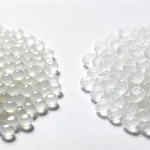
Random copolymer polypropylene is produced by co-polymerizing propylene with a small amount of ethylene (usually 1–4%). The ethylene units are randomly distributed along the propylene molecular chain. This random distribution disrupts the regularity of the polymer structure, lowering the crystallinity and melting point. Although the ethylene content is low (usually 1–7%, max approx 6%), its effect on improving impact toughness and optical transparency is significant. The trade-off is a decrease in stiffness compared to PP-H.
Main Advantages:
- Best optical clarity among all PP types (transparent/translucent).
- Good low-temperature impact toughness (maintains moderate impact strength at around 0°C).
- More flexible than PP-H, with lower stiffness.
- Excellent long-term hydrostatic pressure resistance (ideal for piping).
- Good thermal oxidative aging resistance.
Main Disadvantages:
- Lower stiffness and heat resistance than PP-H.
- Higher cost than homopolymers.
Typical Applications:
- Transparent food containers, clear packaging.
- Medical syringes, medical device components.
- Shrink films, transparent film packaging.
- Piping systems (hot and cold water pipes, floor heating pipes).
- Daily necessities requiring aesthetic transparency.
Quick Identification Tip: PP-R produces no black smoke when burned and can be drawn into very long, round threads.
Polypropylene Impact Copolymer / Block Copolymer (PP-B)
Impact copolymer polypropylene (also known as block copolymer) has a higher ethylene content, typically 7–15%. In PP-B, ethylene units exist in “block” form rather than being randomly distributed. This two-phase system consists of a continuous matrix of PP homopolymer with dispersed ethylene-propylene rubber (EPR) micro-domains. This heterophasic structure drastically increases impact toughness, especially at low temperatures—the rubber phase absorbs impact energy, forming a “hard core-soft shell” structure. Manufacturing impact copolymer PP requires a multi-stage polymerization process: homopolymerization of propylene followed by block copolymerization of ethylene.
Main Advantages:
- Excellent impact toughness, even at low temperatures (maintains well from -20°C to -40°C).
- Good balance of stiffness and toughness (EPR provides toughness while the PP matrix maintains strength).
- Good chemical resistance.
- Suitable for large, heavy-duty injection molded parts.
Main Disadvantages:
- Poor transparency and low gloss.
- Higher cost than homopolymer PP.
Typical Applications:
- Car bumpers, dashboards, exterior trims, battery cases.
- Industrial crates, pallets, buckets.
- Household appliances (washing machine tubs).
- Children’s toys, baby products (requiring high drop impact resistance).
- Sports equipment, luggage, outdoor furniture.
Quick Identification Tip: PP-B also produces no black smoke when burned and draws long threads (similar to PP-R), but feels tougher to the touch.
How to Choose? A Quick Reference Guide
| If your primary need is… | Recommended PP Type |
| Highest stiffness, strength, and heat resistance | Homopolymer (PP-H) |
| Transparency and aesthetics | Random Copolymer (PP-R) |
| High impact resistance and low-temperature toughness | Impact Copolymer/Block (PP-B) |
| Cost-effective rigid structural parts | Homopolymer (PP-H) |
| Food packaging requiring transparency | Random Copolymer (PP-R) |
| Demanding engineering applications (Automotive, Heavy-duty) | Impact Copolymer (PP-B) |
Frequently Asked Questions (FAQ)
Q1: What is the main difference between homopolymer and copolymer PP?
Homopolymer PP is polymerized solely from propylene monomers, offering the highest stiffness and heat resistance but being relatively brittle. Copolymer PP introduces ethylene as a comonomer, which increases impact toughness, flexibility, and low-temperature performance at the expense of some stiffness and heat resistance.
Q2: Can homopolymer and copolymer PP be used for food contact?
Yes. Polypropylene is widely considered a safe material for food contact. Both homopolymer and copolymer PP generally comply with US FDA 21 CFR 177.1520 requirements. However, always verify that the specific grade holds the necessary certifications for your region, as some specialty grades (like those with flame retardants) may not retain food contact clearance.
Q3: Which PP type performs better at low temperatures?
Impact copolymer PP (PP-B) has the best low-temperature performance, maintaining good impact toughness down to -40°C, making it suitable for cold chain packaging, automotive exterior parts, and outdoor applications in cold climates. Random copolymer PP (PP-R) maintains moderate impact strength above approximately 0°C, while homopolymer PP becomes brittle below about 5°C.
Q4: Is PP recyclable?
Yes. Polypropylene is 100% recyclable, denoted by the recycling code “5” (PP). Both homopolymer and copolymer PP can be mechanically recycled and re-granulated for use in new products. The recyclability of PP makes it a key player in the sustainability of the packaging and automotive industries.
Q5: Does PP need drying before injection molding?
In most cases, no. Polypropylene has extremely low water absorption (typically <0.01% over 24 hours), so it can generally be processed directly without drying. However, if the material contains fillers like talc or glass fiber, drying may be necessary.
Q6: How do processing temperatures differ between PP types?
Processing temperatures for homopolymer PP are typically lower than for impact copolymer PP. Random copolymer PP falls in between. Impact copolymer PP may require higher processing temperatures to achieve good melt flow due to the rubber phase. Always refer to the manufacturer’s processing guide for the specific grade.
Q7: Are there other types of PP besides homopolymer and copolymer?
Yes. Beyond the three main categories, there are modified grades such as high-crystallinity PP, flame-retardant PP, UV-stabilized PP (for outdoor use), glass fiber reinforced PP, and long glass fiber PP (LGF-PP), designed for special applications requiring higher mechanical or thermal performance.
Conclusion
Choosing between homopolymer PP and copolymer PP ultimately depends on the specific requirements of your application.
- Homopolymer PP provides the highest stiffness and heat resistance, making it ideal for rigid structural parts and hot-fill packaging.
- Random Copolymer PP offers the best transparency and good low-temperature performance, making it the preferred material for clear containers and medical devices.
- Impact Copolymer PP provides superior toughness—even at low temperatures—making it the choice for automotive, heavy-duty products, and children’s safety products.
When selecting a material, consider the full performance spectrum rather than just the price, and always rely on the official Technical Data Sheet (TDS) from the manufacturer. Understanding these differences will help you optimize product performance, reduce material waste, and avoid application failures caused by incorrect material selection.