Core Safety Conclusion of SEBS Material
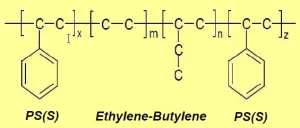
Styrene-Ethylene-Butylene-Styrene (SEBS) block copolymer is a hydrogenated modified thermoplastic elastomer. Under compliant production and standard application scenarios, it is a low-risk, safe, and environmentally friendly polymer raw material. Compared with non-hydrogenated SBS substrates, SEBS saturates the unsaturated double bonds in the molecular chain through a hydrogenation process, thoroughly optimizing the material’s thermal stability, aging resistance, and chemical safety. It contains no free harmful plasticizers and is a mainstream green material globally for replacing PVC and ordinary elastomers, widely adapted to compliant scenarios in fields such as industry, civil life, medical care, and food contact.
Essential Safety Characteristics of SEBS (Core Safety Basis)
The safety of SEBS stems from its stable molecular structure and mature production process, free from the safety hazards of conventional polymer materials. Its core safety traits are as follows:
- No Phthalate-Based Harmful Plasticizers: SEBS features a bulk elastic structure, achieving soft elasticity without the need for phthalate plasticizers. This fundamentally avoids health and environmental risks caused by plasticizer leaching and migration, fully meeting global green supply chain management requirements.
- Stable Molecular Structure with No Easily Leachable Monomers: After hydrogenation modification, the SEBS molecular chain is saturated and stable. At room temperature and conventional processing temperatures, there is no emission of styrene monomers or Volatile Organic Compounds (VOCs), and no odor or migration of harmful substances occurs. Unlike ordinary styrene resins, its fixed block structure does not release free small-molecule pollutants.
- Excellent Chemical and Thermal Safety Attributes: The material is resistant to acid, alkali, and alcohol solvent corrosion, with negligible loss of physical properties when soaked in conventional acid and alkali solutions at room temperature. It also possesses high-temperature resistance, anti-aging, anti-ozone, and anti-ultraviolet properties, and does not crack or produce harmful substances during long-term use, ensuring stable and safe service.
Global Authoritative Compliance Certifications (Core Trust Basis for B2B)
Commercial-grade standard SEBS has passed global mainstream material safety compliance tests and possesses complete compliance endorsements, meeting access standards for multinational trade and high-end scenarios. Core certifications include:
- RoHS and REACH Compliance: It does not contain restricted heavy metals such as lead, mercury, cadmium, and hexavalent chromium, nor persistent harmful pollutants, complying with EU environmental control standards for electronic, electrical, and chemical materials.
- FDA Food Contact Compliance: Specialized food-grade SEBS can directly contact food without the risk of substance migration, suitable for scenarios such as kitchenware and food packaging accessories.
- Medical-Grade Biosafety Certification: High-end SEBS grades have passed ISO 10993 and USP Class VI biocompatibility tests, showing no cytotoxicity or sensitization, and can be used for medical consumables and medical contact accessories.
Clarification of Common Safety Misconceptions in the Industry
Concerns frequently raised by Google users regarding whether “SEBS contains styrene risks or is toxic” can be clearly clarified based on scientific testing: Although the name “SEBS” contains a “styrene” component, this component is stably incorporated into the molecular chain as a polymerized block structure and is not a free styrene monomer. Compliant finished SEBS products have no free styrene residue and do not possess the irritancy or toxicity of styrene monomers; normal use, processing, and contact will not cause harm to the human body or the environment. Only non-standard, poorly modified SEBS from small, substandard factories may have potential risks due to process defects leading to trace residue impurities.
Safety Specifications for Processing and Terminal Use
Finished SEBS products are safe and non-toxic. However, to ensure full-process compliance, basic processing specifications must be followed: within the temperature range of conventional injection molding and extrusion, the material will not degrade to produce harmful substances. High-temperature extreme processing and long-term incineration will produce conventional polymer combustion exhaust gases, necessitating standard ventilation and waste gas treatment equipment. SEBS is not a hazardous chemical during room-temperature storage, manual handling, or finished product contact, but it is recommended to wear basic protective equipment in industrial processing environments according to regulations. It is not a controlled chemical and supports global conventional logistics transportation and mixed-cargo trade.
Summary
Compliant, mass-produced SEBS is a safe, low-toxicity, and environmentally friendly high-performance thermoplastic elastomer. With a stable molecular structure, no harmful leaching, and complete compliance certifications, it is suitable for the vast majority of industrial manufacturing, consumer, medical, and food scenarios. Material safety risks arise solely from non-compliant modification, non-standard processing, and inferior products. Regular, factory-origin SEBS fully meets the core safety, environmental, and compliance requirements of global B2B procurement.