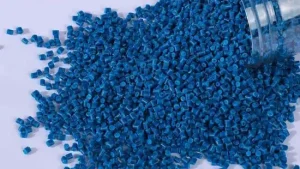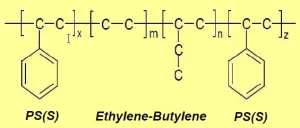
In the field of thermoplastic elastomers (TPE), styrene-ethylene/butylene-styrene block copolymers (SEBS) have long held an important position due to their excellent weather resistance and soft touch. However, traditional SEBS is often limited by high melt viscosity during processing, which makes it difficult to apply in fine processing scenarios such as melt blown that require ultra-high fluidity.
Kraton™ MD1648, launched by Kraton Corporation (USA), is a representative product in the Enhanced Rubber Segment (ERS) series that breaks this technical deadlock. This article will delve into the technical characteristics of this development product polymer and analyze how it redefines the application boundaries of elastomers in hygiene products, medical protection, and high-performance adhesives through its extremely high fluidity.
The Structural Code Behind High Fluidity
Traditional SEBS usually has high viscosity in the molten state due to its large molecular weight and high degree of entanglement. To make it flow, it is often necessary to add large amounts of processing oil (such as white oil) or perform intense blending modification, but this often sacrifices the mechanical properties of the material.
The core technical breakthrough of MD1648 lies in its unique linear triblock structure design. Unlike conventional grades, Kraton™ MD1648 has an extremely high melt mass-flow rate (MFR). According to the technical data sheet (TDS), under the test condition of 230°C/5kg, its nominal melt flow rate is as high as 220 g/10 min.
This data is extremely rare among SEBS products, meaning it has liquid-like fluidity in the molten state, allowing for precision micro-fiber spinning without excessive dilution. This characteristic benefits from its precisely controlled molecular weight distribution and 20/80 styrene/rubber ratio, which retains the elasticity of the rubber phase while reducing internal friction resistance.
Reshaping Production Standards for Elastic Nonwovens
For manufacturers of disposable hygiene products (such as baby diapers, adult incontinence products) and medical protective supplies (such as high-elastic mask ear loops, surgical gowns), comfort and production efficiency are often the focus of trade-offs.
Official data from Kraton Corporation shows that MD1648 is a grade specifically designed for the melt blown process. Fabrics produced using MD1648 are not only soft and breathable but also possess bidirectional stretchability, which is crucial for medical supplies that fit the skin without leaving red marks. In practical applications, this material solves the pain point where traditional Spandex cannot be directly compounded on melt blown lines, allowing manufacturers to directly generate elastic nonwovens in a single process, greatly simplifying the production flow.

Adhesives and Blending Modification: More Than Just a Softener
Beyond the field of nonwovens, Kraton™ MD1648 also performs excellently in hot melt adhesives (HMA) and polyolefin modification.
In hot melt adhesive formulations, MD1648 can serve as a toughening component. Its extremely high fluidity ensures excellent atomization effects during spraying or spiral gluing without easy stringing, which means lower downtime and higher production efficiency for high-speed production lines (such as sanitary napkin and diaper production lines).
In the field of PP (polypropylene) modification, MD1648 is often used as an efficient softener and toughener. When used for melt blown PP, it not only imparts a silk-like soft touch to the originally rigid PP fibers but also maintains the loft of the filter material, thereby optimizing breathability. Furthermore, due to the extremely high saturation of its SEBS base (high degree of hydrogenation), the material possesses superior aging and weather resistance, making it resistant to yellowing or chalking even under long-term UV exposure.
Compliance and Processing Precautions
For product development engineers, material selection depends not only on performance but also on compliance. Although MD1648 is currently still a development product of Kraton, it has demonstrated potential in specific application areas, including sensitive fields such as food packaging and toy manufacturing. In addition, Kraton Corporation owns its leading global production bases, ensuring the stability of the supply chain.
Processing Suggestions:
When using MD1648 for melt blown production, it is recommended to control the processing temperature between 230°C and 260°C. Notably, this grade has excellent processing stability and typically can be processed directly without pre-drying, saving energy and labor hours for manufacturers.
Conclusion
The emergence of Kraton™ MD1648 marks the functional transformation of SEBS materials from simple “soft touch” to “high fluidity + high strength.” It not only solves the viscosity bottleneck of SEBS in the melt blown process but also provides designers with a solution that maintains rubber elasticity while achieving high-speed precision processing.
With the continuous optimization of this development grade by Kraton Corporation, we have reason to believe that MD1648 will play a more central role in future high-end medical protection, lightweight automotive parts, and environmentally friendly packaging materials. For engineers seeking elastic solutions for nonwovens or PP toughening solutions, this ERS polymer from Kraton is undoubtedly a technical bellwether worthy of attention.