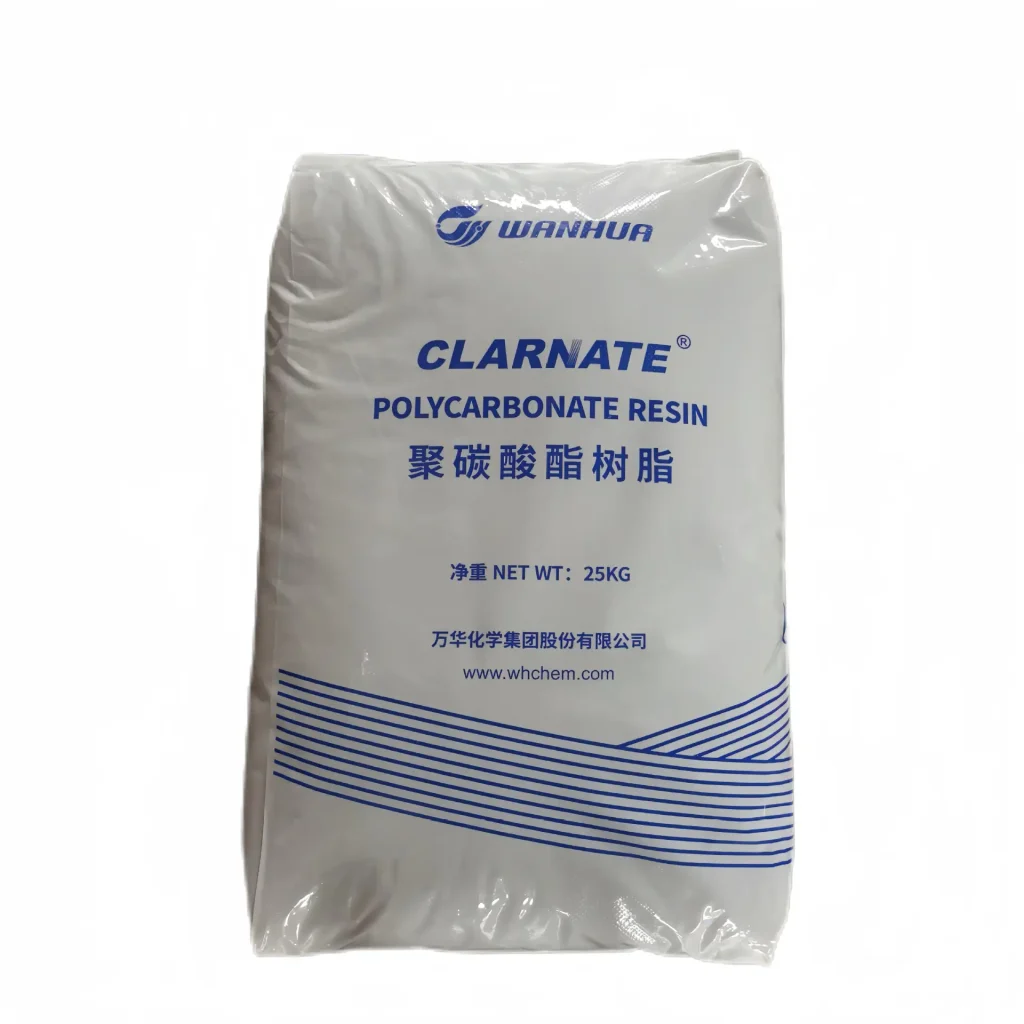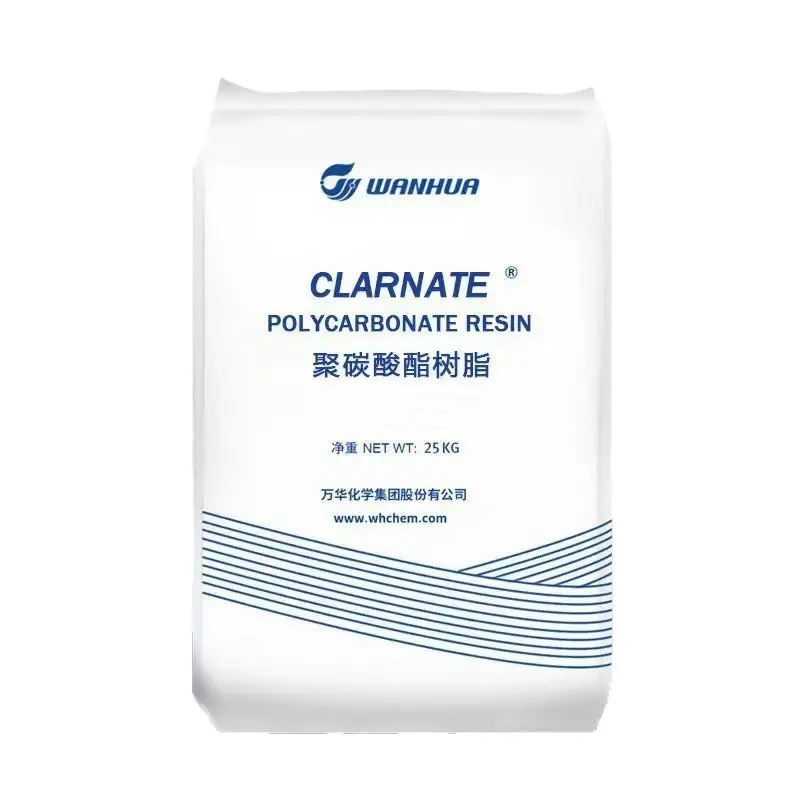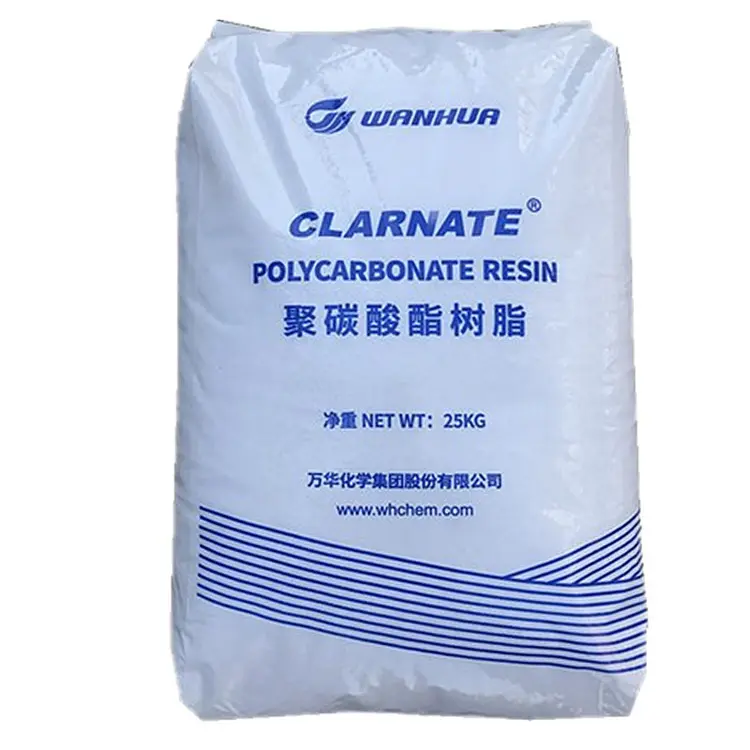
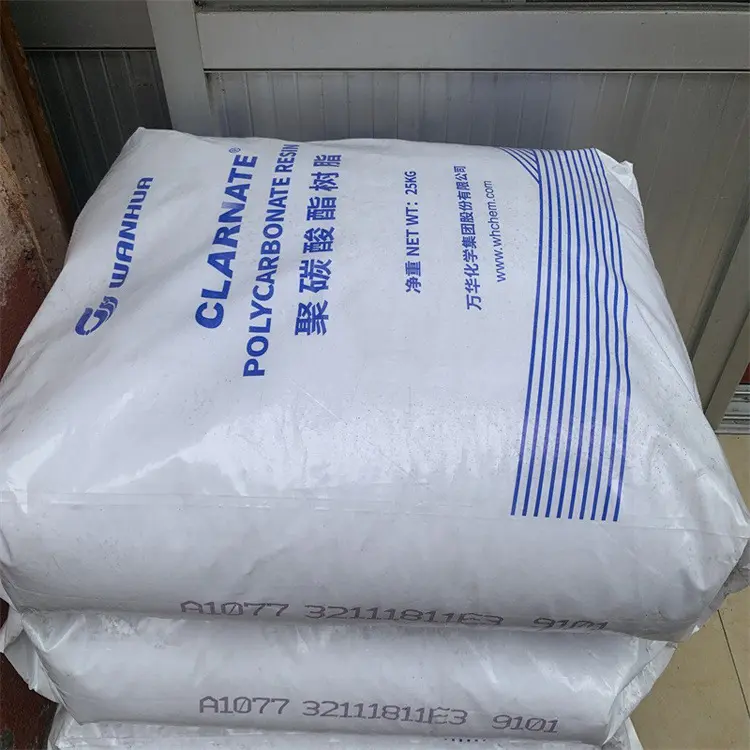
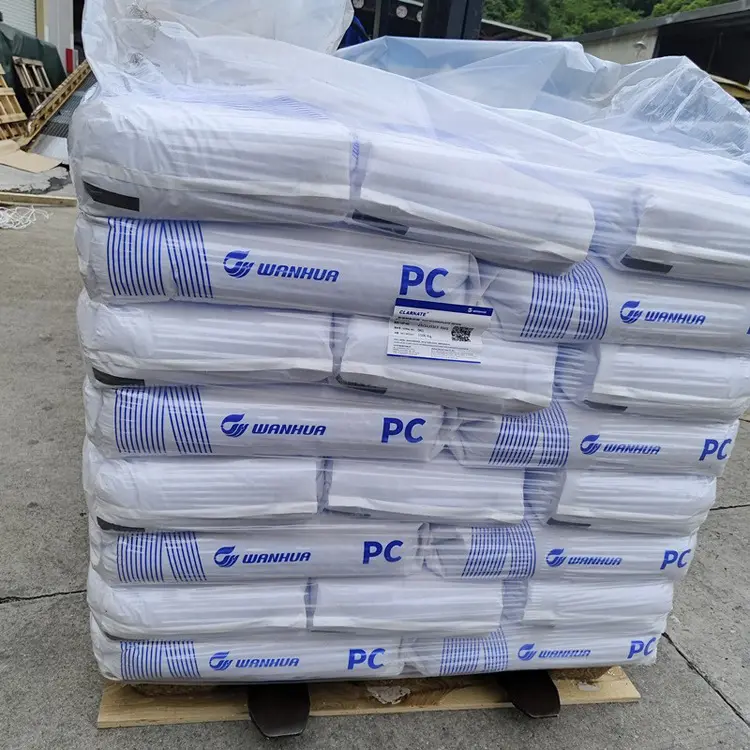
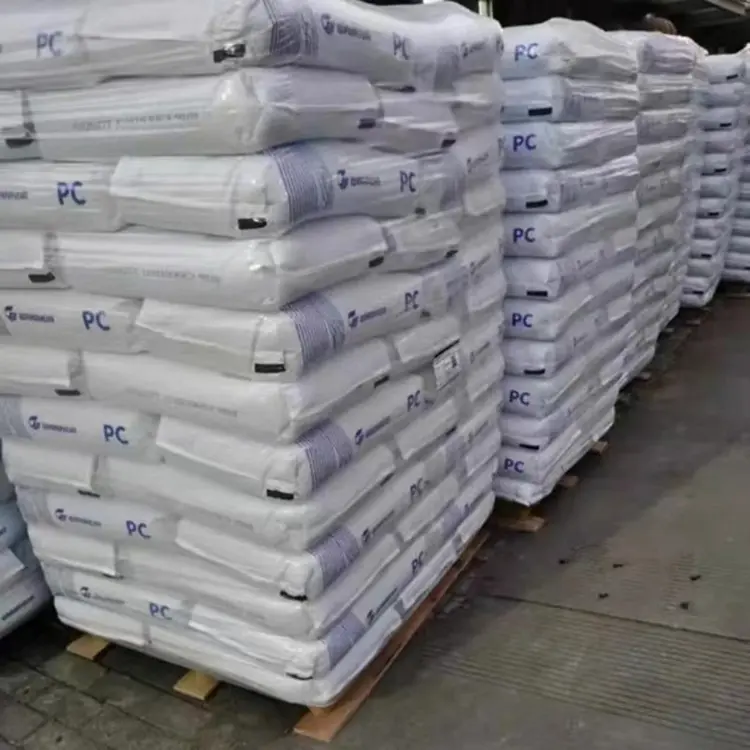
WANHUA Chemical PC 2350 Polycarbonate Resin. A general-purpose PC material with a 34 g/10min MFR and 90% light transmittance. It features high flowability, impact resistance, and thermal stability. Suitable for industrial applications such as thin-wall electronic enclosures, appliance components, and injection-molded optical parts.
| Manufacturer | Wanhua Chemical |
|---|---|
| Density | 1.20 g/cm³ |
| MFR | 34 g/10 min |
| Tensile Strength at Break | 62 MPa |
| Tensile Strength at Yield | 62 MPa |
Note: See the product description for additional technical specifications
WANHUA Chemical Polycarbonate PC 2350 (referred to as Wanhua PC 2350) is a general-purpose polycarbonate (PC) resin independently developed and produced by Wanhua Chemical Group. It belongs to the thermoplastic engineering plastics category and is one of the core general-purpose grades in Wanhua’s CLARNATE® polycarbonate product line. The product appears as colorless transparent granules with uniform and rounded shapes, free of significant impurities. It possesses the inherent high transparency characteristics of polycarbonate material with excellent light transmission performance, making it a general-purpose PC material with balanced overall performance and wide applicability.
As a leading enterprise in the Chinese polycarbonate industry, Wanhua Chemical’s annual PC capacity reaches 600,000 tons, holding the largest market share in the mid-to-high-end segment in China. Its self-innovated interfacial phosgene production process ensures the stability and consistency of PC 2350 product quality, giving it extremely high market recognition and competitiveness in the general-purpose PC field. Leveraging its excellent comprehensive properties, WANHUA Chemical Polycarbonate PC 2350 is widely used in various mainstream industries such as automotive components, electronics and electrical, home appliances, lighting fixtures, medical devices, and construction sheets. It meets the core requirements for transparency, impact resistance, and processability in different fields, making it a preferred general-purpose PC product that balances cost-effectiveness and reliability.
| Physical Property | Test Value | Unit | Test Standard |
| Density | 1.2 | g/cm3 | ASTM D792 |
| Melt Flow Rate (300°C, 1.2 kg) | 34 | g/10 min | ASTM D1238 |
| Mold Shrinkage, Parallel | 0.50-0.70 | % | ASTM D955 |
| Water Absorption (24 hr, 23°C) | 0.2 | % | ASTM D570 |
| Mechanical Property | Test Value | Unit | Test Standard |
| Tensile Strength at Break (50 mm/min) | 62 | MPa | ASTM D638 |
| Tensile Modulus (1 mm/min) | 2300 | MPa | ASTM D638 |
| Tensile Strength at Yield (50 mm/min) | 62 | MPa | ASTM D638 |
| Tensile Strain at Yield (50 mm/min) | 6 | % | ASTM D638 |
| Tensile Strain at Break (50 mm/min) | 115 | % | ASTM D638 |
| Flexural Strength (2 mm/min) | 90 | MPa | ASTM D790 |
| Flexural Modulus (2 mm/min) | 2250 | MPa | ASTM D790 |
| Izod Notched Impact Strength (23°C) | 600 | J/m | ASTM D256 |
| Thermal Property | Test Value | Unit | Test Standard |
| Heat Deflection Temperature, Unannealed (1.8 MPa, 3.2 mm) | 124 | °C | ASTM D648 |
| Vicat Softening Point (120°C/h, 50 N, Rate B, Loading 2) | 146 | °C | ASTM D1525 |
| Flammability Rating (3 mm) | HB | — | UL 94 |
| Flammability Rating (1.5 mm) | V-2 | — | UL 94 |
| Electrical Property | Test Value | Unit | Test Standard |
| Volume Resistivity | 1.00E+14 | ohms·cm | IEC 60093 |
| Surface Resistivity | 1.00E+16 | ohms | IEC 60093 |
| Dielectric Strength | 34 | kV/mm | IEC 60243-1 |
| Comparative Tracking Index (CTI) | 250 | V | IEC 60112 |
| Dielectric Constant (100 Hz) | 3.1 | — | IEC 60250 |
| Dielectric Constant (1 MHz) | 3 | — | IEC 60250 |
| Dissipation Factor (100 Hz) | 5.00E-04 | — | IEC 60250 |
| Dissipation Factor (1 MHz) | 9.00E-03 | — | IEC 60250 |
| Optical Property | Test Value | Unit | Test Standard |
| Refractive Index | 1.586 | — | ASTM D542 |
| Light Transmittance (3 mm) | 90 | % | ASTM D1003 |
| Haze (3 mm) | < 0.800 | % | ASTM D1003 |
The technical data sheet (TDS) of WANHUA Chemical Polycarbonate PC 2350 material from WANHUA Chemical corporation, if there are differences, please refer to the official website of WANHUA Chemical.
Excellent Optical Performance: Light transmittance is as high as 90% with haze lower than 0.8%. Its transparency is comparable to glass with no significant tendency toward yellowing. It meets the aesthetic requirements for various transparent products and is widely used in scenarios like optical lenses and transparent housings, enhancing the visual quality of products.
High Impact Strength and Mechanical Stability: Notched Izod impact strength reaches 600 J/m, tensile strength is 62 MPa, and flexural modulus is 2250 MPa. It possesses outstanding impact resistance and structural strength, making it resistant to brittle failure or deformation. It can withstand collisions and pressure during daily use, extending the service life of products.
Good Processing Flowability: As a high-flow general-purpose PC material, its melt flow rate reaches 34 g/10 min, and the mold shrinkage rate is stable at 0.5-0.7%. It is suitable for various processing methods such as injection molding, extrusion, and blow molding. It offers high molding efficiency and is particularly suited for producing complex structural parts and thin-walled components, reducing processing costs.
Reliable Heat and Weather Resistance: Heat deflection temperature reaches 124°C and Vicat softening point is 146°C. It maintains stable performance over a wide temperature range and possesses certain UV and hydrolysis resistance. It is resistant to aging and discoloration, making it suitable for products used in various indoor and outdoor environments.
High Cost-effectiveness and Quality Assurance: Independently developed and produced by Wanhua Chemical, relying on the advantages of a full industrial chain and mature interfacial phosgene technology. The product offers high batch-to-batch stability and low impurity content. Compared to similar imported products, it provides higher cost-effectiveness while ensuring performance, reducing procurement costs for enterprises.
WANHUA Chemical Polycarbonate PC 2350 covers several mainstream industries due to its balanced comprehensive performance:
Electronics and Electrical Industry: As a highly transparent material with good insulation, it is widely used for consumer electronics housings (such as smartphone cases, tablet housings), 5G base station components, connectors, switch panels, and transparent lamp covers. It meets insulation requirements while ensuring aesthetic appeal and structural stability.
Home Appliance Industry: Suitable for transparent parts and housings of various appliances, such as refrigerator liners, microwave observation windows, washing machine control panels, and air conditioner vent panels. Its heat and impact resistance adapt to long-term usage environments while enhancing product texture.
Automotive Industry: Used for interior trim (such as dashboard covers, door panel transparent strips, air vents) and auxiliary exterior components. With excellent impact and heat resistance, it withstands vibrations and environmental temperature changes during driving, ensuring safety while meeting interior environmental and aesthetic requirements.
Lighting Industry: Used for LED covers, street lamp covers, and indoor lighting housings. Its high light transmittance and soft light diffusion effectively transmit light. Its heat resistance allows it to withstand heat generated during operation, extending the lifespan of lighting fixtures.
Medical Device Industry: Suitable for some medical transparent products, such as syringe barrels, infusion set accessories, and medical observation windows. Its high purity and lack of harmful impurities meet the basic requirements for medical materials, while its good processability allows for precision molding.
Construction and Other Fields: Used as a raw material for architectural transparent sheets (such as sunrooms and skylights). Its high transparency and impact resistance serve as an alternative to traditional glass, improving lighting effects and safety. It is also used for sporting equipment, toys, bottle caps, and cast films, meeting diverse general-purpose needs.
Q1: Can WANHUA Chemical Polycarbonate PC 2350 be used for food contact products? A1: This grade is a general-purpose PC material and is not food-contact certified by default. If it needs to be used for food contact products (such as food containers or bottle caps), please confirm with the supplier in advance to select the corresponding food-grade PC grade from Wanhua Chemical or provide specific certification requirements to ensure compliance with food-contact safety standards.
Q2: What key parameters should be noted during the processing of PC 2350? A2: Before processing, PC 2350 granules must be dried at 120-130°C for 4-6 hours to remove moisture and avoid defects like bubbles or sink marks. The recommended injection temperature is 260-300°C, and the mold temperature should be 80-100°C. Injection pressure should be adjusted based on the part structure to ensure smooth molding. Post-processing annealing may be required to reduce internal stress and improve dimensional stability.
Q3: What are the core advantages of WANHUA Chemical Polycarbonate PC 2350 compared to other general-purpose PCs? A3: The core advantages are concentrated in three points: first, stable quality, relying on Wanhua Chemical’s self-developed interfacial phosgene process and full chain advantages, resulting in low batch variation and low impurity levels; second, superior processability, with a high flow rate of 34 g/10 min making it better suited for thin-walled and complex parts; third, high cost-effectiveness, offering lower procurement costs than similar imported general-purpose PC products while maintaining optical, mechanical, and thermal performance.
Q4: What are the storage requirements for this product? A4: It should be stored in a dry, well-ventilated, and cool warehouse, away from moisture, high temperatures, and direct sunlight. Avoid storing with oils or chemicals. The recommended storage temperature is 20-30°C with relative humidity not exceeding 60%. The packaging must remain sealed to prevent moisture absorption. The recommended storage period is no more than 12 months to ensure stable product performance.
Submit your inquiry today and receive a professional competitive price tailored to your project requirements.