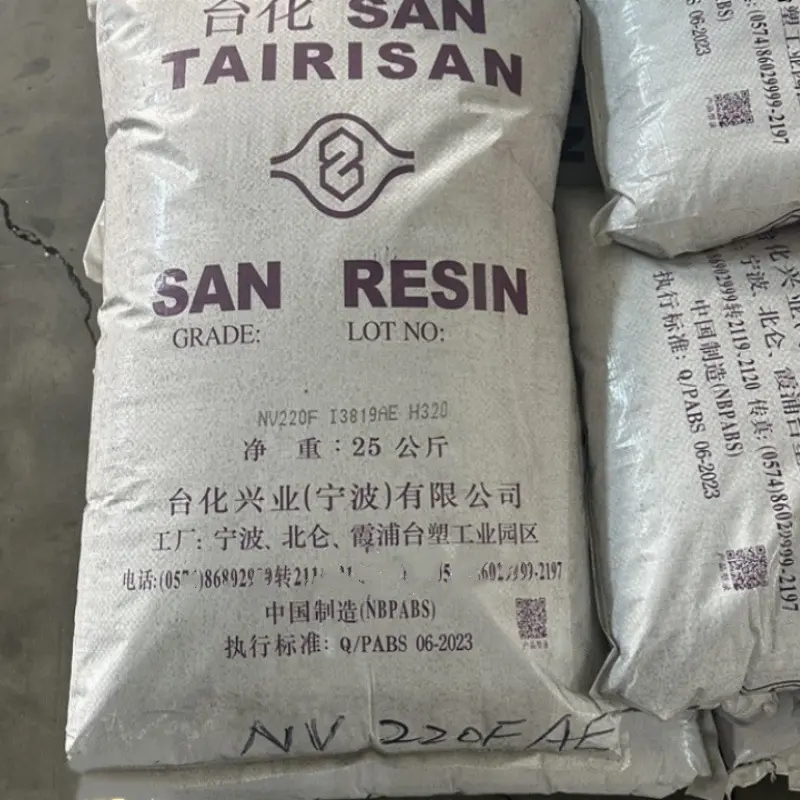
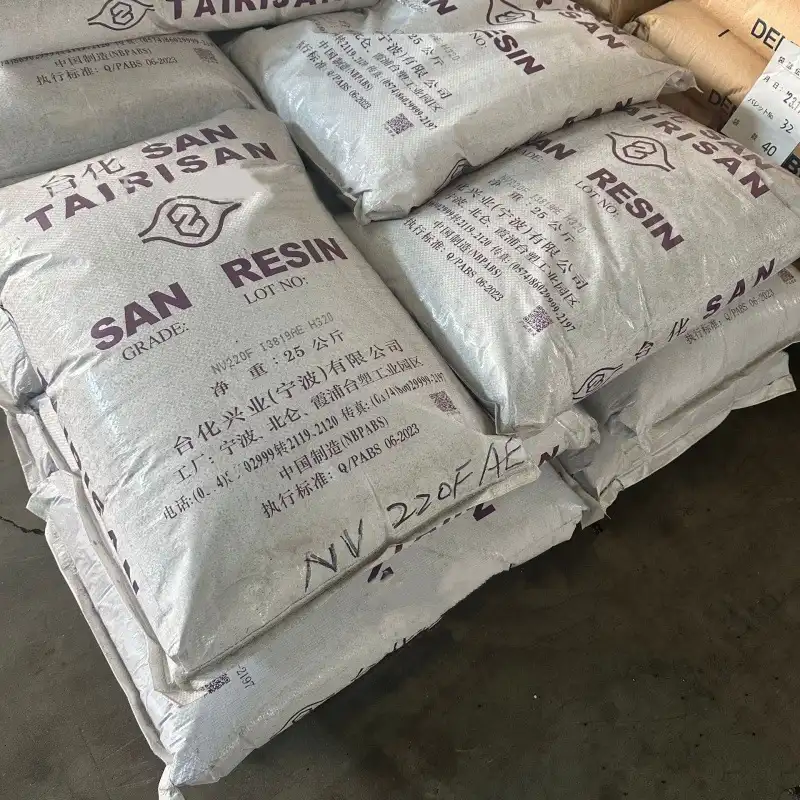
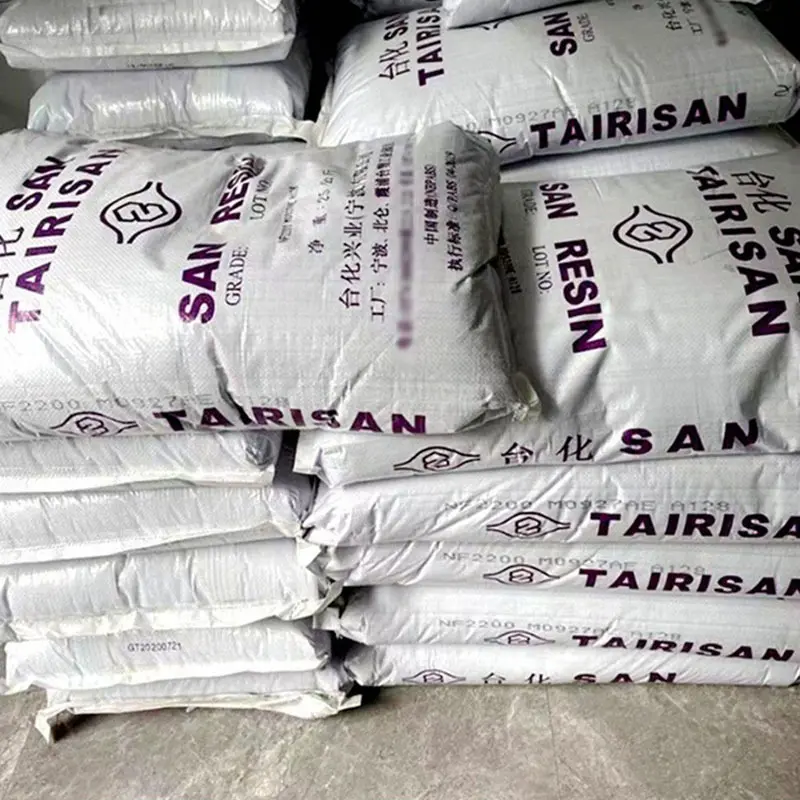
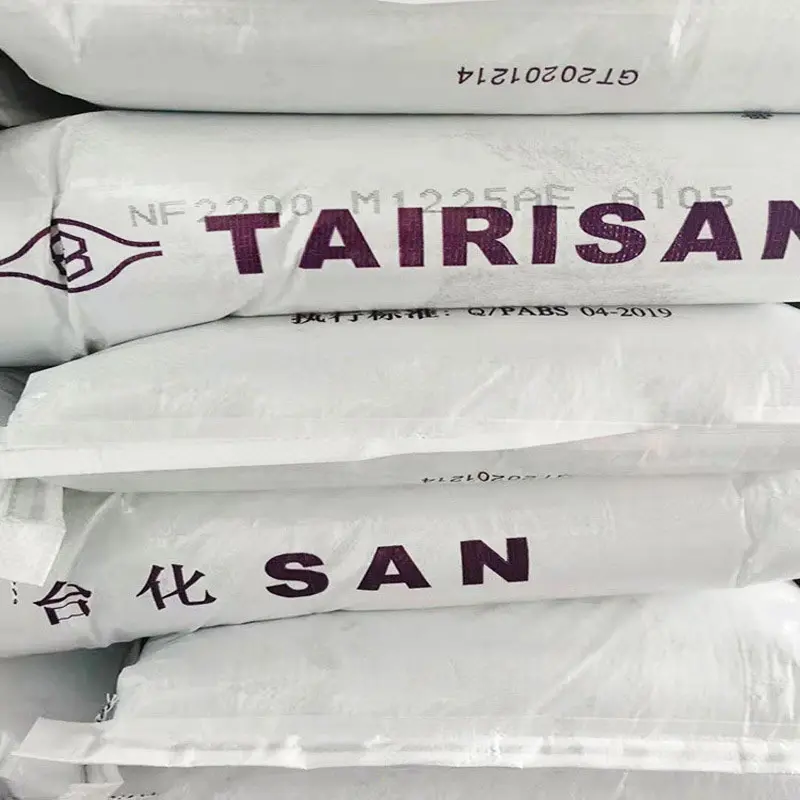
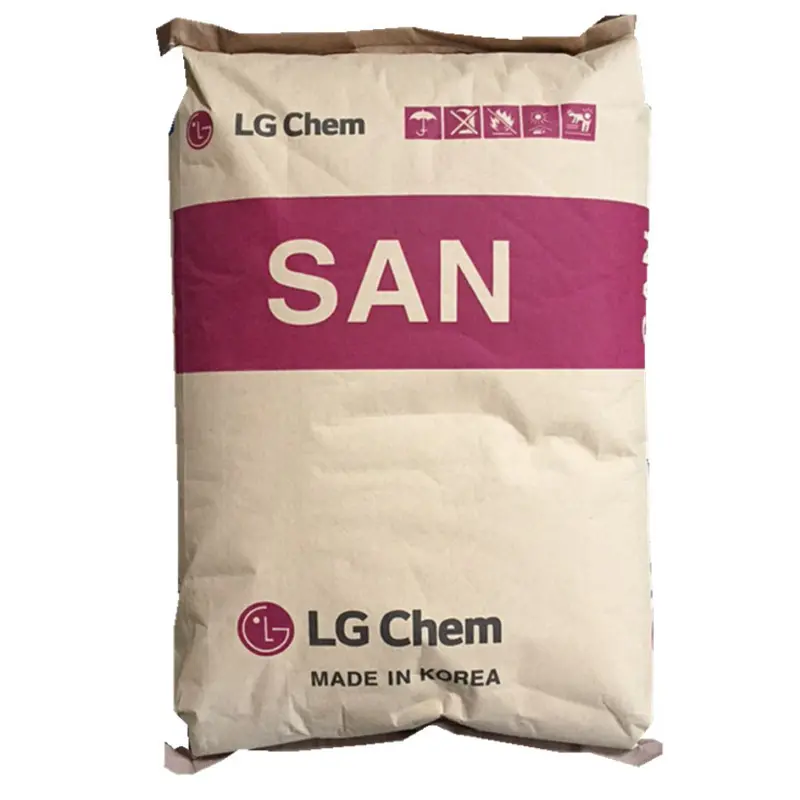
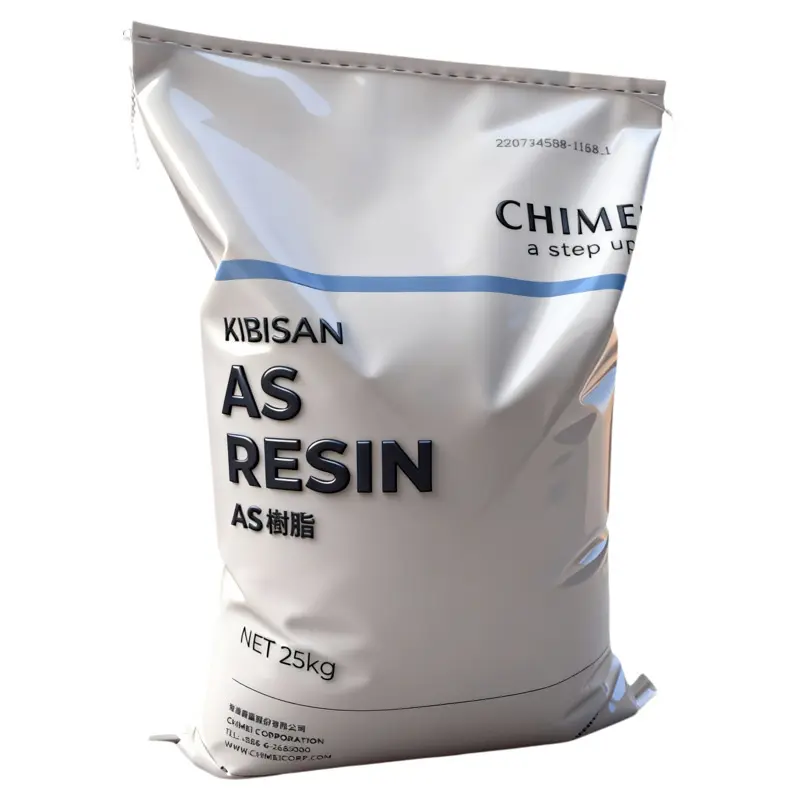
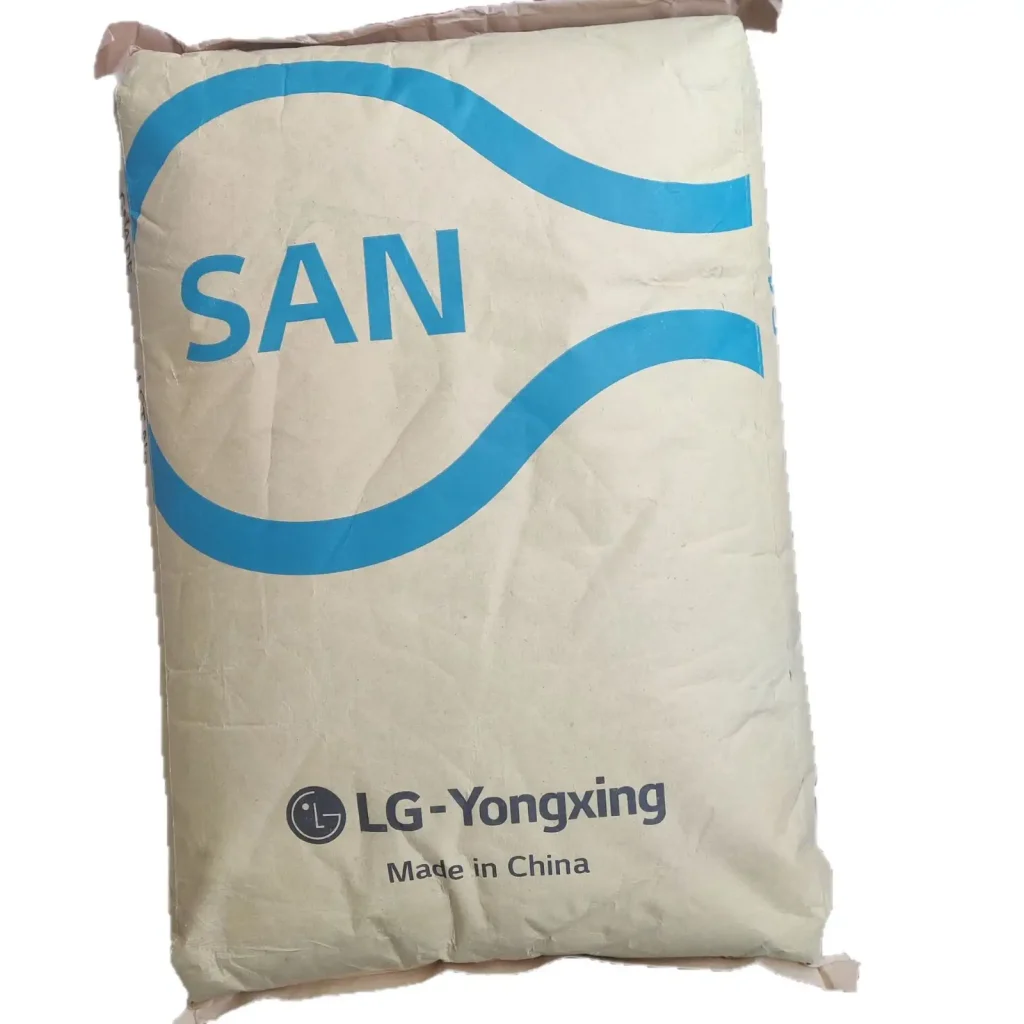
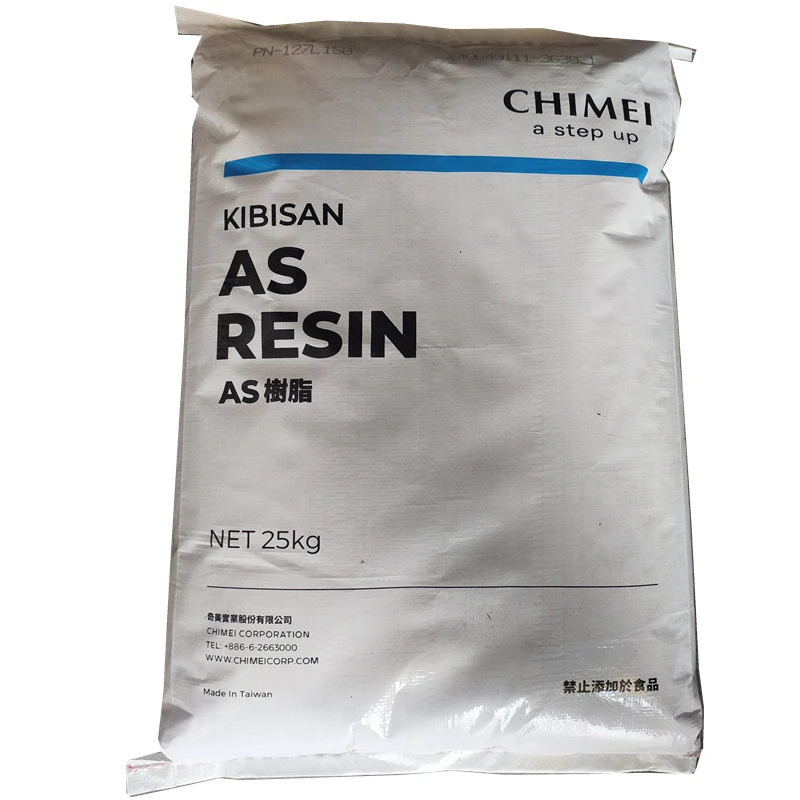
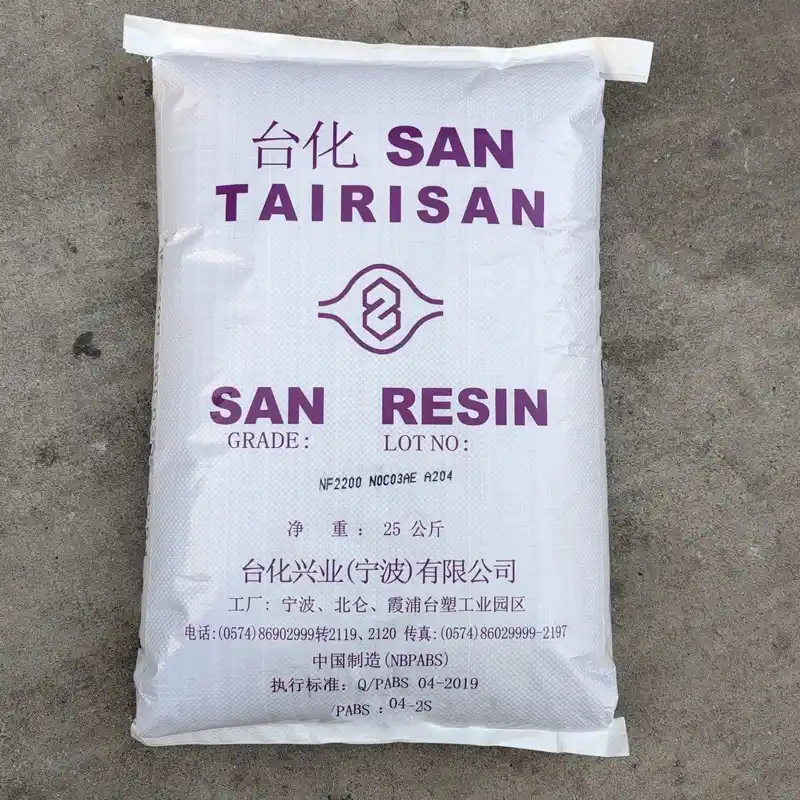
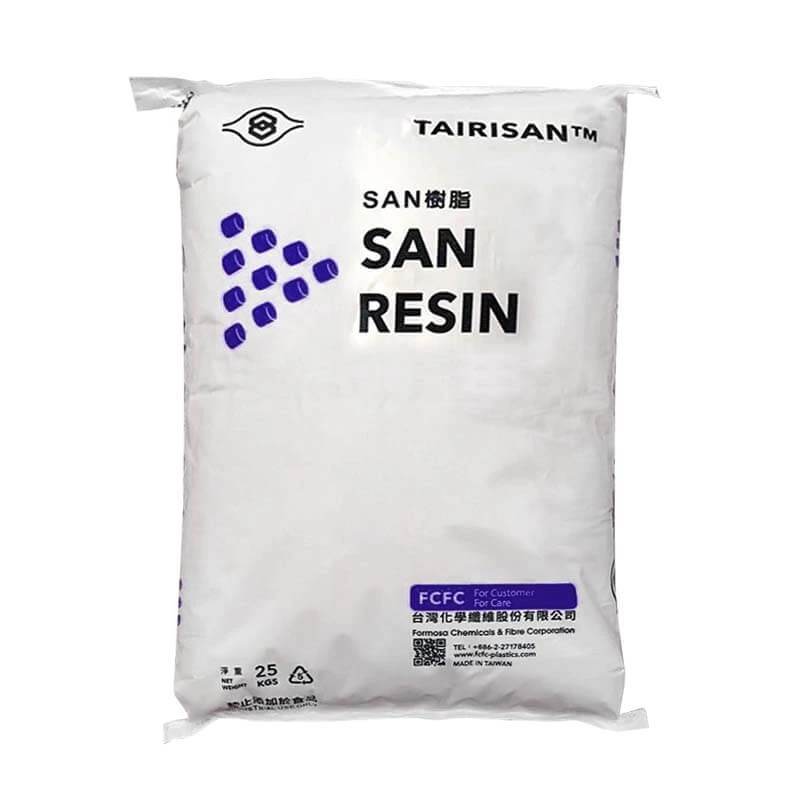
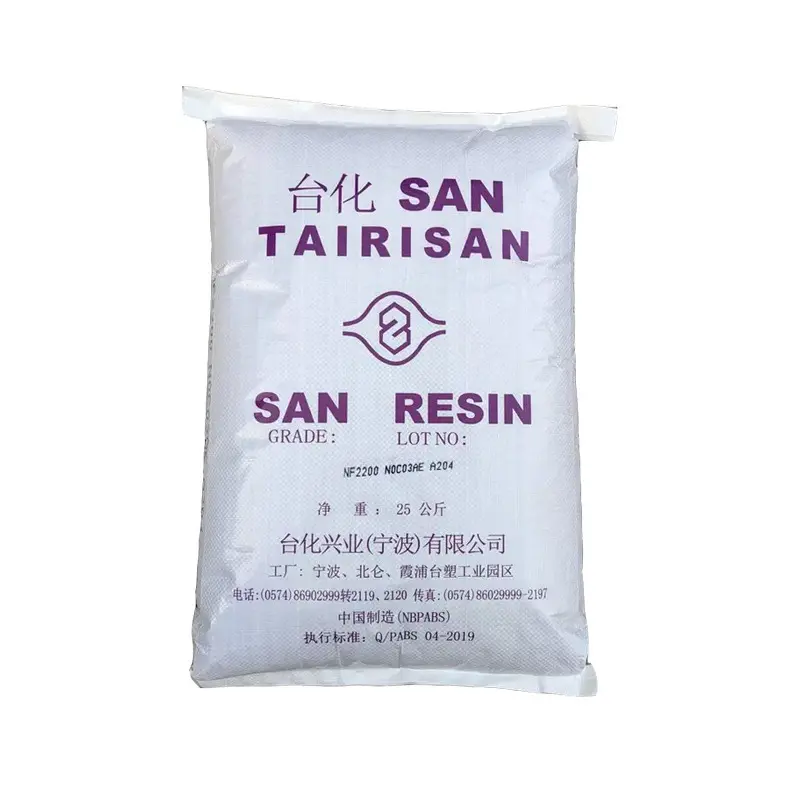
In the field of engineering plastics, Ningbo Formosa Plastics AS NV220F SAN Resin Plastic Raw Material (SAN resin) is a premium material that combines transparency, rigidity, and stable processing performance, widely used in injection molding applications. As a Styrene-Acrylonitrile Copolymer (SAN), NV220F offers excellent cost-performance balance and consistent quality among transparent plastics.
Key Selling Points:
High transparency and excellent surface gloss — ideal for products with high appearance requirements
Good rigidity and dimensional stability — ensures structural strength
Excellent flowability — suitable for complex and thin-wall injection molding
Technical Data Sheet (TDS)
| Property |
Typical Value |
Test Method |
Test Condition |
| Density |
1.08 g/cm³ |
ASTM D792 |
23°C |
| Melt Flow Rate (MFR) |
18 g/10min |
ASTM D1238 |
230°C / 2.16 kg |
| Tensile Strength |
65 MPa |
ASTM D638 |
50 mm/min |
| Notched Izod Impact |
2.5 kJ/m² |
ASTM D256 |
23°C |
| Heat Deflection Temperature (HDT) |
95°C |
ASTM D648 |
1.82 MPa |
Note: The above values are typical data for reference only. Actual performance may vary depending on processing conditions.
Key Applications
1. Automotive Industry
Transparent dashboard components
Radiator grille decorative parts
NV220F offers good rigidity and surface gloss, ideal for appearance parts
2. Electronics & Electrical
Transparent housings (e.g., display windows)
Appliance control panels
High transparency combined with excellent electrical insulation
3. Packaging Industry
Food containers (non-direct contact)
Cosmetic packaging
Superior appearance enhances product appeal
4. Household Products
Kitchen storage containers
Stationery items (e.g., pen holders)
Balanced cost and performance
Product Comparison
SAN vs ABS
| Comparison Aspect |
SAN (NV220F) |
ABS |
| Transparency |
High (transparent) |
Opaque |
| Impact Strength |
Medium |
High |
| Cost |
Lower |
Higher |
| Surface Gloss |
Excellent |
Good |
Conclusion: If transparency is critical, SAN is the better choice; for higher impact resistance, ABS is preferred.
SAN vs PP
| Comparison Aspect |
SAN |
PP |
| Rigidity |
High |
Medium |
| Transparency |
High |
Low |
| Heat Resistance |
Higher |
Medium |
| Cost |
Medium |
Low |
Conclusion: SAN is better for applications requiring appearance and rigidity, while PP is suitable for budget-sensitive projects.
Processing Guidelines
1. Drying Conditions (Drying Temp)
80–90°C for 2–4 hours
A dehumidifying dryer is recommended to prevent bubbles and silver streaks
2. Injection Temperature
Barrel temperature: 200–250°C
Nozzle temperature: 210–230°C
3. Mold Temperature
40–70°C
4. Processing Notes
Avoid prolonged high-temperature residence to prevent material degradation
Medium to high injection speed is recommended to improve surface gloss
Ensure uniform cooling to reduce internal stress
FAQ
Q1: Can NV220F SAN be used for food contact applications?
A: It is generally suitable for non-direct food contact applications. Compliance with local regulations (such as FDA or EU standards) should be verified.
Q2: Why do silver streaks or bubbles appear during processing?
A: This is mainly caused by excessive moisture content. Proper drying and the use of a dehumidifying dryer are recommended.
Q3: What is the difference between SAN and PS (Polystyrene)?
A: SAN offers higher strength, better heat resistance, and improved chemical resistance compared to PS, making it suitable for more demanding applications.
Q4: Is NV220F suitable for thin-wall products?
A: Yes, its good flowability (higher MFR) makes it ideal for complex structures and thin-wall injection molded parts.