Polyvinyl Chloride (PVC) is one of the most widely produced and consumed general-purpose synthetic resin materials globally. In modern industry and bulk commodity trade, PVC has become an indispensable foundational new material across numerous sectors such as construction, packaging, medical, and electrical/electronics due to its excellent chemical stability, corrosion resistance, durability, and high cost-effectiveness.
As a global B2B resin raw material buyer, compounding engineer, or supply chain specialist, gaining a deep understanding of the microstructure, physical properties, classifications, and safety of PVC is key to optimizing product formulations and controlling procurement costs. From the perspective of science and industrial application, this article will provide you with a comprehensive analysis of Polyvinyl Chloride (PVC).
Introduction to Polyvinyl Chloride
Polyvinyl Chloride is a thermoplastic high polymer synthesized from Vinyl Chloride Monomer (VCM) through a polymerization reaction under the action of an initiator. Its basic micro-chemical structural formula can be represented as:
-[CH2-CH(Cl)]n-
In the classification of plastic resins, PVC belongs to the five general-purpose plastics (the other four being PE, PP, PS, and ABS). From the perspective of raw material sources, the production of PVC primarily follows two technological routes:
- Carbide Method: This method mainly uses calcium carbide and coal as raw materials, which is commonly seen in regions rich in coal resources like China.
- Ethylene Method: This method uses ethylene cracked from petroleum as a raw material, representing the most mainstream and environmentally advantageous production process internationally.
Due to the high proportion of chlorine elements (approximately 57% of the total weight) in the PVC molecular chain, the material possesses inherent flame retardancy (the Limiting Oxygen Index, LOI, is typically greater than 45%). Additionally, it features a lower reliance on petroleum resources, giving it strong cost competitiveness in times of high oil prices.
Key Properties of Polyvinyl Chloride
To accurately apply PVC to different industrial fields, materials engineers must master its core physical and chemical property indicators. The following table details the core physical and thermal property parameters of standard general-purpose grade PVC resin:
Core Physical and Thermal Parameters Table
| Physical & Thermal Properties | Typical Value | Unit | Scientific Notes |
| Density | 1.35 – 1.45 | g/cm3 | Higher density than PE and PP, imparting higher substrate hardness and rigidity to the material. |
| Melting Point | 212 – 260 | °C | Strictly speaking, as an amorphous polymer, it has no sharp melting point; this range represents the viscous flow processing temperature zone. |
| Glass Transition Temperature (Tg) | 81 – 82 | °C | Beyond this temperature, the hard segments begin to soften. It can be significantly reduced by adding plasticizers. |
| Thermal Decomposition | > 140 | °C | The processing temperature zone is close to the decomposition temperature, so heat stabilizers must be added to the formulation. |
| Water Absorption | < 0.1 | % | Extremely low hygroscopicity, eliminating the need for strict drying before molding, unlike nylon. |
Key Physical Structure Features
- Amorphous Structure: Pure PVC resin exhibits a long-range disordered amorphous state microscopically, with very low crystallinity (typically less than 5%). This structure ensures good transparency for unpigmented pure PVC sheets.
- Electrical Insulation: The presence of chlorine atoms in the molecular chain results in a relatively high dielectric constant and dielectric loss, making it an excellent material for the insulating jackets of low- and medium-voltage cables.
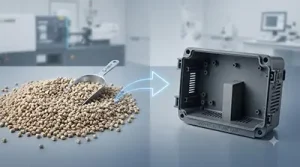
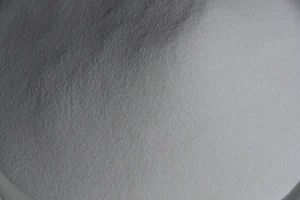
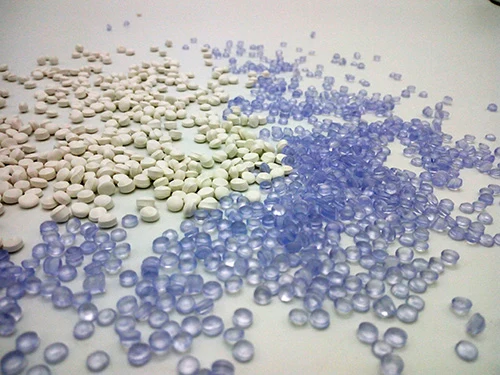
- Processing Sensitivity: Pure PVC begins to release hydrogen chloride (HCl) gas at 140 °C, leading to thermal degradation, whereas its melt processing temperature requires 160 °C – 200 °C. Therefore, in actual resin raw material trade, pure PVC resin powder cannot be directly fed into machinery; it must be compounded with stabilizers, lubricants, and processing additives into PVC pellets or compounds.
Types of Polyvinyl Chloride
Depending on the amount of plasticizers added to the formulation and the polymerization process utilized, polyvinyl chloride resins are industrially classified into three core categories:
uPVC / Rigid PVC
- Definition: PVC materials that contain no plasticizers or only a minimal amount (less than 10%), also known as uPVC (Unplasticized PVC).
- Features: High density, rigid texture, extremely high mechanical strength, and excellent dimensional stability and weatherability.
- Typical Applications: Construction drainage pipes, vinyl door and window profiles, rigid PVC sheets, etc.
PVC-P / Flexible PVC
- Definition: Modified materials created by incorporating a large amount of plasticizers (typically between 30% and 70%, such as phthalate esters like DOTP, DINP, or bio-based plasticizers) into pure resin.
- Features: Possesses rubber-like flexibility, excellent elongation, flex resistance, and outstanding low-temperature flexibility.
- Typical Applications: Wire and cable outer sheaths, PVC flooring, automotive interior soft trim, inflatable toys, and medical infusion bags.
CPVC / Chlorinated PVC
- Definition: A high polymer material produced by further chlorinating pure PVC resin, raising its chlorine content from 57% to over 63% – 69%.
- Features: Significantly elevated heat deflection temperature (capable of withstanding high temperatures of 95 °C – 100 °C), with exponentially enhanced mechanical strength and chemical corrosion resistance.
- Typical Applications: Industrial pipe networks for transporting hot liquids, strong acids, and alkalis, as well as fire sprinkler piping systems.
Is Polyvinyl Chloride Toxic?
Whether PVC is safe or toxic is a paramount concern for global buyers and end consumers. From the perspectives of polymer science and standard testing compliance (such as RoHS, REACH, and FDA), it requires a scientific and rational distinction:
Core Conclusion: The pure polyvinyl chloride (PVC) resin polymer itself is completely non-toxic, inert, and stable.
Safety concerns do not stem from the PVC resin itself, but rather from trace residues of monomers or improper additives incorporated during processing. The main risk areas involve the following two aspects:
- Migration of Traditional Plasticizers (Phthalate Additives): In the past, phthalate plasticizers such as DEHP and DBP were widely used in flexible PVC production. These small-molecule additives easily undergo micro-migration and can disrupt the human endocrine system. The modern solution for exporting to markets with strict compliance mandates, such as the Middle East, Europe, and the United States, involves raw material manufacturers shifting entirely to non-toxic, green plasticizers (such as DOTP, eco-friendly acetyl tributyl citrate ATBC, epoxidized soybean oil, etc.), which fully pass medical-grade and food-grade certifications.
- Traditional Heat Stabilizers (Heavy Metal Lead): In the past, rigid PVC pipes often utilized inexpensive lead salts as stabilizers. Modern chemical industries have fully popularized eco-friendly calcium-zinc stabilizers (Ca-Zn Stabilizers) or organotin stabilizers to resolve this issue.
Modern International Compliance Standards
Today’s eco-friendly PVC raw materials fully comply with EU RoHS 2.0, REACH regulations, and US FDA food contact specifications. As long as procurement is conducted through reputable Chinese or international manufacturers with comprehensive quality control, eco-friendly grade PVC is safe and reliable.
Polyvinyl Chloride vs Vinyl: Markets & Applications
In international trade inquiries, many overseas buyers frequently use the terms PVC and Vinyl interchangeably. In fact, they share a relationship of inclusion and sub-inclusion:
- Vinyl: This is a broad family of organic chemicals, generally referring to all polymers containing a vinyl group (-CH=CH2), including PVA, PVB, EVA, etc.
- PVC: This is merely the most well-known and widely applied specific branch within the Vinyl family. In everyday consumer markets in Europe and America, people colloquially refer to PVC leather or PVC flooring directly as “Vinyl.”
Core Application Fields of PVC and Reasons for Use
Due to its highly adjustable modification potential, polyvinyl chloride resin occupies an important position in the following mainstream sectors:
Pipes & Profiles
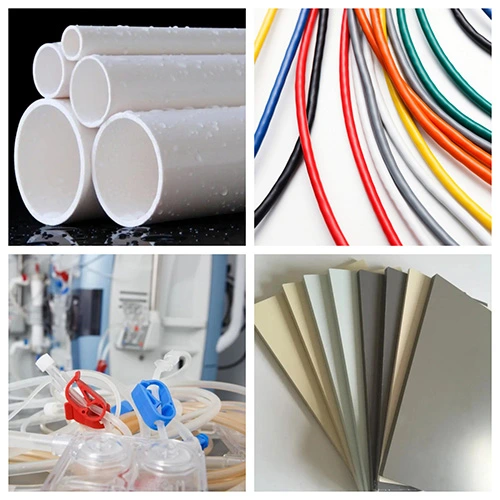
Rigid uPVC is extensively utilized in building drainage pipe networks, underground water supply pipelines, and vinyl doors and windows. This is mainly because rigid PVC features high rigidity and superior corrosion resistance, meaning it will not be easily corroded by soil acidity, alkalinity, or moisture when buried underground, resulting in a long service life. Concurrently, its thermal conductivity is extremely low, providing excellent energy-saving insulation when utilized as window and door profiles.
Wire & Cable Insulation
Flexible modified PVC is commonly used for the insulation layers and outer protective sheaths of low- and medium-voltage wires and cables. This is primarily due to its electrical characteristics of high insulation resistance and high breakdown voltage. Furthermore, because of its unique chlorine-rich molecular structure, PVC possesses inherent self-extinguishing flame retardancy, effectively enhancing the safety of architectural electrical systems.
Medical Devices
Medical-grade flexible PVC is regularly deployed to manufacture blood bags, dialysis tubing, and medical face masks. The core reason for utilizing PVC is its excellent biocompatibility, high transparency, and superior flexibility. It can also withstand high-pressure steam sterilization, making it a highly cost-effective and safe medical material.
Vinyl Flooring & Automotive
PVC resin serves as the primary base material for manufacturing SPC flooring, LVT flooring (luxury vinyl tile), and automotive interiors. This relies heavily on the extremely high wear resistance, waterproofing, and dimensional stability of PVC. In the automotive industry, it is also widely used for instrument panel skins and underbody stone-guard coatings, demonstrating outstanding weather resistance.