In the modern polymer processing industry, High Impact Polystyrene (HIPS) is one of the most representative rigid sheet raw materials utilized in the thermoforming process. From a rheological and thermodynamic perspective, HIPS exhibits an exceptionally wide processing window and excellent melt behavior.
As technical professionals in the resin raw material field, conducting an in-depth exploration of molecular structure evolution, thermodynamic deformation mechanisms, core processing parameter control, and scientific solutions for common deformation defects during HIPS thermoforming serves as the theoretical cornerstone for achieving high-precision, low-internal-stress molding.
Microstructural Phase and Rheological Mechanisms of HIPS
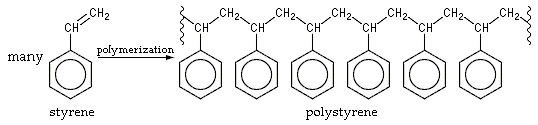
The thermoforming adaptability of HIPS fundamentally depends on its unique microscopic two-phase heterogeneous structure. It consists of a continuous polystyrene (PS) matrix phase and a dispersed polybutadiene rubber (BR) particle grafted phase.
Melt Strength and Tensile Behavior
As a typical amorphous polymer, HIPS does not possess a fixed melting point; instead, it exhibits a broad softening temperature range within the high-elastic state. When the sheet is heated above its glass transition temperature (approximately 95°C – 100°C), the molecular chains of the PS matrix disentangle and begin to move:
- Supporting Role of the Rubber Phase: The dispersed grafted rubber particles act as physical crosslinking points within the melt, imparting exceptionally high melt strength to HIPS during high-temperature stretching.
- Strain Hardening Effect: During thermoforming processes involving deep-draw vacuuming or high draw ratios, the HIPS melt demonstrates distinct strain hardening behavior. This means that in localized areas where the sheet thins and the strain rate accelerates, molecular chain orientation causes a localized increase in viscosity, thereby automatically transferring the tensile stress to the surrounding thicker areas. This characteristic rheologically guarantees excellent wall thickness uniformity in HIPS, making it highly resistant to localized thinning and rupture.
Thermodynamic Processing Window and Parameter Matrix of HIPS Thermoforming
Accurate control of the thermoforming temperature matrix is central to maintaining the elastic behavior of the HIPS melt and avoiding severe anisotropic deformation. The thermoforming process primarily comprises three kinetic stages: sheet radiant heating, vacuum/pressure tensile molding, and cooling solidification.
Standard Technical Parameter Table for Industrial HIPS Thermoforming
| Processing Zone | Standard Value Range | Physical Unit | Rheological & Thermodynamic Control Keypoints |
| Optimum Forming Temperature Range | 150 – 180 | °C | Core sheet temperature. Within this zone, melt elasticity and viscous flow achieve an optimal balance. |
| Glass Transition Temperature (Tg) | 95 – 100 | °C | The boundary between material rigidity and the high-elastic state. Component temperature must drop safely below this point during demolding. |
| Maximum Allowable Sheet Draw Ratio | 3.5:1 – 4.5:1 | — | Measures deep-draw molding limits; depends on grafted rubber content and particle size distribution. |
| Recommended Mold Design Temperature | 45 – 65 | °C | Regulates contact cooling rates. Excessively low mold temperatures lead to high frozen-in internal stress, while excessively high temperatures prolong the cycle time. |
| Infrared Radiant Heater Set Temperature | 220 – 280 | °C | Input source for surface heat flux on the sheet. Necessary to prevent surface shear degradation caused by excessive radiant heat flux. |
Orientation Stress and Relaxation Control During Thermoforming
Because thermoforming involves large forced high-elastic deformations in either uniaxial or biaxial directions, HIPS molecular chains orient highly along the direction of deformation under the influence of mold tensile forces (Molecular Orientation). When this oriented conformation is rapidly cooled by the mold surface, it becomes “frozen” inside the component, creating macroscopic residual internal stress.
Anisotropic Shrinkage Rate
Although HIPS is an amorphous material and its relaxation shrinkage rate is significantly lower than that of crystalline plastics (such as PP or PE), the presence of orientation stress still leads to anisotropic shrinkage behavior. Typically, the longitudinal shrinkage parallel to the extrusion direction is approximately 0.4% – 0.7%, whereas the transverse shrinkage perpendicular to the extrusion direction is lower, at about 0.2% – 0.4%.
To minimize the overlapping effects of residual longitudinal orientation stress from sheet extrusion and secondary orientation stress from thermoforming, it is imperative to ensure completely uniform heating across all zones of the sheet during the heating phase. This allows the molecular chains hardened during extrusion to undergo sufficient relaxation.
Rheological Causes and Technical Countermeasures for Common HIPS Thermoforming Defects
In continuous industrial thermoforming production, slight drifts in processing parameters often lead to defects in the macroscopic geometric structure of the components. The causes and countermeasures for two core defects are analyzed below from a polymer materials science perspective:
Surface Blistering and Pitting
- Rheological Cause: Although the equilibrium water absorption rate of HIPS itself is extremely low (typically less than 0.1%), surface pitting or internal blistering can occur if residual volatile monomers (such as trace styrene monomer) within the matrix resin or micro-moisture adsorbed on the sheet surface exceed thresholds. When entering the heating zone at 150°C – 180°C, the rapid rise in localized vapor pressure causes gases to break through the constraints of the high-elastic molecular chains. This creates expanding bubbles on the surface or inside the sheet, which leave pits upon cooling, destroying both macroscopic optical and mechanical properties.
- Technical Countermeasure: Strictly control the devolatilization process during sheet extrusion, and pre-dry the sheets prior to thermoforming if necessary (recommended drying at 70°C – 75°C for 1 – 2 hours).
Localized Thinning and Blushing
- Rheological Cause: When the thermoforming temperature is excessively high and approaches the viscous flow transition temperature zone of HIPS (greater than 190°C), intense slipping between molecular chains occurs, causing a sharp drop in melt strength and resulting in a fluid-like sagging phenomenon. Subsequent mold stretching causes localized over-thinning because the material loses its strain hardening capability. In the severely thinned flange areas, the two-phase interface undergoes extreme tensile shear, causing dewetting between the rubber phase particles and the PS matrix. This forms micro-crazes, which macroscopically manifest as stress blushing.
- Technical Countermeasure: Precisely lower the radiant energy of the heating panels, utilize multi-zone infrared micro-adjustments to control sheet temperature, or introduce an air-assist cushion to uniformize the strain rate across all areas.