Introduction: In the global commodity plastics market, General Purpose Polystyrene (GPPS) has long held a significant position due to its exceptional transparency, rigidity, and cost-effectiveness. From the professional perspective of a resin raw material supplier, this article provides an in-depth analysis of the chemical characteristics of GPPS and its core uses in industrial manufacturing, offering a scientific reference for B2B buyers and processing enterprises.
Overview of GPPS Material Characteristics
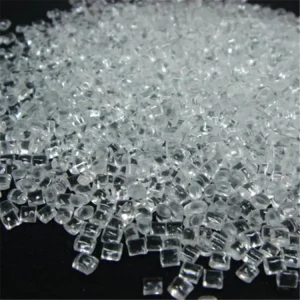
GPPS, commonly known as “crystal benzene” or “crystal material,” is a thermoplastic resin polymerized from styrene monomer via free radical polymerization. From a microstructural standpoint, it is an amorphous polymer, which endows it with the following key physical properties:
- Optical Performance: Light transmittance can reach 88%–92%, with a high refractive index and excellent surface gloss.
- Processability: It features a wide Melt Flow Rate (MFR) range, making it easy to process via injection molding, extrusion, and thermoforming, along with low shrinkage and good dimensional stability.
- Chemical Inertness: It is resistant to water, dilute acids, and alkalis, though it is prone to swelling or dissolving in aromatic and chlorinated hydrocarbon solvents.
It should be noted that GPPS is a brittle material with low impact strength and moderate heat resistance (heat distortion temperature typically ranges between 70℃ and 90℃), which must be emphasized during material selection.
Primary Industrial Uses of GPPS Plastic
Based on the aforementioned properties, GPPS is widely utilized in non-structural components that demand high standards for transparency, rigidity, and appearance:
Packaging Industry (Largest Application Field)
GPPS is one of the premier materials for food-contact packaging. Utilizing its transparent and visible characteristics, it is commonly used to produce:
- Food Containers: Yogurt cups, jelly cups, disposable tableware, fruit trays, and deli boxes.
- Electronic Packaging: CD/DVD jewel cases, blister inserts for high-end electronics, and transparent folding boxes.
- Cosmetic Packaging: Cosmetic bottle caps, perfume bottle bases, and transparent display stands.

Optical and Lighting Accessories
Although GPPS is not a high-performance optical material, it performs exceptionally well in general optical and decorative sectors:
- Lighting Fixtures: LED lamp shades, neon light troughs, and indoor decorative lamp covers.
- Optical Components: Non-precision optical lenses, instrument panel transparent windows, and advertising signboards.
Consumer Goods and Stationery
- Office Stationery: Transparent file folders, rulers, pen barrels, and tape cores.
- Household Goods: Hangers, combs, toothbrush handles, and non-load-bearing parts for various toys.
Technical Limitations and Alternative Solutions
In practical B2B procurement and production, engineers frequently encounter cracking issues caused by the brittleness of GPPS. Depending on specific operational requirements, the following alternative or modified solutions are recommended:
| Application Scenario Pain Points | Recommended Alternative / Modification Solution |
| Requires high impact resistance (e.g., appliance housings, refrigerator inner liners) | Switch to HIPS (High Impact Polystyrene), which significantly enhances toughness through rubber toughening. |
| Requires high temperature resistance (e.g., microwave food containers, coffee maker components) | Select PP (Polypropylene) or SAN (Styrene-Acrylonitrile Copolymer). |
| Requires chemical corrosion resistance (e.g., contact with grease or cleaning agents) | Consider ABS or engineering plastics; or apply a multi-layer co-extrusion composite treatment to GPPS. |
Procurement Recommendations for Global Buyers
For enterprises engaged in the import and export trade of resin raw materials, procurement of GPPS should focus on the following indicators:
- MFR Matching: Select according to the processing technology. Injection molding of thin-walled products calls for high-MFR grades (such as above 20g/10min), whereas sheet extrusion requires low MFR to ensure strength.
- Volatile Content Control: Residual styrene monomer content in high-quality GPPS should be controlled below 1000 ppm to minimize processing odors and comply with environmental regulations (such as EU REACH).
- Origin and Brand: Raw materials from different origins vary in color difference control and batch stability. Internationally renowned brands (such as INEOS, TotalEnergies) and Chinese mainstream petrochemical plants (such as ChiMei Zhenjiang, CITIC Guoan) each possess distinct physical property focuses, which should be selected based on the target market positioning.
Conclusion: As a mature petrochemical product, the market value of GPPS lies in precise application matching. Understanding its “transparent yet brittle” nature assists B2B clients in optimizing product structures and reducing scrap rates. To obtain detailed Technical Data Sheets (TDS) or compliance certificates for specific applications, direct communication with raw material suppliers equipped with supply chain integration capabilities is recommended.