In the development of precision plastic products, General Purpose Polystyrene (GPPS) is often limited in complex structural designs due to its high brittleness. However, MW-1-321, introduced by Denka (Japan), breaks the traditional conflict between optical transparency and mechanical processability through precise molecular weight distribution control.
This article provides an in-depth exploration of the technical parameters of this grade from a materials science perspective and analyzes its performance in specific industrial environments to provide a selection reference for R&D personnel.
Physical Mechanisms of Optical Performance
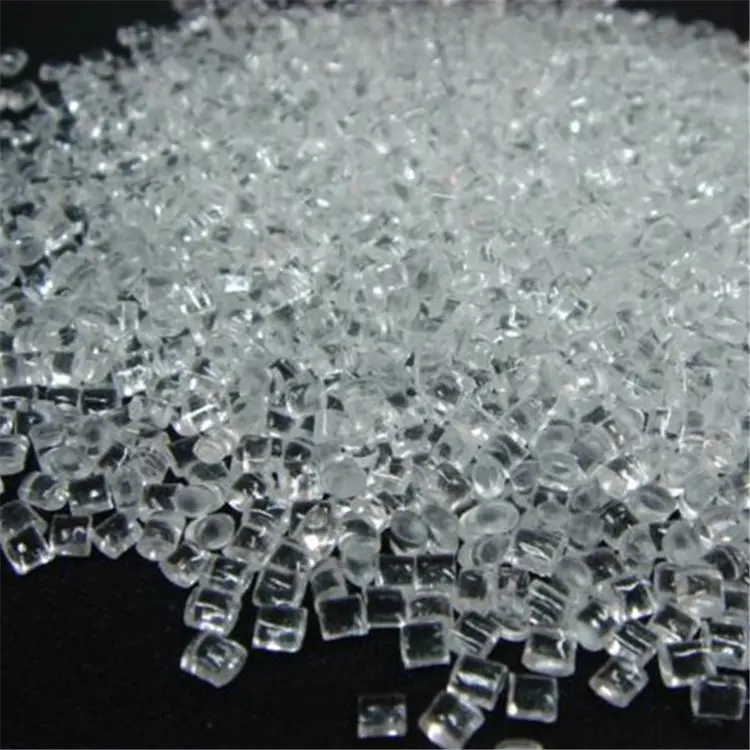
The most prominent feature of Denka MW-1-321 is its exceptional visible light transmittance. According to ASTM D1003 testing standards, its transparency consistently reaches over 90%.
From a molecular structure standpoint, MW-1-321 maintains strict control over monomer purity during the polymerization process, significantly reducing microscopic impurities within the molecular chains. This high level of purity not only minimizes light scattering but also results in an extremely low Yellowness Index. For transparent electronic packaging (such as IC carrier tapes) that requires multi-layer stacking or thick-walled designs, this optical consistency is critical to ensuring the pass rate of AOI (Automated Optical Inspection) systems for the end product.
Rheological Behavior and Processing Window
The greatest challenge for engineers when processing GPPS is achieving sufficient flowability to fill micro-molds while maintaining physical strength.
Balance of Melt Flow Rate (MFR)
The MFR of MW-1-321 is measured at 8.5 g/10min under 200°C / 5.0kg conditions. This medium-high flowability setting allows for rapid mold filling at lower injection pressures. This not only reduces mold wear but, more importantly, minimizes residual stress within the part, thereby improving the inherent cracking tendency of GPPS materials.
Temperature Sensitivity of Viscosity
The grade exhibits stable shear-thinning behavior between 190°C and 230°C. This wide processing window means that when producing complex parts with uneven wall thickness, the material can maintain a uniform shrinkage rate (typically between 0.4% – 0.7%), ensuring that the final product’s dimensional tolerances remain within a minimal range.
Mechanical Strength and Stress Control
Although GPPS is categorized as a brittle material, MW-1-321 has been fine-tuned in its formulation to enhance its Flexural Strength.
Flexural Modulus: Reaching 3,100 MPa, this provides thin-walled parts with sufficient rigidity to resist deformation when subjected to external stacking pressure.
Stress Whitening Protection: By optimizing mold temperature control during processing (recommended 30°C – 50°C), an orderly arrangement of molecular chains can be further induced. This effectively avoids stress whitening marks typically generated at the ejector pins during part removal.
Industrial Compliance and Supply Chain Expertise
In a landscape of increasing technical barriers in international trade, the chemical compliance of a material is as vital as its physical indicators.
As a deeply rooted plastic resin material wholesaler in china, ZiJun Plastics emphasizes that the export of MW-1-321 must be accompanied by detailed TDS (Technical Data Sheets), MSDS (Material Safety Data Sheets), and compliance certifications such as REACH/RoHS. This comprehensive technical backing serves as a core guarantee for manufacturing enterprises to navigate inspections in overseas markets.