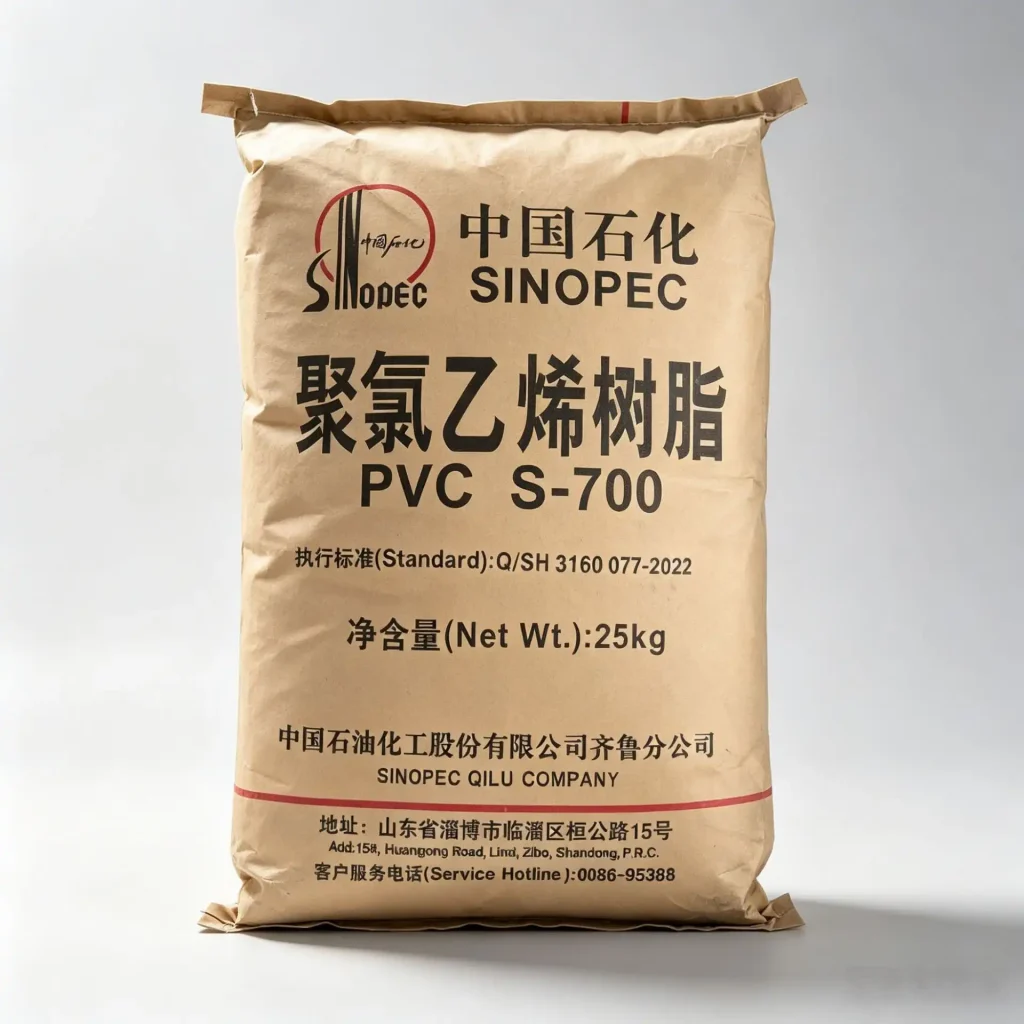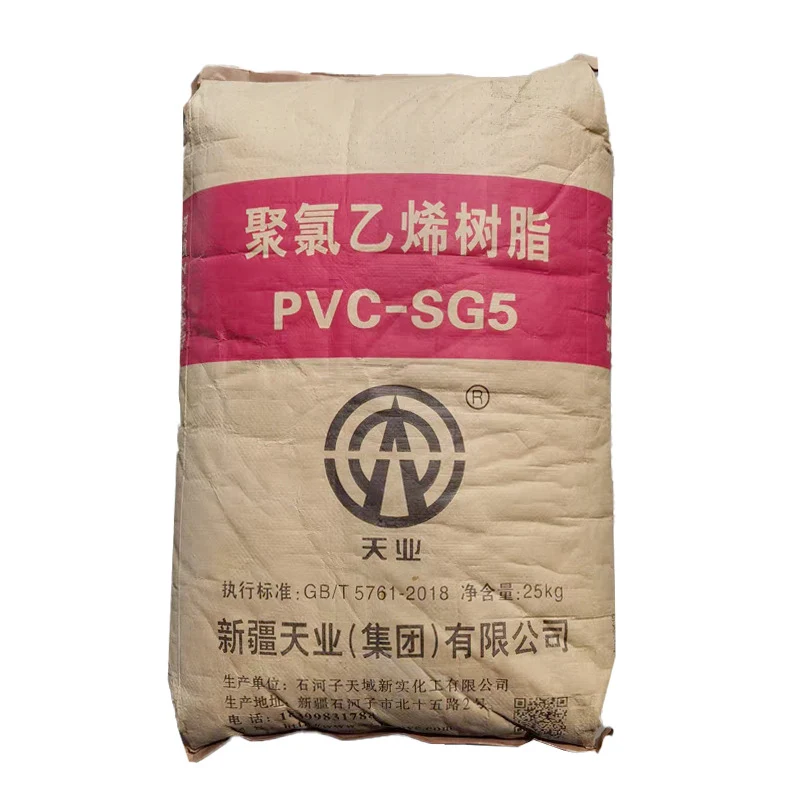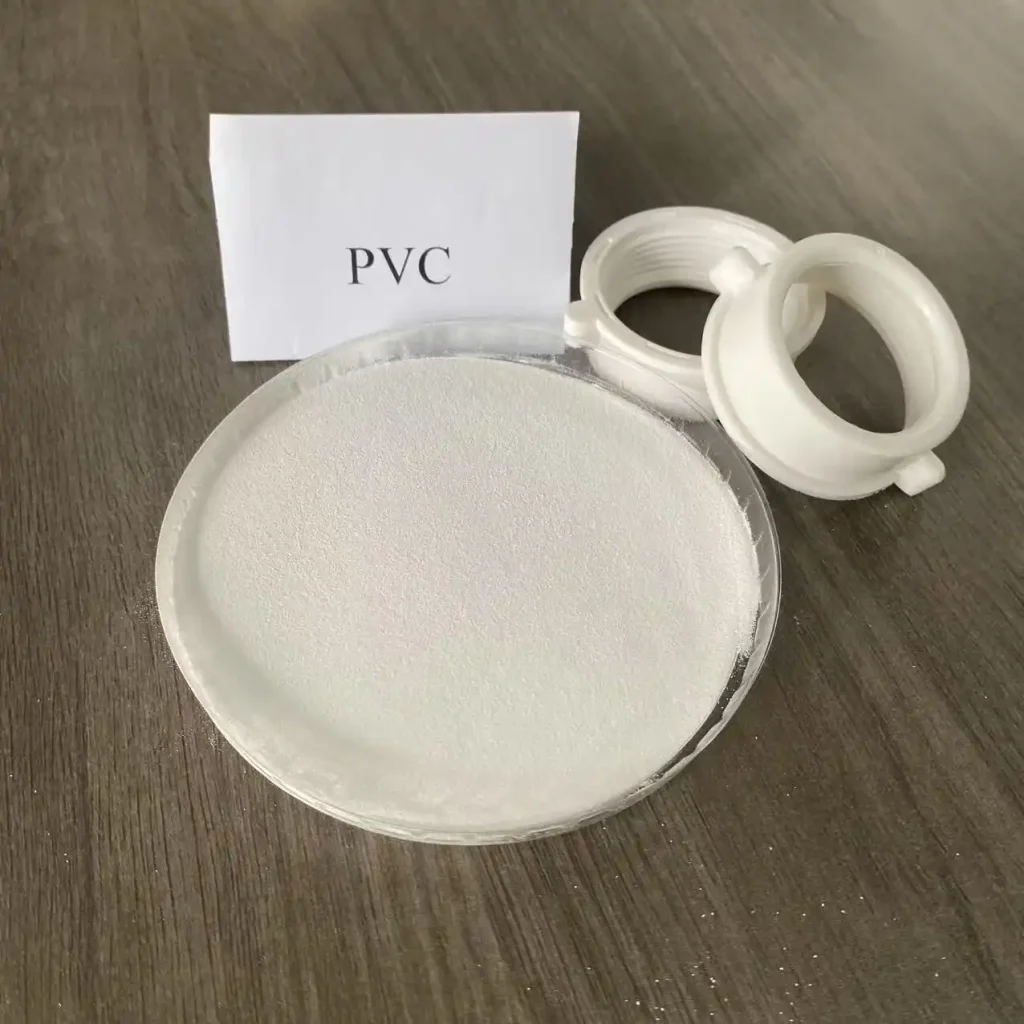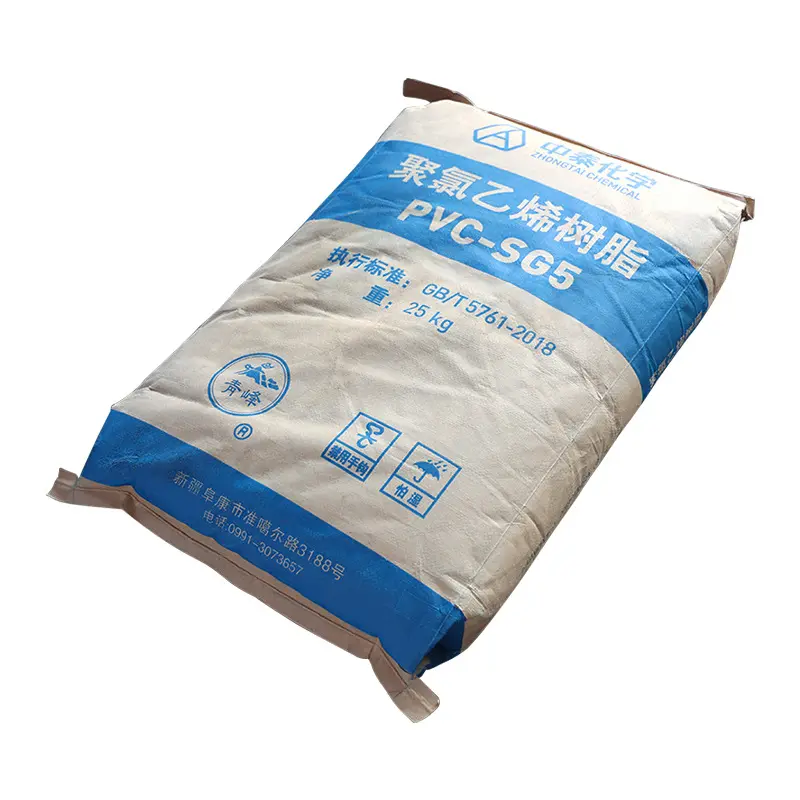
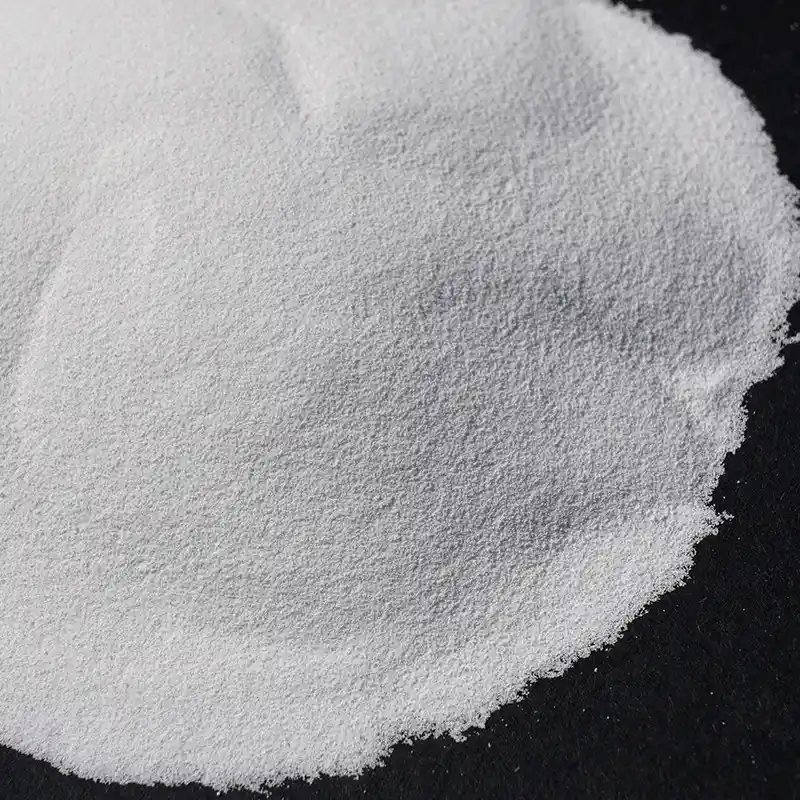
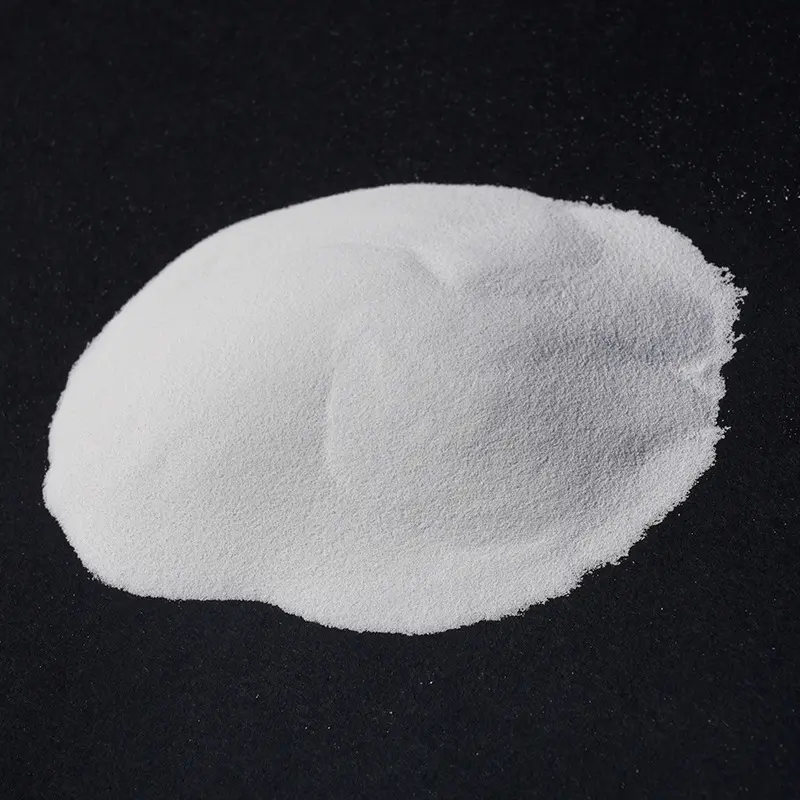
PVC Resin SG5 is a suspension-grade polyvinyl chloride with a K-value range of 65-67. It features excellent thermal stability, high mechanical strength, and good processing performance. This grade is widely used in the production of rigid pipes, window profiles, panels, and various construction materials. Technical Data Sheets (TDS) are available.
| Bulk Density | 0.45 – 0.55 g/cm³ |
|---|---|
| Volatile Content | ≤ 0.40% |
| Residue on Sieve | ≤ 0.25% |
| Plasticizer Absorption | ≥ 19 g/100g |
| Izod Notched Impact | ≥ 5 kJ/m² |
Note: See the product description for additional technical specifications
PVC Resin SG5 (K65 / K66 / K67 Grade) is a general-purpose suspension Polyvinyl Chloride (PVC) resin, widely used in pipes, profiles, films, and cables. It offers excellent processing performance and stable physical properties, making it one of the most commonly used plastic raw materials in industrial manufacturing.
Key Highlights:
Excellent processability, suitable for various forming methods (extrusion / injection molding)
Good mechanical strength and dimensional stability for long-term use
Stable supply, supporting bulk purchase and global export
| Property | Value | Test Method | Test Condition |
| K Value | 65 / 66 / 67 | ISO 1628 | – |
| Bulk Density | 0.45 – 0.55 g/cm³ | ASTM D1895 | Room Temperature |
| Volatile Content | ≤ 0.40% | ASTM D3030 | 105°C |
| Residue on Sieve | ≤ 0.25% | ASTM D1921 | 40 mesh sieve |
| Whiteness | ≥ 80 | ASTM E313 | – |
| Plasticizer Absorption | ≥ 19 g/100g | ASTM D3367 | – |
| Tensile Strength | ≥ 45 MPa | ASTM D638 | 23°C |
| Notched Impact Strength | ≥ 5 kJ/m² | ISO 179 | 23°C |
| Vicat Softening Temp | ≥ 75°C | ASTM D1525 | 1kg load |
Note: The K value (K65-K67) represents the molecular weight range of PVC. Higher values indicate better mechanical performance but slightly higher processing difficulty.
PVC SG5, a medium-polymer resin, has a wide range of applications across industries:
Water supply and drainage pipes (PVC-U Pipes)
Electrical conduits
Window profiles
Advantage: Good rigidity, corrosion resistance, long service life
Agricultural films
Flexible packaging films
Advantage: Good transparency and flexibility (requires plasticizer)
Cable sheathing
Advantage: Excellent insulation and flame-retardant properties
Pipe fittings
Industrial components
Advantage: Moderate flowability, good dimensional stability
| Comparison | SG3 | SG5 | SG8 |
| K Value | Low (~60) | Medium (65-67) | High (68+) |
| Molecular Weight | Low | Medium | High |
| Processing Difficulty | Easy | Moderate | Difficult |
| Mechanical Strength | General | Good | Excellent |
| Typical Application | Films | Pipes / Profiles | High-strength parts |
Conclusion: SG5 provides the best balance between performance and processability.
| Comparison | PVC | PE |
| Cost | Medium | Low |
| Rigidity | High | Low |
| Heat Resistance | Better | General |
| Corrosion Resistance | Excellent | Excellent |
| Applications | Pipes, cables | Films, containers |
Conclusion: PVC is more suitable for structural applications, while PE is better for flexible products.
Processing temperature: 160 – 190°C
Mold temperature: 30 – 60°C
Screw speed: 20 – 60 rpm
Barrel temperature: 170 – 200°C
Mold temperature: 20 – 50°C
Injection pressure: 60 – 120 MPa
Add heat stabilizers to prevent thermal degradation
Add plasticizers (e.g., DOP) as needed to adjust flexibility
PVC is heat-sensitive; avoid prolonged high-temperature residence
Use dehumidifying equipment to control moisture
Ensure proper venting during processing to prevent bubbles
1. What is the difference between PVC SG5 and SG3?
SG5 has a higher K value and molecular weight, offering better mechanical strength, suitable for pipes and profiles; SG3 is more suitable for films.
2. Does PVC SG5 require drying?
Generally not required, but if storage humidity is high, short-term drying at 60–80°C is recommended to improve processing stability.
3. Is PVC SG5 suitable for injection molding?
Yes. SG5 has good flowability and molding stability, suitable for pipe fittings and industrial components.
4. Is PVC SG5 environmentally friendly?
PVC itself is recyclable. Proper use of stabilizers and additives ensures compliance with RoHS or REACH standards.
Submit your inquiry today and receive a professional competitive price tailored to your project requirements.