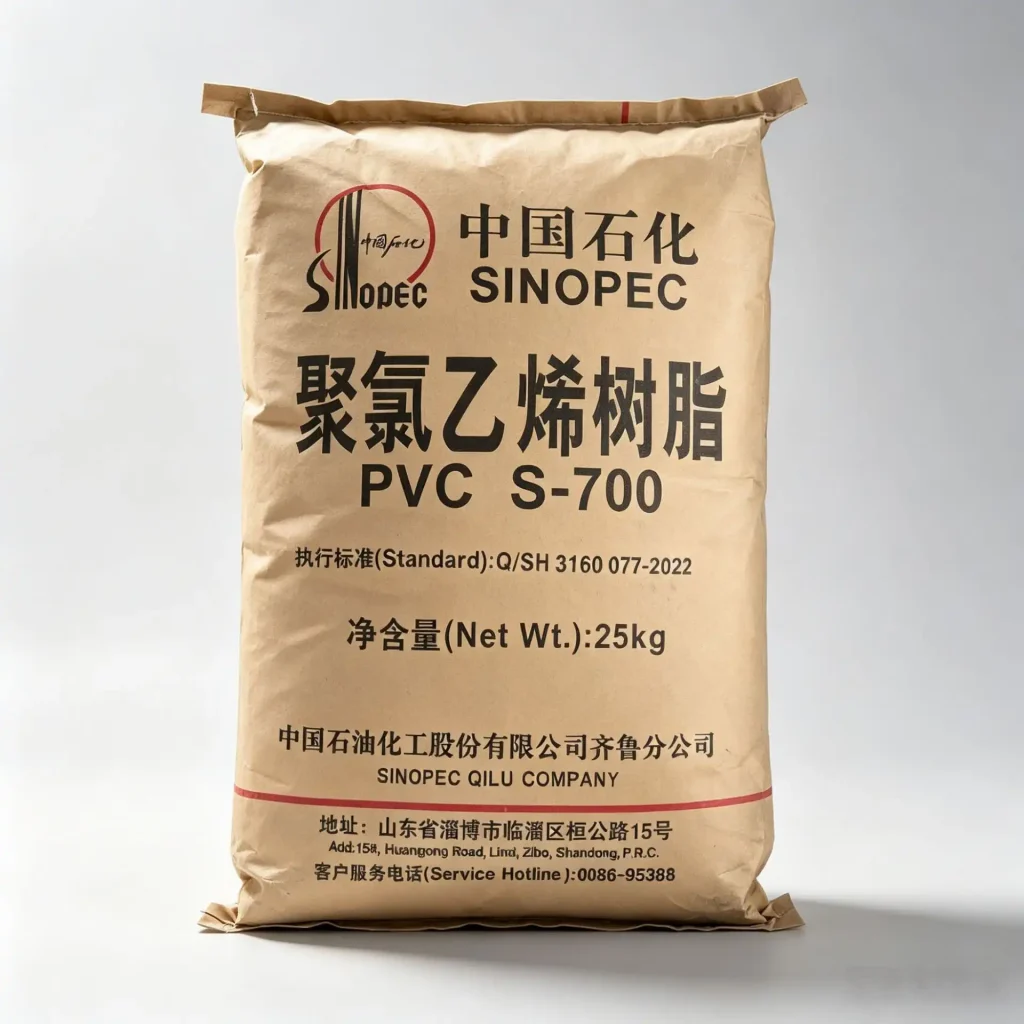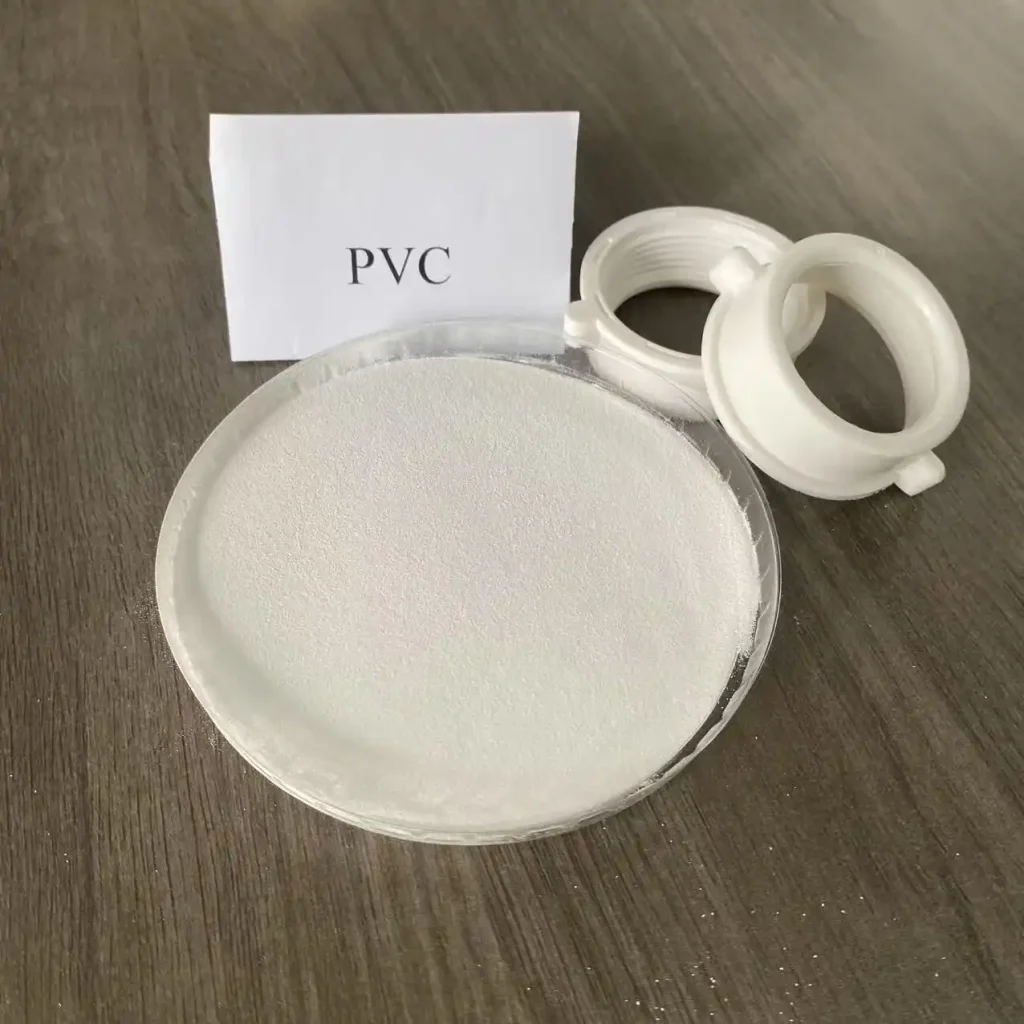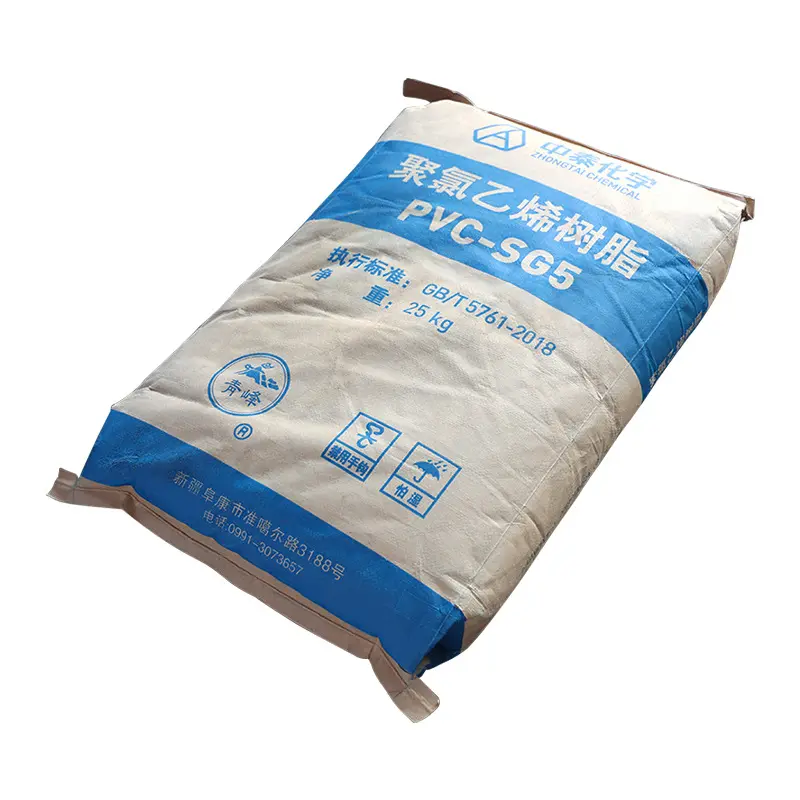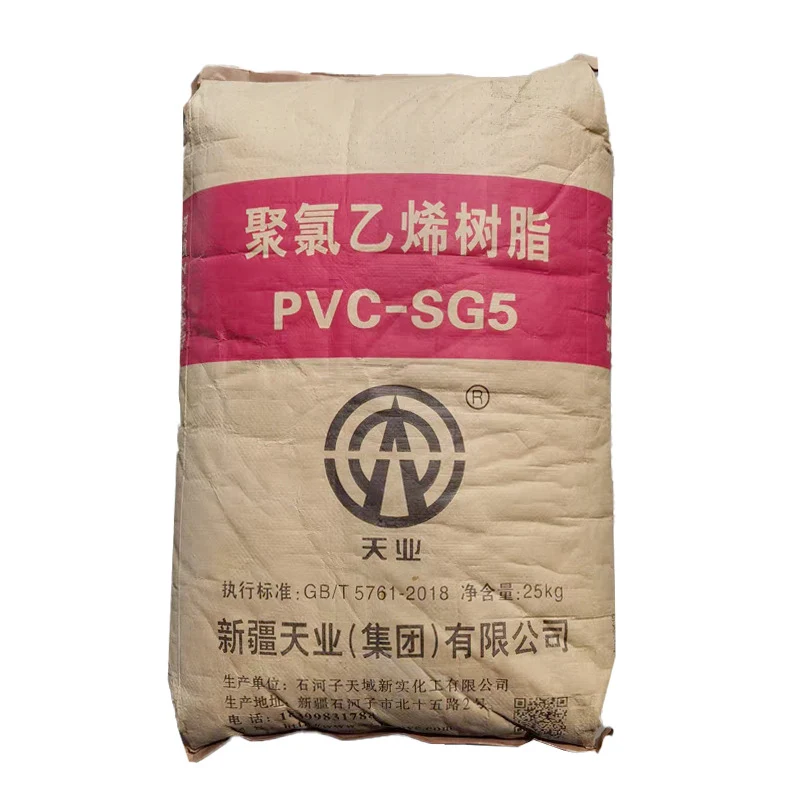
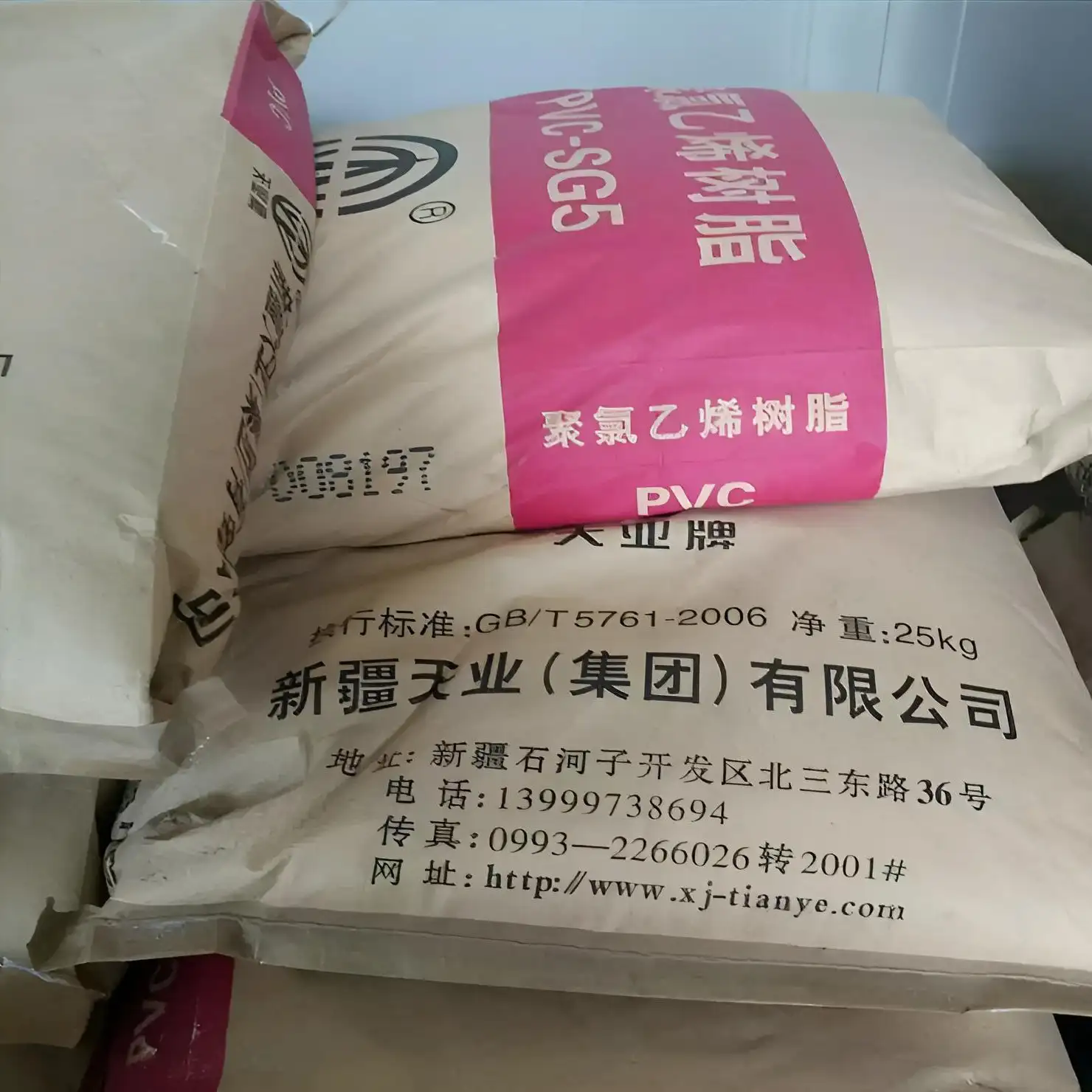
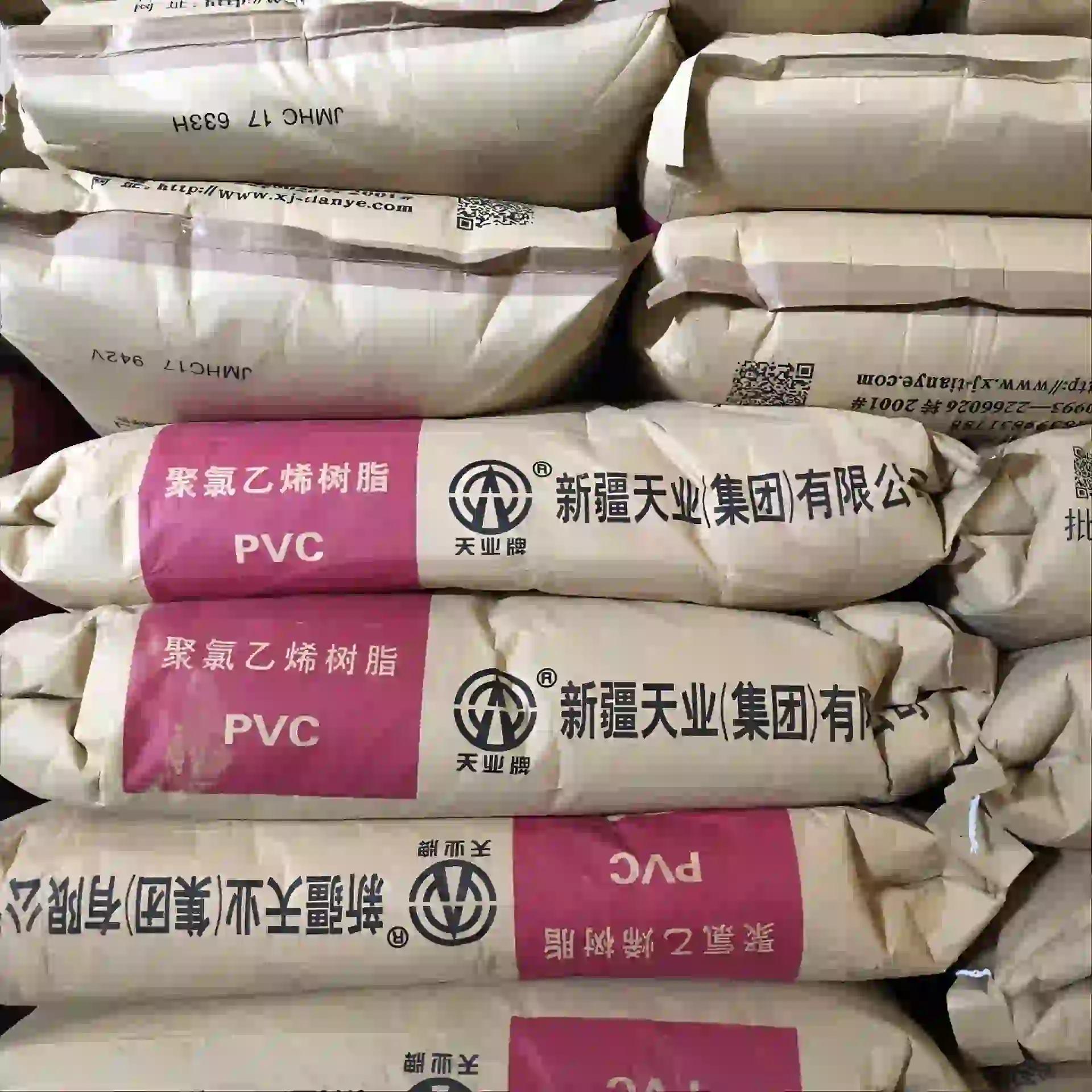
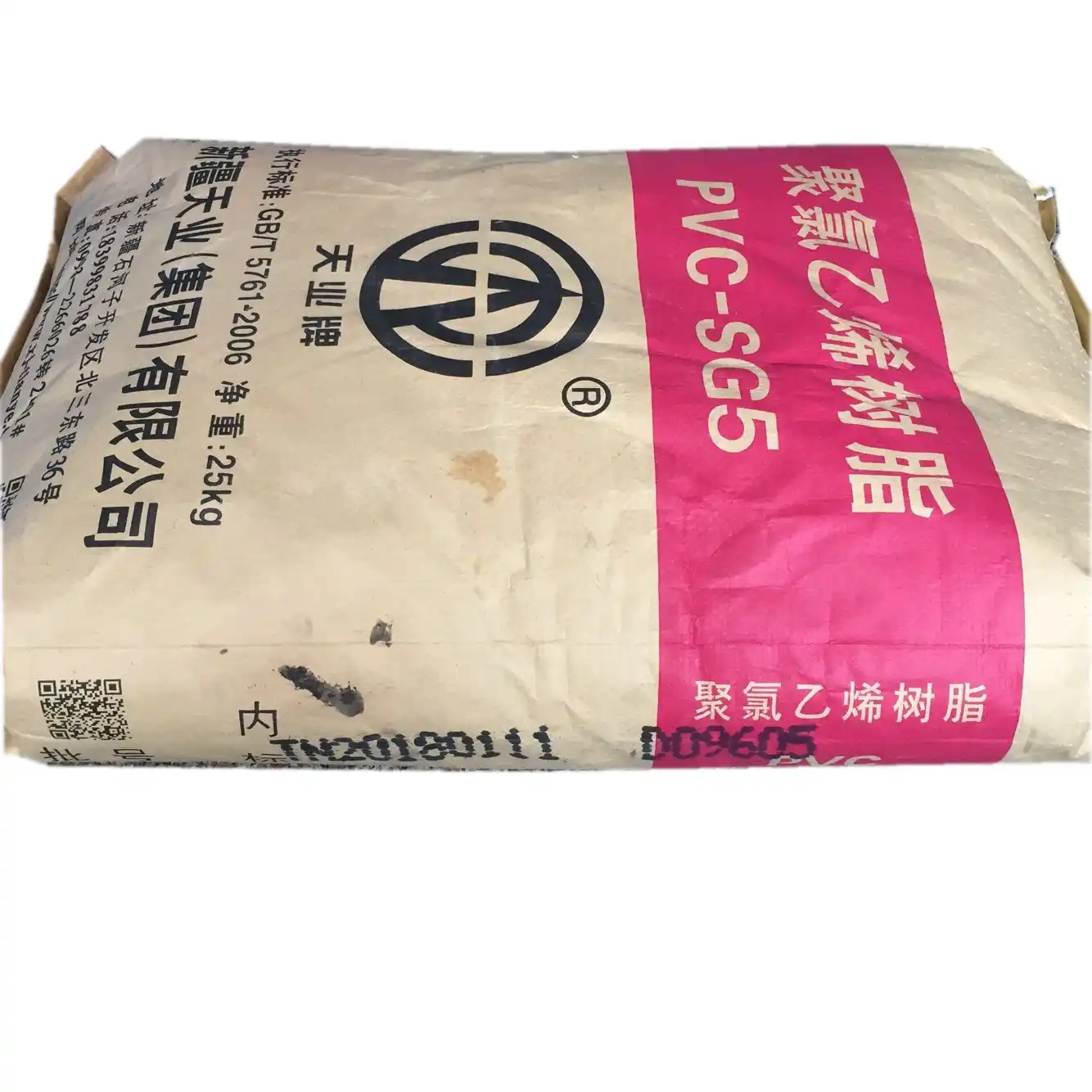
Technical description and specification table of Xinjiang Tianye PVC resin SG5 grade. Polyvinyl chloride raw material available in white powder or white particles.
| Manufacturer | Xinjiang Tianye |
|---|---|
| Density | ≥ 0.48 g/mL |
Note: See the product description for additional technical specifications
Manufacturer: Xinjiang Tianye Co., Ltd.
Category: Polyvinyl Chloride PVC Resin / Suspension General Purpose
Appearance: White Powder or White Particles
Grade: SG5 (Industry Standard K-Value: 68 – 66 / K67 Grade)
Polyvinyl chloride (PVC) is a macromolecular compound polymerized from vinyl chloride monomer (VCM). Its core structural unit is (-CH2-CHCl-)n, where n represents the degree of polymerization, which generally ranges from 590 to 1500. During the polymerization process, due to the regulation of various technological factors such as polymerization process, reaction temperature and pressure conditions, reactant composition, and additives, eight different models of polyvinyl chloride resins (SG1 to SG8) can be precisely manufactured in the industry. The performance of each model varies due to differences in molecular weight and viscosity.
According to the residual monomer content and purity control standards in the polyvinyl chloride resin, the material can be subdivided into three types: Industrial Grade, Food Grade, and Sanitary Grade. This product is the general-purpose SG5 resin produced by Xinjiang Tianye. Its average degree of polymerization is approximately between 1000 and 1100, making it a thermoplastic base material with medium-to-low viscosity and high fluidity. It possesses extremely high standardized versatility in international B2B bulk raw material trade.
The following physical property parameters are derived strictly from the official quality inspection standards of Xinjiang Tianye (GB/T standards), displaying the actual technical indicators of the Premium Grade and other classes:
| Item | Unit / Condition | Premium | First Class | Qualified |
| Viscosity Number (K-Value / DP) | mL/g( – / – ) | 118 ~ 107 (68 ~ 66) (1135 ~ 981) |
118 ~ 107 (68 ~ 66) (1135 ~ 981) |
118 ~ 107 (68 ~ 66) (1135 ~ 981) |
| Number of Impurity Particles | pcs | ≤ 16 | ≤ 30 | ≤ 80 |
| Volatile Matter (incl. Water) | % | ≤ 0.40 | ≤ 0.40 | ≤ 0.50 |
| Apparent Density | g/mL | ≥ 0.48 | ≥ 0.45 | ≥ 0.42 |
| Sieve Residue (2.0) | % | ≤ 2.0 | ≤ 2.0 | ≤ 8.0 |
| Sieve Residue (0.25 / 95) | % | ≥ 85 | ≥ 90 | ≥ 85 |
| Number of “Fish Eye” | pcs/400cm² | ≤ 20 | ≤ 40 | ≤ 90 |
| Plasticizer Absorption (per 100g) | g | ≥ 19 | ≥ 17 | — |
| Whiteness | %(160℃, 10min) | ≥ 78 | ≥ 75 | ≥ 70 |
| Water Extract Conductivity | µS/(cm·g) | ≤ 5 | ≤ 5 | — |
| Residual VCM Content (Industrial Grade) | µg/g | ≤ 5 | ≤ 10 | ≤ 30 |
| Residual VCM Content (Food Grade) | µg/g | ≤ 5 | ≤ 5 | ≤ 5 |
| 1,1-Dichloroethane (Food Grade) | mg/kg | ≤ 150 | ≤ 150 | ≤ 150 |
The technical data sheet (TDS) of Xinjiang Tianye PVC Resin SG5 Raw Material material from Xinjiang Tianye corporation, if there are differences, please refer to the official website of Xinjiang Tianye.
Stable Degree of Polymerization and Processing Window: The K-value of Tianye SG5 is stably maintained within the range of 66 – 68. It features a narrow molecular weight distribution and high thermal shear stability, ensuring stable melt pressure for formulation systems during extrusion or calendering processing.
Low Impurities and Excellent Apparent Purity: The number of “fish eyes” in the premium grade is strictly controlled below 20 pcs/400cm², and the count of impurity particles is low, which can significantly eliminate physical fish eyes and product defects on the surface of downstream products (such as films and sheets).
Balanced Plasticizer Absorption Performance: It possesses a plasticizer absorption capacity of ≥ 19g/100g resin, ensuring that additives can penetrate and wet quickly and uniformly during compounding and compounding processes, which is beneficial for uniform material plasticization.
Excellent Chemical Inertness and Physical Strength: The macromolecular chain structure endows it with outstanding resistance to acids, alkalis, and corrosion. The molded rigid or soft structural parts can still maintain good tensile and impact physical indicators under long-term load.
Polyvinyl chloride resin has a wide range of application fields. After compounding and compounding modifications, Xinjiang Tianye SG5 can be widely used in the production and processing of polyvinyl chloride rigid products, soft products, coatings, and adhesives:
(1) PVC General Soft Products: By utilizing an extruder, it can be extruded into soft hoses, cables, wires, etc.; by using an injection molding machine paired with various molds, it can be made into plastic sandals, shoe soles, slippers, toys, automotive parts, etc.
(2) PVC Film: After PVC is mixed with additives and plasticized, it can be made into transparent or colored films of specified thickness using a three-roll or four-roll calender (i.e., calendered film). It can also be processed into packaging bags, raincoats, tablecloths, curtains, inflatable toys, etc., through cutting and heat sealing. Wide transparent films can be used for greenhouses, plastic sheds, and mulching films. Biaxially stretched films possess heat-shrinkable characteristics and can be used for shrink packaging.
(3) PVC Coating Products: Artificial leather with a substrate is made by coating PVC paste onto cloth or paper and then plasticizing it at above 100 degrees Celsius; it can also be made by calendering PVC and additives into a film and then pressing it together with a substrate. Substrateless artificial leather is directly calendered by a calender into soft sheets of a certain thickness, and then embossed with patterns. Artificial leather can be used to make suitcases, leather bags, book covers, sofas, and car seat cushions, etc.; there is also floor leather used as flooring material for buildings.
(4) PVC Foam Products: When mixing soft PVC, an appropriate amount of foaming agent is added to make sheets, which are then foamed and molded into foam plastics. These can be used as foam slippers, sandals, insoles, and shock-absorbing cushioning packaging materials. It can also be extruded by an extruder into low-foaming rigid PVC sheets and profiles, which can be used to replace wood and serve as a new type of building material.
(5) PVC Transparent Sheet: PVC mixed with impact modifiers and organotin stabilizers is blended, plasticized, and calendered into transparent sheets. By utilizing thermoforming, it can be made into thin-walled transparent containers or used for vacuum blister packaging, serving as excellent packaging and decorative materials—such as mooncake packaging boxes.
(6) PVC Rigid Plate and Sheet: PVC mixed with stabilizers, lubricants, and fillers is compounded and can then be extruded into rigid pipes, profiled pipes, and corrugated pipes of various diameters using an extruder, used as drainage pipes, drinking water pipes, wire conduits, or stair handrails. By overlapping and hot-pressing the calendered thin sheets, rigid plates of various thicknesses can be manufactured. The plates can be cut into required shapes and then welded with hot air using PVC welding rods into various chemical corrosion-resistant storage tanks, air ducts, and containers, etc.
Q1: Does Xinjiang Tianye PVC SG5 belong to food-grade or sanitary-grade resin? How can overseas buyers distinguish it?
A1: The SG5 resin produced by Xinjiang Tianye can provide different purity grades according to process controls. According to the technical data sheet, the residual vinyl chloride monomer (VCM) content in its food-grade standard is strictly controlled at ≤ 5 µg/g, and the 1,1-dichloroethane content is ≤ 150 mg/kg. If your terminal application involves manufacturing packaging that comes into contact with food (such as mooncake boxes or sheets), please specify the need for the Food Grade / Sanitary Grade batch at the time of procurement to meet the corresponding international environmental safety compliance standards.
Q2: Why can Xinjiang Tianye SG5 be used in both soft products (such as cables and hoses) and rigid products (such as pipes and rigid plates)?
A2: This primarily depends on its molecular weight range (K-value 66 – 68) being in a balanced intermediate position. When it is extruded and compounded without adding or with adding a small amount of plasticizer (<10 parts), it can provide excellent rigidity for processing rigid pipes, corrugated pipes, and rigid plates. Conversely, when a sufficient amount of plasticizer (>30-40 parts) and a foaming agent are added for plasticization and calendering, the gap between its molecular chains increases, exhibiting excellent flexibility, which enables it to be processed into soft hoses, calendered films, artificial leather, and foam slippers.
Q3: What are the requirements for raw material powder when conducting hot-air welding on PVC rigid pipes or plates?
A3: When performing welding on corrosion-resistant storage tanks and containers, the welding strength depends on the formulation compatibility between the PVC rigid plates and the welding rods themselves. Since the apparent density of Xinjiang Tianye SG5 is stable at ≥ 0.48 g/mL and the number of “fish eyes” is extremely low, the rigid plates and welding rods processed through modification possess a dense internal structure without pores. When hot-air guns are used with PVC welding rods for welding, the molten joint is not prone to stress cracking, ensuring extremely high sealing performance and chemical corrosion resistance life.
Submit your inquiry today and receive a professional competitive price tailored to your project requirements.