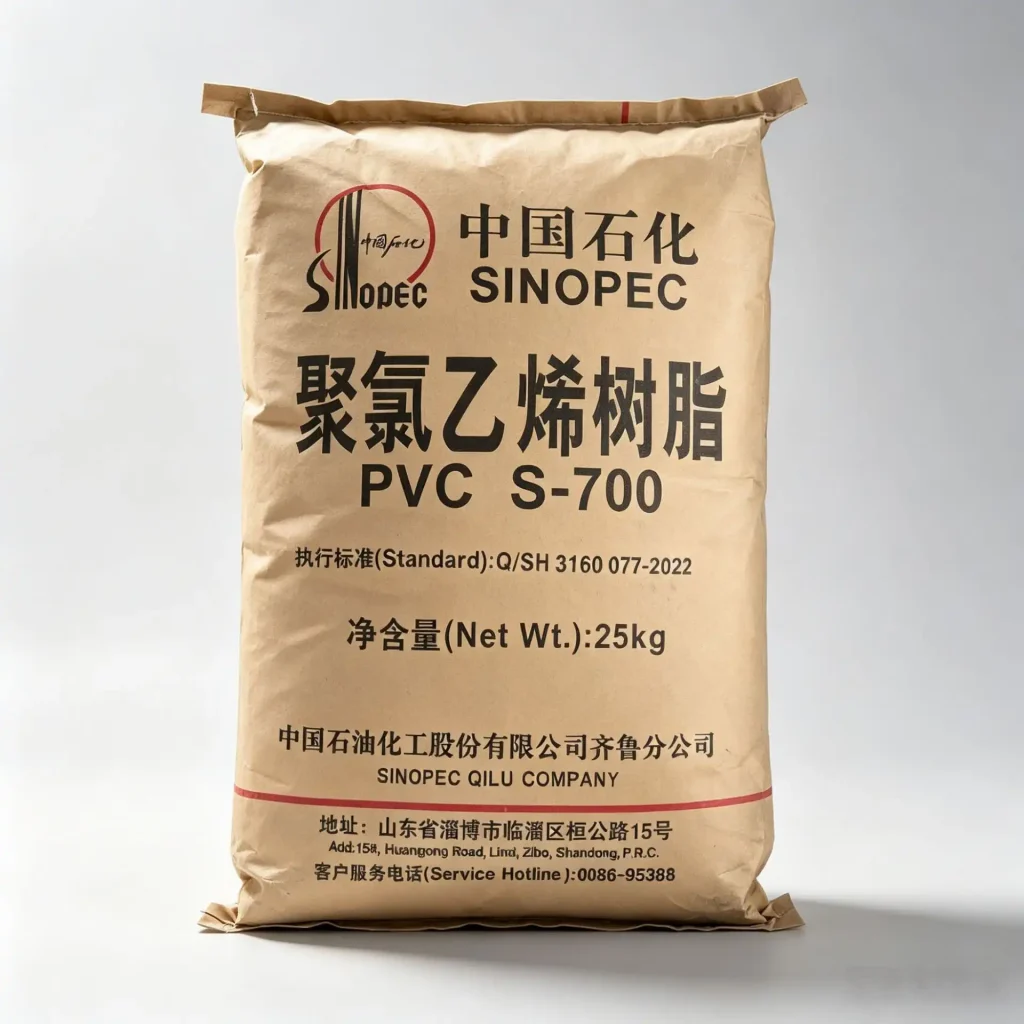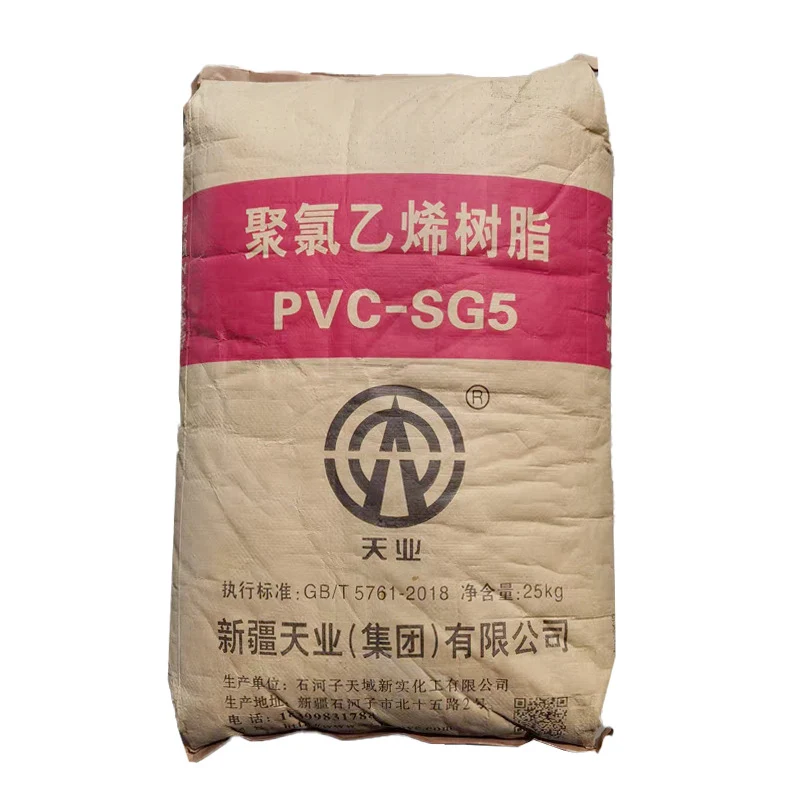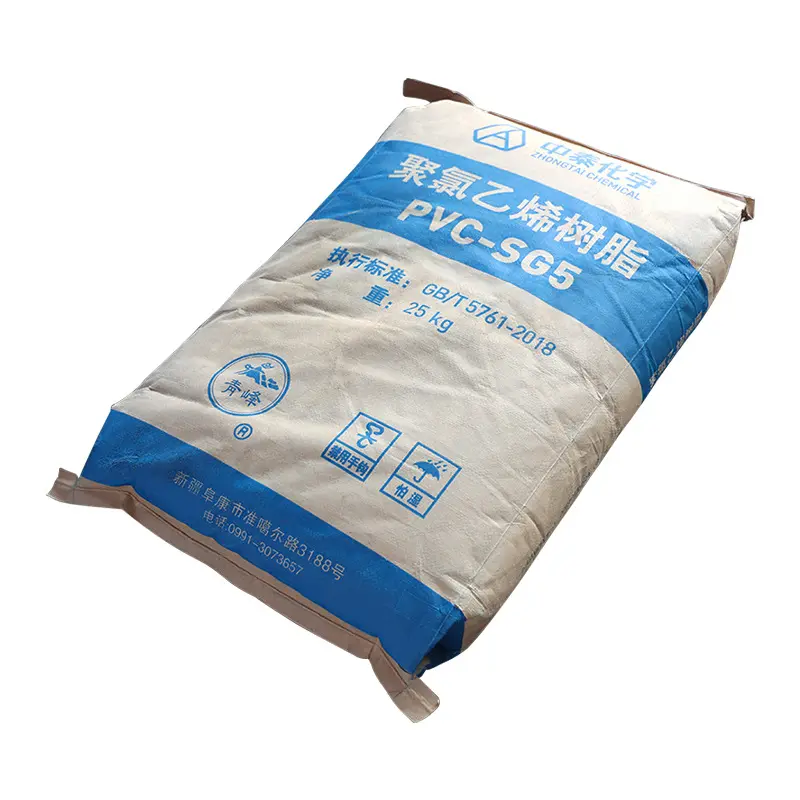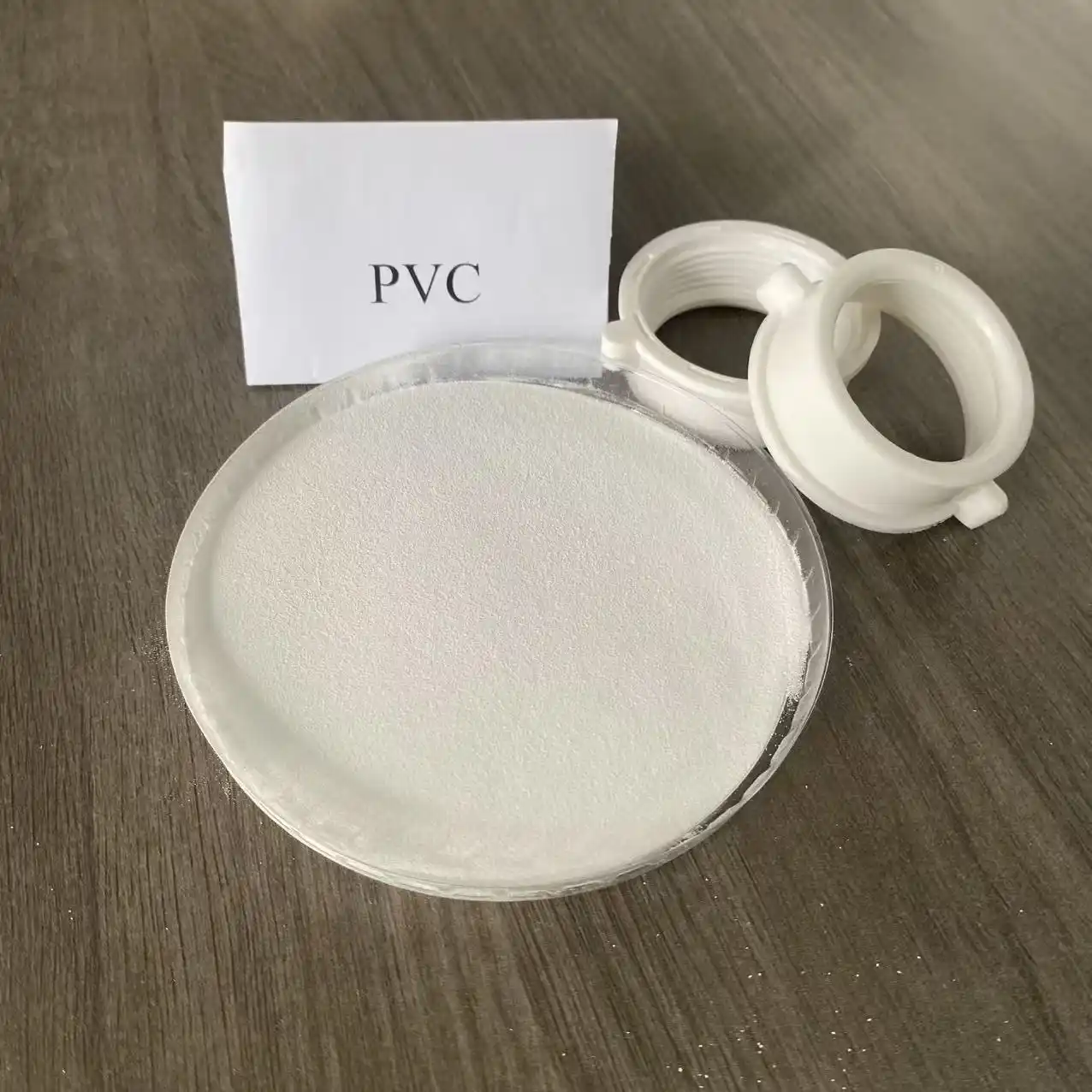
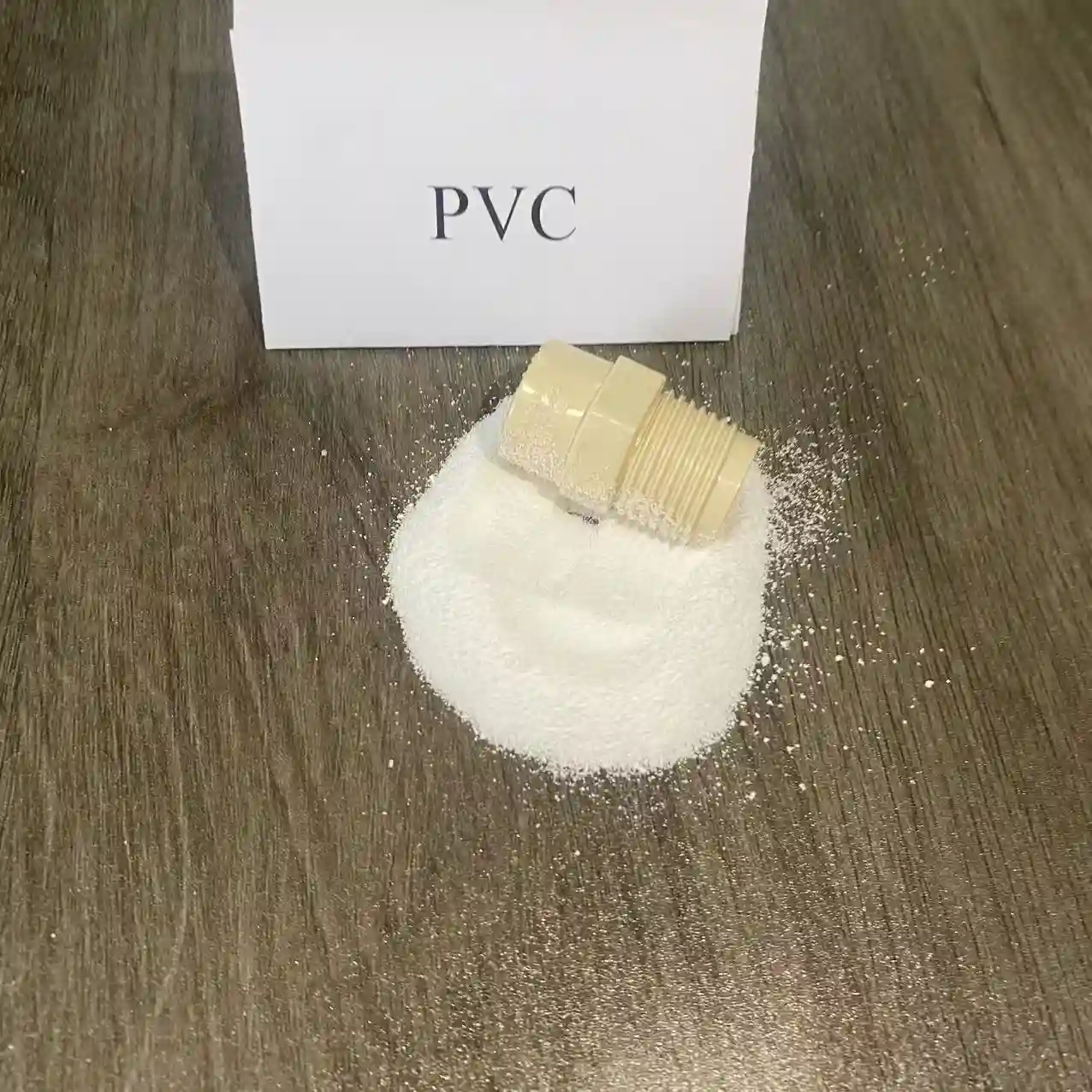
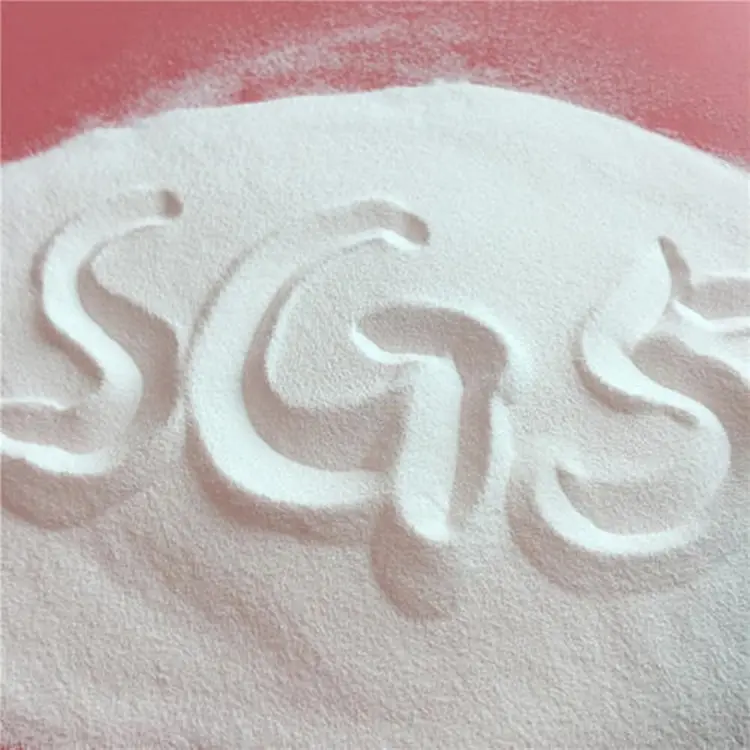
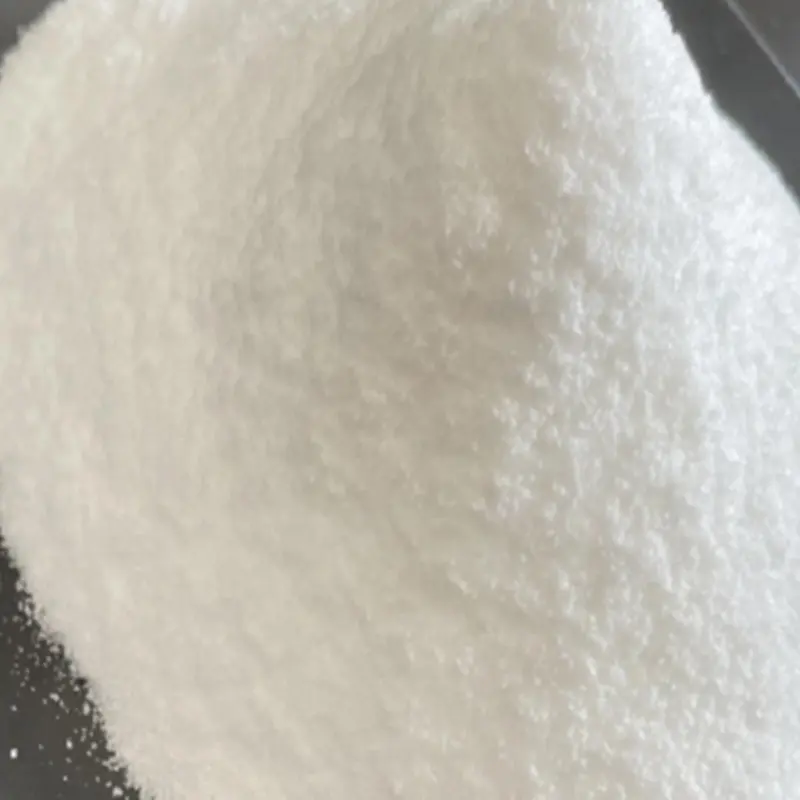
High-quality PVC Resin SG5 (K-Value 66-68) powder produced via suspension polymerization. This general-purpose grade features a degree of polymerization between 1000-1100 and an apparent density ≥0.48 g/ml. Optimized for the extrusion and injection molding of rigid products, including water supply pipes, architectural profiles, and industrial fittings.
| Apparent Density | ≥ 0.48 g/ml |
|---|---|
| Volatile Content | ≤ 0.40 % |
| Number of Fish Eyes | ≤ 20 Pcs/400cm² |
| Number of Impurity Particles | ≤ 16 Pcs |
Note: See the product description for additional technical specifications
PVC Resin SG5 (Polyvinyl Chloride Resin SG5, K-value 66-68) is a general-purpose thermoplastic polymer material produced from Vinyl Chloride Monomer (VCM) through a suspension polymerization process. This grade is consistently supplied by major domestic and international chemical enterprises such as Sinopec, Xinjiang Tianye, Zhongtai Chemical, and Shaanxi Beiyuan.
SG5 resin corresponds to a K-value of 66-68 (commonly known as K67), with an average degree of polymerization of approximately 1000-1100 and an apparent density of no less than 0.48 g/ml. Known for its excellent plasticizing uniformity, good fluidity, and stable processing performance, it is the core raw material for producing rigid pipes, architectural profiles, and injection-molded fittings. Balancing rigidity and toughness, it is widely regarded as the “King of Cost Performance” in the field of general plastic processing.
The following data is based on GB/T 5761-2018 and relevant ISO testing standards, provided for direct reference by engineers and technical personnel.
| Item | Typical Value | Test Standard / Condition |
| K-Value | 66 – 68 | GB/T 3401 (ISO 1628-2) |
| Avg. Degree of Polymerization | 1000 – 1100 | GB/T 5761 |
| Apparent Density | ≥ 0.48 g/ml | GB/T 20022 (ISO 60) |
| Volatile Content | ≤ 0.40 % | GB/T 2914 (ISO 1269) – 110°C |
| Number of Fish Eyes | ≤ 20 Pcs/400cm² | GB/T 4611 |
| Number of Impurity Particles | ≤ 16 Pcs | GB/T 9348 |
| Whiteness (160°C, 10min) | ≥ 75 % | GB/T 15595 |
| Residual Vinyl Chloride (VCM) | ≤ 5 ppm | GB/T 4615 (ISO 6401) |
| Sieve Residue (0.25mm mesh) | ≤ 2.0 % | GB/T 2916 (ISO 4610) |
| Plasticizer Absorption | ≥ 16 % | GB/T 3400 (ISO 4608) |
Key Performance Analysis:
Moderate Molecular Weight (K67): Compared to SG3, SG5 offers better fluidity and lower processing energy consumption; compared to SG7/SG8, it provides higher strength and superior product rigidity. It sits at the “Golden Balance” between processing fluidity and mechanical properties.
High Purity: VCM residual levels are controlled below 5ppm, meeting environmental and health standards for drinking water pipes.
Based on the molecular structure characteristics of K67, SG5 resin primarily dominates the rigid product market and is widely used in the following areas:
Specific Applications: Water supply pipes, drainage and sewage pipes, electrical conduit pipes, agricultural irrigation pipes.
Why it applies: SG5 has excellent melt fluidity and thermal stability, making it highly suitable for high-speed extrusion molding. Pipes produced with this resin feature high pressure strength and corrosion resistance, with a design service life of over 50 years.
Specific Applications: uPVC door and window frames, window sills, baseboards, decorative moldings.
Why it applies: K67 resin plasticizes quickly. When combined with appropriate impact modifiers (such as CPE, ACR) and processing aids, it produces profiles with high surface finish and excellent welding strength, fully meeting building energy-saving standards.
Specific Applications: Elbows, tees, valves, and flanges compatible with piping systems.
Why it applies: Its K-value 67 fluidity is superior to SG3, allowing for more complete mold filling when injecting complex-shaped fittings, reducing internal stress and weld lines, and preventing brittle cracking during use.
Specific Applications: Transparent rigid sheets, packaging sheets, insulation boards, stationery sheets.
Why it applies: Through the calendaring process, SG5 can be converted into rigid sheets with high transparency and good stiffness, widely used in architectural decoration, industrial packaging, and office supplies.
SG5 (K67) vs SG3 (K72) vs SG8 (K60)
| Feature Parameter | SG5 (K67) | SG3 (K72) | SG8 (K60) |
| Molecular Weight | Medium | High | Low |
| Melt Fluidity | Good (Balanced) | Poor (Requires higher temp) | Excellent (Easy flow) |
| Mechanical Strength | High | Highest (Impact/Tensile) | General |
| Surface Gloss | Good | General | Excellent |
| Processing Energy | Medium | High | Low |
| Typical Applications | Pipes, Profiles, Fittings | High-end fittings, Cables | Transparent sheets, Fittings |
| Overall Cost | Best Value | Higher raw/process costs | High speed, but high aid cost |
Selection Advice: Use SG3 if your product has extreme requirements for low-temperature impact resistance. Use SG8 if there are rigid requirements for ultra-high fluidity or high transparency. For the vast majority of general rigid processing scenarios, SG5 is the most economical choice with the widest processing window and highest fault tolerance.
To ensure product quality and maximize production efficiency, here are professional processing parameters and tips for PVC Resin SG5:
Although PVC has lower moisture absorption than engineering plastics like Nylon, it is still recommended to use a dehumidifying dryer at 75-80°C for 1-2 hours (strictly prohibited to exceed 90°C to prevent clumping) before processing to prevent silver streaks or bubbles on the product surface.
| Zone | Temperature Range (°C) |
| Barrel C1 (Feeding) | 160 – 170 |
| Barrel C2 (Compression) | 170 – 180 |
| Barrel C3/C4 (Metering) | 175 – 185 |
| Adapter/Flange | 165 – 175 |
| Die/Head | 185 – 200 |
| Item | Recommended Value |
| Barrel Temperature | 170 – 195°C |
| Nozzle Temperature | 180 – 190°C |
| Mold Temperature | 30 – 50°C |
| Injection Pressure | 80 – 120 MPa |
| Holding Pressure | 40 – 60 MPa |
It is recommended to use barrier or separation screws with a Length/Diameter (L/D) ratio between 20:1 and 25:1 and a compression ratio of 2.0-2.5 to reduce shear overheating and ensure sufficient plasticization.
Heat Stabilizers are Essential: PVC easily decomposes to produce HCl above 140°C. Sufficient heat stabilizers (such as Calcium-Zinc, Organotin, or Lead-based) must be added during processing, typically 3-5 parts per 100 parts resin.
Shutdown Procedure: For temporary shutdowns exceeding 10 minutes, it is recommended to lower the barrel heating temperature and thoroughly empty the barrel or use purging compounds to prevent material degradation and burning from prolonged exposure to high heat.
Lubrication Balance: Pay attention to the combination of external and internal lubricants. Excessive external lubricant leads to poor plasticization, while too little causes melt sticking.
Q1: Why is the K-value of SG5 resin 66-68? What specific impact does this have on production?
The K-value is an international indicator of PVC molecular weight. K67 indicates a medium molecular weight. Compared to K70+ (high viscosity), K67 has better fluidity during extrusion or injection, allowing for 5-10°C lower processing temperatures and smoother surfaces. Compared to K65- (low viscosity), it has higher mechanical strength and better ring stiffness for pipes. Therefore, K67 is ideal for pressure pipes and structural profiles.
Q2: How to solve “shark skin” or roughness on pipe surfaces when using SG5 resin?
“Shark skin” is usually a sign of poor plasticization or melt fracture. Recommended troubleshooting steps:
Check if processing temperatures are too low, especially if the die head area is below 185°C.
Increase the amount of external lubricant (e.g., PE wax or paraffin) gradually from 0.5 to 1.0 parts.
Check if the Calcium Carbonate mesh is too coarse (recommended 1250+ mesh) or if the loading is too high (recommended <15 parts).
Slightly increase screw speed to enhance shear plasticization. SG5 has a wide plasticization window, and issues are usually resolved quickly through process adjustments.
Q3: What are the packaging specifications and storage precautions for SG5 resin?
SG5 resin is typically packaged in 25 kg bags (composite kraft paper or woven bags with PE moisture-proof liners) or 1000 kg jumbo bags. Key storage points:
Store in a dry, ventilated indoor environment with relative humidity below 60%.
Avoid direct sunlight and rain to prevent moisture clumping.
Stacking height should not exceed 8 layers (25kg bags) or 2 layers for jumbo bags.
Keep away from fire and heat sources—while PVC resin is inherently flame-retardant, the packaging materials are flammable.
Submit your inquiry today and receive a professional competitive price tailored to your project requirements.