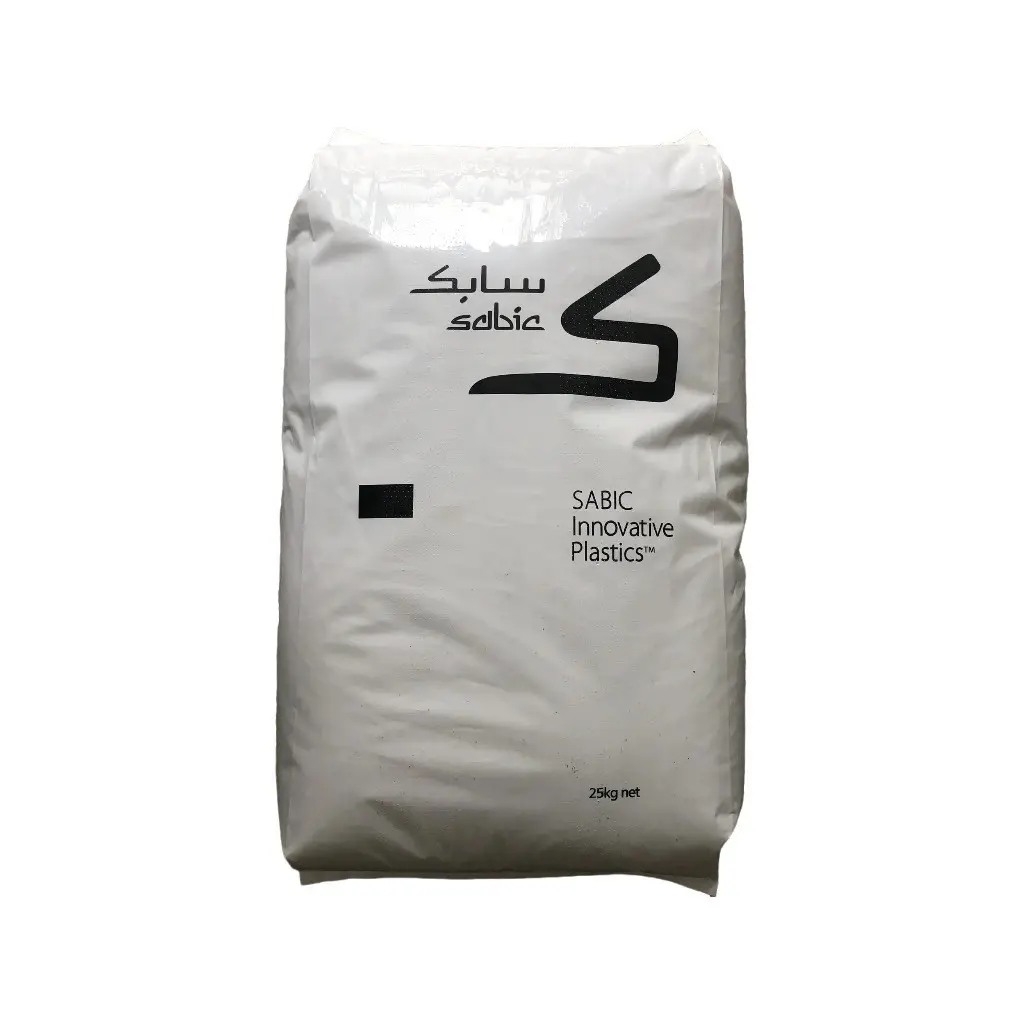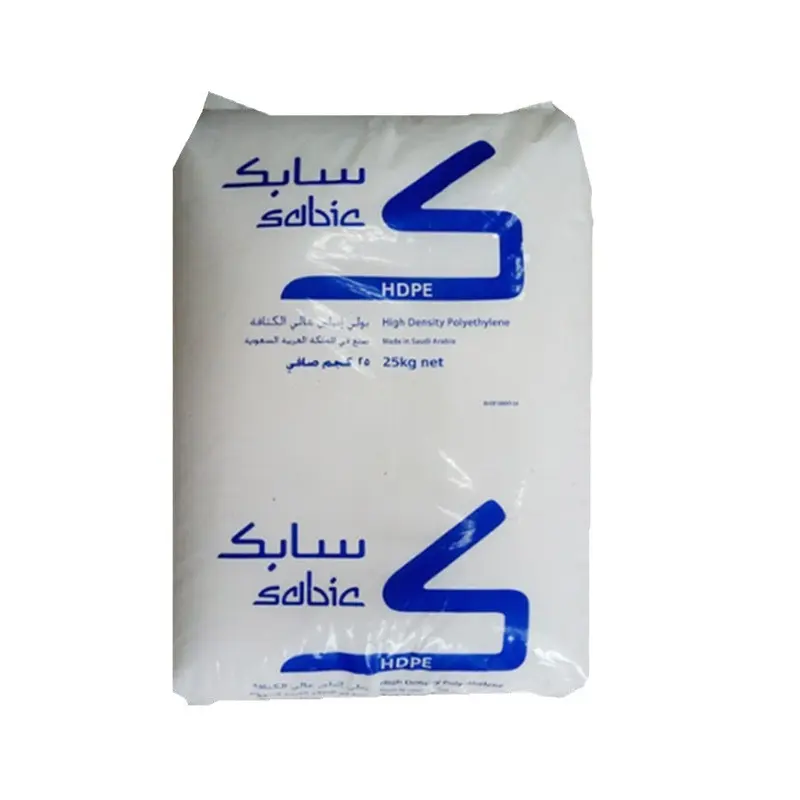
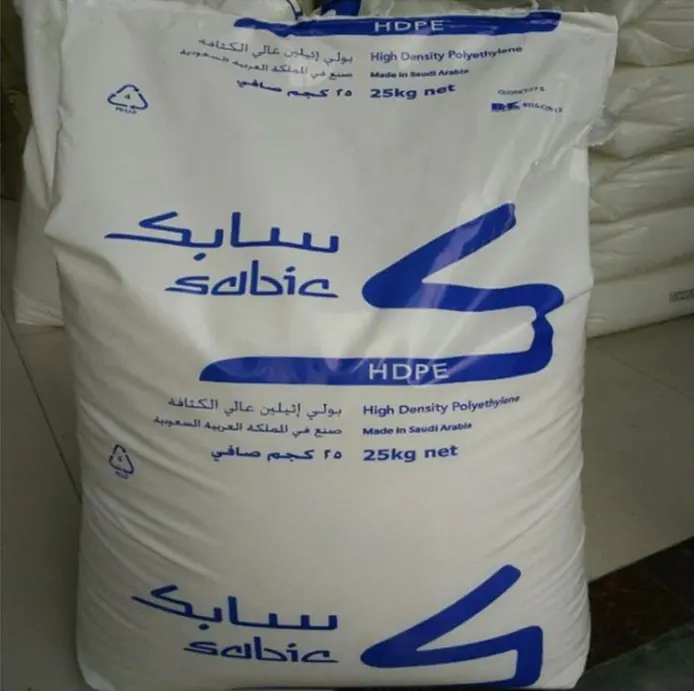
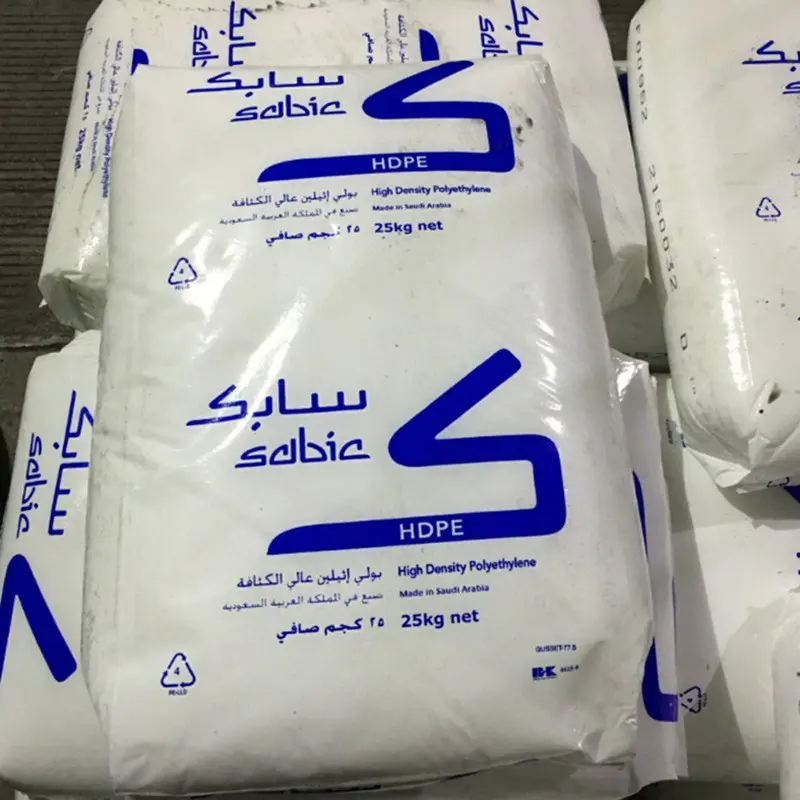
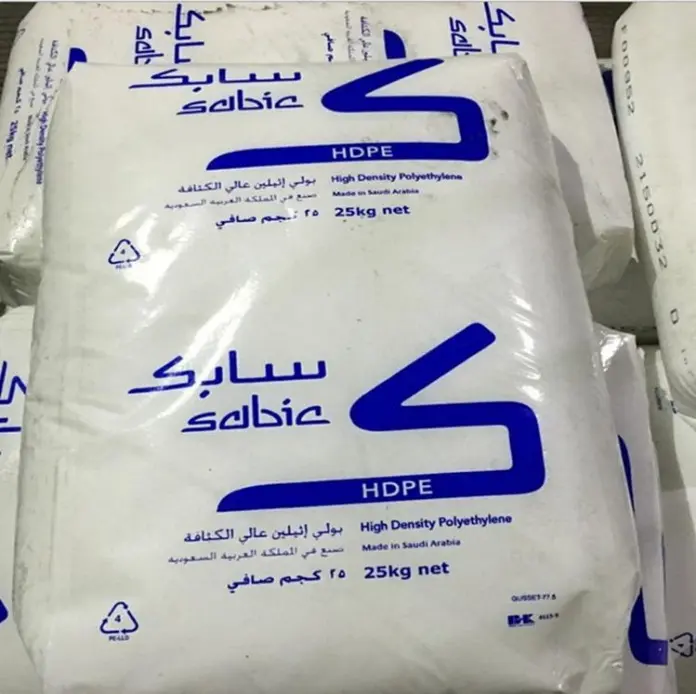
SABIC P6006 is a PE 100 bimodal high-density polyethylene black pipe compound with 2.3% carbon black and a density of 0.959 g/cm³. It combines excellent stress crack resistance with long-term hydrostatic strength for pressure pipes, including water supply, gas distribution and sewage.
| Manufacturer | SABIC |
|---|---|
| Density | 0.959 g/cm³ |
| MFR | 6.2 g/10min |
| Tensile Strength at Yield | 23.0 MPa |
| Elongation at Yield | 9.0 % |
Note: See the product description for additional technical specifications
SABIC® P6006 is a high-density polyethylene (HDPE) black compound for pressure pipe applications, manufactured by Saudi Basic Industries Corporation (SABIC). Classified as an MRS 10 (PE 100) pressure pipe material, it features a bimodal molecular weight distribution and is supplied in black pellet form. Formulated with uniformly dispersed carbon black (typical content 2.3%) during compounding, it delivers a consistent black appearance, UV resistance, and environmental weathering protection without requiring additional inline color masterbatching.
| Basic Information | Description & Specifications |
| Manufacturer | SABIC (Saudi Basic Industries Corporation) |
| Category | High-Density Polyethylene (HDPE); PE 100 Grade (MRS 10 MPa) Black Pipe Compound; Bimodal Molecular Weight Distribution |
| Appearance | Black pellets (containing uniformly dispersed carbon black), uniform particle size, free of impurities and odor |
| Supply Form | Black compound pellets (Standard 25 kg bags / 1000 kg jumbo bags / bulk) |
| Primary Applications | Pressure pipe extrusion (potable water, natural gas, sewage, irrigation), chemical liners, and container manufacturing |
Industry Status: PE 100 is the dominant grade in polyethylene pressure pipe systems, requiring the material to withstand a minimum required strength (MRS) of 10 MPa over a 50-year design lifespan at 20 °C. Through its bimodal molecular weight distribution, P6006 combines the processing melt flow of low molecular weight fractions with the mechanical toughness of high molecular weight fractions, achieving a balance between environmental stress crack resistance (ESCR) and long-term hydrostatic strength. Consequently, it has become one of the most widely specified standard grades in pressure pipe extrusion for potable water, gas distribution, and sewage networks. For pipe manufacturers, using pre-compounded black resin eliminates the inline color masterbatching step, preventing appearance and weatherability variations caused by uneven pigment dispersion.
Primary Application Fields: Municipal water supply networks, natural gas distribution pipelines, sewage and drainage pipes, agricultural irrigation networks, industrial wastewater and pressure piping systems, as well as extrusion applications such as chemical liners, containers, corrugated pipes, and spirally wound structural wall pipes. This grade is one of the standard resin offerings from ZiJun Plastics, available in compliance with official TDS standards along with sample verification support.
| Physical Property | Typical Value | Unit | Test Standard |
| Density (23 °C) | 0.959 | g/cm³ | ASTM D1505 |
| Melt Flow Rate (190 °C, 21.6 kg) | 6.2 | g/10min | ISO 1133 |
| Melt Flow Rate (190 °C, 5 kg) | 0.23 | g/10min | ISO 1133 |
| Carbon Black Content | 2.3 | % | ISO 6964 |
| Shore Hardness D | 63 | — | ASTM D2240 |
| Mechanical Property | Typical Value | Unit | Test Standard |
| Tensile Modulus (50 mm/min, 2 mm) | 900 | MPa | ASTM D638 |
| Tensile Stress at Yield (50 mm/min, 2 mm) | 23 | MPa | ASTM D638 |
| Tensile Strain at Yield (50 mm/min) | 9 | % | ISO 527-2 |
| Charpy Notched Impact Strength (-30 °C) | 13 | kJ/m² | ISO 179 |
| Charpy Notched Impact Strength (23 °C) | 26 | kJ/m² | ISO 179 |
| Thermal Property | Typical Value | Unit | Test Standard |
| Vicat Softening Temperature | 74 | °C | ISO 306/B |
| Oxidation Induction Time (OIT) (210 °C) | > 20 | min | EN 728 |
The technical data sheet (TDS) of SABIC P6006 HDPE material from SABIC corporation, if there are differences, please refer to the official website of SABIC.
PE 100 Pressure Rating & Long-Term Hydrostatic Strength: Meets MRS 10 MPa requirements for a 50-year service life at 20 °C, making it suitable for high-pressure water and gas transport (Tensile Stress at Yield: 23.0 MPa, Tensile Modulus: 900 MPa). If switching to injection molding applications (such as crates, caps, or industrial components), material selection should be re-evaluated using higher-flow HDPE grades like LG Chem XL9100 HDPE; pressure pipe extrusion applications should strictly retain PE 100 pipe-grade compounds.
Superior Environmental Stress Crack Resistance (ESCR): The bimodal molecular weight architecture ensures long-term toughness under sustained mechanical loads and soil settlement, mitigating the risk of premature pipe cracking.
Integrated 2.3% Carbon Black Weathering System: Uniformly dispersed carbon black provides UV protection and environmental resistance suitable for long-term outdoor exposure and direct burial, while eliminating inline masterbatching to avoid batch-to-batch color variation.
Balanced Stiffness and Low-Temperature Toughness: Charpy notched impact strength reaches 26 kJ/m² at 23 °C and retains 13 kJ/m² at -30 °C, facilitating cold-weather installation and transport handling.
Wide Processing Window & Process Versatility: Recommended melt temperature range of 190–220 °C provides stable flow for conventional extrusion lines. In addition to sheet and profile extrusion, it can also be processed via injection molding or blow molding for chemical liners and containers.
Chemical Resistance & Electrical Insulation: Demonstrates resistance to acids, alkalis, salts, and various industrial media without electrochemical corrosion, making it ideal for conveying potable water, natural gas, industrial effluent, and irrigation water.
Thermal & Oxidative Stability: Vicat softening temperature of 74 °C; Oxidation Induction Time (OIT) exceeding 20 minutes at 210 °C demonstrates reliable thermal-oxidative stability during processing and long-term service (a key quality control parameter for PE pipe materials).
Municipal Water Supply & Distribution Networks Extrusion of potable water distribution piping manufactured in accordance with ISO 4427, EN 12201, and related PE piping standards for long-term underground pressure service.
Natural Gas Distribution Pipelines Suitable for low-to-medium pressure natural gas and city gas distribution networks, where material flexibility accommodates soil settlement and dynamic traffic loads.
Sewage, Drainage & Industrial Wastewater Piping Used for pressure sewer lines, underground drainage, and industrial effluent transport. In sewer and drainage material selection, engineers often compare HDPE with PVC resin for pipe extrusion: PE pipe is flexible, coilable, and impact-resistant at low temperatures (ideal for trenchless installation and subsidence-prone areas), whereas PVC offers higher rigidity at a different cost structure.
Agricultural Irrigation Pipe Networks The UV-stabilized black compound is well-suited for long-term outdoor exposure in sprinkler systems, drip irrigation mains, and high-pressure agricultural pipelines.
Chemical Liners & Industrial Containers Applied in chemical equipment linings, storage tanks, and industrial containers via injection, blow, or rotational molding, taking advantage of its chemical inertness and moldability.
Corrugated & Spirally Wound Structural Wall Pipes Melt flow characteristics adapt well to complex profile extrusion, producing corrugated and spirally wound structural wall pipes with efficient processing and smooth surface finish.
Emergency & Temporary Water Lines Serves as a reliable raw material for emergency water supply and disaster-relief pressure piping due to its ease of storage and rapid pipe extrusion.
Q1: Does SABIC P6006 require pre-drying before processing?
A: HDPE is a non-hygroscopic material with extremely low water absorption. Under standard packaging and storage conditions, it can be processed directly without pre-drying. Pre-drying (hot air drying at ~80 °C for 1–2 hours or dehumidifying drying at 70–80 °C) is only required if the packaging is damaged or if condensation occurs due to cold transport. Recommended melt temperature range is 190–220 °C, with barrel temperature profiles fine-tuned based on pipe diameter, output rate, and extruder design. Avoid prolonged exposure to humid ambient conditions after opening.
Q2: What is the difference between SABIC P6006 (Black) and P6006NA (Natural)? How should I choose?
A: Both grades share the same PE 100 bimodal HDPE base polymer. The primary difference is carbon black content: P6006 is a black compound containing ~2.3% carbon black, whereas P6006NA is a natural (uncolored) resin. The black compound offers UV resistance for outdoor and direct-burial piping without requiring inline color additives; the natural grade is designed for indoor piping, custom color compounding, or specific color-coded applications. Select P6006 Black whenever long-term weatherability or UV exposure is required.
Q3: What compliance standards does P6006 meet (RoHS, Food Contact, UL)?
A:
Q4: How should I choose between P6006 (PE 100) and higher PE 112 grades?
A: P6006 is a standard PE 100 (MRS 10 MPa) material capable of fulfilling the vast majority of municipal, industrial, and agricultural pressure pipe applications. Higher PE 112 grades are only necessary under extreme design stress or specialized high-pressure operating conditions. Standard PE 100 compound offers a more cost-effective solution for standard pipe dimensions and pressure ratings.
Submit your inquiry today and receive a professional competitive price tailored to your project requirements.