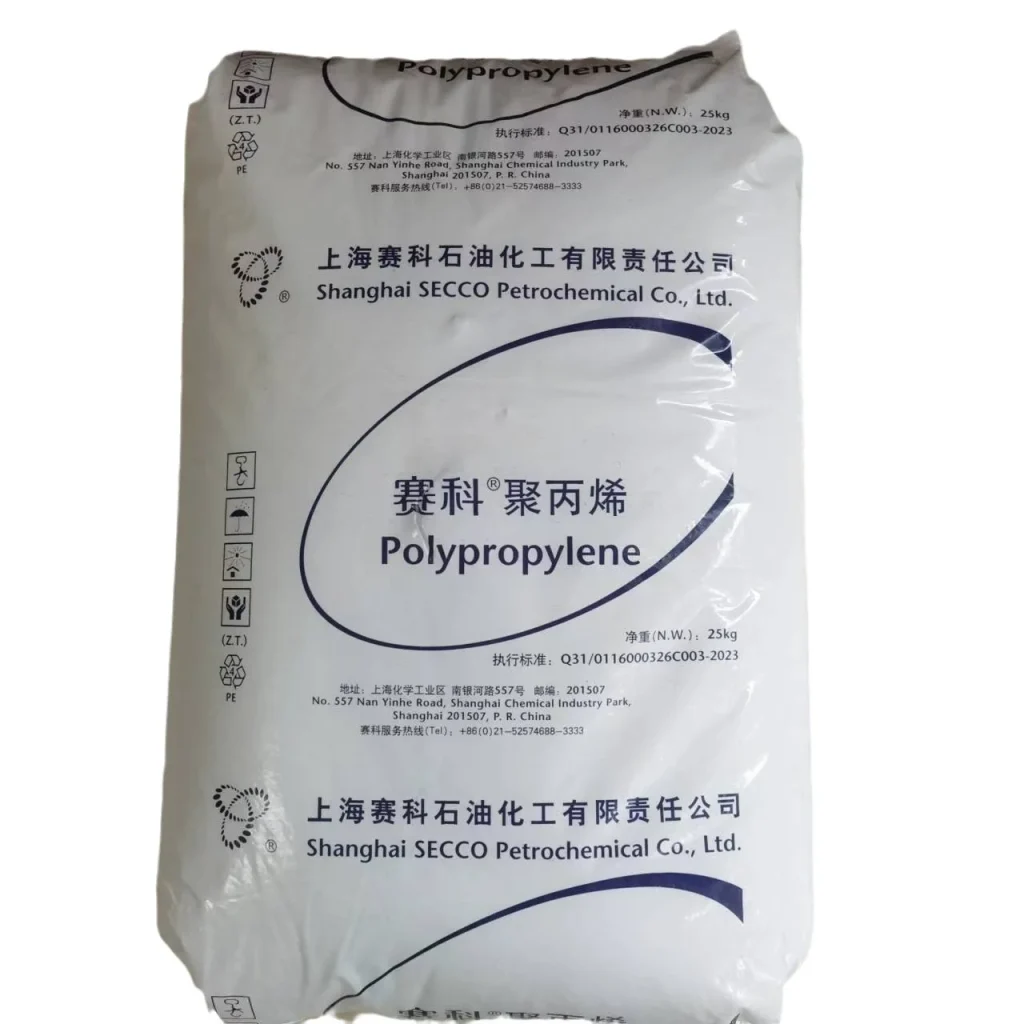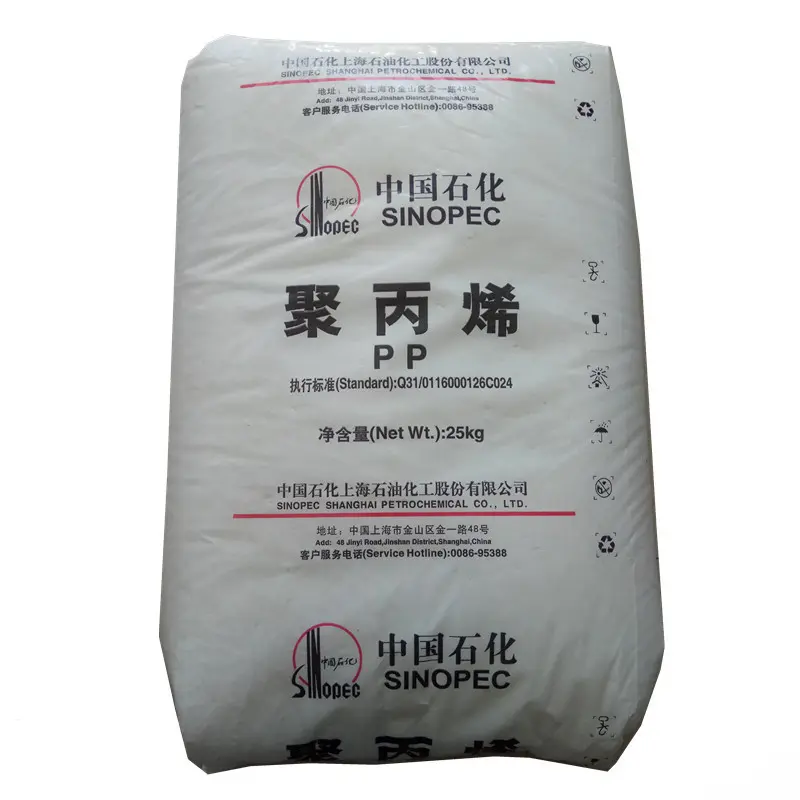
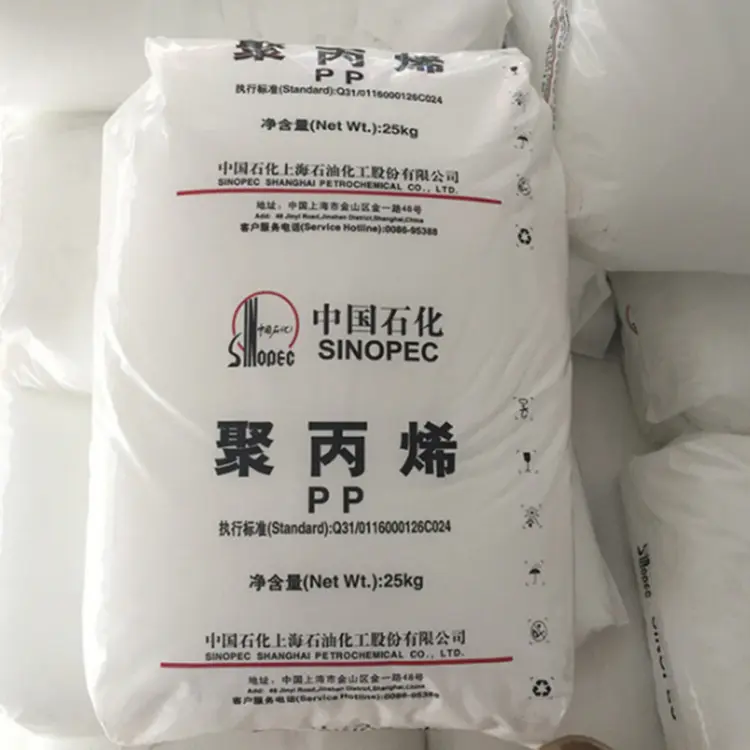
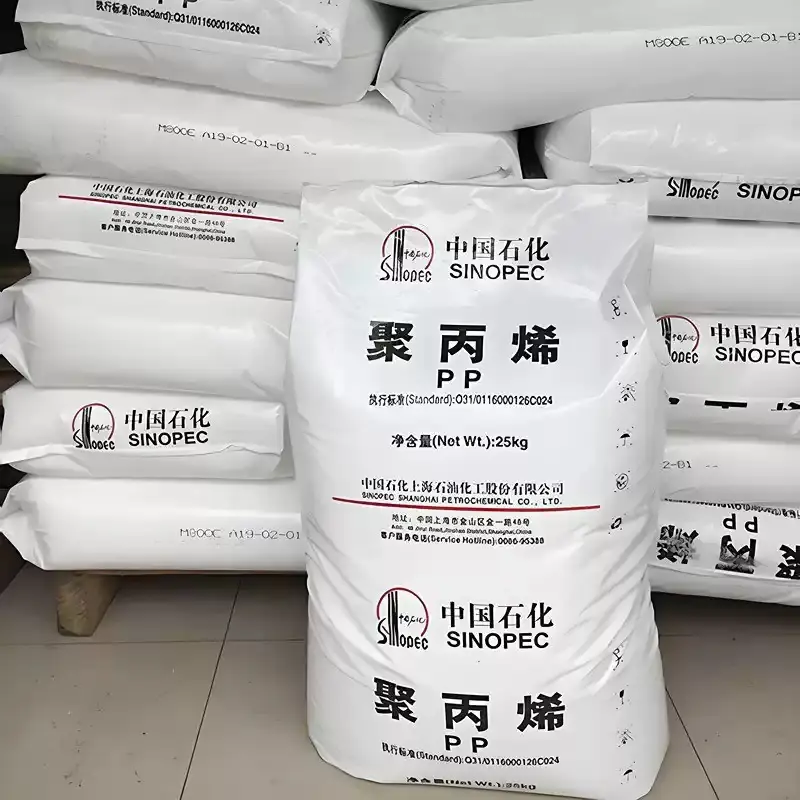
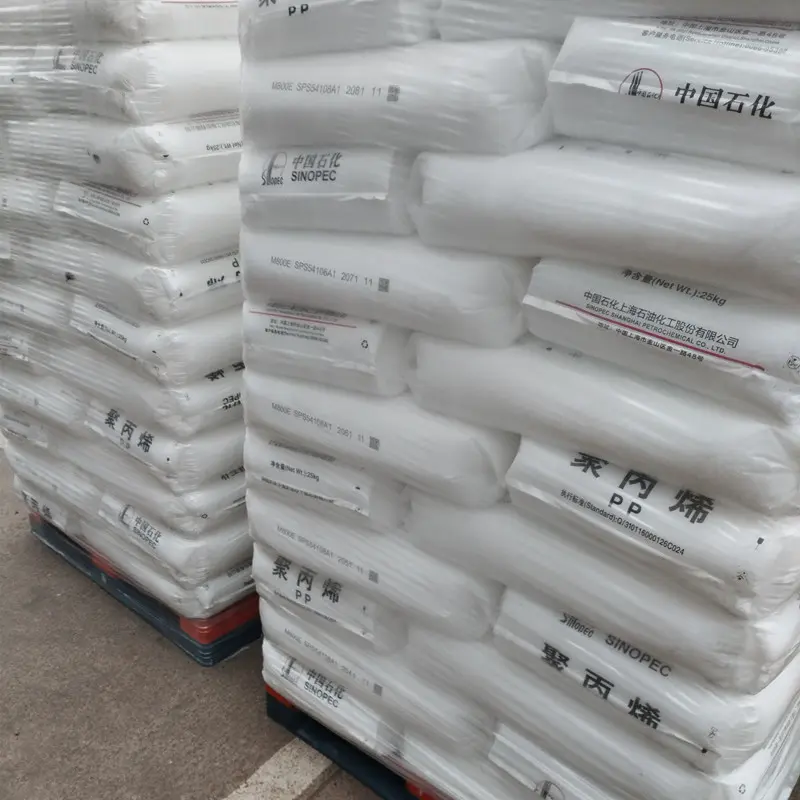
Sinopec Shanghai Petrochemical PP M250E is a transparent random copolymer polypropylene resin with a 2.5 MFR, offering low yellowness, high parison stability, and a balance of toughness and rigidity for medical, food, and industrial packaging.
| Manufacturer | SINOPEC Shanghai Petrochemical |
|---|---|
| MFR | 2.5 g/10min |
| Tensile Strength at Yield | 27 MPa |
| Flexural Modulus | 900 MPa |
| Izod Notched Impact | 40 J/m |
Note: See the product description for additional technical specifications
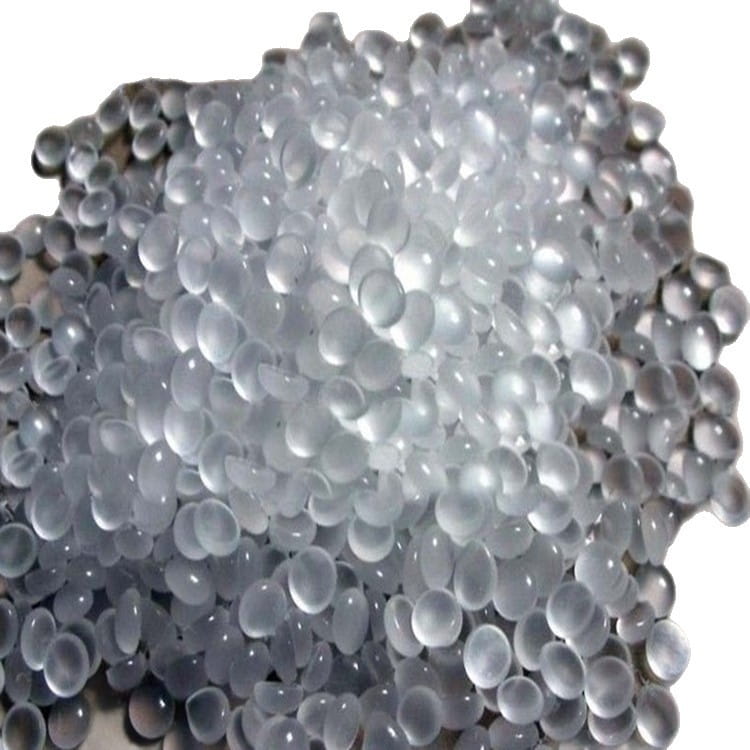
PP M250E is a transparent random copolymer polypropylene (Random Copolymer PP) resin produced by SINOPEC Shanghai Petrochemical Co., Ltd., with the original factory product code PPR-MT03(M250E). This material appears as milky-white to translucent uniform cylindrical pellets. With ethylene randomly inserted into the propylene main chain and a lower crystallinity than homopolymer PP, it maintains the inherent rigidity and chemical resistance of polypropylene while offering a lower tendency to yellow and superior transparency and gloss.
With an MFR of 2.5 g/10min (low melt flow rate, relatively high molecular weight), M250E is widely used in the industry as a benchmark high-transparent PP grade for blow molding, extrusion sheet, and thermoforming applications—positioned neither as a high-flow thin-wall injection grade nor as a high-impact block copolymer, but rather as a medical/food/stationery packaging resin optimized for “stable parison, uniform wall thickness, and a balance of transparency and toughness.” Its typical end-use products include medical centrifuge tubes, sample preservation tubes, infusion bottle accessories, transparent food containers, stationery shells, and blister packaging trays. For production lines requiring high transparency, hollow blow molding/thermoforming, and room-temperature toughness, M250E serves as a common and easily substitutable selection benchmark within the domestic petrochemical system.
| Property | Test Condition | Value | Unit | Test Method |
| Cleanliness | — | 6 to 10 | None | Internal Method |
| Melt Flow Rate (MFR) | — | 2.5 | g/10min | Internal Method |
| Property | Test Condition | Value | Unit | Test Method |
| Tensile Yield Strength | — | 27 | MPa | Internal Method |
| Flexural Modulus | — | 900 | MPa | Internal Method |
| Property | Test Condition | Value | Unit | Test Method |
| Yellowness Index | — | ≤1 | None | Internal Method |
| Property | Test Condition | Value | Unit | Test Method |
| Notched Izod Impact Strength | 23°C, V-notch | 40 | J/m | Internal Method |
The technical data sheet (TDS) of PP M250E material from Shanghai Petrochemical corporation, if there are differences, please refer to the official website of Shanghai Petrochemical.
High Transparency & Low Yellowness: Yellowness index ≤ 1; the random copolymer structure reduces crystallization haze, resulting in transparency and surface gloss superior to standard homopolymer PP, making it ideal for appearance components and content-visible packaging.
Low MFR & High Parison Stability: With an MFR of 2.5 g/10min, it provides high melt strength, minimizing parison sag during blow molding for more uniform wall thickness. Its drawability and stability in thermoforming sheets are superior to high-flow injection-grade PP.
Balance of Toughness and Rigidity: Features a tensile yield strength of 27 MPa, a flexural modulus of 900 MPa, and a notched Izod impact strength of 40 J/m at 23°C, offering a balance of impact resistance and structural support among transparent PPs, while overcoming the low-temperature brittleness of homopolymer PP.
High Suitability for Food and Medical Packaging: Cleanliness of 6–10, low yellowness, and low odor; the manufacturer can provide COA batches upon request. It has a mature downstream validation foundation in applications such as medical centrifuge tubes, sample tubes, and food containers.
Good Chemical Resistance & Moisture Barrier: Polypropylene inherently offers stable short-term contact resistance to water, weak acids and bases, alcohols, and oils, along with excellent moisture barrier properties, making it suitable for daily chemicals, reagents, food, and medical excipient packaging.
Wide Processing Window & Regrind Friendly: PP exhibits low moisture absorption and good thermal stability, resulting in low transition costs across blow molding, extrusion, and thermoforming lines, with clean scrap being recyclable in a controlled manner.
Medical Devices & Laboratory Consumables: Medical centrifuge tubes, sample preservation tubes, reagent tube shells, non-sterile structural components for infusion sets, and transparent shells for testing consumables—leveraging high transparency, low extractables, and 23°C toughness.
Food & Daily Chemical Packaging: Transparent food containers, small jam/honey jars, condiment bottles, medium-sized cosmetic bottles, and transparent personal care jars—featuring a low yellowness index for true-to-life content display, suitable for mid-to-high-end daily chemical positioning.
Stationery & Office Supplies: Transparent pencil boxes, folder covers, display boxes, and stationery storage shells—offering a balance of rigidity and toughness to prevent cracking during assembly.
Thermoforming & Blister Products: Pastry trays, fruit boxes, electronic component blister inserts, and thermoformed containers from extruded sheets—where low MFR delivers enhanced parison/sheet stability.
Hollow Blow Molded Parts: Small hollow bottles, medical/daily chemical small-capacity blow-molded containers, and non-bearing transparent bottles—offering superior parison sag control compared to high-flow PP.
Note: M250E is a non-flame-retardant, non-UV-resistant, and non-high-impact block copolymer grade. Long-term outdoor exposure, contact with strong solvents, repeated high-temperature steam sterilization, load-bearing structural parts, and V-0 flame-retardant enclosures are outside its intended application scope. For food and medical contact compliance, please refer to the original manufacturer’s GB 4806.6, FDA, or EU 10/2011 compliance statements and end-product testing.
Q1: Does M250E require drying before processing?
A1: Polypropylene has very low moisture absorption. M250E typically does not require forced drying when packaging remains intact and storage humidity is normal. However, if the packaging is damaged, left open for a long time, or exposed to high-humidity/monsoon conditions, pre-drying at 70–80°C for 2–3 hours is recommended to prevent fish eyes, silver streaks, or inner wall bubbles during blow molding or thermoforming. Transfer the material into sealed containers after drying to prevent secondary moisture absorption.
Q2: How to choose between M250E (MFR 2.5) and PMMA/PC for transparent parts?
A2: They belong to different material categories. PMMA offers higher light transmission and surface hardness, but it is brittle and prone to stress cracking. PC provides high strength and heat resistance, but carries higher costs, requires mandatory drying, and tends to yellow. M250E is a transparent polyolefin whose advantages lie in food/medical packaging compliance, excellent blow molding and thermoforming performance, low cost, and simple processing, though its surface hardness and heat resistance are lower than those of PMMA/PC. Selection rule: Choose PMMA/PC for rigid transparent appearance parts; choose M250E (and similar transparent random copolymer PPs) for food/medical/daily chemical transparent containers, centrifuge tubes, and thermoformed trays.
Q3: Can M250E with an MFR of only 2.5 be used for thin-wall injection molding?
A3: It is not recommended as a primary material for high-flow thin-wall injection molding. The 2.5 g/10min MFR is better suited for hollow blow molding, sheet extrusion, and thermoforming. Forcing it into thin-wall injection molding below 1.0 mm will result in slow mold filling, prominent weld lines, and prolonged cycle times. Transparent thin-wall injection molding typically requires transparent PP with an MFR of 8–30 (such as Shanghai Petrochemical M800E or M1600E classes). The value of M250E lies in “stable parison and uniform wall thickness,” rather than “fast mold filling.”
Q4: How should compliance and documentation for this grade be handled?
A4: M250E is a non-dangerous good (Non-DG), and TDS, SDS, and COA can be provided with each batch. For downstream applications involving food contact or medical consumables, compliance documents such as RoHS, REACH, GB 4806.6, or FDA 21 CFR §177.1520 should be requested from the manufacturer or trader. UL 94 HB can serve as a general flammability reference; however, M250E is not a halogen-free V-0 flame-retardant grade, and high-flame-retardant applications like chargers, sockets, or appliance housings require switching to flame-retardant PP or flame-retardant ABS systems.
Submit your inquiry today and receive a professional competitive price tailored to your project requirements.