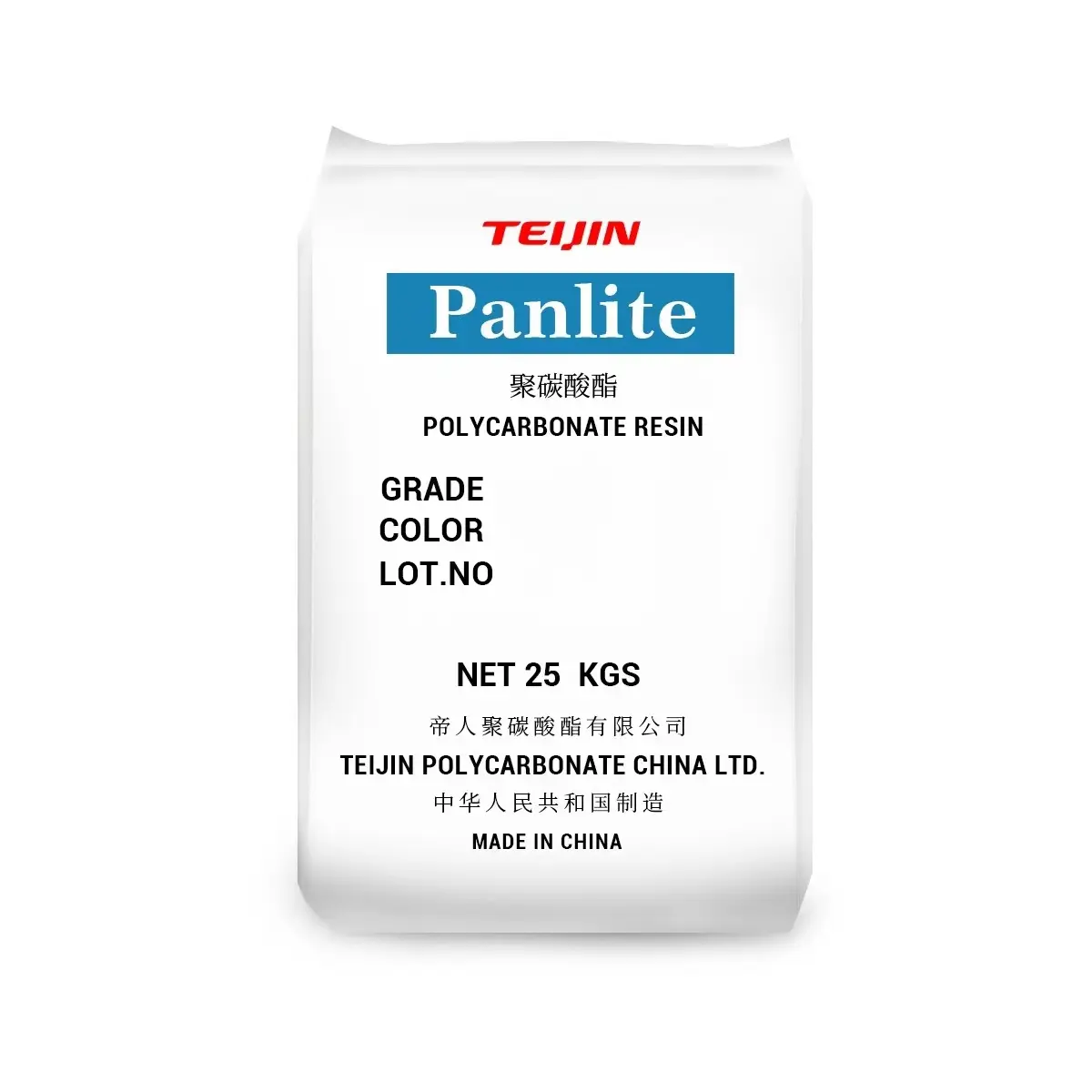
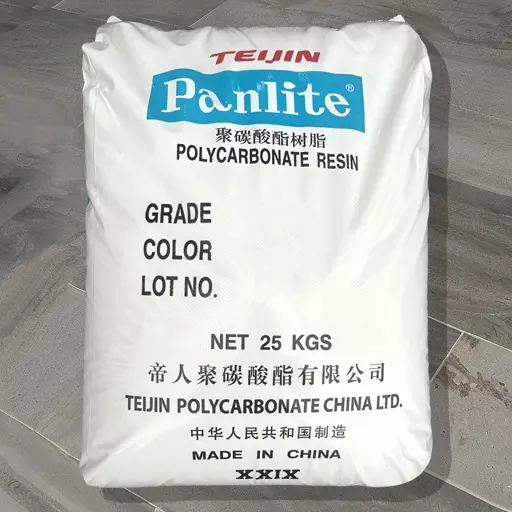
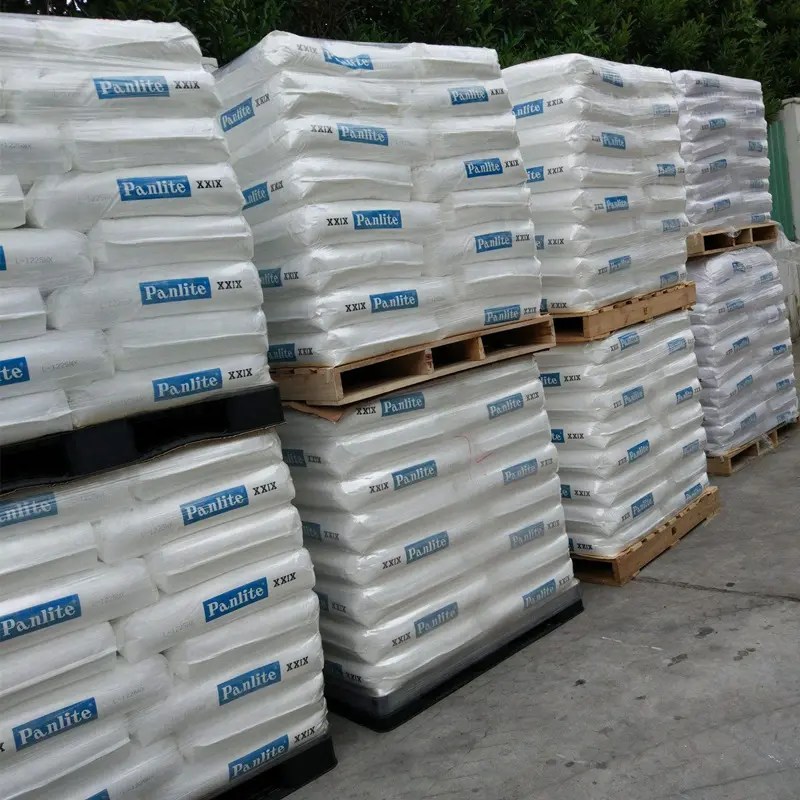
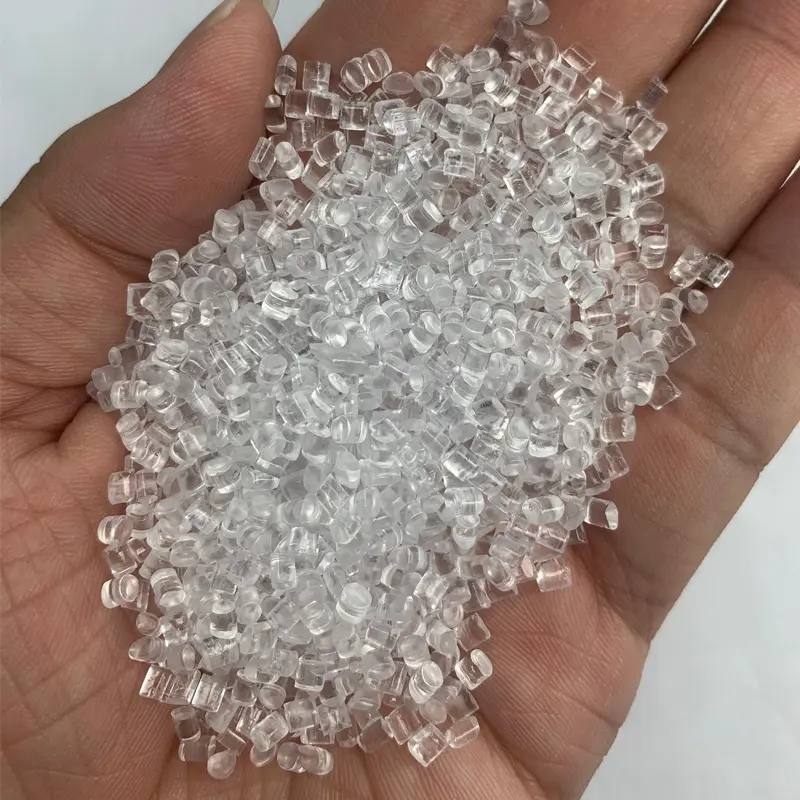
Teijin Panlite AD-5503 is a high-flow polycarbonate resin combining high optical transparency, excellent mechanical strength, and superior processing efficiency.
| Manufacturer | Teijin |
|---|---|
| Density | 1.20 g/cm³ |
| MVR | 54 cm³/10 min |
| Tensile Strength at Yield | 63.0 MPa |
| Elongation at Yield | 6.0 % |
Note: See the product description for additional technical specifications
AD-5503 is a polycarbonate (PC) resin manufactured under the Panlite® brand by Teijin Limited. Presented as transparent to light amber cylindrical pellets, it is a high-flow injection molding grade polycarbonate with a melt volume-flow rate (300 °C, 1.2 kg) of 54 cm³/10 min. AD-5503 combines the inherent high light transmittance (89%, 3 mm) and excellent mechanical strength of polycarbonate, exhibiting superior mold filling capability in thin-walled, complex precision structures. This grade is primarily targeted at sectors with comprehensive requirements for transparency, dimensional stability, and processing efficiency, such as consumer electronics optical components, electrical housings, and small precision connectors.
| Physical Properties | Test Conditions | Test Value | Test Standard |
| Density | — | 1.20 g/cm³ | ISO 1183 |
| Melt Volume-Flow Rate (MVR) | 300 °C, 1.2 kg | 54 cm³/10 min | ISO 1133 |
| Molding Shrinkage, Normal | 4 mm | 0.50-0.70 % | Internal Method |
| Molding Shrinkage, Parallel | 4 mm | 0.50-0.70 % | Internal Method |
| Water Absorption | 24 hr, 23 °C | 0.20 % | ISO 62 |
| Mechanical Properties | Test Conditions | Test Value | Test Standard |
| Tensile Modulus | — | 2450 MPa | ISO 527-2/1 |
| Tensile Stress at Yield | — | 63.0 MPa | ISO 527-2/50 |
| Tensile Strain at Yield | — | 6.0 % | ISO 527-2/50 |
| Tensile Strain at Break | — | > 50 % | ISO 527-2/50 |
| Flexural Modulus | 2 mm/min | 2400 MPa | ISO 178 |
| Flexural Strength | 2 mm/min | 96.0 MPa | ISO 178 |
| Charpy Impact Strength, Notched | — | 3.0 kJ/m² | ISO 179 |
| Charpy Impact Strength, Unnotched | — | No Break | ISO 179 |
| Thermal Properties | Test Conditions | Test Value | Test Standard |
| Deflection Temperature Under Load, Unannealed | 0.45 MPa | 138 °C | ISO 75-2/B |
| Deflection Temperature Under Load, Unannealed | 1.8 MPa | 124 °C | ISO 75-2/A |
| Vicat Softening Temperature | — | 143 °C | ISO 306/B50 |
| Coefficient of Linear Thermal Expansion (CTE), Parallel | — | 7.0E-5 cm/cm/°C | ISO 11359-2 |
| Coefficient of Linear Thermal Expansion (CTE), Normal | — | 7.0E-5 cm/cm/°C | ISO 11359-2 |
| Electrical Properties | Test Conditions | Test Value | Test Standard |
| Surface Resistivity | — | > 1.0E+15 Ohms | IEC 60093 |
| Volume Resistivity | — | > 1.0E+15 Ohms·cm | IEC 60093 |
| Electric Strength, Short-Time | — | 30 kV/mm | IEC 60243-1 |
| Relative Permittivity (Dielectric Constant) | 100 Hz | 3.1 | IEC 60250 |
| Relative Permittivity (Dielectric Constant) | 1.0e+6 Hz | 3 | IEC 60250 |
| Dissipation Factor | 100 Hz | 1.00E-03 | IEC 60250 |
| Dissipation Factor | 1.0e+6 Hz | 9.00E-03 | IEC 60250 |
| Comparative Tracking Index (CTI) | — | 250 V | IEC 60112 |
| Optical Properties | Test Conditions | Test Value | Test Standard |
| Refractive Index | — | 1.585 | ASTM D542 |
| Light Transmittance | 3 mm | 89.0 % | ASTM D1003 |
The technical data sheet (TDS) of Panlite® AD-5503 material from Teijin corporation, if there are differences, please refer to the official website of Teijin.
High Flow Processability: A melt volume-flow rate of 54 cm³/10 min supports high-speed injection molding of thin-walled (<1 mm) complex structures, shortening molding cycles and enhancing mass production efficiency and yield rates.
Superior Optical Transparency: Light transmittance of 89% (3 mm) and a refractive index of 1.585 make it suitable for precision optical components and transparent housings requiring visual inspection or light transmission.
Balanced Mechanics and Toughness: Flexural strength of 96.0 MPa and unnotched Charpy impact with no break provide drop resistance and assembly stress tolerance while maintaining rigidity.
High Thermal Stability and Dimensional Accuracy: An HDT of 124 °C (1.8 MPa) alongside low and isotropic mold shrinkage (0.50–0.70%) facilitates precision tolerance control and applications in high-temperature reflow soldering environments.
Good Electrical Insulation Performance: Volume/surface resistivity > 1.0E+15 and CTI of 250 V suit low-voltage electrical insulation parts and connector housings.
Consumer Electronics & Optical Components: Internal smartphone/tablet brackets, camera filter frames, LED lens housings, optical sensor covers, transparent buttons, and display panel bezels.
Electrical & Connector Parts: Small relay housings, terminal blocks, low-voltage connector bodies, switch panels, and insulation spacers.
Home Appliances & Office Equipment: Printer/copier transparent windows, scanner covers, water dispenser transparent plumbing components, and smart appliance touch panel backings.
Precision Instruments & Industrial Accessories: Flow meter transparent casings, instrument cluster protective covers, small laboratory transparent containers, and non-contact food-grade packaging components.
Q1: What are the recommended drying conditions for Panlite® AD-5503 prior to processing? Why must PC be strictly dried?
A1: PC is sensitive to moisture. Trace amounts of moisture at high temperatures can cause hydrolytic degradation, leading to molecular chain breakage, brittle parts, and surface silver streaks. Hot air drying at 120–130 °C for 3–4 hours is recommended to control the moisture content below 0.02%; using a dehumidifying dryer yields even better results. Dried pellets should be quickly transferred to a sealed hopper to prevent ambient moisture reabsorption, and exposure time must be strictly controlled, especially during humid seasons.
Q2: How should one choose between AD-5503 and PMMA (acrylic) for transparent housing applications?
A2: Compared to PMMA, AD-5503 has slightly lower light transmittance (89% vs. typically 92%+ for PMMA), but its impact resistance far exceeds that of PMMA (PC unnotched no break vs. PMMA being brittle), and its heat resistance is higher (HDT 124 °C vs. PMMA ~90 °C). Select PC if the application involves drop risks, high-temperature environments, or toughness requirements; choose PMMA if pursuing ultimate light transmission, UV resistance (PC tends to yellow without UV additives), and surface hardness. Long-term outdoor use requires verifying whether the PC incorporates weather-resistant modifications.
Q3: Does this grade comply with RoHS, UL, and food contact regulations? What documentation can be provided?
A3: The base grade Panlite® AD-5503 generally complies with RoHS and REACH restricted substance requirements and carries a UL 94 HB rating (specific thickness depends on the yellow card). TDS, MSDS/SDS, and COA can be provided for each batch; compliance declarations and third-party test reports corresponding to end-use requirements should be requested based on terminal applications for food contact (e.g., FDA 21 CFR 177.1580) or specific UL yellow card certifications, and it is recommended to clarify regulatory boundaries during the project introduction phase.
Submit your inquiry today and receive a professional competitive price tailored to your project requirements.