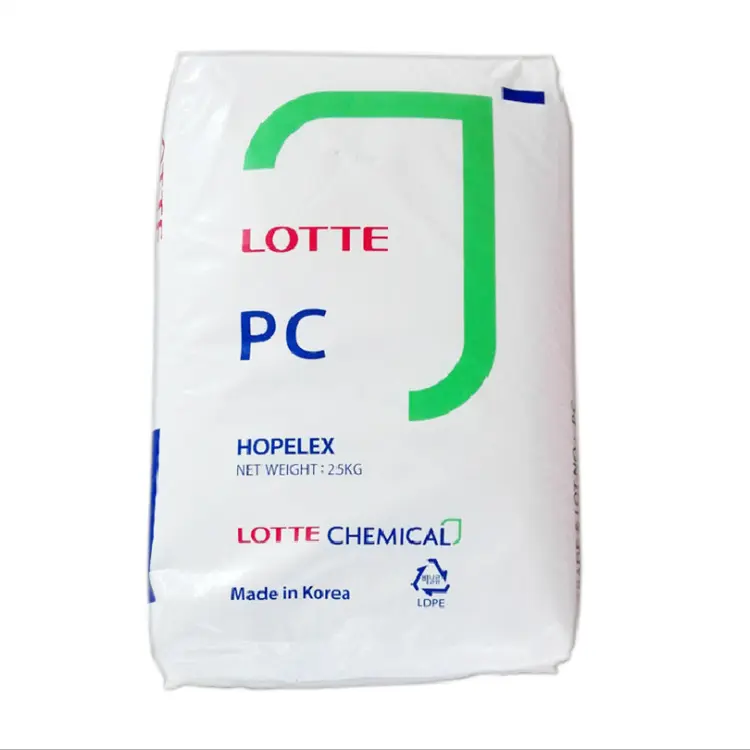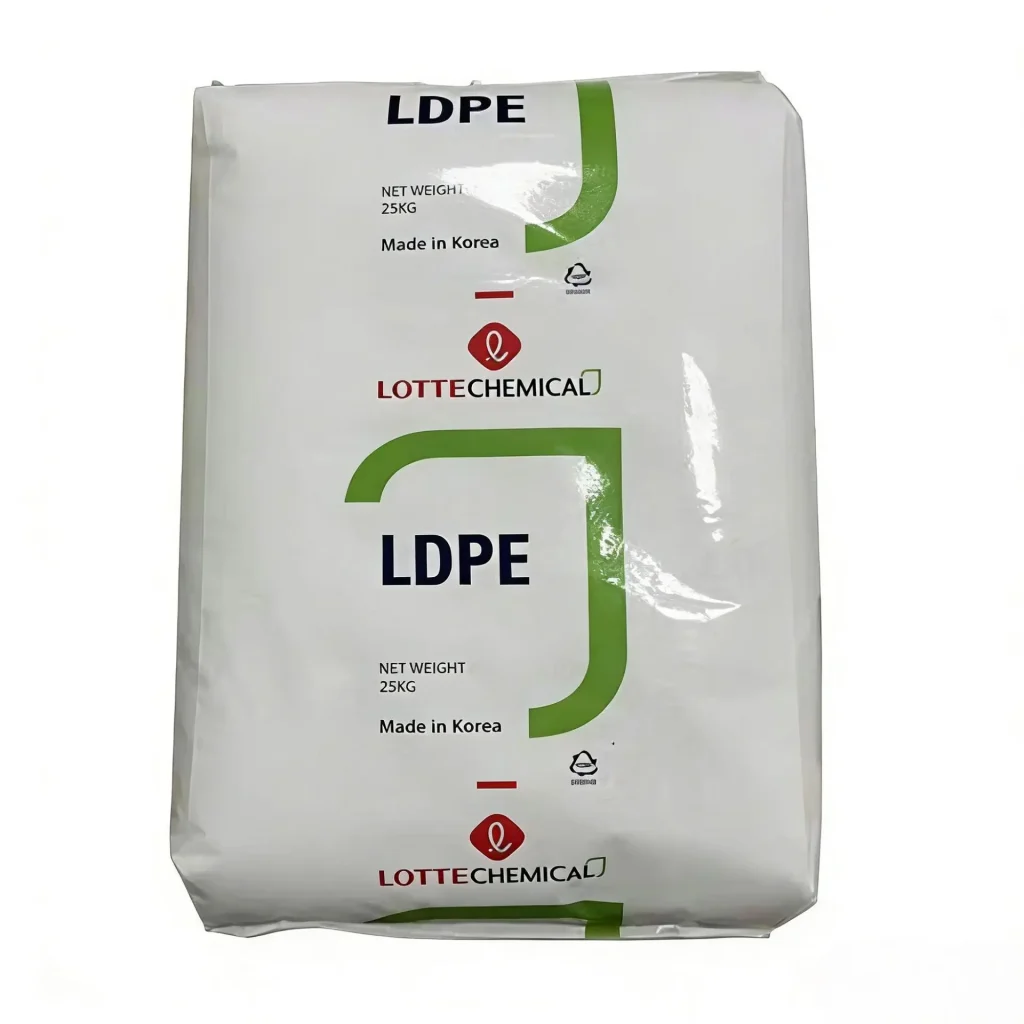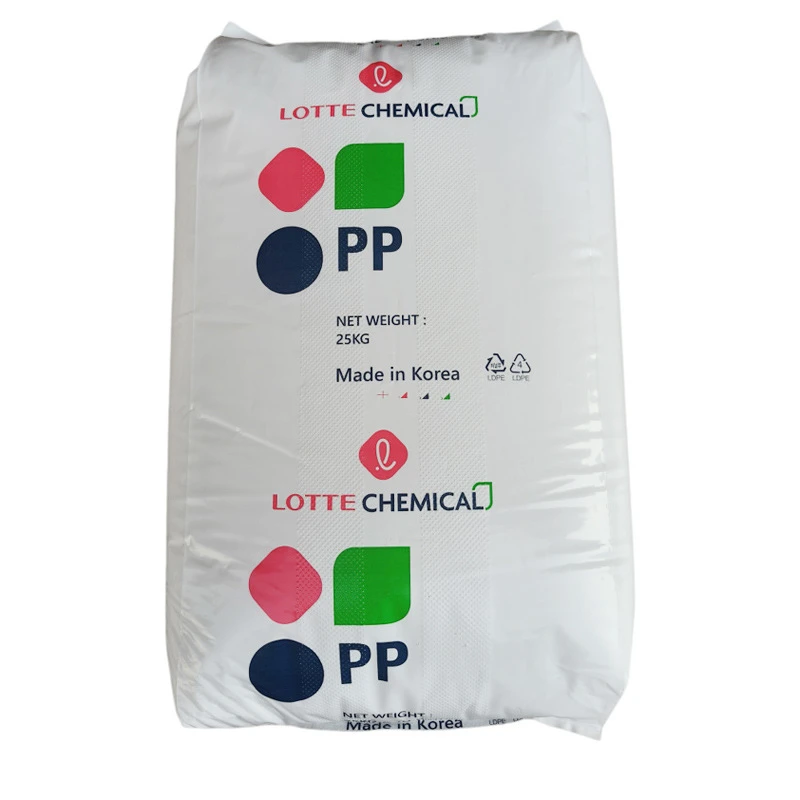
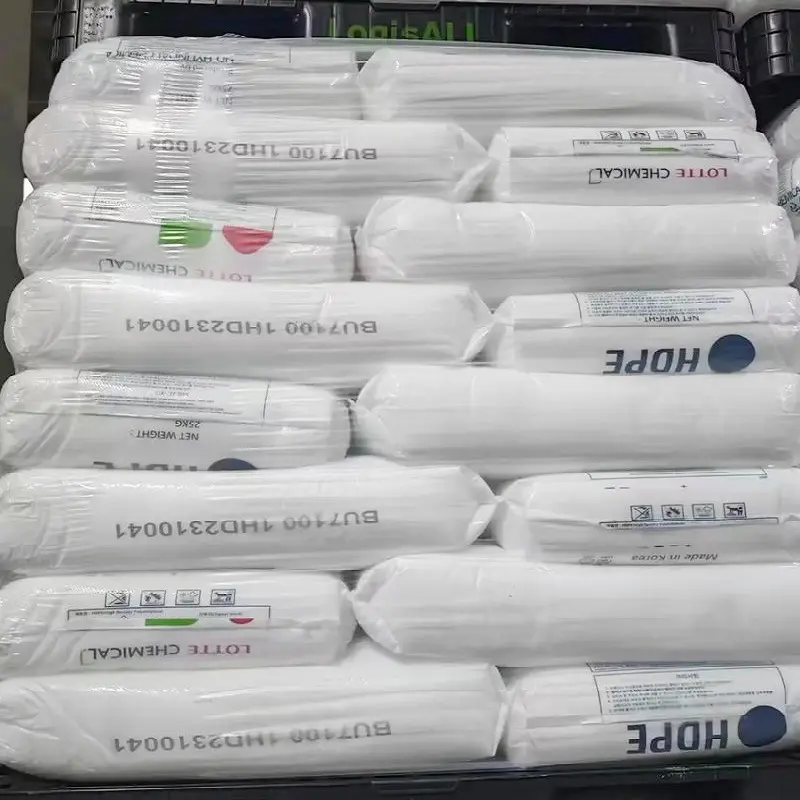
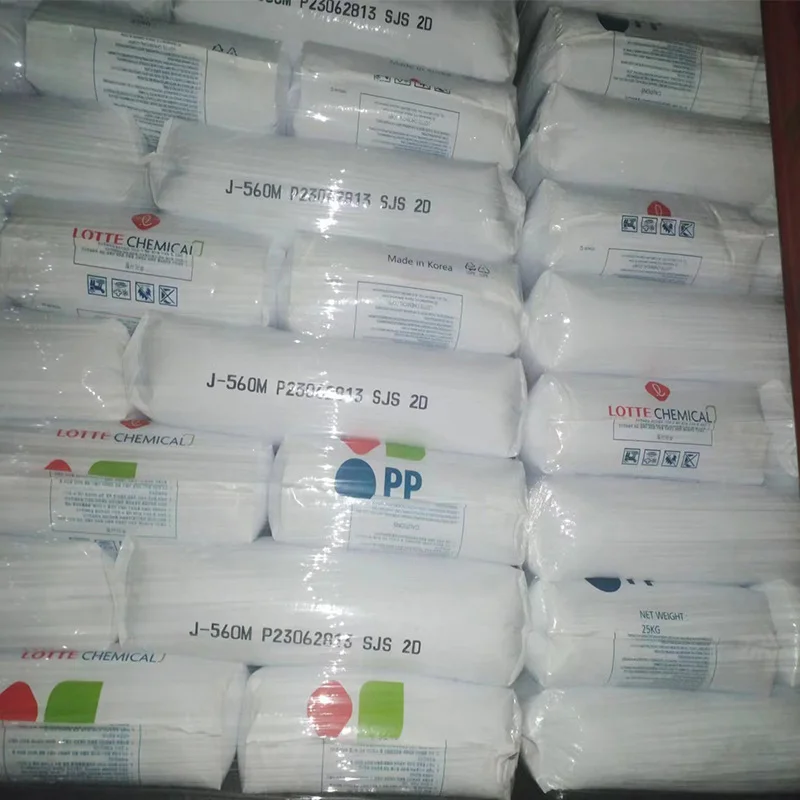
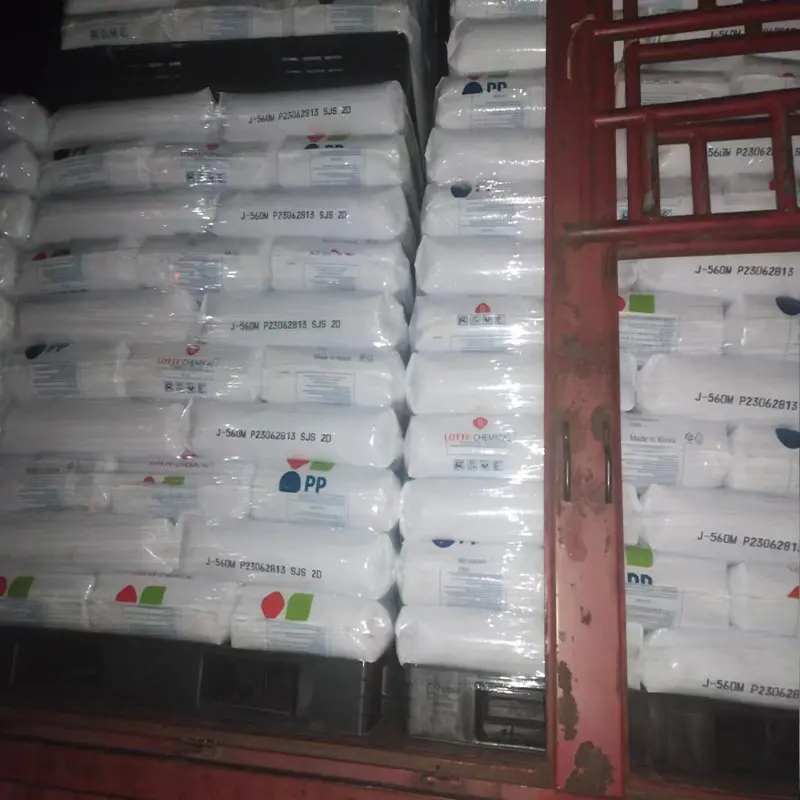
LOTTE Chemical PP SB-520 is a low-flow, high-rigidity random copolymer polypropylene resin featuring a 20% low haze value and excellent ambient impact resistance.
| Manufacturer | Lotte |
|---|---|
| Density | 0.90 g/cm³ |
| MFR | 1.8 g/10 min |
| Tensile Strength at Yield | 31.0 MPa |
| Izod Notched Impact | 37 J/m |
Note: See the product description for additional technical specifications
Manufacturer: LOTTE Chemical, a world-renowned polyolefin resin R&D and production enterprise with a comprehensive polypropylene industry chain production system, offering stable product quality covering the global plastics processing market.
Category: Random Copolymer Transparent Polypropylene (Random Copolymer Transparent PP)
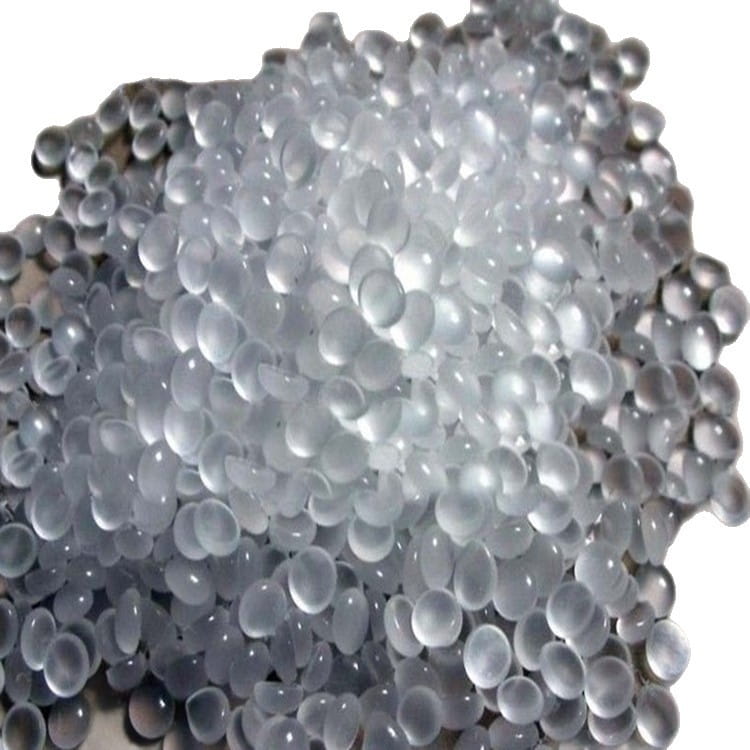
Appearance: Natural cylindrical plastic granules, low-haze and high-transparency base, free of impurities and black spots. Standard natural transparent particles, adaptable to various color masterbatch coloring and modification.
LOTTE Chemical SB-520 is a low-flow, high-rigidity transparent PP grade with a melt index of 1.8. It balances high transparency, ambient-temperature impact performance, and excellent moldability, making it a mainstream general-purpose transparent PP raw material in the fields of food contact, daily packaging, and small injection-molded containers. By virtue of its well-balanced mechanical and optical properties, combined with high processing stability for mass production and excellent finished appearance texture, this grade is widely supplied to injection molding plants, food packaging factories, and household article manufacturers. It is highly suitable for the mass production of both thin-walled and thick-walled transparent injection-molded parts, holding an extremely high market share in the mid-range transparent polypropylene raw material sector.
| Property | Value | Unit | Test Method |
|
Melt Flow Rate (230 °C / 2.16 kg)
|
1.8 | g/10 min | ASTM D1238 |
| 1.8 | g/10 min | ISO 1133 | |
|
Density
|
0.9 | g/cm3 | ASTM D792 |
| 0.9 | g/cm3 | ISO 1183 |
| Property | Value | Unit | Test Method |
|
Tensile Strength at Yield
|
31 | MPa | ASTM D638 |
| 29 | MPa | ISO 527-2 | |
|
Flexural Modulus
|
1030 | MPa | ISO 178 |
| 1320 | MPa | ASTM D790 | |
|
Notched Izod Impact Strength (23 °C)
|
37 | J/m | ISO 180 |
| 49 | J/m | ASTM D256 | |
|
Elongation at Break
|
>300 | % | ISO 527-2 |
| >300 | % | ASTM D638 |
| Property | Value | Unit | Test Method |
|
Heat Deflection Temperature (0.45 MPa, Unannealed)
|
90 | °C | ISO 75-2/B |
| 100 | °C | ASTM D648 |
| Property | Value | Unit | Test Method |
| Haze | 20 | % | ASTM D1003 |
The technical data sheet (TDS) of LOTTE Chemical PP SB-520 material from LOTTE Chemical corporation, if there are differences, please refer to the official website of LOTTE Chemical.
Excellent Optical Performance: With a haze of only 20%, the molded finished product exhibits high clarity without requiring secondary polishing, allowing for direct visual display of internal items. It is highly suited for transparent packaging, storage containers, and other products with high aesthetic demands.
Balanced Rigidity and Toughness: The flexural modulus reaches up to 1320 MPa, and the tensile strength at yield remains stable at 29 – 31 MPa. Concurrently, the elongation at break exceeds 300%, ensuring that finished products do not easily crack or become brittle, demonstrating stable ambient-temperature impact performance that balances hardness with drop resistance.
Superior Thermal Performance: The heat deflection temperature under a 0.45 MPa load reaches up to 100 °C, enabling finished parts to withstand short-term contact with boiling water, which satisfies the requirements for food containment and high-temperature cleaning scenarios.
Stable and Easy Processing: Featuring a melt flow rate of 1.8 g/10min, the melt viscosity is moderate, making the injection molding process less prone to defects such as flow marks, shrinkage, and air bubbles. It accommodates the mass production of thin-walled and complex-structured small parts, lowering the manufacturing defect rate.
Low-Density Lightweight Base: With a material density of only 0.900 g/cm³, finished products of equal volume have a lower weight compared to PE or PS raw materials, helping downstream manufacturers reduce raw material usage and control production costs.
Broad Modification Compatibility: The base PP matrix possesses strong compatibility and can be blended and modified with transparent nucleating agents, food-grade color masterbatches, and antistatic additives to flexibly adjust finished properties such as haze, hardness, and antistatic capabilities.
Food-grade transparent crisper boxes, disposable sauce cups, snack storage jars, microwave-heatable lunch boxes, transparent water bottles, and cold drink plastic containers. The material’s thermal properties accommodate microwave heating and hot water cleaning scenarios, and its high transparency directly displays food to enhance shelf appeal.
Transparent plastic storage boxes, cosmetic dispensing bottles, toiletries packaging shells, children’s transparent toys, and desktop storage small items. The balanced impact performance prevents breakage from daily drops, and the low haze guarantees product appearance quality.
Transparent battery housings, transparent decorative cover plates for small household appliances, and protective accessories for small digital products. The high-rigidity base ensures the dimensional stability of components, preventing deformation or warping after molding.
Disposable transparent sampling tubes, small medical storage boxes, and non-invasive medical plastic components. The matrix provides good resistance to weak acids and weak alkalis, making it compatible with routine disinfection and cleaning processes.
Transparent gift packaging boxes, transparent stationery pencil cases, and small hardware display enclosures. Its stable processing performance supports high-volume automated injection molding production, reducing mold maintenance frequency.
Q1: Does LOTTE Chemical PP SB-520 require drying before injection molding? What are the recommended drying parameters?
A: PP natively has extremely low moisture absorption. Under standard warehousing environments, it can be directly injection molded without pre-drying. However, if the raw material has been stored long-term in a high-humidity warehouse and condensation appears on the surface, the recommended drying conditions are: temperature 80 – 90 °C, drying time 2 – 3 hours, to fully eliminate surface moisture and avoid defects such as silver streaks or bubbles in the finished product.
Q2: What are the core differences among PP SB-520, high melt-index transparent PP grades, and GPPS, and how should one select among them?
A: 1. Compared to high melt-index transparent PP: SB-520 has a melt index of 1.8, offering lower flowability but stronger rigidity and heat resistance, which makes it suitable for thick-walled products that require temperature and drop resistance. High melt-index PP is only suitable for ultra-thin-walled disposable fast-moving consumer goods, with relatively weaker heat and impact resistance. 2. Compared to GPPS: SB-520 possesses far superior toughness to GPPS, resists shattering, and can withstand boiling water heating. While GPPS offers higher transparency, it is highly brittle and cannot be used at high temperatures, making it suitable for disposable, lightweight display packaging. If the product requires repeated use and high-temperature resistance, SB-520 is preferred.
Q3: Does LOTTE PP SB-520 comply with food contact and RoHS environmental regulations? Can it be used for export products?
A: The original base formulation of LOTTE Chemical SB-520 meets the EU RoHS restricted substances standards and possesses food contact compliance certifications (FDA, EU 10/2011), supporting exports to overseas markets such as Europe, the United States, and Southeast Asia. If used for high-end food export products, it is recommended to request original factory COA and compliance test reports from the supplier, and complete third-party re-testing of the finished product to satisfy local customs inspection requirements.
Q4: The molded product occasionally exhibits high haze. What are the optimization solutions?
A: There are two mainstream optimization approaches: ① Processing side: Increase the mold temperature and lower the injection cooling speed to reduce internal crystallization and improve transparency. ② Material modification side: Melt-blend with food-grade transparent nucleating agents, which can significantly reduce the haze of the finished product and substantially upgrade the transparency effect.
Submit your inquiry today and receive a professional competitive price tailored to your project requirements.