Introduction to HIPS
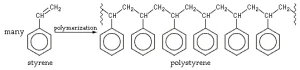
High Impact Polystyrene (commonly known as HIPS) is one of the most widely used engineering thermoplastics globally. From a chemical structure perspective, HIPS is a rubber-modified polystyrene system. While General Purpose Polystyrene (GPPS) offers high rigidity and exceptional transparency, it is inherently brittle and prone to catastrophic failure under shear stress or impact loading. To overcome this critical limitation, the plastic industry introduced polybutadiene rubber particles into the polystyrene matrix during polymerization, resulting in the development of HIPS.
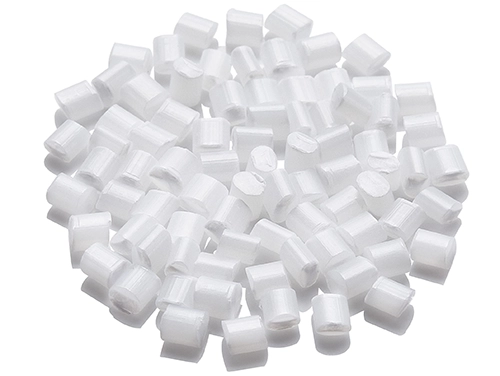
In this two-phase composite system, the continuous polystyrene matrix provides the required stiffness, melt processability, and surface hardness. Meanwhile, the dispersed rubber particles act as “stress concentrators.” When subjected to an external impact, these particles initiate extensive crazing and shear banding, which heavily absorbs and dissipates the impact energy. Consequently, HIPS retains the seamless processability, high dimensional stability, and excellent dielectric insulation properties of standard PS, while achieving a massive leap in impact resistance. Visually, due to light scattering caused by the internal rubber phase, HIPS shifts from the absolute transparency of GPPS to a white, opaque appearance with a matte or low-gloss surface finish.
Advantages and Disadvantages of High Impact Polystyrene
As a well-established industrial resin, evaluating the balance between its physical properties and processing characteristics is key for engineers during material selection.
Advantages
- Excellent Impact Strength: The integration of rubber modification endows the material with the toughness to withstand severe mechanical shocks, maintaining reliable crack resistance even in low-temperature environments.
- Superior Processability: HIPS exhibits excellent melt flow characteristics (Melt Flow Index), making it highly suitable for high-efficiency injection molding and continuous sheet extrusion. It offers a broad processing temperature window and distinct shear-thinning behavior, easily filling complex or thin-walled molds.
- Outstanding Dimensional Stability: With a very low mold shrinkage rate (typically between 0.4% and 0.7%), HIPS ensures high geometric precision in molded parts, resisting warpage or post-molding distortion.
- Great Secondary Processing: HIPS is an exceptional candidate for thermoforming. Due to its robust melt strength when heated, it stretches uniformly during vacuum forming, making it ideal for fabricating various packaging cavities and protective enclosures.
- Excellent Dielectric Properties: It possesses high volume resistivity and low dielectric loss, making it an ideal insulating structure for low-frequency electrical and electronic devices.
Disadvantages
- Limited Thermal Resistance: The Vicat softening point typically ranges between 90°C and 100°C. It has a relatively low continuous-use temperature, making it unsuitable for sustained high-temperature industrial environments.
- Poor UV Stability: The polybutadiene rubber component contains unsaturated double bonds, which are highly susceptible to photo-oxidative degradation under ultraviolet light. This results in yellowing and brittleness. For outdoor applications, UV stabilizers must be incorporated.
- Moderate Solvent Resistance: It is prone to chemical attack and environmental stress cracking when exposed to aromatic hydrocarbons, chlorinated hydrocarbons, aliphatic hydrocarbons, and certain low-molecular-weight esters or ketones.
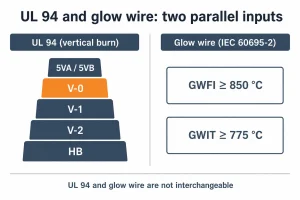
- Flammability: Having a low Limiting Oxygen Index (LOI), HIPS is classified as a flammable material (UL 94 HB rating). For applications requiring strict fire safety compliance, flame-retardant modifications (FR-HIPS) are mandatory.
High Impact Polystyrene Uses
Thanks to its perfect balance of performance and cost-efficiency, the application network of HIPS penetrates into almost every corner of consumer goods and industrial manufacturing:
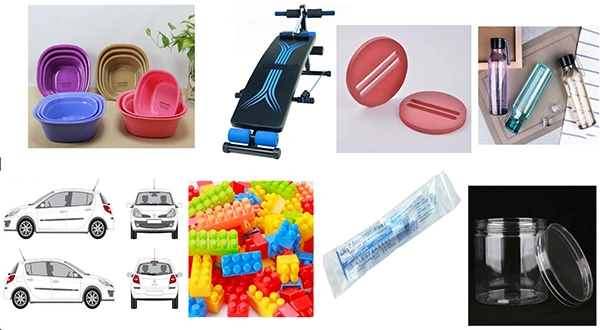
- Electronics & Appliances: This represents the core market for HIPS. Given its structural rigidity, structural toughness, and ease of coloring, it is widely utilized for TV front/rear bezels, computer mainframe enclosures, air conditioner indoor unit housings, and internal structural components of copiers and printers.
- Thin-Walled Packaging & Disposables: Leveraging its superb thermoforming capabilities, HIPS is extruded into sheets and vacuum-formed into dairy containers (such as yogurt cups), disposable food containers, supermarket trays, pharmaceutical packaging, and daily stationery.
- Toys & Consumer Goods: Offering excellent shatter resistance, being odorless, and easily complying with environmental standards like RoHS, HIPS is the material of choice for building bricks, children’s stroller components, and various recreational products.
- Medical Components: In non-sterile or disposable medical supplies, HIPS is frequently engineered into pipette packaging, medical instrument housings, test tube racks, and diagnostic kit enclosures.
- Signs & Displays: Its high printability (via screen printing or digital printing) and ease of machining make HIPS sheets a staple for retail display racks, promotional signage, and in-store directional systems.
Can High Impact Polystyrene be Recycled?
Yes, HIPS is a 100% fully recyclable thermoplastic. Within global plastic recycling frameworks, it is designated under the Number 6 (PS) category.
As an amorphous polymer, the molecular chains of HIPS maintain relatively good thermal stability even after multiple regrind and heating cycles. Post-industrial or post-consumer HIPS products can be sorted, washed, shredded, and pelletized through twin-screw extruders to be converted back into Recycled High Impact Polystyrene (R-HIPS).
Technical Challenges and Practices in Closed-Loop Recycling:
In industrial production, “regrind” and “scrap” (Post-Industrial Scrap) can usually be blended directly with virgin material at specific ratios (typically 10% to 20%) without significantly sacrificing the mechanical properties of the final molded part. However, for Post-Consumer Recycled (PCR) HIPS, high-precision optical sorting is required to prevent contamination from GPPS or ABS. Modern compounding industries introduce highly effective compatibilizers, allowing PCR-HIPS to be successfully repurposed into non-load-bearing appliance liners, logistics pallets, or construction panels. This practice perfectly aligns with the rigorous ESG (Environmental, Social, and Governance) and carbon reduction standards demanded by modern B2B buyers.
How to Buy High Impact Polystyrene
If you are sourcing high-grade, consistently reliable High Impact Polystyrene raw materials, ZiJun Plastics is your premier global supply partner.
As a top-tier resin distributor and supply chain expert, ZiJun Plastics has deeply cultivated the plastic raw materials industry for years. We possess not only an expert understanding of material physics but also an uncompromised international supply infrastructure.
Why Choose Us
- Strategic Global Alliances: We maintain long-term distribution and agency partnerships with major global petrochemical giants (including TAIRIREX/Formosa Chemicals & Fibre Corporation, CHIMEI, and other leading producers).
- Competitive Pricing: Benefiting from our position as a direct first-tier distributor and our bulk purchasing mechanisms, we eliminate intermediary markups, providing global buyers with highly competitive market pricing.
- Stable & Reliable Supply: Utilizing modern warehousing reserves situated at major international shipping hubs, we maintain robust stock levels even during international logistics volatility or cyclical raw material shortages, mitigating any risk of supply disruption.
- Comprehensive International Trade Terms: We fully support all primary international trade terms, including FOB, CIF, EXW, and CFR. Backed by a professional execution team experienced in handling Letters of Credit (L/C) and Telegraphic Transfers (T/T), we ensure your cross-border procurement process is completely seamless.
- Rigorous Technical Verification: Our team delivers purely objective technical support without marketing modifications. We provide 100% original factory packaging alongside official Technical Data Sheets (TDS), RoHS compliances, and UL certification documentation to secure your manufacturing standards.