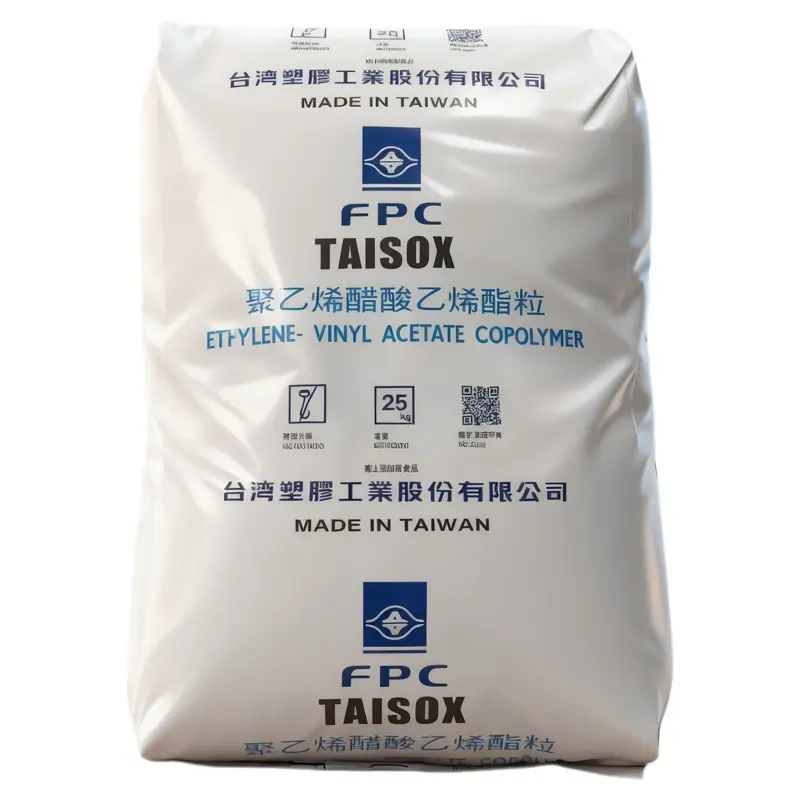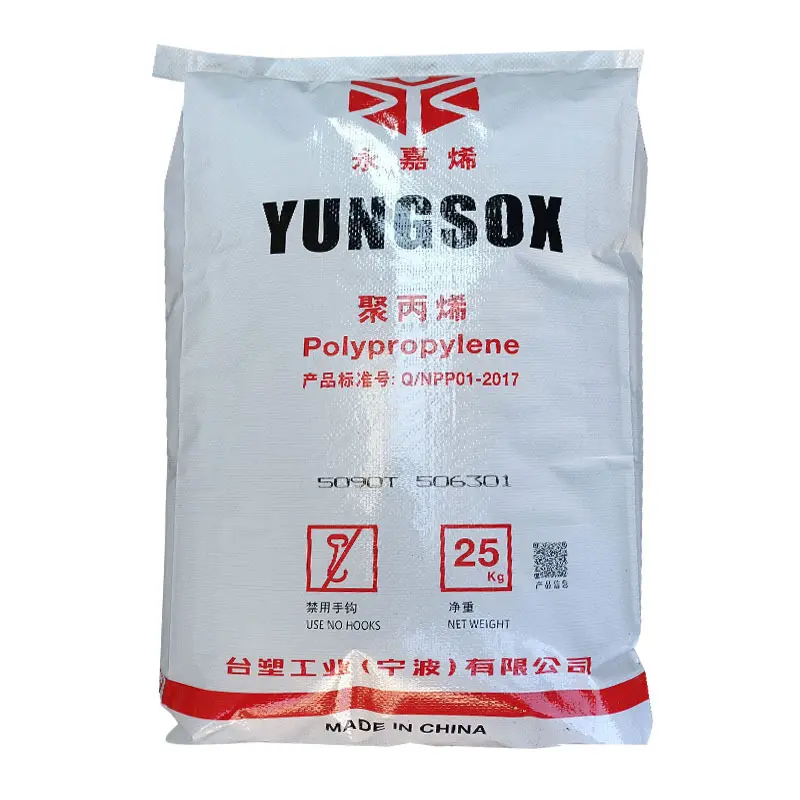
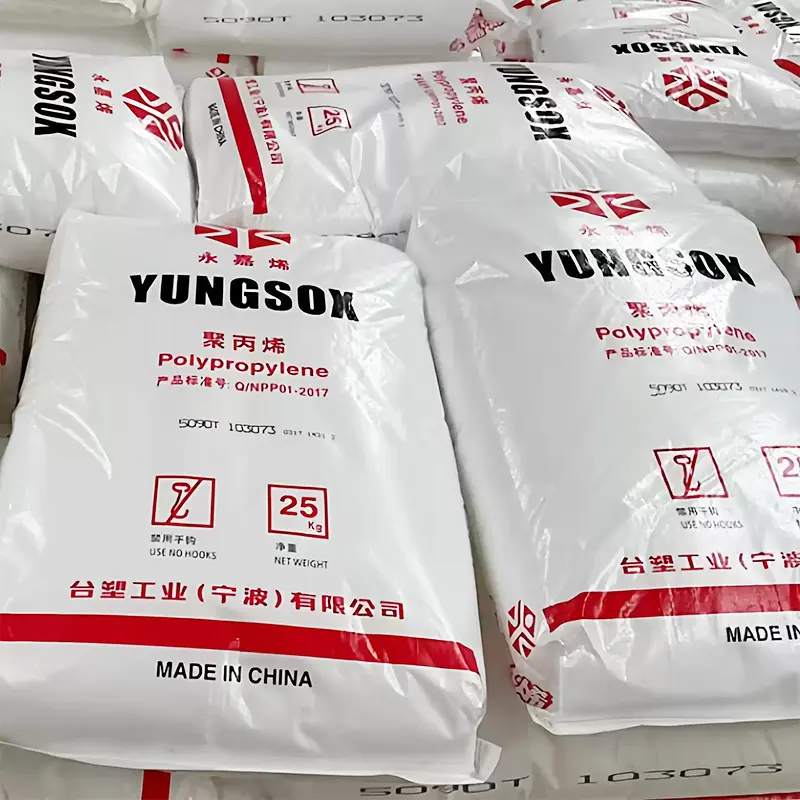
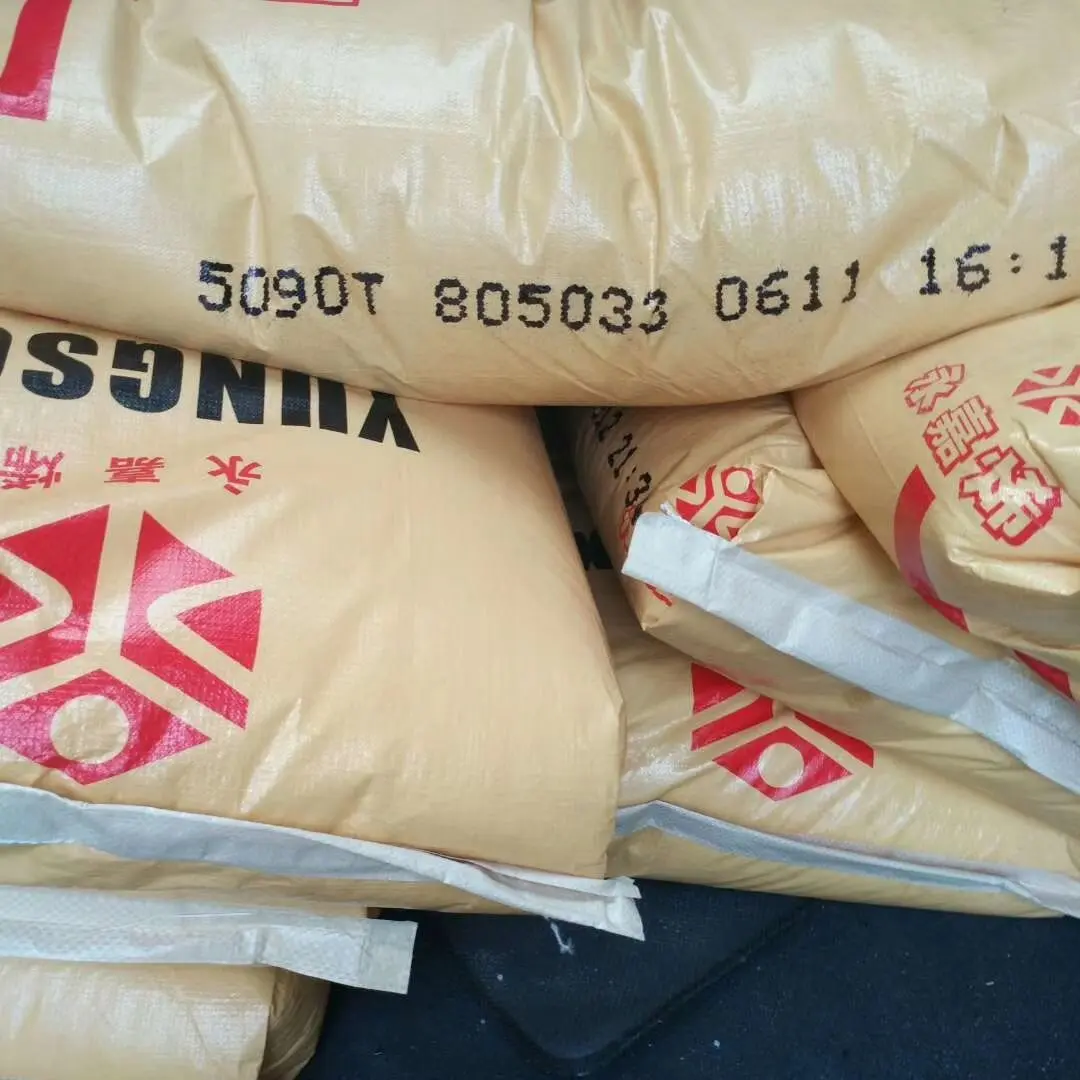
Formosa Plastics YUNGSOX® 5090T is a high-flow polypropylene (PP) copolymer designed for thin-wall injection molding. Featuring excellent impact resistance and dimensional stability, it is ideal for food-grade containers, small appliance parts, and consumer goods.
| Manufacturer | FPC |
|---|---|
| Density | 0.900 g/cm³ |
| MFR | 15 g/10min |
| Tensile Strength at Yield | 27.5 MPa |
| Elongation at Break | 300 % |
Note: See the product description for additional technical specifications
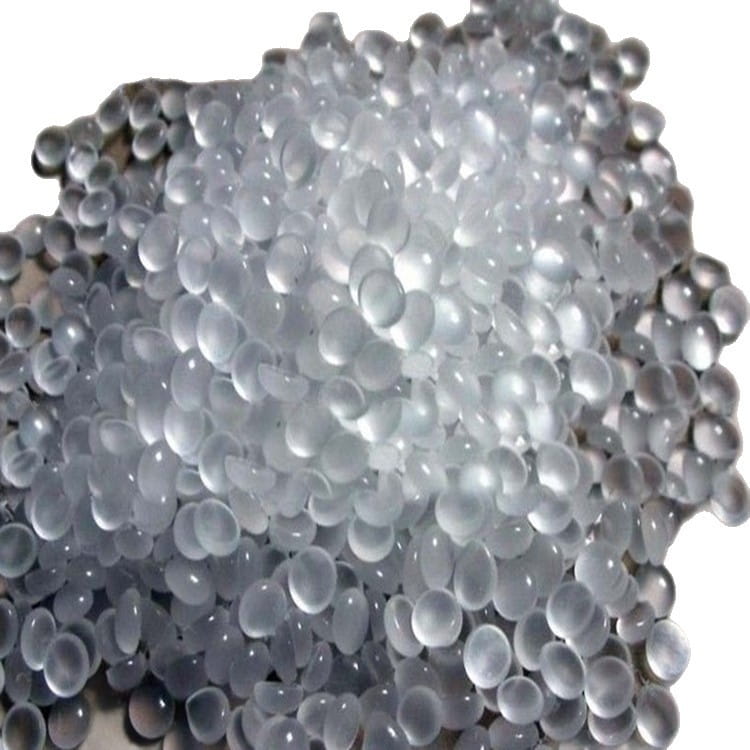
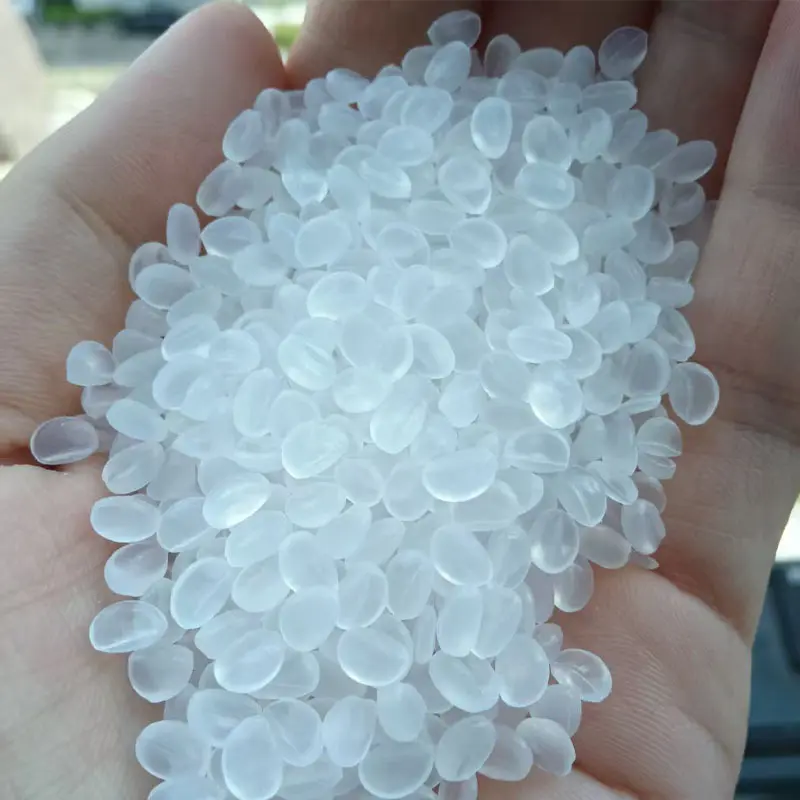
YUNGSOX® 5090T is a polypropylene (PP) copolymer produced by Formosa Plastics Corporation. This material appears as translucent to milky white cylindrical pellets and belongs to the high-flow, impact-resistant copolymer polypropylene grade. With a melt flow rate of 15 g/10min and the toughness advantages provided by its copolymer structure, it exhibits excellent mold-filling capability and dimensional stability in thin-wall injection molding processes. This grade is primarily targeted at processing fields that require high turnover efficiency and drop impact resistance, such as food containers, household thin-walled products, and structural components for small home appliances.
| Physical Properties | Test Value | Test Unit | Test Standard |
| Density | 0.9 | g/cm³ | ISO 1183 |
| Melt Flow Rate (230 ℃, 2.16 kg) | 15 | g/10min | ISO 1133 |
| Mold Shrinkage | 1.3-1.7 | % | Internal Method |
| Rockwell Hardness R | 98 | — | ISO 2039-2 |
| Mechanical Properties | Test Value | Test Unit | Test Standard |
| Tensile Strength, Yield | 27.5 | MPa | ISO 527-2 |
| Tensile Strain, Break | 300 | % | ISO 527-2 |
| Flexural Modulus | 1029 | MPa | ISO 178 |
| Izod Impact Strength, Notched (23 ℃) | 58.8 | J/m | ISO 180 |
| Thermal Properties | Test Value | Test Unit | Test Standard |
| Heat Deflection Temperature, Unannealed (1.8 MPa) | 95 | ℃ | ISO 75-2/A |
| Vicat Softening Point | 125 | ℃ | ISO 306 |
| Melting Temperature | 146 | ℃ | DSC |
| Flammability Rating | HB | — | UL 94 |
The technical data sheet (TDS) of YUNGSOX® 5090T material from Formosa Plastics corporation, if there are differences, please refer to the official website of Formosa Plastics.
High-Flow Processability: The melt flow rate of 15 g/10min supports rapid thin-wall injection molding, shortening cooling cycles and increasing production line utilization and efficiency.
Impact Resistance via Copolymer Structure: The rubber phase dispersion structure introduced by ethylene results in a notched impact strength of 58.8 J/m, superior to homopolymer PP, making it suitable for parts requiring drop resistance or resistance to assembly stress.
Appropriate Thermal Stability: The Vicat softening point of 125℃ and HDT of 95℃ meet the usage boundaries of conventional household high-temperature environments (such as microwaveable containers and parts in contact with hot water).
Good Dimensional and Shrinkage Control: A mold shrinkage rate of 1.3–1.7%, combined with stable crystallization behavior, facilitates tolerance control and mold design compensation for precision thin-walled parts.
Balance of Surface Hardness and Appearance: The Rockwell hardness of R 98 maintains rigidity while reducing the risk of surface scratching during handling, making it suitable for consumer goods with specific appearance requirements.
Thin-Walled Food-Contact Containers: Such as yogurt cups, disposable lunch boxes, and microwaveable storage boxes, utilizing its high-flow mold-filling capability and food-contact compliance foundation.
Small Home Appliance Structural Components: Such as juicer housings, rice cooker inner lid assemblies, and mixer handles, balancing low-temperature impact resistance and short-term heat resistance needs.
Household Consumer Goods and Storage: Thin-walled storage boxes, cosmetic bottle caps, toy casings, etc., which have comprehensive requirements for molding cycles, drop tolerance, and surface texture.
Industrial Auxiliary Parts: Such as housings for light conveying equipment and instrument frames, achieving a balance between cost and performance for low-load structural parts.
Q1: Does YUNGSOX® 5090T require drying before injection molding? What are the recommended processing conditions?
A1: PP itself has extremely low hygroscopicity and generally does not require drying for direct processing under standard storage conditions. If the raw material is stored in extremely high-humidity environments or used for highly transparent products requiring strict surface quality, it can be hot-air dried at 80–90℃ for 1–2 hours to remove a small amount of moisture adsorbed on the surface of the pellets, preventing air bubbles or silver streaks in the products.
Q2: How should one choose between 5090T and homopolymer PP or PC/ABS for thin-walled container applications?
A2: Compared to homopolymer PP, 5090T as a copolymer has better low-temperature impact resistance and toughness, though its transparency is slightly lower. Compared to PC/ABS, it has a lower density and better cost-efficiency, but a lower upper limit for heat resistance (HDT approx. 95℃), making it unsuitable for long-term high-temperature load-bearing scenarios. Material selection should be comprehensively evaluated based on terminal usage temperature, drop test standards, and transparency requirements.
Q3: Does this grade meet RoHS and food-contact compliance requirements? What documents can be provided?
A3: YUNGSOX® 5090T can provide batch-specific TDS, MSDS/SDS, and COA. Formosa Plastics’ PP products generally comply with RoHS and REACH restricted substance requirements and hold a UL 94 HB rating. Food-contact suitability must be confirmed based on terminal regional regulations (such as FDA, EU 10/2011) regarding formulation versions and third-party test reports. It is recommended to request the corresponding compliance statement during the project introduction phase.
Submit your inquiry today and receive a professional competitive price tailored to your project requirements.